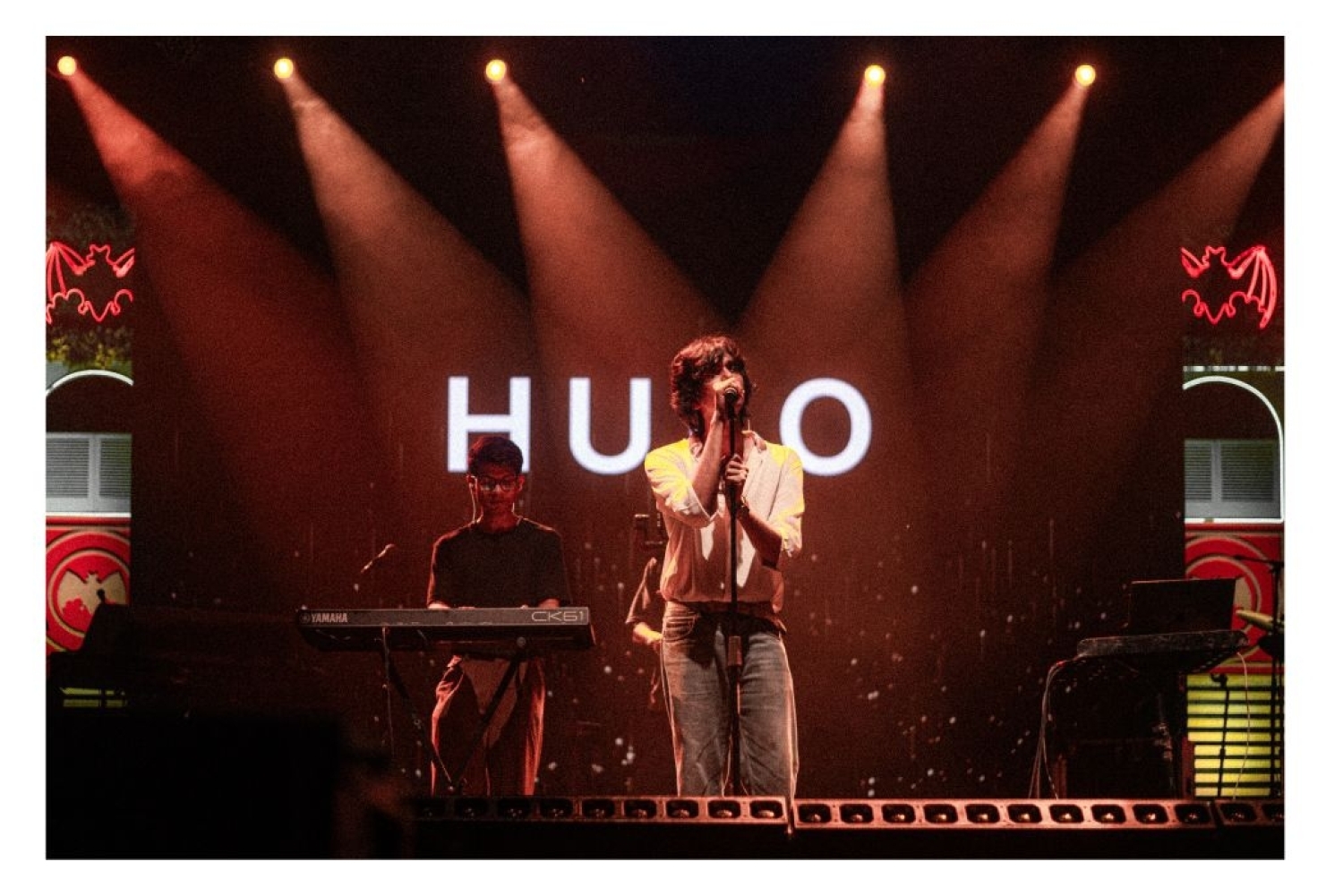
‘I think I fell in love with the idea of a stage before the guitar; I remember my parents showing me a Bon Jovi concert on DVD.’ Indie singer-songwriter Aditya Majumdar, AKA Hulo, has been turning heartbreak, anxiety and the messier parts of growing up into acoustic folk, alternative rock and blues. His debut album Griefcase grew out of his years as an immigrant student, carrying ‘a suitcase with unpacked clothes and slices of my previous life that I refused to place in my new one’. His music digs into doubts and difficult days, but they also hold room for humour, hope and the strange little joys of being alive.
He was seven when he first picked up a guitar and eight when he first performed for a group of people. He does not remember whether it sounded good. He only remembers that ‘the room was united by the song and that feeling is what I’ve been chasing every day since’. His debut album, Griefcase, released in 2025, came out of a period when he was living away from home and trying to make sense of a life that seemed to be changing faster than he could keep up with. As an immigrant student navigating an unfamiliar country, he was going through a ‘heavier time’ in his life, not necessarily unhappy, but filled with more conflicting emotions than he had dealt with before. It was only while writing the final song, the title track Griefcase, that Hulo understood what the album had gradually become. ‘I realised these songs were me unpacking my Griefcase,’ he says. At first, Griefcase was not really about grief. It was a way of coping with feelings he did not yet know how to process. By the end, the word had changed for him. ‘It turned into something that gifted me the most beautiful memories I’ve had the privilege to make.’
That contradiction is at the heart of Hulo’s music. Writing about anxiety and self-doubt has not necessarily made him understand himself better. If anything, he jokes, it may have done the opposite. ‘Lately I’ve been rephrasing my experiences to fit into a song’, he says. Still, he treasures the ability to write about them. There is a kind of freedom in taking something difficult and giving it another form. The process behind a song is not always carefully planned either. Hulo used to begin with a guitar riff, shaped by the rock music he grew up listening to. But these days, songs often start with a melody and move into a lyrics-first approach. He tries not to overthink the process. ‘Procrastination and overthinking come easy to me’, he says, ‘so when I’m in the zone I try to just finish the song’.
His influences stretch well beyond music too. He talks about films, food and his grandmothers, calling them all artists in their own way. There is Martin Scorsese, whose films he ‘loves everything about’ and Khaled Hosseini’s A Thousand Splendid Suns, which pushed him towards writing Griefcase. And then there is food: his Nani’s biryani and Aamma’s mutton.
After years of writing in bedrooms and studios, Hulo recently took Griefcase on his first India tour. ‘It’s the most incredible feeling to hear your song sung back at you.’ At one show, the audience even helped him remember the first line of one of his songs after he missed it. Touring also taught him that making music is not always glamorous. There were sleepless nights, exhaustion and plenty of panic. But he would do it all over again.
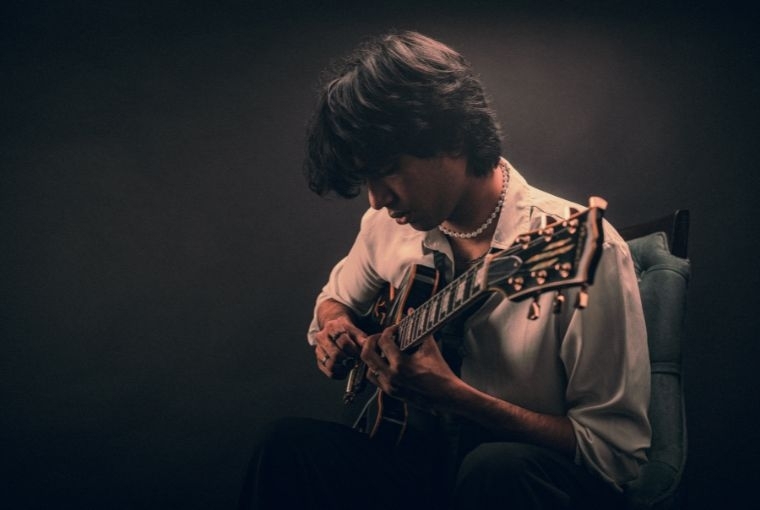
It is also what keeps him hopeful about the independent music scene. Hulo has learned to let small things excite him, because it’s all been ‘fuelled by hope’. ‘It’s really empowering to know I’m not alone in this journey.’ Now, with a new album on the way, Hulo has been taking every idea he can into the studio, excited by what might emerge when those ideas meet other people. ‘Creating music’s always been about people coming together to make something bigger than them.’ All in all, the biggest lesson, he says, has been gratitude, the same feeling he found in that room as an eight-year-old.
Words Nidhi Soni
Photography Ankan Sarkar
Date 17.8.2026