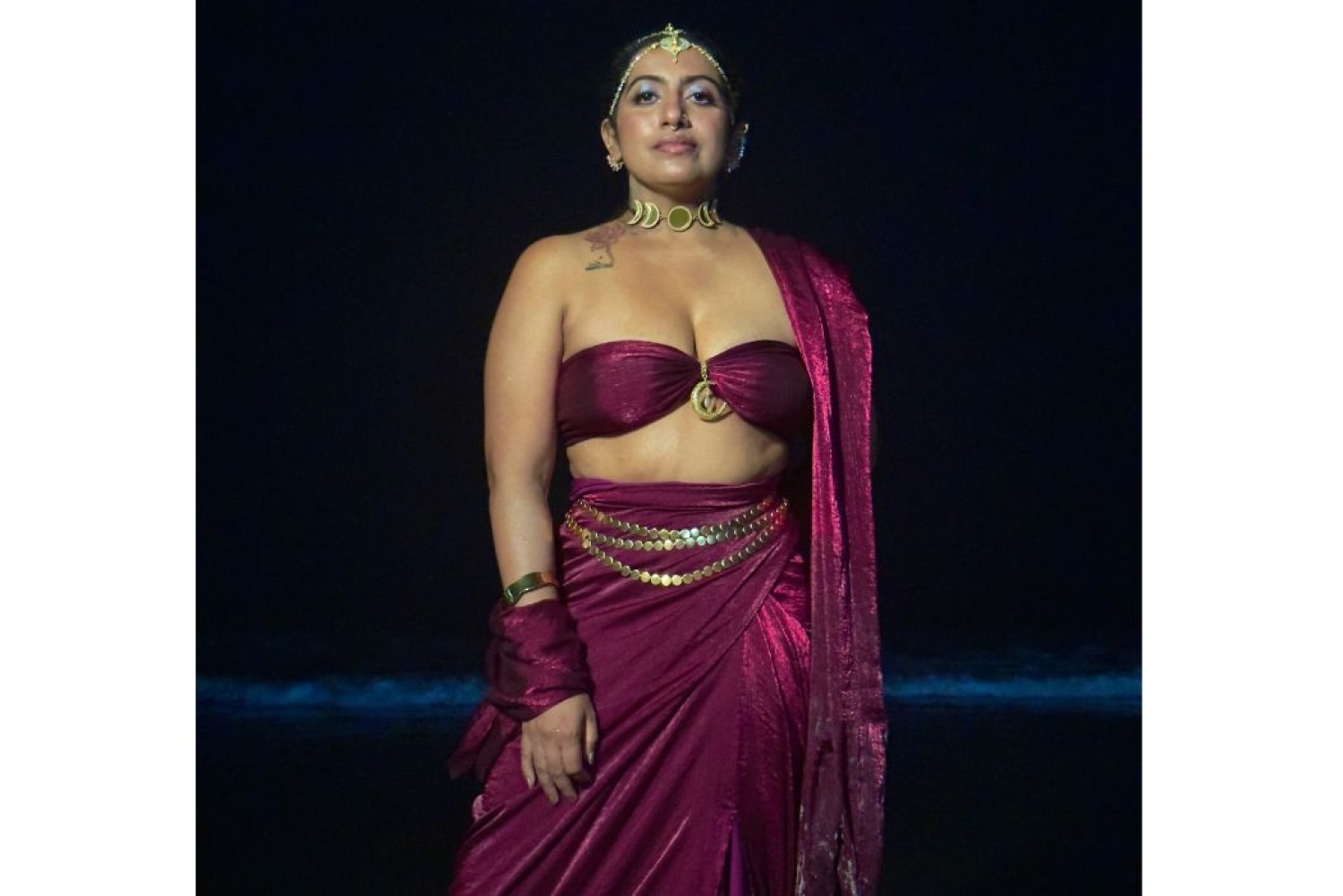
Scorpio Moon, the latest EP by Tribemama, isn’t just a body of work; it’s a shedding, a reckoning, a return.
Over the past few years, Tribemama has lived through a chapter that demanded both stillness and strength. In Kochi, while raising her daughters, she navigated illness, loss, and the weight of expectation, even as she was being pulled inward. She emerged from that period transformed: sharper, more present, and deeply attuned to herself. This EP becomes the language of that transformation, drawing on the emotional depth of a Scorpio Moon. Each track feels like a fragment of that becoming.
When we asked Tribemama about this shift, she answered with striking clarity. She says she has stopped shrinking herself to fit and has begun reclaiming the full, complex truth of who she is. Scorpio Moon is where that woman stands now: no longer performing, no longer contained, but fully in her power, glowing with a new, hard-won light.
Tell us about the last three years. Where were you, and what did life look like for you?
The last three years were deeply personal for me. I was in Kochi, raising my daughters and building a quiet, grounded life with them. We moved homes, I tried my hand at gardening, and our little family grew. Two dogs, and what started as a few cats turned into many more.
It was a time of simple, intimate moments, beach mornings in Fort Kochi, movie nights, binge-watching shows, and just being present with my girls. At the same time, it was also a period of intense resilience. I went through three surgeries, my father was diagnosed with cancer, and there were moments of public scrutiny and personal vulnerability. I was aware that my role as a mom played out more than being a wife. Through all of this, what stayed constant was strength, not just mine, but the strength my daughters and I found together. That phase changed me. It grounded me, stripped me down, and rebuilt me in ways I carry into my music today.
What was the starting point for Scorpio Moon? What inspired the project?
Scorpio Moon began at a very pivotal point in my life. I had completed ten years of my marriage, and around that time, I wrote Goldfish. Everything in my life was shifting, and when I looked back, I realised I was no longer the same woman. For a long time, I had been simplifying and shrinking parts of myself to fit into something that ultimately felt suffocating. That phase pushed me to reconnect with who I really was, not the edited version, but the whole, complex truth of me.
Astrology became a language through which I understood that transformation. My Ketu was activating in Scorpio, where my Moon is placed and a Scorpio Moon carries intense emotional depth, transformation, and the ability to alchemise even the most difficult experiences. That inner shift, that shedding and becoming, is what inspired Scorpio Moon. It’s not just a project, it’s a reflection of my transformation.
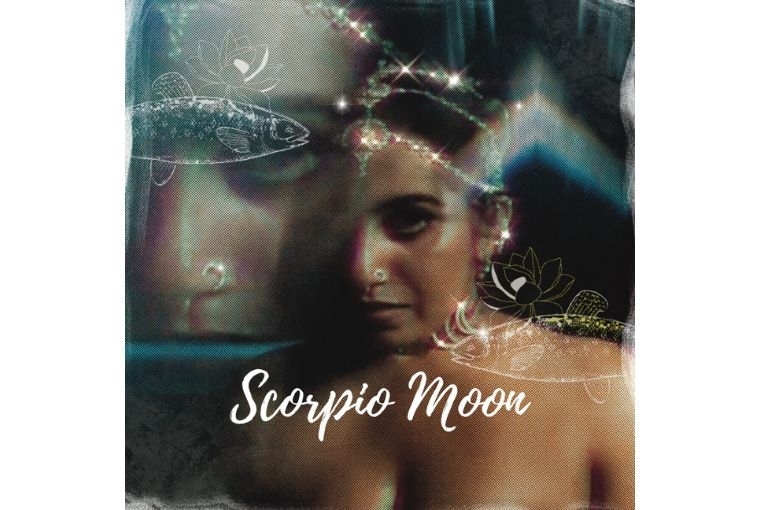
Your album feels like the tracks reflect different stages of love: Goldfish captures falling in love, Painkiller explores the pain that can come with that feeling, Leela speaks to sensual experience, Serpent suggests transformation through love, and finally, Kill the Beast feels like liberation. Would you say that’s an accurate reading of the EP? Could you talk a little about that arc and the emotions behind the tracks?
Yes, that’s a very perceptive reading of the EP. It is an emotional arc, but not a linear one. It’s more like a slow unravelling of a woman as she becomes aware of herself. Goldfish is where it begins. I was a new bride in an arranged marriage, stepping into my husband’s home, and I felt like a goldfish in a bowl, constantly watched, assessed, and contained. The gaze was constant. And the more I was observed, the more I performed that version of myself. But intimacy changes something. In private, there’s a quiet rebellion, a moment where the woman in the bowl begins to realise she can step out of it. Painkiller explores the addiction of love, how something that heals you can also quietly damage you. Leelah is where the woman stops performing and starts owning her sensuality without apology. Serpent is transformation in its rawest form, shedding skin, confronting shadow, and becoming something unrecognisable even to yourself. And Kill the Beast is not gentle liberation. It’s a conscious destruction of what once defined you.
So, the EP moves from observation to awareness, from control to surrender, and finally to power. It’s not just a journey of love, 'it’s a woman reclaiming herself, piece by piece.' May I add that the gaze doesn’t just observe a woman, it quietly trains her to perform and then one starts to realise your are not being seen you are being managed
What was your creative process for making this EP? You worked again with your longtime collaborators, Da Architecht (Artie) and RET.
The RET and Da Architect are long-time collaborators, so there’s an unspoken creative language between us. I wrote and composed these songs in isolation n they came from a very internal, almost private space. In 2024, the three of us came together in Goa, at my dad’s place, and that’s when the project really transformed. What started as something intimate and personal became something much more expansive. We weren’t just arranging songs , we were building a sonic world around them.
Each of them brought a distinct perspective. Where I came in with emotion and narrative, they helped translate that into texture, space, and sound. We were very intentional about how the music should feel. Not just lyrically, but physically, almost like an experience you move through. It wasn’t about overproducing or decorating the songs. It was about amplifying what was already there, the tension, the sensuality, the transformation. That collaboration allowed Scorpio Moon to evolve from something introspective into something immersive. I did not want this EP to be heard but felt.
What do you think about women in rap right now? Do you feel they’re getting the recognition they deserve?
Women in rap today aren’t fitting into the space, they’re defining it. Recognition and success are subjective. The moment you believe you are a rapper and show up as one, you’ve already claimed your place.”
How would you describe the sensibility of this album?
For me, the sensibility of this EP wasn’t about being ‘sensible’, it was about being 'sentient'. It came from a place of heightened awareness, of feeling everything deeply rather than trying to make it neat or logical. This project isn’t controlled or overly polished emotionally, it’s intuitive, raw, and honest. It allows contradiction, intensity, and vulnerability to exist without trying to resolve them. In many ways, just being able to release this EP feels overwhelming to me. For a long time, I didn’t think I would even get here. So the sensibility of the work is not perfection it’s 'presence'. It’s me showing up fully, as I am, and allowing that to be enough.
How do you think you’ve grown as a musician, songwriter, and rapper over the last few years?
As a singer-songwriter, I’ve evolved through different phases of my womanhood and my humanity. Rap… ahem, I’m still growing into it. I have a lot of respect for the craft, and I think I have some distance to go before I fully claim that space. Mama don’t spit bars right now she just cusses privately.
Words Hansika Lohani
Date 22.4.2026