Photography Tarun Khiwal
Photography Tarun Khiwal
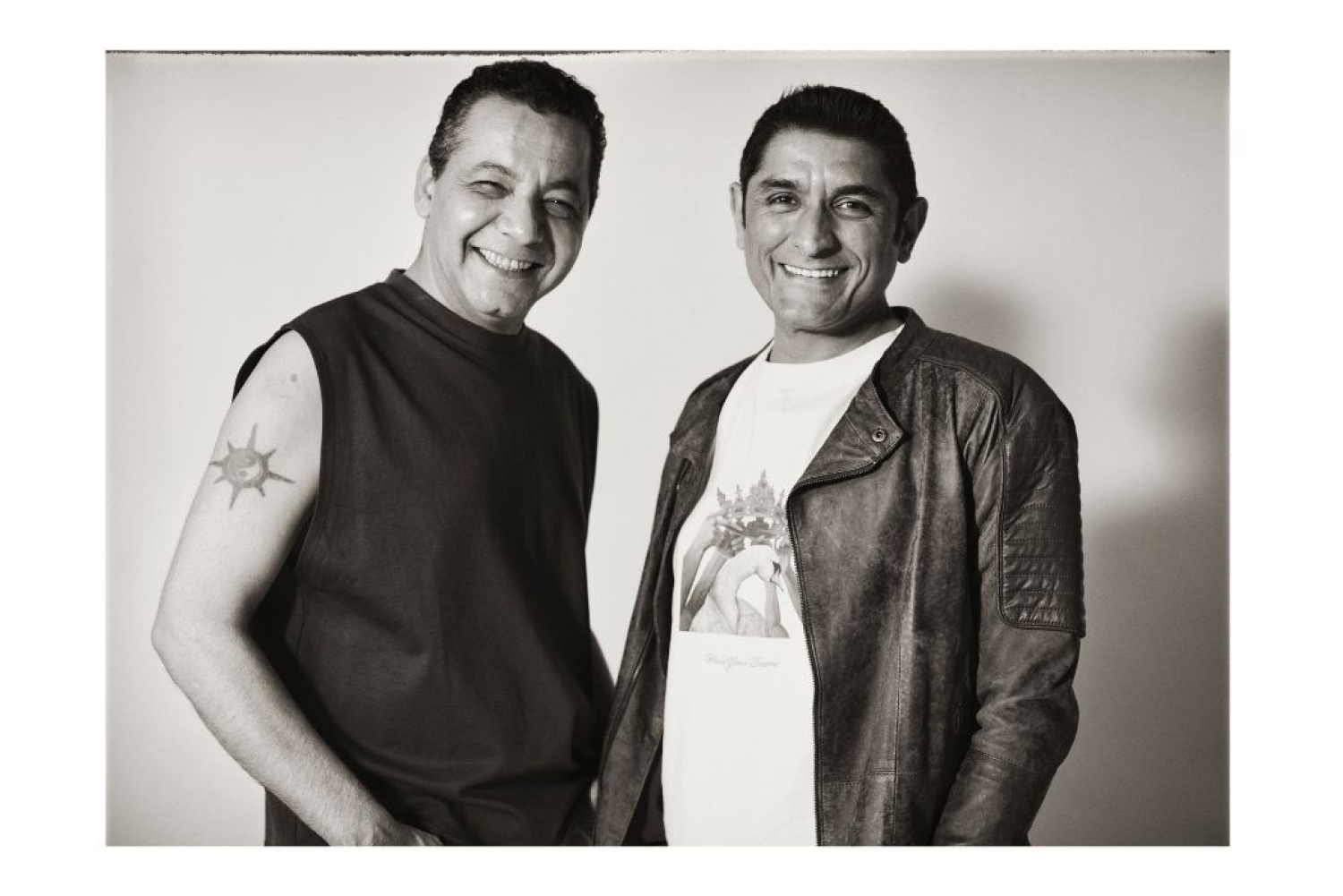
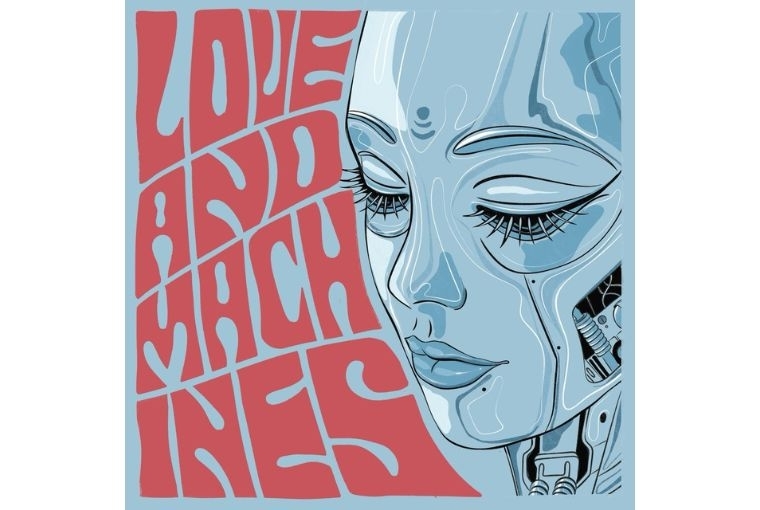
Midival Punditz, the pioneering duo of Gaurav Raina and Tapan Raj, marks twenty five years at the forefront of India’s electronic music scene with their new album, Love & Machines, which is out now. Known for their incredibly eclectic amalgam of traditional Indian sounds with innovative global influences, their music has always been in the space of boundary-breaking experimentation and cultural synthesis. As they return with fresh energy, a renewed creative vision coupled with the same refreshing humility, the album reflects both a retrospective of their illustrious journey and a forward-looking embrace of newer possibilities, reaffirming their solid role as cultural architects in contemporary Indian music.
Over twenty five years of creating, producing and inspiring other musicians, how would you describe your journey and the evolution you both experienced throughout this time?
Well, we’ve known each other for far longer than twenty five years, since we were in 5th grade and went to the same high school. But it was only after college, in 1997, that we started a band. We always knew we wanted to do something with music and finally, around 2001, our first album came out. And now, with our new music, twenty five years later, we are finding ourselves doing similar things to what we did on the first album and that’s a good sign. The only thing changing is that the sounds are fresher and more current. But we still want to represent what we love, which is all traditional forms of Indian music, along with Western club culture-oriented music. Even if we’re doing a ghazal track, the underlying music will likely be quite electronic. It’s always been our signature and we are doing the same thing now.
It’s impressive how you’ve stuck to your sound without getting caught up in current trends. Many other artists in your sphere shifted away from their original styles. In contrast, you stayed true to your art and vision.
It’s about discovering your sound or your calling, as they say and it is so powerful that it’s very tough to go away from it. Our journey from the first album to now has been filled with moments of doubt and deviation. There were times when we thought, ‘Hey, this looks very shiny, let’s go here’. Then we realised, ‘Shit, it didn’t work. Why were we even trying that?’ There have been many moments of meandering in and out of our main space. It’s the high that you keep chasing for the rest of your life because your first album is so innocent and full of honesty and realness. It’s so real that your whole life is spent trying to recreate that magic of the first album. So, honestly, the only way to recreate it is through inward exploration and being honest with yourself in this day and age. That should create the magic. Our intent with this album was clear: let’s not overthink it, let’s feel and let’s go with it. We decided to follow our hearts and see where it takes us.
What was the starting point for your new album, Love & Machines?
It was about capturing experiences. Those experiences have changed. For instance, the previous album consisting of EPs came out in 2019-2020, during which we were going through certain things at that time, in our personal lives and in our other careers we have, along with all our travels. In this current project, we focus on capturing what’s happened between the last album and now. Over a broader spectrum, in the album, you’ll see certain artists that we wanted to really work with along the way. For example, Shubha [Mudgal] ji has been a friend and she’s appreciated our music from the get-go. We even performed together. She mentioned that she had never worked on a Panditz’ track and we realised this was an opportunity we had wanted for the last ten or fifteen years, so we brought her on board. Then there is a track written by Suneet Verma’s mother, Indira Verma, who passed away recently. She was a senior poetess. She had written for us earlier and we wanted to work with her again. It just so happened that she recorded this song with us and sadly, she passed away literally ten days after she heard it. Experiences like that have brought us to this album. There’s certainly a lot of soul in our music. About 80% into the album, when we were writing it, we realised it’s mostly female-driven with contributions from Shruti Pathak, Shubha ji, Hansika Pareek, Malini Awasthi. Then we got something from Papon and Vishal Vaid to make it more balanced.
But in all these years, has your creative process evolved or stayed the same in creating the music that you play?
The tools are changing. As much as people are averse to using tech and AI, we find them very useful. The fact that we can use our devices to exchange notes easier and send samples more easily. If we hear something on the radio, even in the car, we can record it on our phones, go home and strip it down to different layers. We can separate vocals and beats just to create ideas; the process has become more evolved and accessible. We are both pretty nerdy about such things. Therefore, we get to see all the evolutions in the tools and we quickly explore and start using them. The tools have also allowed us to become more collaborative. We’re lucky to live in India and Delhi, where there are many people from the folk music or classical world who like to collaborate with us. For instance, we could do a recording where someone is in Bombay, they go to a studio and we get a live link with the studio. So we’re actually there, hearing exactly what they’re doing and talking to them in real-time, while the recording is done on the studio end, which we receive later. We have done orchestral recordings in Budapest with an orchestra sitting here in real-time. So, technology has really helped. It’s really simplified things but the way we produce or write music remains similar.
What are your thoughts on the music coming out of India?
It’s an amazing time for the Indian scene because the occupation of a musician has a much higher standing now. I’m giving career advice to our friends whose children want to pursue music as a career. A mother is choosing this for her child, which wasn’t the case before, when going to IIT was the norm. We had to satisfy our parents back in the day. They were concerned that if things didn’t work out, we should have some backup. There’s a whole breed of artists that have emerged. They are remarkably talented singers and songwriters, producing music of international quality. We’re in a very interesting space now. Senior people at labels, say that ‘Indian artists are very talented but excel at copying Western pop stars’. This is especially true for the younger generation. Apeing is a progression toward finding one’s own sound. Young artists, like Komorebi and Kavya [Trehan], among others, are navigating a noisy landscape and working hard to find their identities. Now, promoters, venues, record labels and mediums like OTT platforms are supporting independent and electronic music. When breakout stars like Hanumankind, Divine from Gully Boy, Ankur Tewari and Udyan [Sagar] from Nucleya emerge, they push the whole movement forward.
What’s next after twenty five years? What will the next era of Midival Punditz look like?
We should make more albums before we get too old. The process of creating an album truly brings us a great deal of joy and inner happiness. You feel good about yourself. You feel good about your existence. It gives you a purpose. Because that’s where we are in our lives. We’re settled. We know who we are. We’ve answered the crucial questions, hopefully. We’re going to intentionally pay more attention to our art and create more music… In the initial phases, we were like, ‘Let’s do singles or let’s do EPs’. That’s the new world out there, which is true. But at the same time, we realised that we get closer when we’re making an album since we have such different lives. We learn what’s going on in each other’s lives and that seeps into the music. Then the whole thing builds up. We’ve found that this style of producing and releasing music through an album is a more honest version of us than what can be encapsulated in an EP or a single. When you’re making a single, there’s so much concentration on one song. But when you’re making an album, you feel free. You think, ‘Let’s make this one too,’ and then you finally create twenty things. You sit down, take a week off and then find the ten gems in that. Suddenly, you have this gamut and spectrum of expression where all your feelings are taken care of.
Words Hansika Lohani
Photography Dwaipayan Mazumdar
This article is from our November 2025 Bookazine. For more such stories, have a look at our Bookazines here.