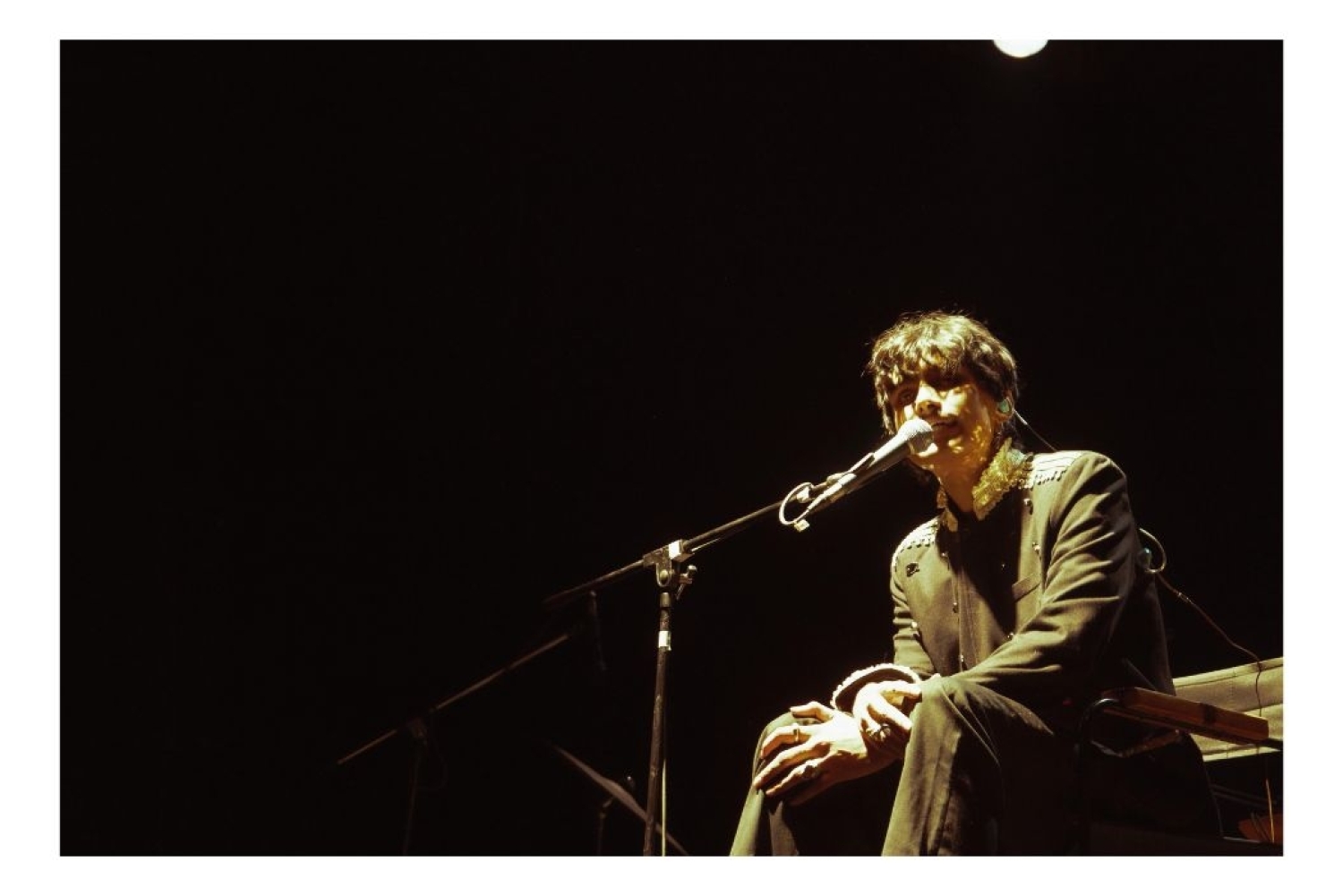
Image Courtesy | Dasvi Manzeela
Image Courtesy | Dasvi Manzeela
‘You can never predict what the city has to offer.’ shauharty is talking about Delhi, but he could just as easily be describing his own discography. Delhi has seen the teenager who’d just lied to his parents about college become one of the most compelling Indie artists in the country. He spent three years chasing gigs, meeting artists, building relationships, and making music with near-religious devotion. By the time college ended, his attendance reportedly sat at seven per cent. His career, meanwhile, had taken off.
At 22 today, the Assam-born artist is taking Farookh: Ek Khoj – The Tour 2026 across India, riding on the momentum of his latest release. With 14 conceptual tracks, his sophomore mixtape Farookh has been his longest project yet. At its centre is its namesake, a character shauharty has carried with him for years before finally turning him into a full-fledged project. Depending on the song, he might be doing rap, maybe jazz, or a psychedelic track or old school hip-hop. His music pulls from unlikely influences, and the result is a body of work that feels intensely personal yet impossible to categorise. Part alter ego, part mirror, Farookh became a way to unpack the contradictions that run through his music: the Northeast and Delhi, vulnerability and bravado, cult appeal and growing visibility, the personal and the political.
He is not interested in going mainstream. What he is interested in is finding more and more people with taste, and taking the music to them, city by city. I spoke with him one hour before a show, and one day before his multi-city India tour began.
Tell me about your journey into music, from the place you grew up to moving to Delhi and finding your voice as an artist.
I grew up in the northeast in Assam primarily and started making music in high school. I was also learning how to develop a sound, how to sound like myself and not mimic someone else and being comfortable with my voice because that's a very it's a qualm of every artist that they have to overcome in their initial stages to learn to accept their voice. When I was growing up in Assam, I had been introduced to hip hop in India, and I realised that my city has nothing around [hip hop] like this. I had to move somewhere where the culture is popping for me to make something out of this. I just lied to my parents, moved to Delhi for college, gave the entrance exam and made music the entire three years of college and ended up with 7 percent attendance.
Delhi is one of the most surreal places you can go to. You can never predict what the city has to offer. For me everything was tactical from the get-go. I knew how to network and market myself. Boxout Wednesdays was my first gig in Delhi, where I met a bunch of people, some idols, some acquaintances, some friends. Once I was out there in Delhi, it was fairly easy for me because all it takes is you to land up at the right place at the right time.
Farookh was years in the making as a persona before it became a project. At what point did you realise the character had outgrown being just a concept and needed to become an album?
Farookh explores the duality of a man, a misfit in a country like India and a city like Delhi. The entire project has themes of ego, sex, identity, gender and trauma and with all of that inside me, I needed to portray it through the lens of a character because with characters, you need to have world-building going on, and I want to build a world every time I drop a project which is going to adapt to a character and be the character for the process. Even to help myself make that kind of music, it's almost like method acting in that manner. I had been calling myself Farookh ever since I started making music because in Urdu it means the one who can distinguish the wrong from the right and the right from the wrong; the idea of duality was centred around that entire concept, and that's how it began. From concept to creation, this project took me around 2 years. [I] started making a lot of demos initially in the first 6 months, and everything I’d make I scrapped in the next 6 months and started a project again after listening to this band called Common Saints. At one point, I felt like I was in a deeper vulnerable state of mind, [I] was almost depressed for a bit, and all of that evoked a sense of: how do I put this barrage of emotions, take them and make meaning out of it? And that’s how music is made.
You sampled Barsha Rani Bishaya's CAA speech in Taint Lassos. That's a very deliberate political choice in a project that's largely read as personal. Where does the political sit for you, in art?
The song was about me being scared of going back home to the northeast and seeing conflict where I grew up. With my family, I've seen a lot of conflict and a lot of police activity, so the sample that I took was from the CAA protests that happened when I was in 10th grade and saw a bus being set on fire, protesters being killed and that was a really traumatizing event in my life; the song is about the representation of a northeastern while still being afraid of being going back home you know. I won't call myself a political rapper by any means. I'm just talking about the personal, which is political.
You've said previously that you're happy with a small set of listeners who are ‘ready to kill’ for you. But Farookh is already finding a larger listenership, especially with the tour underway. Have your ambitions for reach changed?
The ambitions for reach have not changed. I'm still F*ck Pop Culture, I'm still F*ck Mainstream; it's just about doing your own thing, and because there's so much youth in this country with taste, all I need to do is find the right people. I believe that even a small majority listening to the music that I make will still be a lot of people, so my thing with reach has not changed, but trying to find more people who are alike in terms of taste has definitely changed significantly. I don't want to gain a huge mass because then they start to demand things, and the relationship becomes transactional. I am at a position where they [listeners] should be willing to accept me for what I make because it could be anything. I don't wanna box myself into a particular category. I might drop a country album tomorrow, who knows?
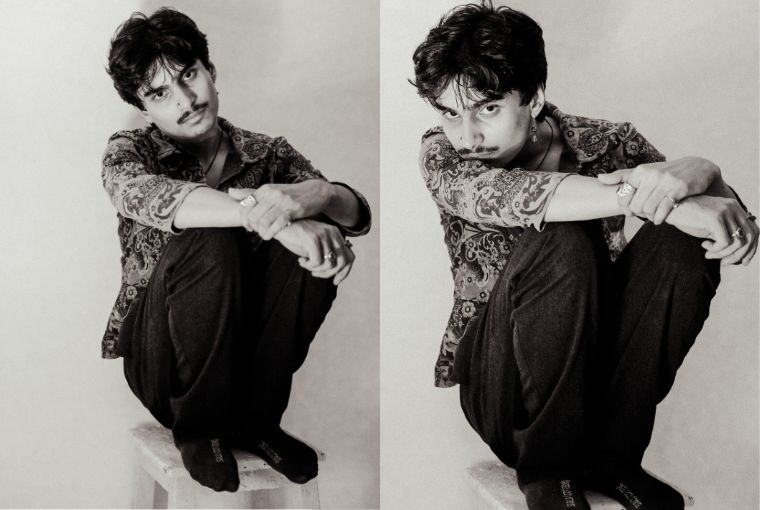
Image Courtesy | Priya Panchwadkar
You move between many genres: jazz, psychedelic hip-hop, funk, indie songwriting, sometimes within a single track, but ‘Alternative hip-hop’ is the tag that follows you everywhere. How do you feel about that label?
Honestly, sometimes it icks me out, and it used to ick me out more before, but now I feel like if somebody has already labelled me as this alternative artist, then I wanna be the flag bearer of it. I'm making different, experimental yet very, very accessible music, and if people still call it alternative, then I would want to be alternative and still be like: on your face!
Walk me through what a typical writing session looks like for you. Do you start with the beat, a line, a feeling?
It starts with an idea, I observe something or I read something. I might read a word, or I might read about someone, like recently I was reading about Daniel Johnston after Lifafa told me about him at a party, and I found out a lot of things about how songwriting can be so pure, and I'm the kind of guy who takes a lot of direct and indirect influences and makes something of his own. The process starts with an idea and then blooms into everything else. The writing is secondary if the idea is not strong enough.
What are you reading, watching, and listening to right now?
My current obsession is reading about the substance abuse in the jazz community from the late 50s or 60s with Coltrane and Miles Davis. I have also been reading a book called Freakonomics, and it’s all fun. You never know where you might see a Freakonomics influence on one of my songs.
Who in the current Indian underground music scene are you excited about right now?
Everybody is doing great. From Dhanji to GHILDIYAL to Frappe (Ash) to EXCISE DEPT, Navgun to ARSLAN, one of my family producers, everyone is doing incredibly. Even Karshni, Green Park, Rounak Maiti, and Dohnraj are all incredible, and it's just about being aware of what you are doing and what your goal is.
Madheera is the moment people point to as the breakthrough. But what did you feel was the moment or a sign that the music reached someone the way you intended?
I have been very privileged and lucky to have the kind of fan base I do. From the get-go, they have always been very cult and have shown up for gigs. I used to go to gigs of big artists and there was no one for them there but for my gigs people showed up. Even if fifty people showed up in my initial gigs, it was a big deal for me, and then Madheera caught up, the streams started looking nice, and there were a lot of cosigns too. Yashraj cosigned me, and when you get co-signed by more and more people in the industry, you realise that the industry is making space for you, and you have to capitalise on the moment, and that is exactly what I intended to do. But what really is a breakthrough? I broke through the first time I picked up a mic because I broke through my fear of doing this.
You've been vocal about wanting to change things for Indian music broadly. What's the version of Indian music you're working towards?
The version is not to listen to the business side of things. It's always the art that exists first. I understand it's a tough life and earning money is difficult, but believe me when I say this, I am always in a money crunch. But because of whatever I am doing, I am making something which will eventually lead me to hopefully have a good life financially. It might just all be stupid, but I can't sleep at night if I don't do it this way. I am just trying to make a scene for people who don't get representation, who don't feel like they exist in this space or this world, and I believe I am the voice of our generation.
Anything else you’re working on?
I am working on two albums. I am working on a jazz album, and I am working on Madheera’s sequel with ARSLAN, and both of them should hopefully be out next year.
Words Nidhi Soni
Date 26.6.2026