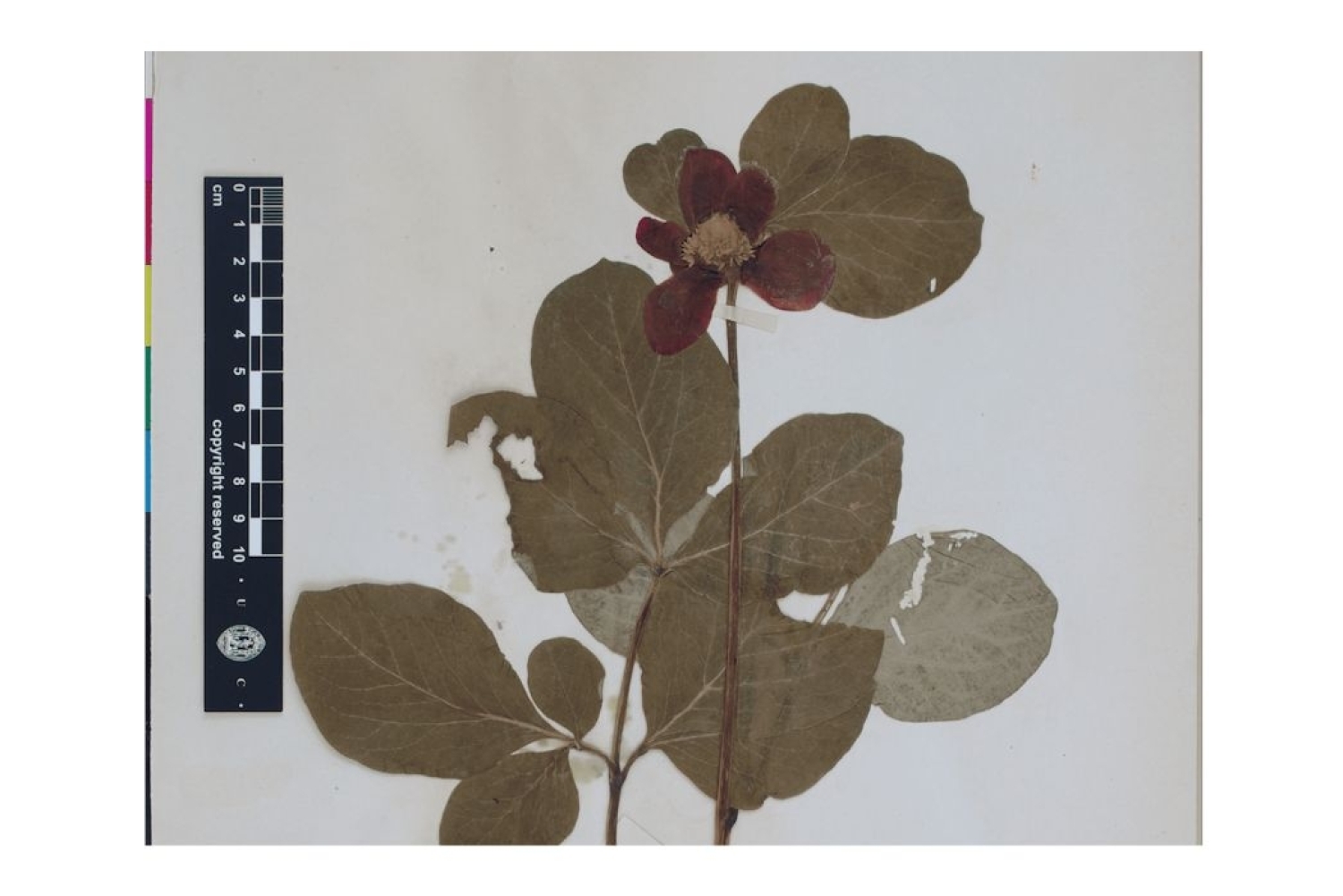
Still from How To Download A Forest
Still from How To Download A Forest
Annette Jacob is a Mumbai-based filmmaker/animator whose practice spans documentary filmmaking, video journalism, installations, illustrations and animation. In her hands, a forgotten wig balanced on a ball of newspaper, a pressed botanical specimen, a family photograph, or an expanse of forest are archival but not static;they are restless matter capable of afterlives as they pass from tangible to digital mediums. Her short film, How to Download a Forest, follows the endless human project of cataloguing the natural world. The film reflects Annette’s growing fascination with human and non-human relationships, with ways of seeing that decentre the human gaze and unsettle the logic of the Anthropocene. Since premiering at the FIPADOC festival in France, the film has travelled to the Beldocs Festival in Serbia and found a home in Labocine's archive issue. If two signposts are guiding her work, she says, they are archives and ‘life as digital form.’ The former is expansive enough to hold family histories, inherited objects, and ecological records alike. The latter asks what becomes of these things once they enter the rabbit hole of the digital.
In our conversation, we unpacked the ideas connecting her work: archives, ecology, grief, digital afterlives, and the dogged human impulse to preserve what can never be fully contained.
What first drew you toward visual art?
I grew up for the most part in Delhi. I'm from Kerala, but my father's work took us to Delhi, and that's where I went to school and college. I did my undergrad in psychology, which I decided not to pursue and somehow was completely transfixed by films, and that is how I got into it [visual art]. I didn't really know anything about filmmaking before, and then I studied it, and got into it commercially a little bit, but mostly into non-fiction stuff. That's always been what I've been more drawn to.
You wear many hats: documentary, animation, illustration, and installation. How did you get into these fields?
So filmmaking is what I'm trained in; I have two master’s in filmmaking and it's what I do professionally but I've always enjoyed playing and that's how I came into animation. I've always been drawn to archives, family archives specifically and for a creative person, family archives is truly like a gold mine because you have all of this material that someone has collected for you and you have a medium to use them in play. I started looking at my family photographs and started playing with them. I didn't know how to use Photoshop, so I learned it as I was animating and truly, it was just a free associative intuitive making; there was no real method behind it. I was just cutting, pasting, moving things around, trying to take something inanimate and animate it and a photograph really worked well for that medium. Because I'm not trained in animation, I was truly just f*cking around and even with the sounds, I would just record myself on my phone and then change the pitch on Premiere Pro, and that's how I just started animating. Illustration has been a very small part of my creative mediums; I made four large paintings, and that was the extent of my painting career!
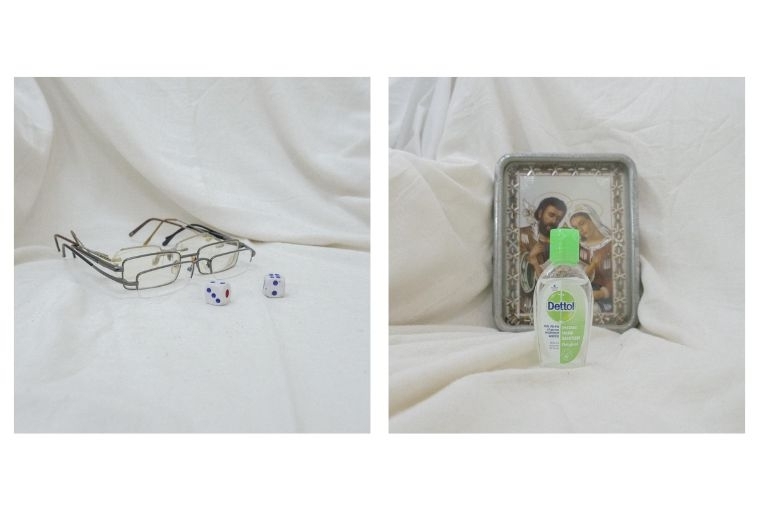
Ek Chipkali
Talk to me about how you work with archival material.
For my animations, especially the ones to do with family photographs, there's truly no idea that I sit down with it's really it's something that comes through during the process. I'm really driven by shapes and sounds and colours; very basic, primal figures of motivation and then the meaning comes later. But also, photographs have all this evidence about your own history, a history that you were not directly a part of and so it's also deciphering that like my grandfather had all these objects that now I'm animating, objects in the photograph that I'm cutting around and that gives me clues into who I am and a lot of the archival material that I have worked with is my paternal grandfather's and having worked with all of his material I realize now that I'm basically him because I have the same interests as him, I have the same need to collect objects as him so it is a little bit of connecting yourself back in time to something else before you but connected to you. I was also feeling a lack of meaning because too much intuitive free-associative creating is fun but you need meaning to that method as well, and I think maybe seven years of working playing with stuff, I now am very deeply eager to embed my work in some meaning. Maybe it's a little counterproductive because I now focus a lot on: oh, what does this mean, let me research and connect it to socio-economic things outside of my own independent existence, but then I also lose that intuitive way of working, so it's a double-edged sword in some way.
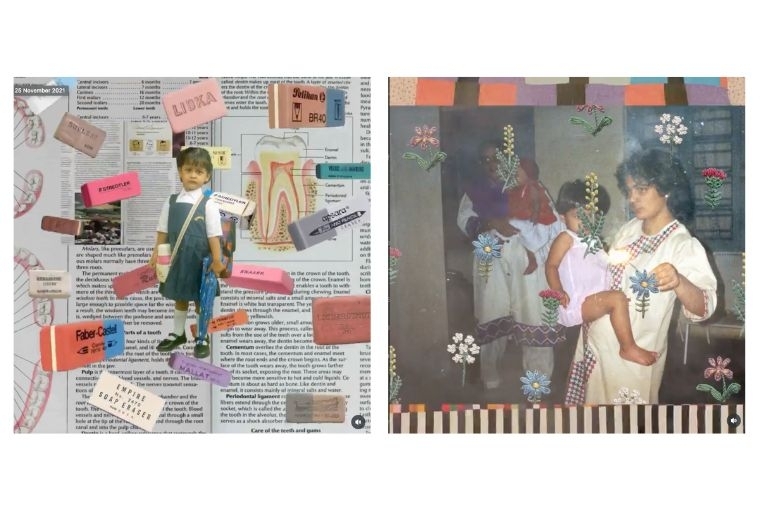
L: First Day at School R: Yummy Cigarettes
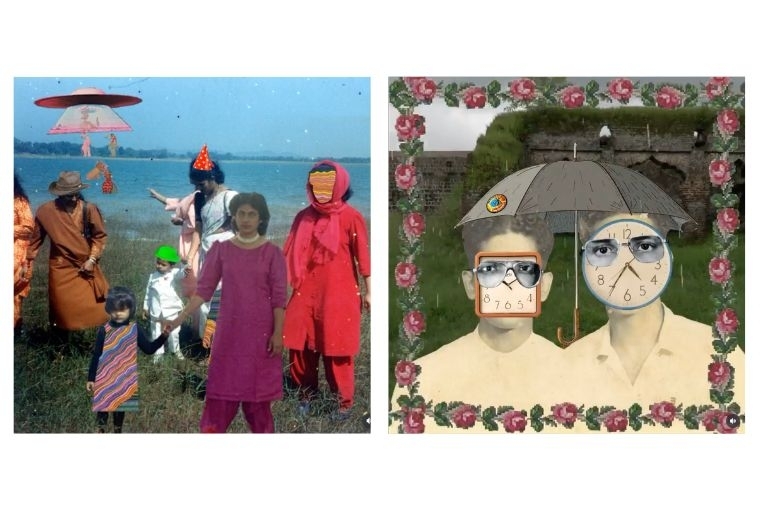
L: Picnic R: Skylab
In How to Download a Forest, what was the original spark for the film? Did you begin with a political idea, a visual idea, or a personal one in How to Download a Forest?
I made this film as my graduation film for my master's program. I was curious to understand the movement of ecology between the coloniser and the colonised. Vegetal land was identified in colonies and brought back to be assessed for its value and that's how botanical gardens exist, with vegetation being assessed for its value and reproduction within that existing climate. Because I was in Portugal, which was a major coloniser of the world, I was interested to look into this and went to the botanical garden in Coimbra and right next to it was a herbarium. I also had the boundaries of it being a graduation film, so I didn't have a lot of time to make this film. I just had two to three months and I didn't want to make a soft film about something that is so historically heavy. So I ended up at the herbarium and I decided to make my film about the archiving of the natural world and that became the central question of my film.
I was interested in how we are always trying to archive the world, always trying to understand the world and gather all information about it, like botany and taxonomy, and then control it. The film really became about: oh, we're creating this archive of the world and what happens when the archive becomes larger than the world? The people I was working with were scientists and botanists and researchers. I was really interested in their work because I like that scientists working with the natural world are interested in looking outside and as an artist, you're kind of always looking inside. I was happy to have this other point of view and just the precise tender work that they do, there's so much care.
The title How to Download a Forest is striking. What does that phrase mean to you?
A herbarium by itself is such an interesting place. It's like a time capsule; they have plant specimens from the 18th century to the specimens that they collected last week. They were in the process of digitising all of their specimens, and they have around, I don't know, 5,00,000 specimens in the herbarium, and it's crazy because that entire building is huge, it's probably like two floors, but all of that material digitised together does not even take up a few GBs worth of space. I was very interested in this compression of all of this material into digital files and that's how the title of the film emerged for me. It goes back to the original question of: can we learn everything about the world? Can we archive everything? Can we find the last plant specimen to press and put into a herbarium? And the answer is no, like you can't actually ever download the forest, it's impossible and no matter how much you try certain things, the world will just fall outside of your grasp.
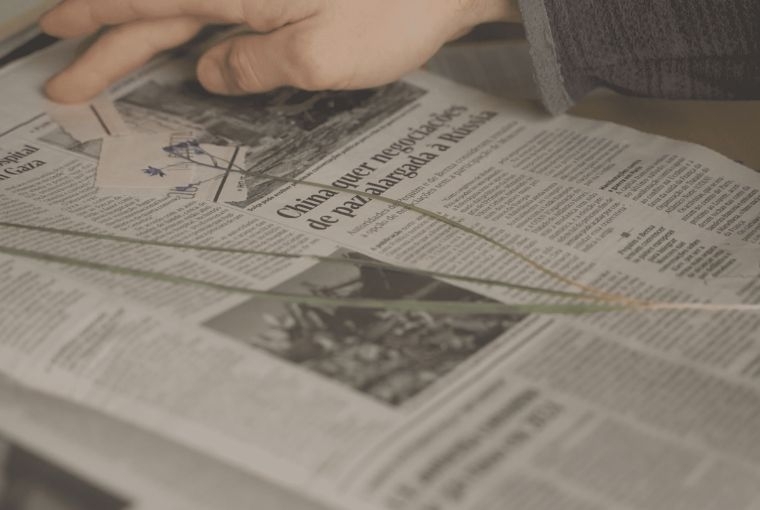
Still from How To Download A Forest
What are you working on next, and what format will it take?
I'm trying to develop a very short film; it's a continuation of my film Digital Fantasy, which was about my mother's wig. Then another film [I'm working on] about grief called After Me, where my mother and I are trying to prepare for the eventuality of her death and the third film that I'm working on is called Link to Funeral and it's about my grandmother who passed away last year and her five-hour-long funeral being live-streamed on YouTube. I'm trying to use that footage to turn it into a short film about death being digitised and what it means for my grandmother, who had no existence on the internet whatsoever and now her soul exists in her funeral video. Another project that I'm trying to develop is, so I used to live in Navi Mumbai until a month ago and 60 to 70 per cent of all of India's AI data centres are being constructed there, about documenting that entire process.
Words Nidhi Soni
Date 3.7.2026