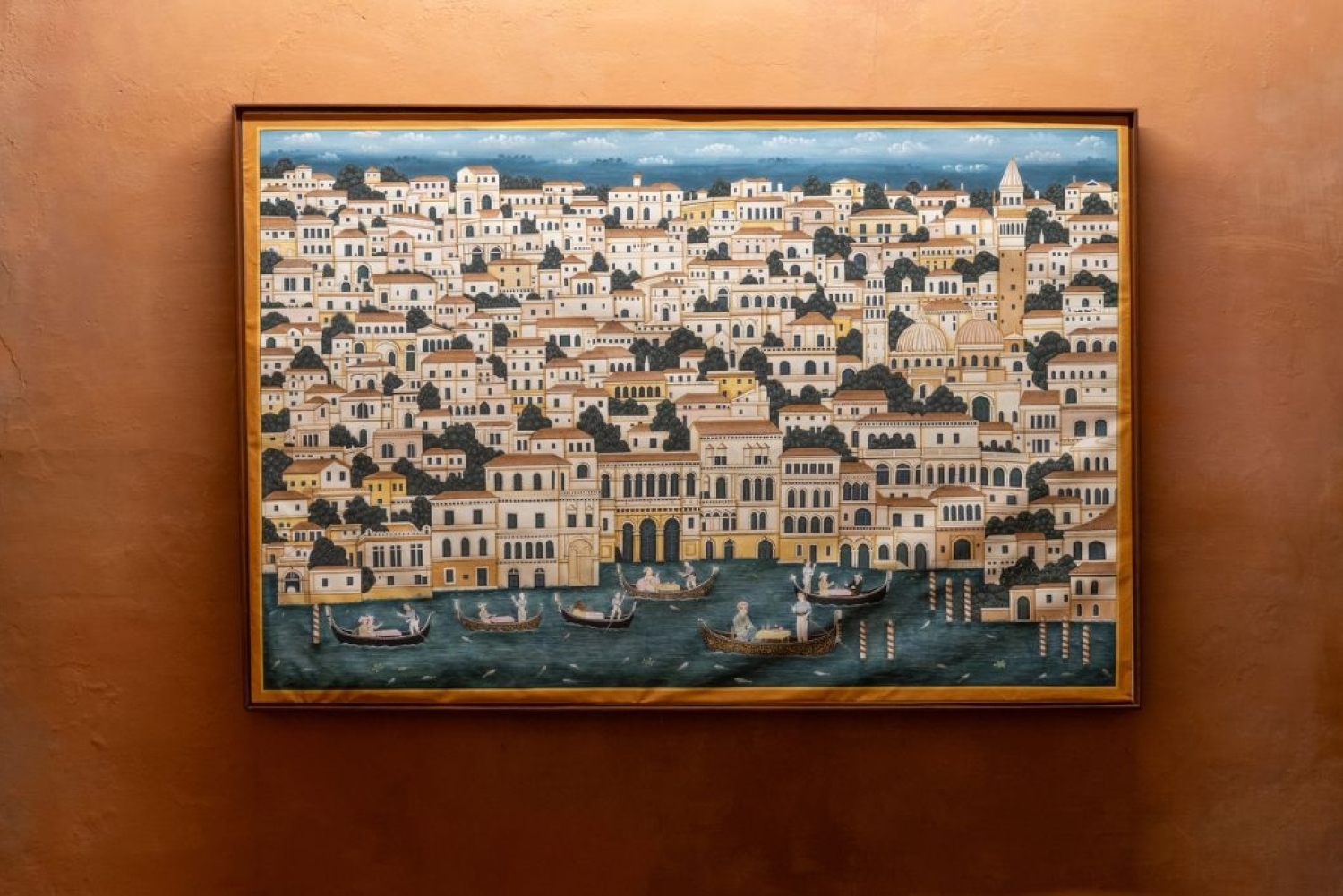
When Pooja Singhal began commissioning Pichwai paintings in 2009, she found an art form in quiet crisis. Patronage was thinning, printed devotional imagery was replacing hand-painted work, and the guru-shishya system that once produced complete masterworks had been reduced to fragments of skill scattered among artists who could no longer finish a painting alone. Her initial thought was an act of preservation, but it became Atelier Pichwai Tradition & Beyond, a collaborative model that rebuilt the ecosystem from the ground up and now sustains a community of nearly 4,000 artists.
In the years since, Pooja has taken Pichwai far beyond its traditional register, stripping it to monochrome in her Greyscale series, framing it within jharokha installations at India Art Fair, and mapping its temple architecture onto the canals of Venice for a show at Palazzo Barbaro. After serving on the Tate Museum's Southeast Asian Acquisitions Committee, she has recently been invited to join the board of another major Western institution. We spoke to her about finding new audiences for an old visual language, and what it means to carry a temple tradition into the boardrooms of global museums.
You grew up around collectors and artisans, but atelier Pichwai Tradition & Beyond didn't start until 2015. What took so long, and what was the moment that made you formalise it?
My engagement with Pichwai began much earlier than the formal establishment of the atelier. It was around 2009 when I became increasingly aware that while the artistic tradition itself remained extraordinary and the ecosystem around it had gradually weakened. Patronage had declined, printed devotional imagery had become widespread, and younger audiences had very little engagement with the practice.
As I began commissioning works, I realised that the guru-shishya tradition had weakened to the point where a single artist was no longer able to execute an entire Pichwai at the level of skill the tradition once demanded. Artists possessed different areas of expertise, but very few had retained the complete range of skills required to create a work from start to finish. [This realisation led to the forming of the atelier.]
Drawing on my entrepreneurial and resource planning background, I brought together artists with complementary skill sets, allowing them to work collaboratively on a single painting. The atelier became a way of rebuilding an artistic ecosystem, producing works of the highest quality (using traditional paint materials, methodology) while creating a stable livelihood for the artists.
The atelier model you built replaces the old father-son transmission of skill with a collaborative structure. What did you have to unlearn about how Pichwai was traditionally made to build that system?
The pichwai guru-shishya tradition is centuries old, [where the guru was traditionally the father and the shishya the son]. Children embarked upon quite a rigorous system of learning at the age of seven, progressing through different stages, from mixing colours and mastering the geometry of Shrinathji's face to drawing precise lines and applying gold and silver foil.
As the art form declined, fewer young people were willing to commit to that level of discipline, while many seeked alternate ways to generate income before seeing this training through. As a result, while later generations of artists remained skilled, they often did not receive the same depth of training as those before them. By the time I became involved in reviving Pichwai art, the economic ecosystem around the tradition had weakened significantly, with many artists having left the profession altogether, working as vegetable vendors or running tea stalls.
The biggest shift that had to be undertaken was not in the skill sets, but in the mindset. Traditionally, one father-son duo would create a single painting. The atelier brought together artists with different areas of expertise, enabling them to collaborate on a single work. The opportunity to return to painting with a stable livelihood made them receptive to new ways of working together. This collaborative approach has also made possible to undertake the reimaginings and interventions that have defined my atelier's practice, allowing me to rethink both how the work is made and the new aesthetic directions it could take.
The Greyscale series strips a famously colour-driven form of Pichwai down to monochrome. Did it take time to find a place with people who saw colour as non-negotiable to what Pichwai is?
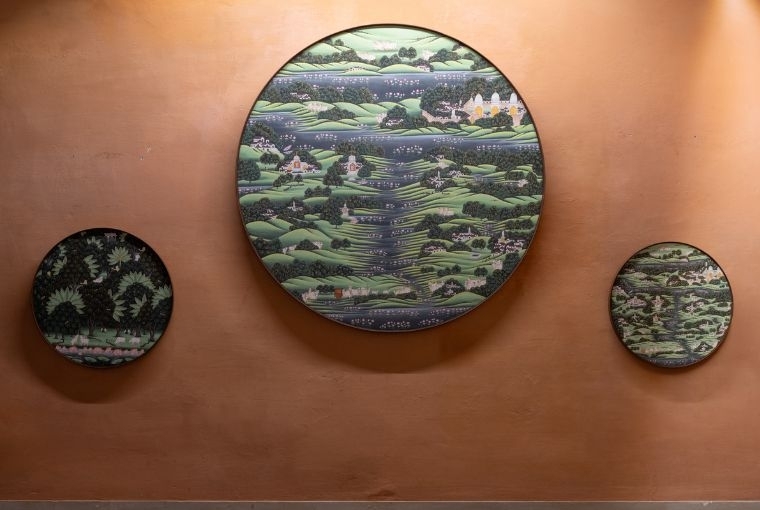
My personal collecting journey in Indian contemporary art was the inspiration behind the Greyscale series. I was drawn to black-and-white photography, sketches, and the works of artists such as Zarina Hashmi and Nasreen Mohamedi. While I loved the layers and luminous colours of Pichwai, I found myself searching for a similar monochromatic visual language within the [pichwai] tradition.
I began discussing the idea of greyscale with the artists, but it was difficult for them to imagine Pichwai without colour. We eventually photographed a selection of existing works in black and white so I could experience them without their colour palette, and that marked the birth of the Greyscale category. The works found collectors quite naturally almost immediately, as there was already an audience, (myself included), that was drawn to monochromes, line drawings and photography. Greyscale introduced Pichwai into a visual language those collectors already appreciated.
The series was first presented at GallerySKE in the show The Unseen Divine. We also removed the central religious iconography from many of the works, while retaining the acts of reverence. This allowed viewers to bring their own interpretation of the divine to the paintings.
Architecture has always been part of Pichwai, from the haveli of Shrinathji to its temple maps. What led you to reinterpret that architectural language through the jharokha installations at India Art Fair and later in Venice?
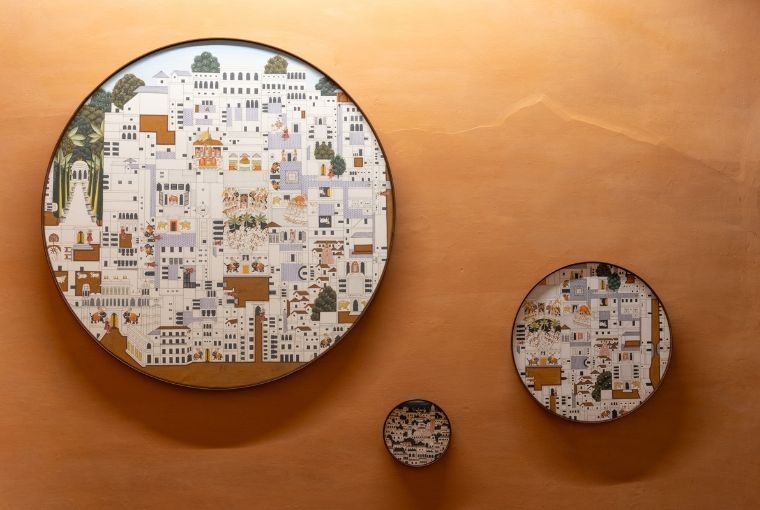
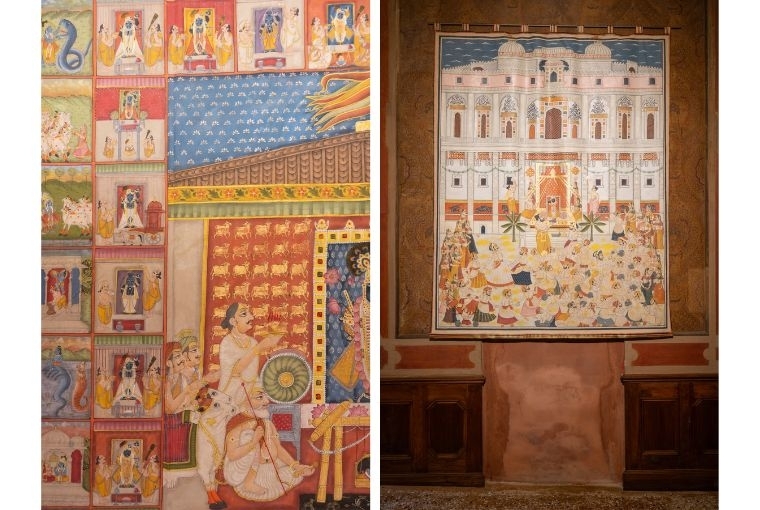
Architecture has always been part of the visual language of Pichwai: the temple maps, the haveli of Shrinathji, its gateways, courtyards and jharokhas have long been central to the way the tradition depicts sacred space. The jharokha framed works at the India Art Fair came directly from that architectural vocabulary, I wanted the paintings to be experienced in relation to the spaces they originally belonged to. Framing the works within jharokhas [inspired by the haveli of Shrinathji], added another layer of context and depth, allowing audiences to encounter the works within an architectural setting that was inherent to the tradition.
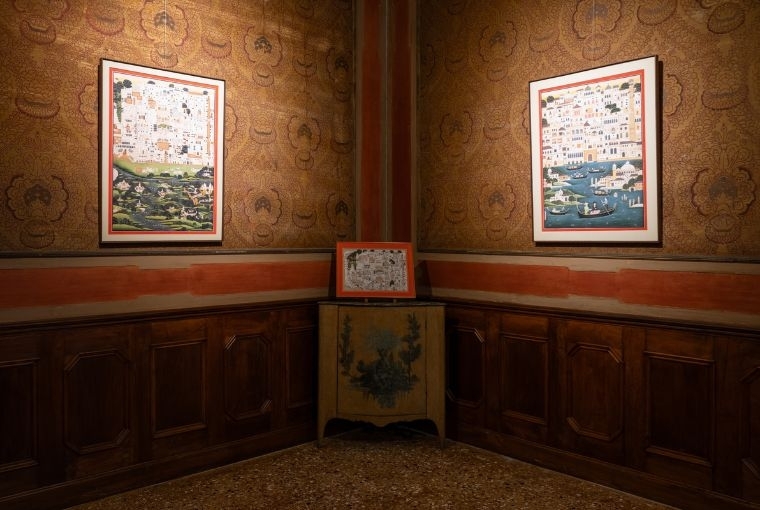
The same architectural language became the starting point for From India to Venice. The temple maps inspired the way we approached Venice, while our research into the city, including the architectural cityscapes of Canaletto, informed the visual development of the works. Venice's canals, palazzos and skyline were translated through the visual language of Pichwai. It was fascinating to see how an architectural tradition that evolved around the haveli of Shrinathji could also be used to interpret another historic city with such a rich identity.
Palazzo Barbaro sits on the Grand Canal, and you've used Pichwai's temple-map tradition to reimagine Venice's own canals and skyline. What was it about mapping Shrinathji's world onto Venice?
I was drawn to the surprisingly many parallels between Nathdwara and Venice. Both are historic cities whose identities have been shaped by community and centuries of lived history. In Pichwai, temple maps capture not only the haveli of Shrinathji but also the town that grew around it, its streets and people animate it. Venice carries a similar sense of place, where canals, bridges and public spaces shape the experience of the city. Seeing those similarities opened up the possibility of understanding how the visual language of Pichwai could interpret another historic city while remaining completely authentic to its own history and structure.
In the process, I found myself looking at both Nathdwara and Venice differently. The shared histories between the two cities were what first drew me to the project. At the same time, I felt that for the atelier, and for the wider community of artists, to sustain itself over generations, patronage had to continue expanding beyond the traditional realms of the art form. The revival of Pichwai in India has, in many ways, come full circle [with it now being a household name]. To create opportunities for a community of nearly 4,000 artists, I felt it was important to explore how this centuries-old visual language could interpret entirely new subjects. That became one of the driving ideas behind bringing the language of Shrinathji to Venice.
You are already a member of the Tate Museum's Southeast Asian Acquisitions Committee, and have recently been invited to join the committee of another major American cultural institution. What does a Western institution built on modernism have to learn from a temple tradition like Pichwai, and what do you see your role as translator, advocate, something else?
Traditional Indian art practices have an extraordinarily rich visual language and history, yet they are still often viewed through the lens of craft rather than as artistic practices with their own conceptual and visual depth. At the same time, there is a growing interest amongst collectors, curators and cultural institutions in engaging with these traditions through stronger research, curatorial direction and collaboration.
My work has always centred on creating new contexts for Pichwai and other traditional Indian art forms, while remaining closely connected to ancient practices. The focus has been on expanding how the tradition is positioned and experienced internationally, while retaining its ethos. I see my role as creating opportunities for that conversation to continue, and whether through exhibitions or institutional engagement, the objective remains the same: to deepen the understanding of the artistic discipline, cultural histories and knowledge systems that underpin traditions. The more these traditions are experienced, the greater the opportunity to appreciate them for their finesse and enduring relevance.
Words Hansika Lohani
Date 9.7.2026
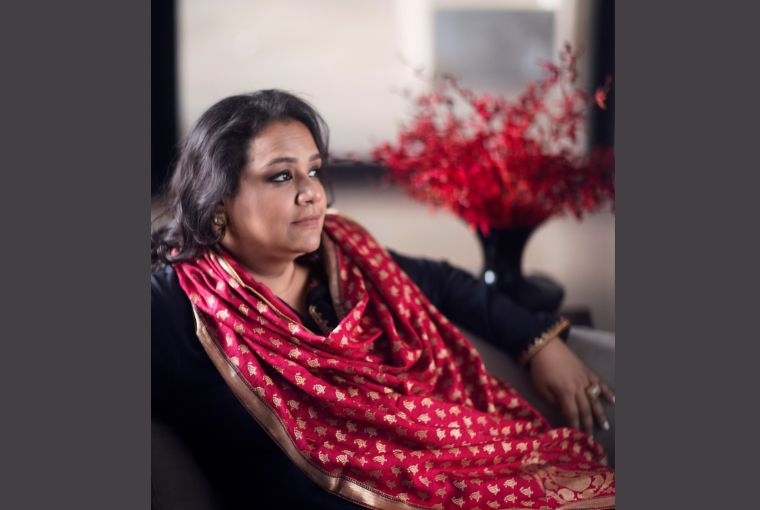
Pooja Singhal