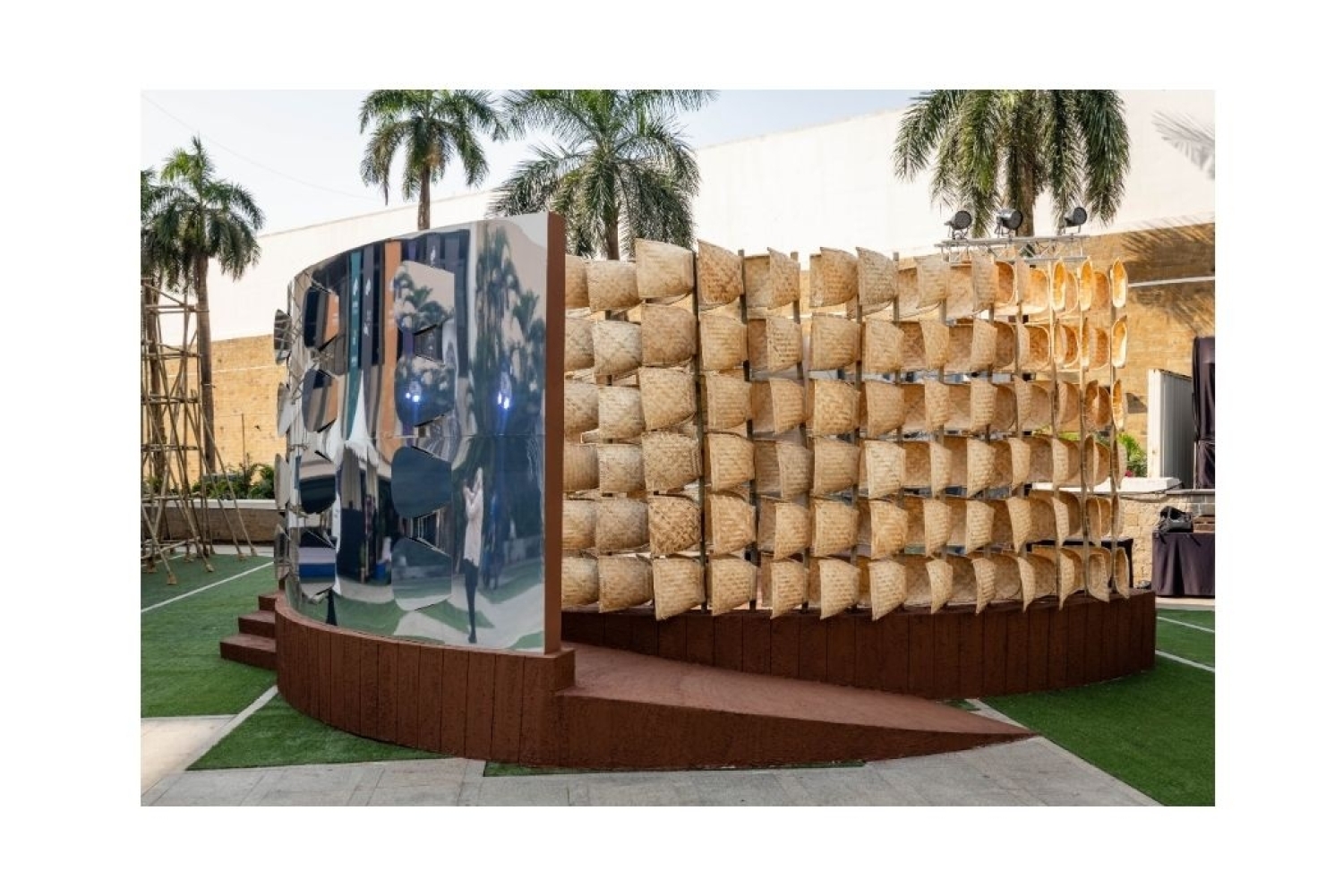
Sift by Suchi Reddy
Sift by Suchi Reddy
The second edition of the Architectural Design Film Festival (ADFF:STIR Mumbai) unfolded last weekend with exemplary film curation that demystified architecture and design, rendering these fields vibrantly accessible to all, as architecture ought to be. A thoughtfully selected lineup of documentaries, 3D screenings and interdisciplinary works, alongside the innovative Pavilion Park curated by Aric Chen, transformed cinematic narratives into public provocations on Mumbai's urban stories. This curation not only bridged cinema with everyday spatial experience but also invited diverse voices to reimagine Mumbai's dynamism through pavilions that evoked cacophony, diaphanous veils and levitated wood.
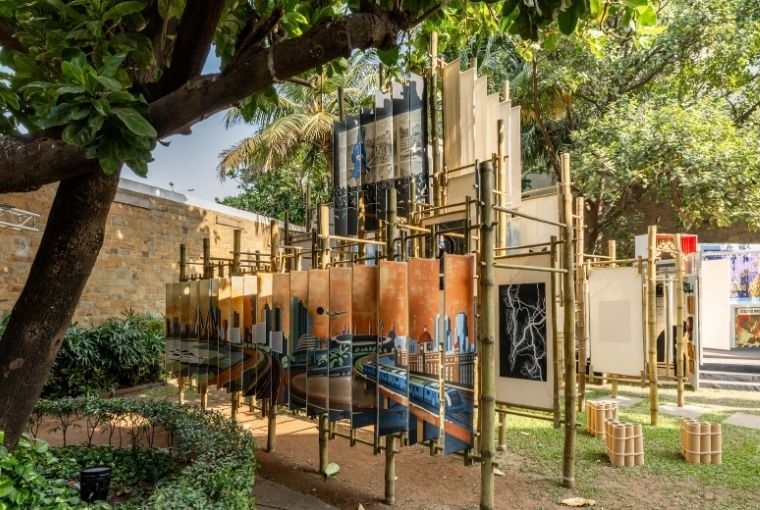
The Script by Field Architects
Such immersive encounters underscored design's democratic potential, fostering conversations that lingered beyond the screen. Quotes below from creative minds like curator Aric Chen, festival curator Samta Nadeem, and ADFF founder Kyle Bergman offer deeper insights into the festival's vision and impact.
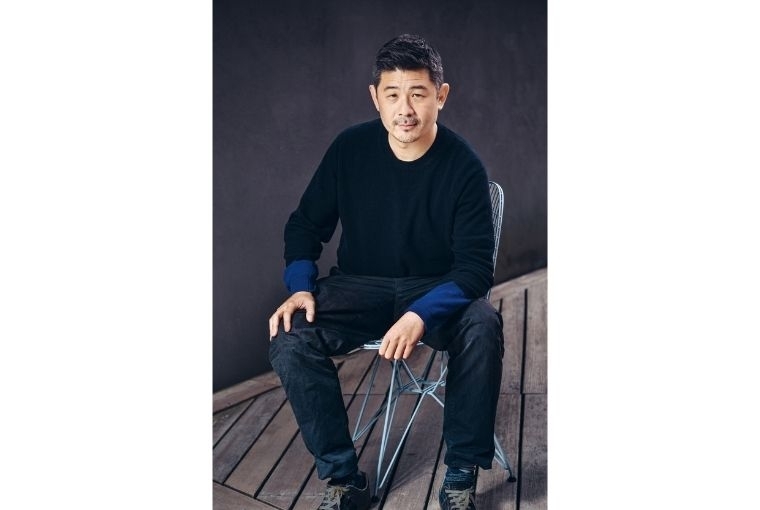
Aric Chen
Aric Chen
Curator, Pavilion Park at ADFF
'I think everyone is fascinated by and looking at India right now, and rightly so. I mean, it’s such an incredibly dynamic place, which I think, for the rest of the world, offers a lot of meaningful new perspectives. And really, throughout the world right now, we’re looking at a lot of profound shifts and changes, some for the better, some definitely not.
But for me, when I was invited by Amit [Gupta] and Stir to set a curatorial prompt for the pavilions, I was looking at my own experience of architecture, my own education in architecture, and wanting to provoke a shift in that perspective. A significant reference for people of my generation was Bernard Tschumi’s Manhattan Transcripts series of drawings, which he began in 1976. In his case, here was a Swiss architect coming with outsider’s eyes, looking at New York in the ’70s, and finding New York not as this agglomeration of high-rises and skyscrapers, but actually as a kind of site for stories and narratives. So architecture is not just bricks and mortar; it’s really about a real temporality; it’s about an event or series of events.
Starting from that point, I thought, why don’t we ask architects, especially those from India, to look at Mumbai now in the 2020s? We kept it very open; the notion of architecture as an event versus a building or configuration of buildings remained. We then looked forward to the responses that the architects gave, and what you see here now are 10 of those responses. All the proposals that we looked at were already fairly well developed, and after the selection, I had a feedback session with each studio. I was really impressed by how well thought-out the proposals were and how receptive everyone was to the feedback, because basically all the pavilions turned out exactly as we were promised or better.
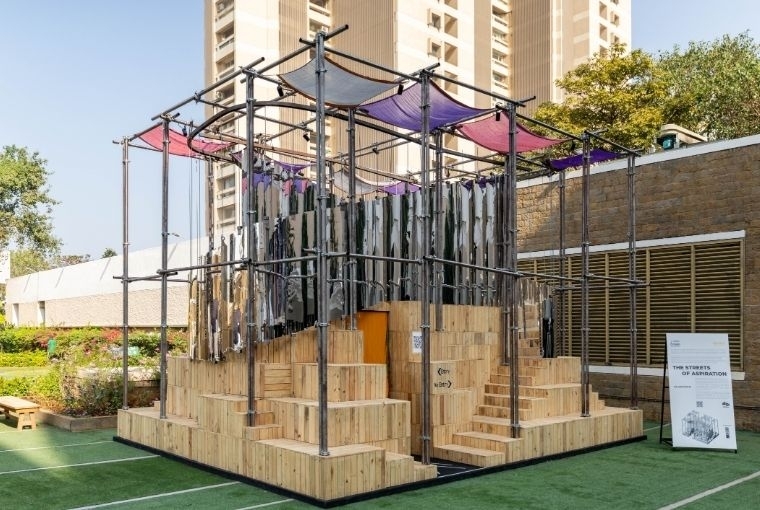
The Streets of Aspiration by SJK Architects
Cacophony is what I would use for the pavilion by UHA Architects. This is kind of like a kind of representation of different, of democracy, because they took the kind of seating configurations from different democratic parliaments and jumbled them up, and the idea is you get different kinds of conversations going on, but you can also hear and interject in amongst each other's conversations.
Diaphanous for Unscripted by Abin Design Studio. It is kind of gauzy, you can sort of see, but in a kind of gauzy way like your vision is blurred. The pavilion of conversations is ‘Fun’ because it reminds me of like a carousel. Mountain Transcripts make you feel ‘Levitated’ because the wood is levitating and there's a kind of spiritual aspect to it.
Divide for Streets of Aspiration or inequality, because that really was one of the themes for this pavilion, that they’re two kinds of Bombay.
Bollywood is what comes to my mind for Tectonic Fantastic by Anagram Architects but maybe another word could be like tableau. Scaffold for The Script by The Field architects as formally, there's a kind of scaffolding construction, but also metaphorically it's a scaffold for different experiences like the rural and the urban sides of Bombay.
Communal for the Mangrove Pavilion by Studio Sangath because it's communal in terms of where people can gather, but also it's a place of communion with nature. Vibration for Sift by Suchi Reddy, it is really in many ways about the literal sonic vibration with the rice as a kind of metaphor for Mumbai, but there's also a sort of vibration between the rural and urban, with the actual rice sifters and the metallic screen as well.
The Mumbai Transcripts is multi-perspectival as they show the different parts of Bombay.'
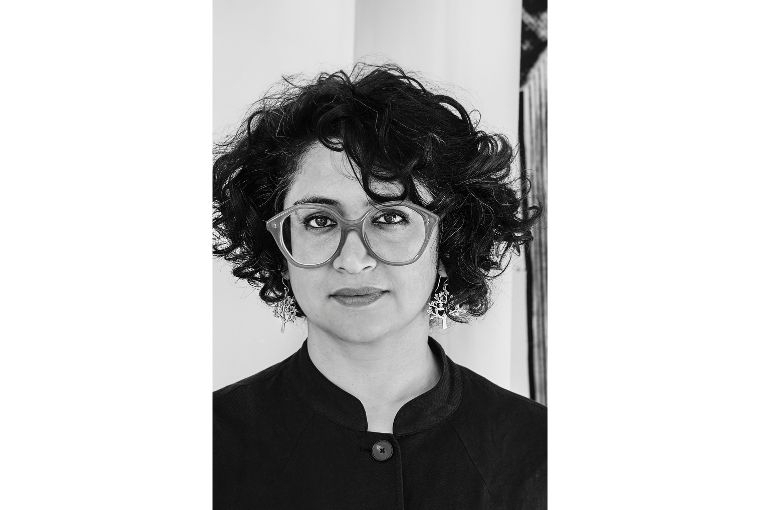
Samta Nadeem
Samta Nadeem
Festival Curator and Curatorial Director, STIR
'Our first edition was as hard as it can be because we were not selling templates and booths; we were building a platform and a community, and the response over those four days in January 2025 showed us we were on the right track. One of the foundational aspects of the festival is expanding the boundaries of who counts as a creative community and giving people the agency to discuss and understand the spaces they inhabit through films, talks, conversations, and workshops. The film curation, led collaboratively with Kyle from ADFF, responds to the local context and to STIR’s intersections of architecture, design and art, so the lineup ranges from architecture and design documentaries to dance, art and fashion films, all activated through prologues and epilogues with Indian practitioners. Around this, our public and analogue programmes, including workshops, outdoor activities and now dedicated children’s sessions, invite everyday citizens to shape civic narratives in engaging ways, so the festival cuts across disciplines, regions and age groups with the intention of creating porosity. After an encouraging first year, the festival is firmly annual and now looking to travel, with a London edition at the V&A, conversations in the Middle East and Jakarta and across Indian states, as we work to make future editions even more participatory and communal in how the festival is made.'
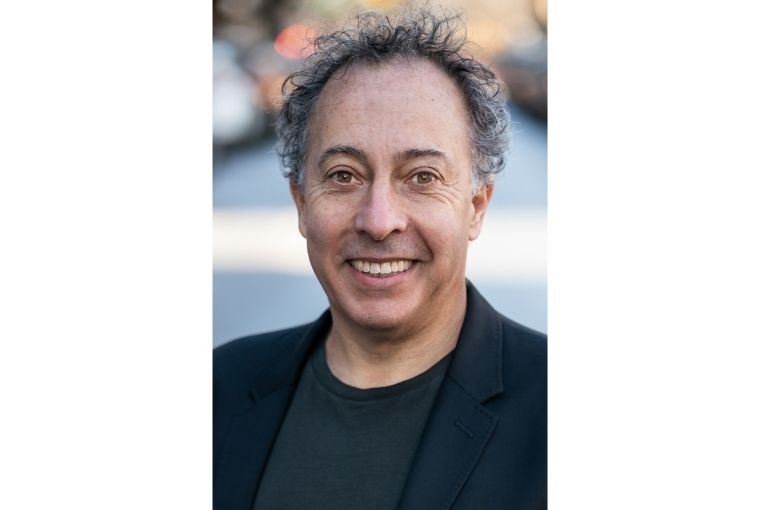
Kyle Bergman
Kyle Bergman
Festival Director & Founder, ADFF
Kyle explained the Architectural Design Film Festival's debut in India through STIR: 'There's never been an architectural design film festival here in India... the opportunity was the same as everyplace else to do interesting and engaging events and interesting moments for people to come together and be inspired and talk about design and hopefully be a jumping off point for better and better design.'
Bringing ADFF to India
He highlights Mumbai as the launchpad: 'We did it in Mumbai because as a launching place, it seemed to be a great place to start here. And if things go well, we'll take it to cities all across India.'
Curation Thoughts
Kyle describes film selection: 'We look at about 350 films, and we select 15 or 20 for the season. A balance of brand new films, and a selection of older films this year the Berlin Philharmonic, it's a 3D film. We expanded the 3D screenings, we have six 3D films." He notes accessibility: "It's really for everybody... design is for everyone.'
Words Hansika Lohani
Date 13.1.2026
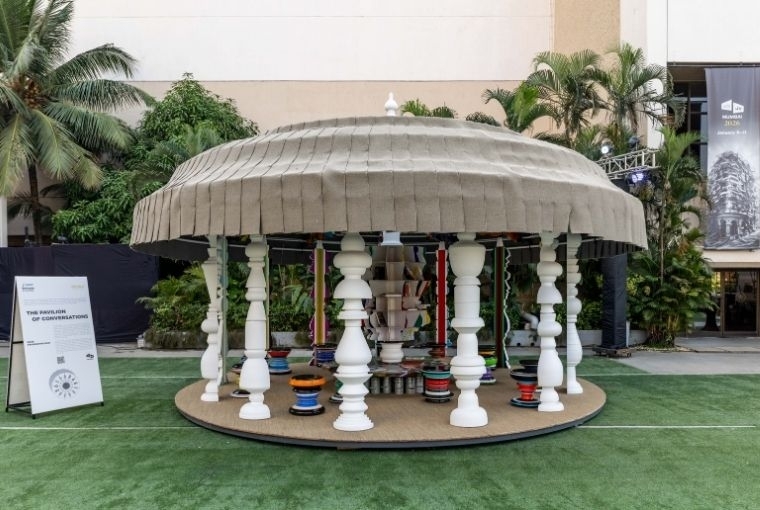
The Pavilion of Conversation by Bose Krishnamachari