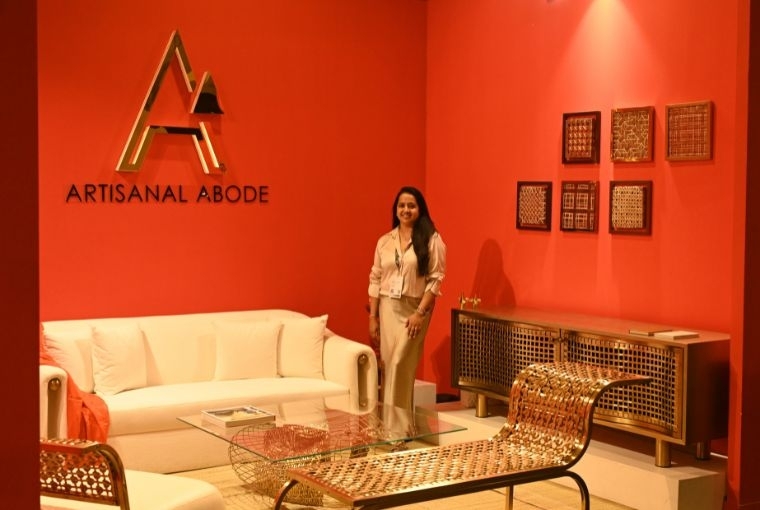
For founder Upasana Jain, Artisanal Abode emerged from a desire to engage with Indian craft as a living, evolving practice rather than a static heritage. While India has a vast vocabulary of artisanal techniques, much of it remains confined to either traditional formats or surface decoration. She was interested in what happens when these techniques are applied to contemporary forms; furniture pieces or spatial objects that are functional, architectural, and rooted in present-day lifestyles.
Her travels and experiences across different cultures reinforced this belief. Craft is deeply appreciated around the world; not just for skill, but for the stories it carries. There is a growing human need to connect with objects on a more personal level and handmade pieces naturally allow for that connection. Artisanal Abode began as an inquiry into how Indian craftsmanship could exist meaningfully within modern design without becoming too ornamental or nostalgic; but remaining relevant, honest, and enduring.
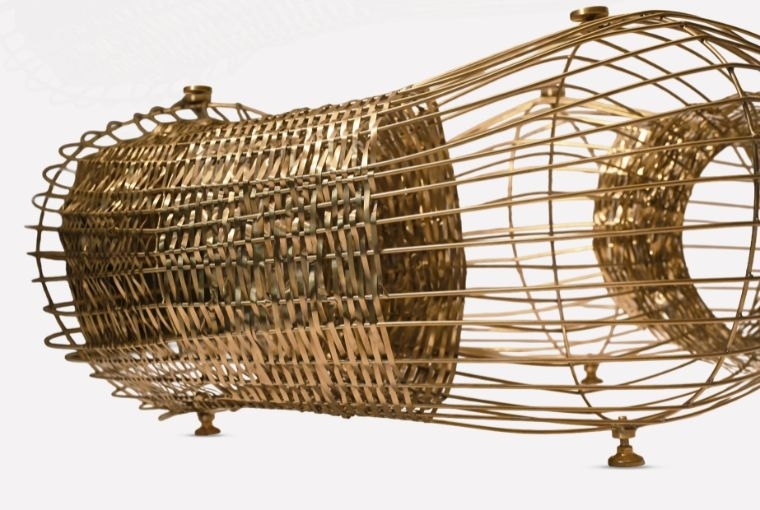
Photo Credits Sahil Lodha Photography
What is your own relationship with design?
Good design has the power to uplift and enrich your experience of life. This is not only restricted to furniture but in everything you see, touch, feel and use on a daily basis. It’s an expression of collective human thoughtfulness, and I find myself naturally drawn to it.
My relationship with design began long before I understood it as a discipline. Growing up, I was always drawn to how things were made. Objects in the house, textures, patterns, the way materials came together. I didn’t have the language for design then, but I was instinctively observant. Those early sensitivities stayed with me. Studying at the National Institute of Design was a turning point. NID taught me that design is not about aesthetics alone, it is a way of thinking. My Masters program at NYU Tisch School of the Arts, trained me to question intent, context, and relevance. I began to see design as a system shaped by people, materials, culture, and time, rather than as isolated objects. That shift fundamentally changed how I approached making. It made me more curious, more patient, and more respectful of the process.
Over time, this thinking has deepened. While my core philosophy, material honesty, and purpose has remained constant; my approach has become more expansive and global. Travel, exposure to different design cultures, and working closely with craftsmen have shaped how I understand scale, function, and longevity today. I now see design as something that must truly belong wherever it exists. It should feel intuitive, grounded, and timeless; never forced. That belief continues to guide my work, even as the language evolves.
How do collaborations with craftsmen shape the final form of each piece?
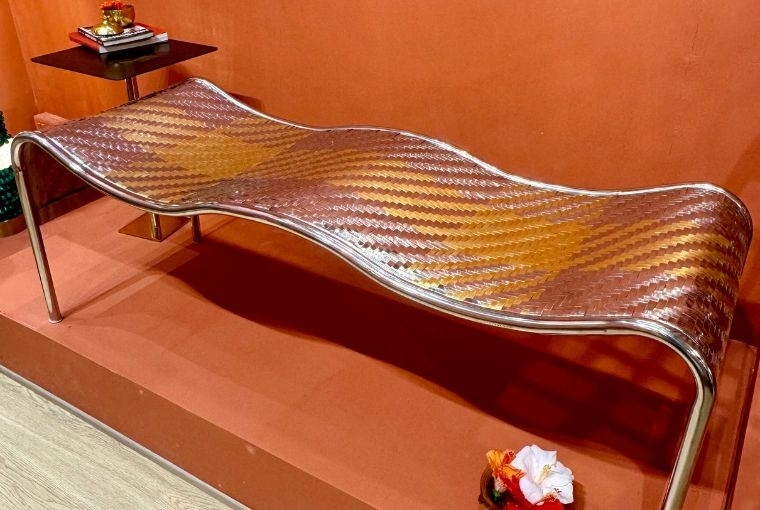
Our design philosophy is deeply rooted in continuous collaboration with artisans and craftsmen. The design process is not linear, it unfolds through continuous exchange with craftsmen. Materials such as wood, metal, fabric, natural stones etc all behave unpredictably when worked by hand. The moments where the material resists or requires adaptation during the hand-working process are vital, often influencing the final proportion, form, rhythm, and structure of the piece. Rather than imposing a predetermined form, we allow the making process to inform the final outcome. This ensures that each piece carries the intelligence of both the design intent and artisanal knowledge.
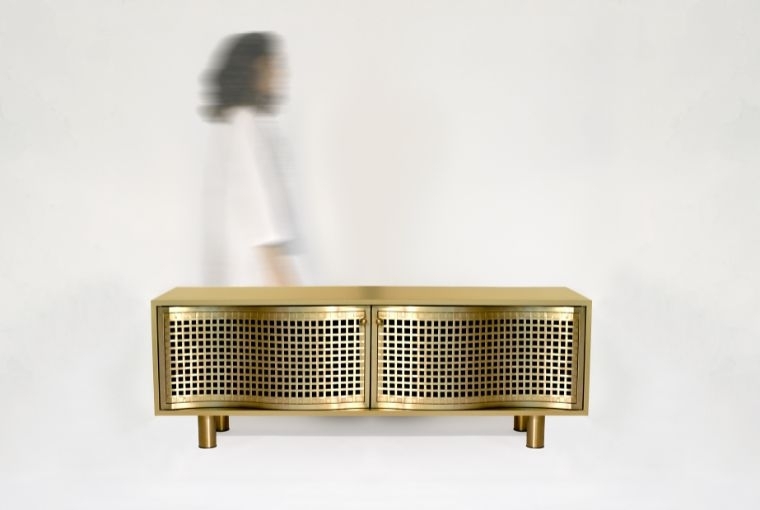
Photo Credits Sahil Lodha Photography
There seems to be a heavy focus on metal ware across your products. Tell us a little bit about why.
Metal has always fascinated me because of its range and complexity. It is one of the few materials that can be both structural and expressive at the same time. It allows for an incredible variety of applications : casting, bending, hammering, weaving, cutting, welding; each technique creating a completely different character. I’m drawn to the precision of metal, but also to how much room it leaves for interpretation when worked by hand. Its look and feel can shift dramatically, from sharp and industrial to soft and tactile, depending on how it’s treated.
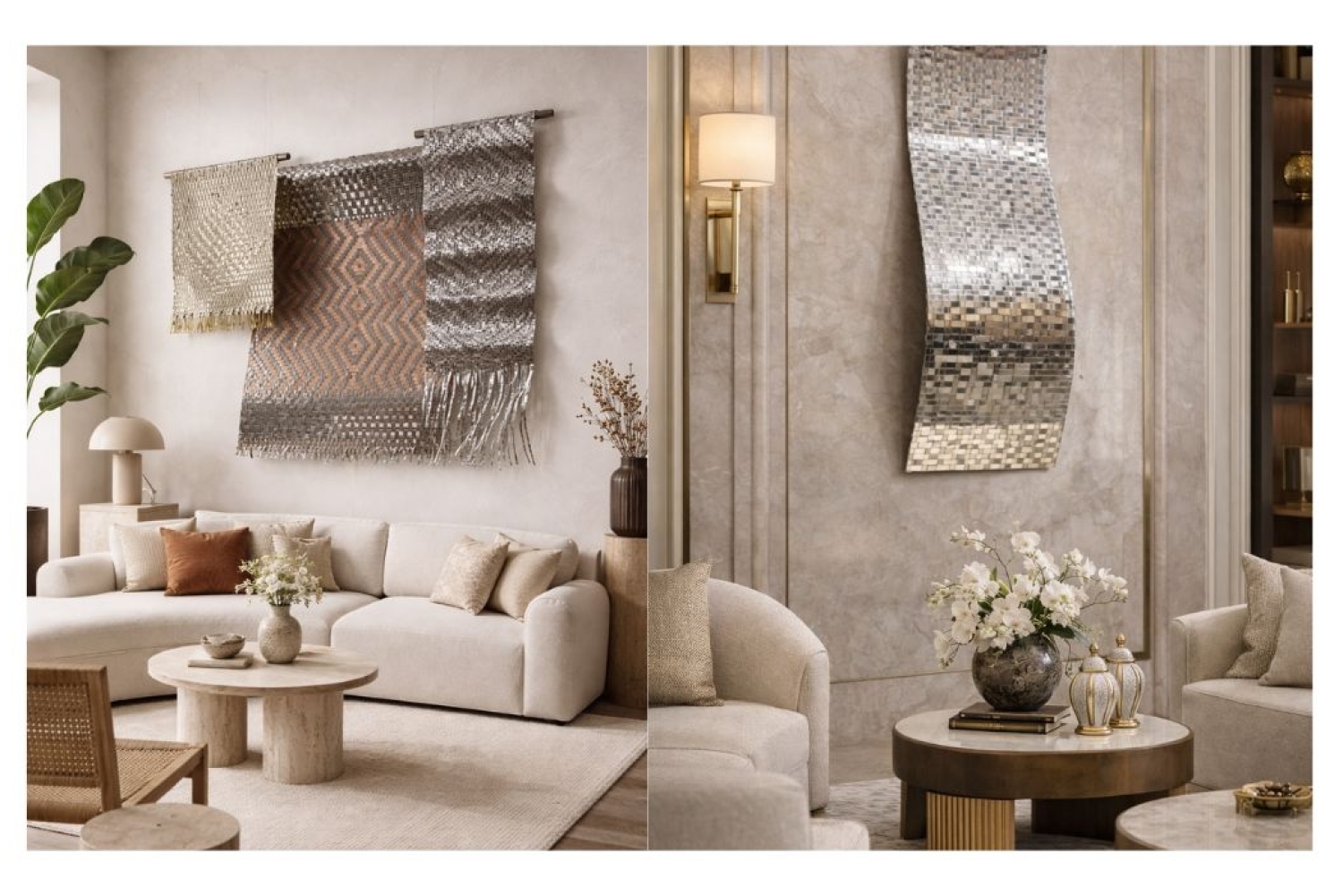
For our New Collection Weaving in Metal Series, what interests me the most is questioning the rigidity and coldness that we usually associate with metal. Through weaving and hand manipulation, I began exploring how it could move, drape, and respond almost like a fabric. That moment when metal starts behaving in unexpected ways - felt transformative. It opened up new possibilities, not just formally, but emotionally, allowing metal to feel warmer and more human.
Metal also carries time beautifully. It ages, develops patina and records touch and use rather than hiding it. I find that honesty compelling. A piece made in metal doesn’t remain frozen in time; it evolves alongside the space and the people who live with it. That sense of permanence, change, and memory is what keeps me returning to metal again and again.
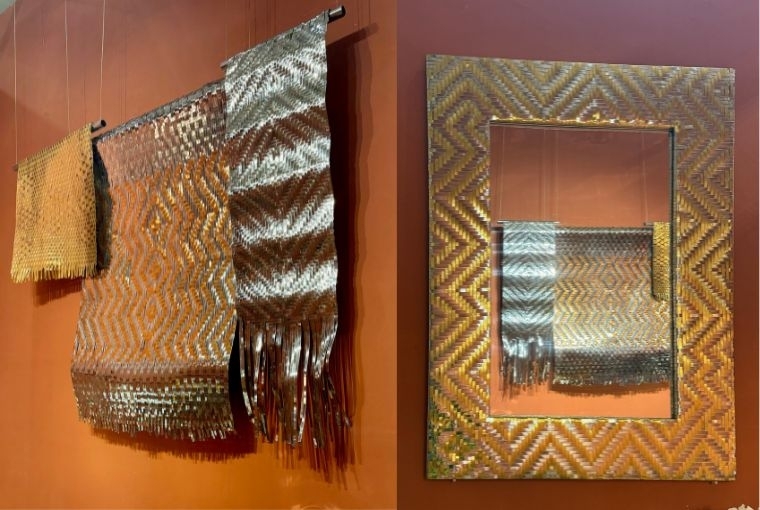
How do you balance functionality with ornamentation?
Functionality is fundamental. Every piece is designed to perform its role comfortably and intuitively. Ornamentation, when present, is embedded within the structure rather than applied superficially. In many cases, the weave itself becomes the support system or defining element. This integration ensures that decoration is purposeful and inseparable from function, resulting in pieces that feel considered rather than excessive.
What are you working on currently, and what’s the future looking like?
We are currently expanding our Woven-Metal language across larger furniture formats and spatial elements, including seating systems, partitions, lighting, and architectural panels. There is also ongoing research into modularity and scalability. How craft can operate within larger, more complex environments. Looking ahead, our focus remains on deepening material exploration and positioning Indian artisanal processes within global contemporary design conversations, without diluting their integrity.
Words Neeraja Srinivasan
Date 23.1.2026