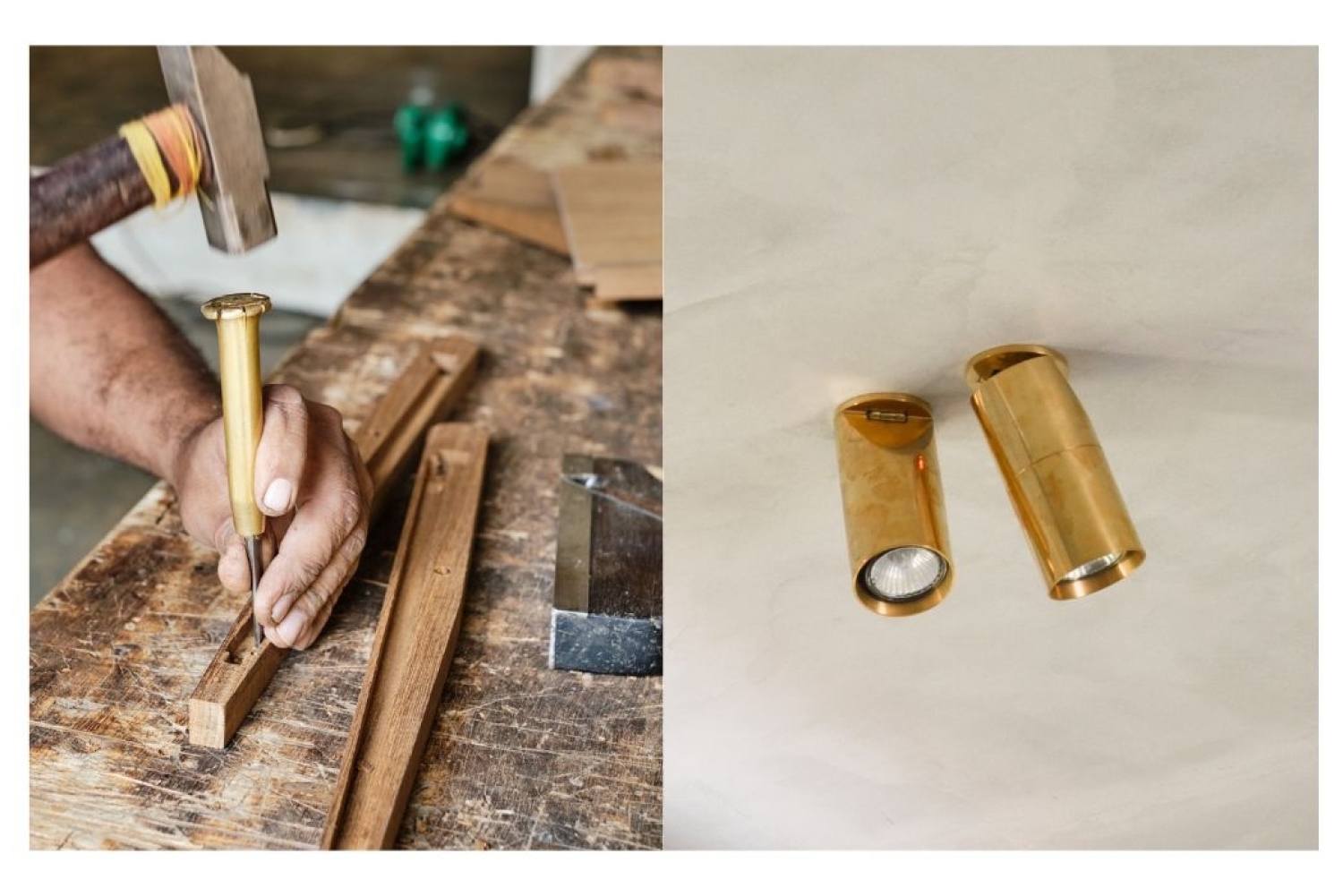
L: Process R: Art Lights
L: Process R: Art Lights
Founded by Samuel and Erica Barclay, Case Design began as an architectural practice that gradually expanded into product design through organic evolution. In 2021 Saleem Bhatri was added as a partner and co-founded Casegoods with Sam and Erica the same year. Speaking about the studio’s journey, Sam recalls how, “project by project, we started producing furniture, lights, and objects,” which slowly developed into a larger body of work.
As requests began to arrive beyond architectural commissions, the team realised they had a critical mass of pieces that they could put out into the world, leading to exhibitions across Mumbai, Venice, and Antwerp, and eventually to the formation of Casegoods, the studio’s product arm. Rooted in what Samuel calls a shared engagement with workshop culture, the practice approaches design through materials, making, and collaboration, driven by a deep fascination with how things are put together and built. In this conversation, he shares the ethos behind Case Design, the importance of artisans in the production process, and how experimentation forms the core of the studio’s objects and its evolving practice.
Casegoods emerged from Case Design, which began as an architectural practice. Can you take us through how both evolved and how you eventually branched into product design?
My wife and I came to India in 2006, and for the first seven years that I was here, I was working for Studio Mumbai. I left there in 2013 and started Case Design. Our first project was an architectural one, a residential school. From there, we started doing interiors. Project by project, we began producing furniture, lights, and a few objects, which very slowly evolved into the collection of pieces that we have today.
Then we started being more deliberate about it. We began designing not just for our own projects and started getting requests for pieces outside of the architecture work that we were doing. At a certain point, we had a critical mass of pieces that we could put out into the world. We started doing small exhibitions—one here in Mumbai, one in Venice when we were at the Venice Biennale, and one in Antwerp when we were invited to present there as part of an architecture exhibition.
So it’s been fairly organic. We’re now trying to be a little bit more strategic in the development of specific pieces. We’re doing a lot of bespoke work as well, and we’re trying to establish stronger connections with architects and interior designers. I’m also really excited that we’ve just started renovating a space in central Mumbai that will become our first gallery. Once it’s ready we are looking forward to inviting people to come and see more of our work.
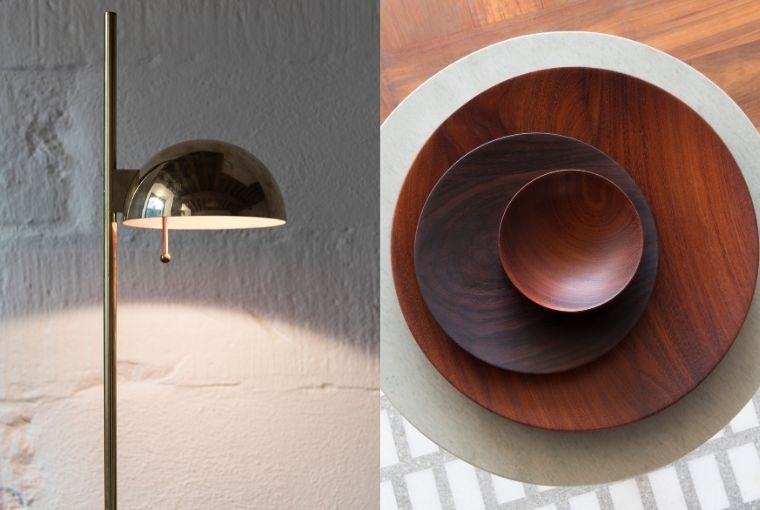
L: Standing Straight Lamp R: Topologic Bowls
Craftsmanship seems central to your work. How do you approach working with craft and artisans today?
Only a very small percentage of our designs are produced outside of India. Everything that we produce for Casegoods is made with artisans and craftsmen that we’ve worked with—and that I’ve worked with, in most instances—for the last 20 years or so.
A lot of our stonework is done in Rajasthan. Much of the metalwork we do, brass, aluminium, stainless steel, is produced in-house in our own workshop here in Mumbai. A lot of the woodwork is done with one or two groups of carpenters that I’ve worked with on architectural projects, who are based in Alibaug. That accounts for the vast majority, probably more than 95% of our output.
Saleem [co-founder, Casegoods] and I both come from backgrounds as makers or engineers and people who are deeply engaged in what I would call workshop culture. We’ve always had a deep fascination with how things are put together. We approach design not just through what makes a beautiful experience or a functional product, but also through the manner in which it’s made, the people who are making it, and the materials that are used. We bring that enthusiasm to the design process, and many of the things we produce come from that origin.
What does a good day in the workshop look like for you?
Part of the joy is that there isn’t a typical day in that sense. There’s always something different. In fact, I was at two different construction sites today for architecture related work. One of them is a project where we’re designing a workshop for one of the carpenters we collaborate with. We’re also working on designing and building a workshop for ourselves.
I was also at the workshop separately to look at a collection of chairs that we’re working on. One of the things we’ve been trying to figure out is how to steam-bend wood. We’ve set up the boiler, the steam box, the moulds, and the jigs, and we’ve been doing tests and trials. A few weeks ago was a really exciting day when we got the first successful trials of that piece. Then they rest for a couple of days, they warp and bend, and you recalibrate and try again.
What’s really beautiful about this is that I come from an engineering and architecture background and from working in workshops with my grandparents and many different people. The carpenters come from their own backgrounds. We’ve got young architects and product designers, so there’s a plurality of positions. When we’re all trying something new, ideas can come from anywhere.
When it’s a creative process, it’s up to us to evaluate what the best outcome is. But when it’s a technical process, the solution that works best is the one that wins—and that can come from anywhere. In one instance, one of the youngest contributors to the conversation had the best idea. It’s really fun to have those wins, creative or technical, when you figure something out.
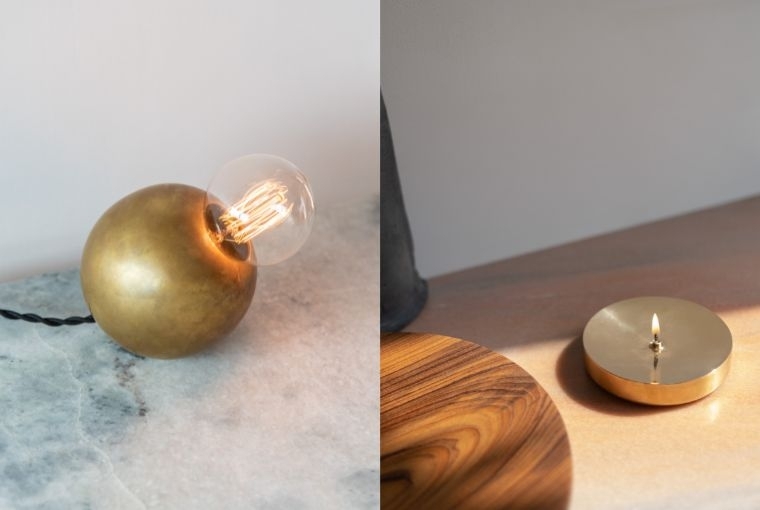
L: Rolling Round Light R: Dipa Oil Lamp
Is there a particular piece or moment in your practice that feels especially meaningful to you?
From a product design perspective, I think our Folding Flat Chair is something we’re very proud of. Architecturally, we’d been commissioned to design a café in Dubai, and one of the constraints was physical space. We had to be able to store ten chairs in half a metre. They couldn’t stack—they had to collapse and fold into a very tight space.
Those chairs have actually outlived that project. The café came and went, but years later, people in Denmark commissioned them, and they’re now sold all over the world. When you get something right—whether it’s a detail or a functional solution that’s lightweight, durable, and has aesthetic qualities as well—it’s really exciting.
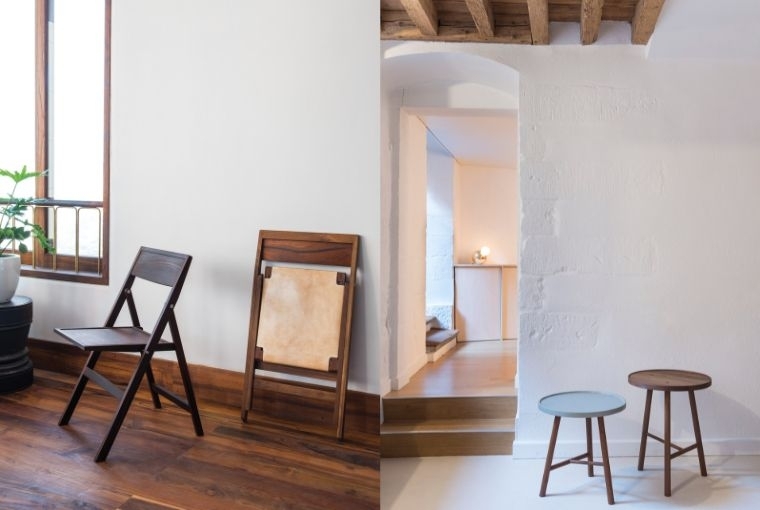
L: Folding Flat Chair R: Three Leg Table
Finally, what are you currently working on, and what can we expect next?
We have a really exciting collaboration coming up with a world-renowned furniture designer. I can’t say who it is at the moment, but it’s something we plan to put out into the world later this year. We’re also planning an exhibition of that work here in Mumbai at a very large scale, hopefully sometime between Diwali and Christmas.
We’re developing a collection of sofas, and we’ve also recently launched our new website, which is a complete rework of what we had before. It includes both new pieces and products already out in the world, but it’s completely reimagined in terms of function and graphics. We’re continuing to add new pieces to the catalogue—lights and furniture—and taking it from there.
Words Neeraja Srinivasan
Date 27.2.2026