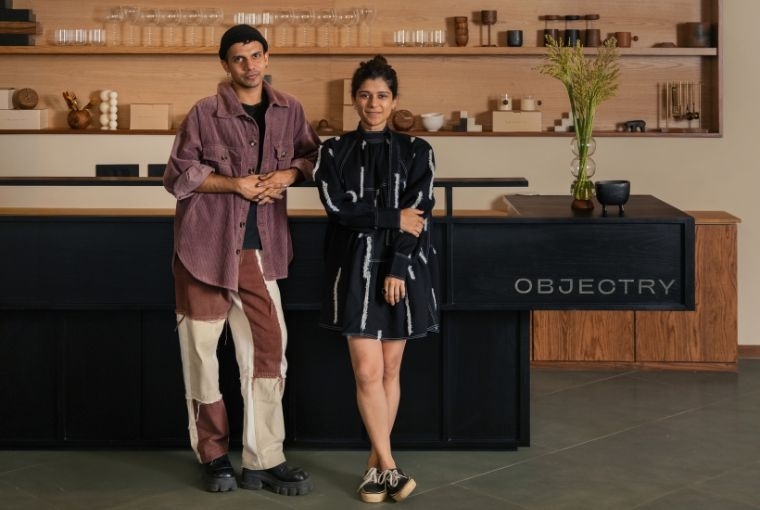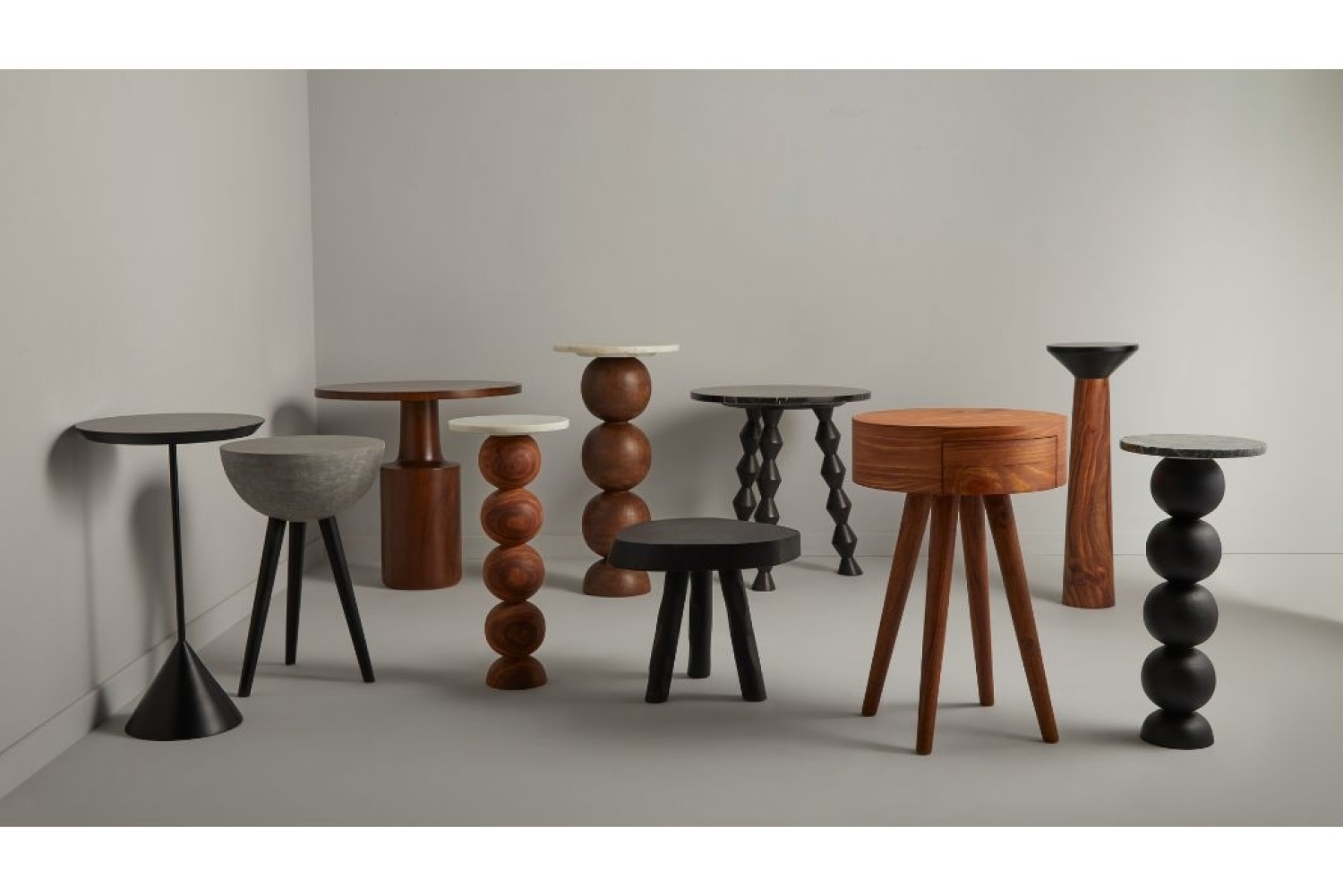
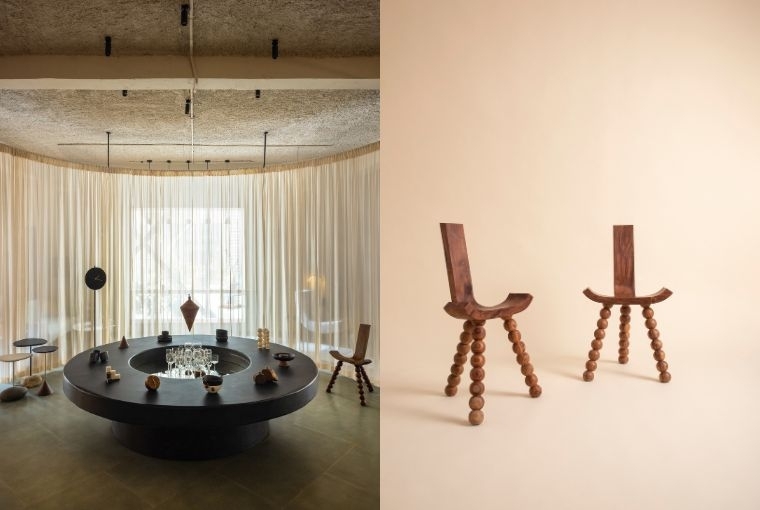
The beauty of Aanchal Goel and her work at Objectry isn’t that she creates the most innovative furniture. What she gives you is furniture you’ll feel guilty for loving after you’ve passed on it, assuming it’s uncomfortable. Case in point: her Ball Tripod Chairs. Inspired by Spanish birthing chairs, they might draw you in hesitantly. You may think they’re merely decorative, but once you sit, you’re surprised by how well they support your back and lumbar. That’s what Aanchal seeks to express through her furniture. Think of her work as a book so don’t judge it by its cover.
She has always been a material girl, quite literally. Growing up, she loved materials, all of them. 'Knowing them, touching them, knocking on them, how they’re worked on, what their weaknesses and strengths are, wondering what it would be like if I stuck my cheek to them,' Aanchal explains. As a result, she learned to work with metal, then clay, and finally wood, eventually starting her own practice.
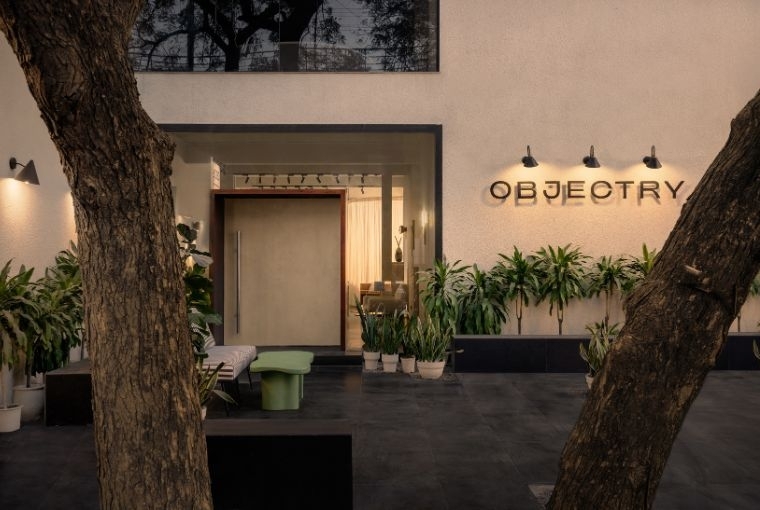
Although Objectry as a practice has been around for a few years, its physical manifestation in Delhi has only just arrived. Much like her furniture, which you engage with like literature, Aanchal’s space unfolds like a haiku. There is minimalism, intentionality, and a celebration of a singular, profound moment. The space may be divided into distinct sections, but its connected areas together feel like a complete sentence.
We asked Aanchal to write down her entire journey on paper. She did so by carving out time from designing what she calls a 'very, very comfortable chair.' That’s her focus for now, and she has no intention of straying from it.
Inspiration: Itches
It began as a creative itch eleven years ago, that needed to be scratched to do something that no one is thinking of; I couldn’t understand why craftsmen were sitting around creating things that always had existed. So instead of aping the West, I wanted to create something global yet Indian in its material roots. An educated eye would be able to tell a product apart, sitting in a different country and identify the materials as Indian.
I found an amazing carpenter, who is still with me today, who understands me in eye contact. I work with a very talented Manipuri craftsman whose willing to entertain all my troublesome ideas and so many craftsmen now we work with that scratch all these itches.
‘Good Design is Knowing When to Stop’
What stands out to me personally is that Objectry knows where to stop. I think we strike a good balance between simplicity and complexity, in a manner that one needs to look at a product more than a quick glance to completely understand it. This sense of newness yet slight familiarity is what draws one in. I like that Objectry is not excessive.
There’s a Johnny Cash recording where he suddenly stops singing before the track ends. The producers ask, 'What happened, Johnny?' and he replies, 'I know when my song is sung.' I think Objectry knows when a design is done.
Play, Posture and Paradox
For me, a few traits a good design should have is that it should catch your attention and make you smile. I think something about the idea of play is not being taken as seriously as it should. I took inspiration from the 14th-century Spanish birthing chairs to design my Ball Tripod Chairs. My favourite thing about those chairs is how people feel compelled to walk towards it reluctantly expecting to find it more 'decorative' then sit on it and are surprised by how well it holds their back and lumbar. This mostly always leads to a guilty smile. I think when something makes you smile, it becomes easier to love.
Prologue, Climax and Epilogue
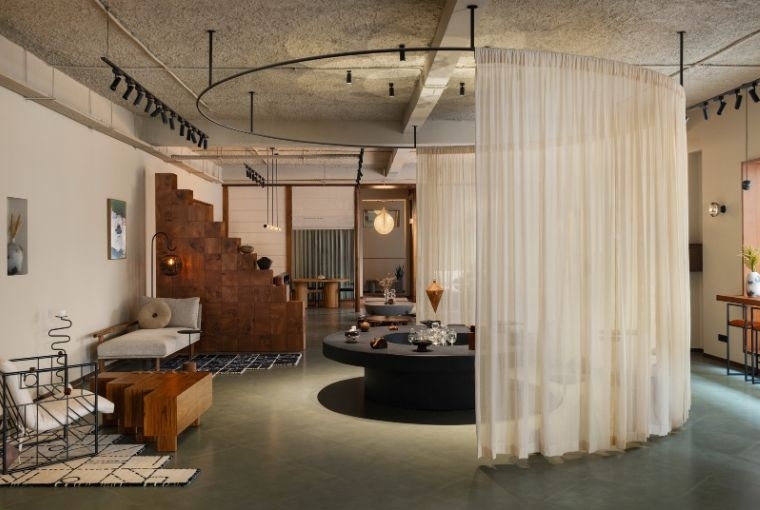
Objectry’s products are mostly built on concepts and ideas rather than vapid aesthetics. To translate the brand into the store, we tried to allow the space not to be decorated with Objectry but to almost behave like it. By design, Ishaan Bharat (Sector Form) and I decided that the space does not suggest how one’s home must look; it just allows for enough negative space to exist, while you can think for yourself. The intention with the store is to let enough space be free that it naturally piques one’s curiosity.
To me, it seems like the way the store has been designed gives the brand a flow, like a movie where there’s plot building, a sense of reveal, a climax and an epilogue. One takes home something more than just the object itself. It's almost as if the space has stemmed out of the brand’s subconscious mind.
The Space as a Large Language Model
There is a poetic precision in all the installations that we’ve created. At the centre of the store, hangs a plumbline as a symbol of alignment, skill and perfection. Beneath it sits a ritualistic circular platform creating a spatial axis between the horizontal and vertical, where one finds objects mid-performance. As a reader and a sucker for romance and philosophy, I wanted not for the space to look poetic but to read it. If one looks intently, words are flowing through the store, on different materials and in different techniques to almost request that one shuts their mind chatter to be there, more mentally than just physically. The space comes a little bit more alive in its true sense with Hansraj Dochaniya’s glow boxes from a shoot we did together. The lit boxes take me back to the space where the idea for the store first began.
Words Hansika Lohani
Date 12.3.2026
Photo Credits Lokesh Dang, Arka Mukherjee and Chirag Pattnaik