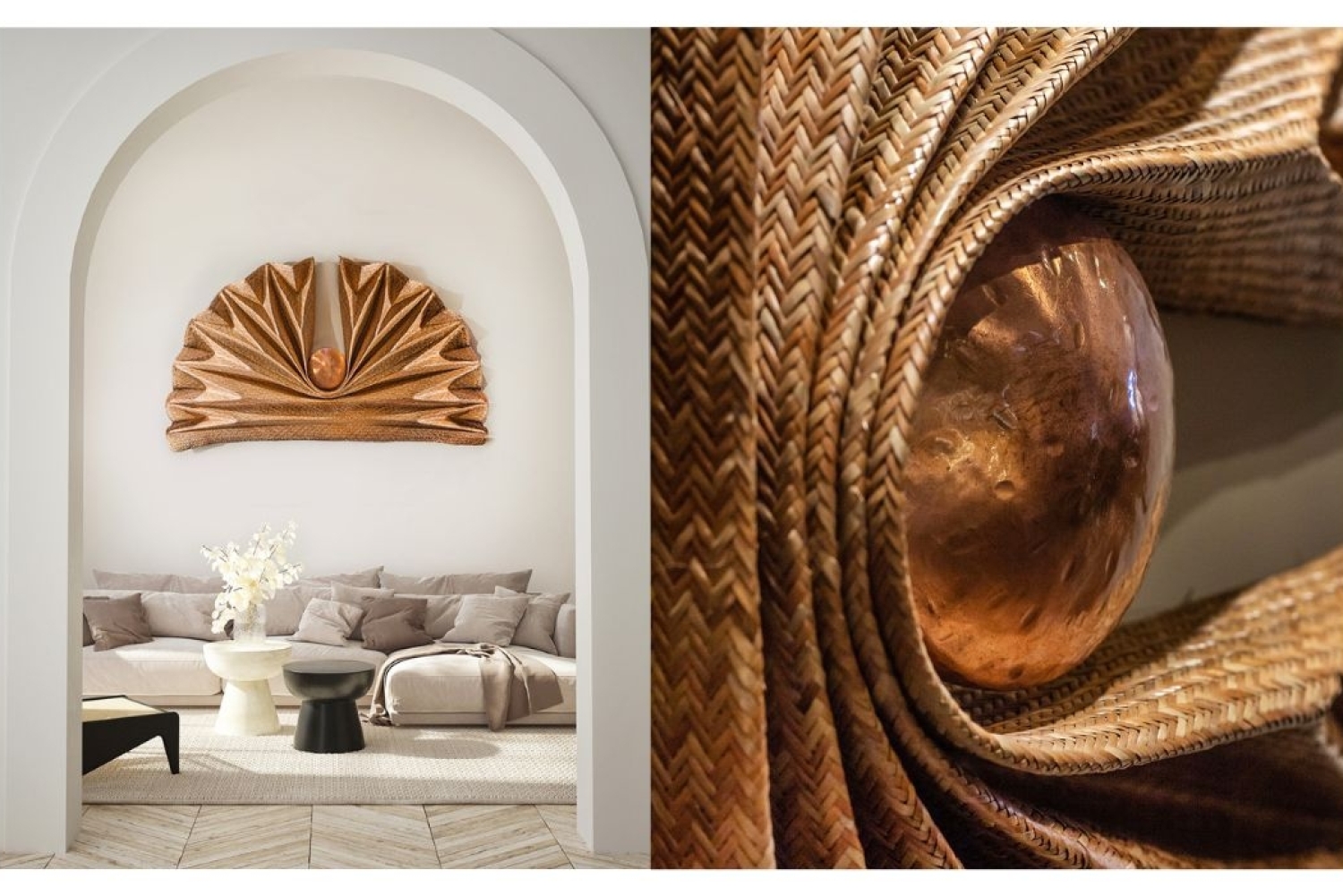
Orikrit grew out of a meeting of interests between the founders, Deepti Jain and Ayush Jain. Ayush’s engagement with origami, architecture, structure, and craftsmanship, and Deepti’s fascination with jewellery, materials, textiles, and music, came together through the meditative act of folding a two-dimensional surface into a three-dimensional form. Rooted in folding and pleating rather than figurative or paper-based origami, Orikrit draws from both Japanese calm and composure and the unpredictability of Indian creation, informed by the everyday elegance of drapes and pleats.
Seen in the works themselves, Orikrit’s pieces have a strong sculptural presence. They are layered, folded surfaces that create rhythmic patterns and shifting depths. Their tactile textures and precise geometry catch light differently at every angle, making the artworks feel immersive and architectural, depending on how light moves across them.
The Act of Folding
To me, what we craft is an interaction between two materials, between two surfaces, between two forms, between light and shadow, along with the space it occupies. As if it is in motion, but frozen in time. Ayush’s approach is more structured and planned, while I challenge each one of the folds. My approach has to do with applying unusual or uncommon techniques and scaling them up with different materials like in cinch or lattice, where the woven cane is smocked, just like fabric.
I like to approach art like jewellery on a person, something that is characteristic and one’s own. The colour, the texture, the scale. Each aspect is very important, but the most important is how it comes together in an unpredictable process.
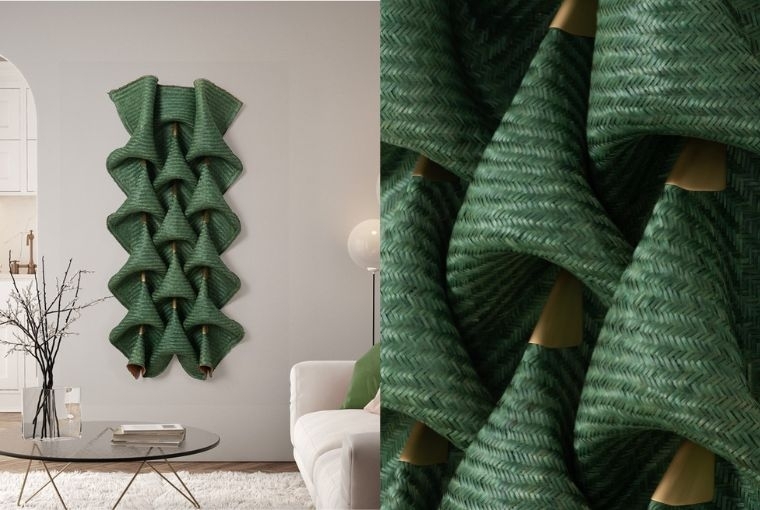
From Beginning to End
For a new design, the process is more playful and less intentional than one may think. Sometimes samples or sketches wait for a few years before they spark something in our vision, and then they come alive.
Some days are just folding surfaces. Some are for bending, colouring, pinning and sewing the samples. Others are handling materials, observing the finish, the fall, the light and shadow. Many sketches, inspirations and conversations later, the artwork takes shape.
Next is prototyping to scale, ensuring the impact translates well from the small mockups. There is a lot of back and forth, but we create what convinces both of us. It may sound tedious, but we find it to be very rewarding when it is honed.
The final artwork production is a lot of technical detailing from the choice of materials, the method of hanging it, the way it would be packed and conveniently installed. Every new order gets us excited about trying it in a different chosen colour, or a change in scale.
The Completion of a Product
We keep folding, sketching, and rummaging through the bins of samples made over time. But the real answer is, a piece of work is complete when it convinces both of us. We are then just eager to see it done. It all happens in a smooth flow post that. It all just comes together one day. Never a dull moment.
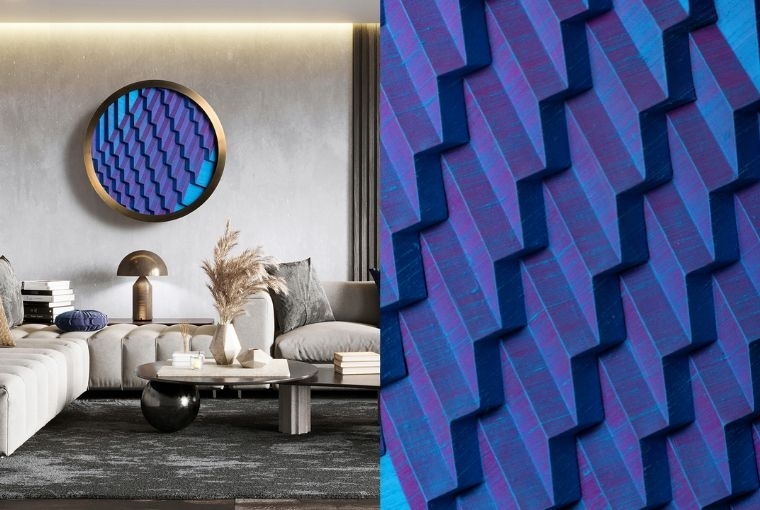
Challenging Common Ideas of Origami
The first thing that we did when we did not even have a brand name in mind, was decide what we are not going to do. Not figurative, not on paper, not small, not what one can see online. At all. To me, folding and pleating has been an interest as a textile enthusiast. India has drapes and pleats as part of everyday life, and the effects are so elegant. Hence, Ori Krit or made with folds, is a combination of Japanese calm, composure and the Indian unpredictability of a new creation. So, it was not to challenge what the rules are, but instead to find what speaks to you, interests you, surprises you.
The Future
When someone engages with our work, I want them to feel intrigue, curiosity and calm while they pay attention to the form from a distance, and the surface from up close. Playing with light and shadows is very important to me. The way intense light makes a piece of work edgy, and softer light makes it surreal, is fascinating.
The first two years were just Ayush and I folding and experimenting. The team is now growing into playful, curious people who are crafting a new collection, a display space, some new ranges of objects and some really large-scale pieces.
This is an excerpt from the Feb EZ. For more such stories, read the EZ here.
Words Neeraja Srinivasan
Date 4.3.2026