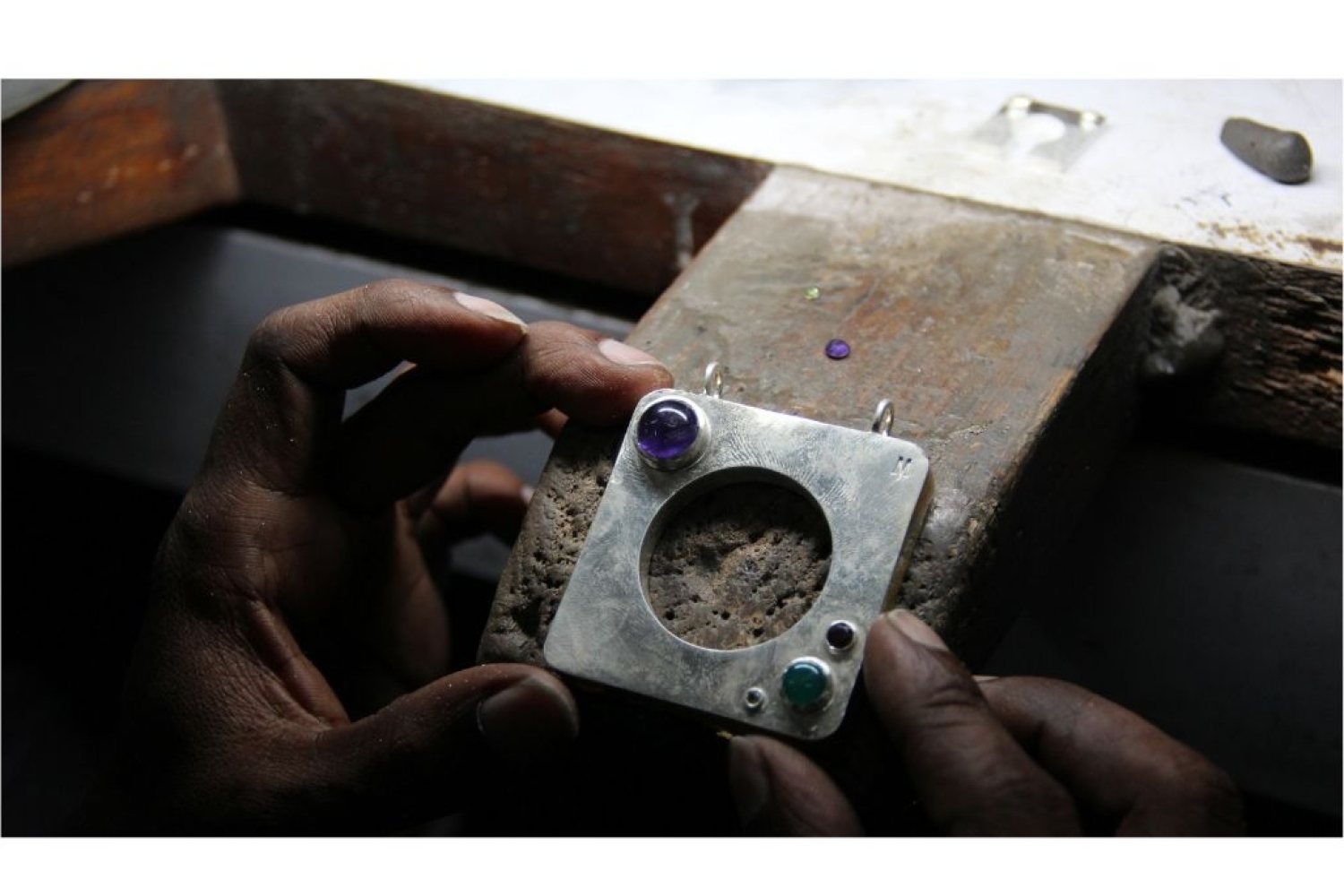
Maison Megh began as a quiet rebellion against the idea that Indian luxury must look or sound a certain way. Meghna Ratra wanted to create a house that felt global in its design language and Indian in its soul. The spark came from hours she spent inside workshops in Jaipur, surrounded by silhouettes of extraordinary craft that had somehow been boxed into the same imagination for decades. She remembers standing there, thinking, what if we could shift that? What if Indian craftsmanship could speak in geometry, in silence, in structure, instead of florals and nostalgia?
While growing up, she was surrounded by her mother wearing very statement silver pieces, from traditional filigree and florals to bold, sculptural forms she picked up while travelling the world. The idea of Maison Megh comes from her, because when she thinks of her mother, she thinks of silver. Meghna always knew she wanted to work with metal, and when she finally put pen to paper, what started flowing out were jewelry designs. Both her parents are architects, so she grew up around clean lines, edges, and geometry. Naturally, Maison Megh’s design language became architectural and structured, inspired by the sharpness of silver itself.
Beyond design, it is also about belief, that there is nothing the Indian karigar cannot do. For too long, craftsmanship has been associated with France or Italy when it comes to luxury, but Indian hands can do the most extraordinary things. With Maison Megh, Meghna wants to bring Indian craft back to India, and from India to the world, experimenting endlessly with shapes, forms, and materials.
What is your relationship with design?
My relationship with design is constantly evolving. When I was at Parsons in New York, design was about precision, about replicating form to understand discipline and technique. But over time, especially as Maison Megh began to take shape, that relationship softened. It became freer, more instinctive, more like play.
I’ve come to think of design as choreography, a rhythm between chaos and control. Working with silver taught me that structure and fluidity can coexist, that metal can feel alive. To me, silver isn’t a limitation but a language, one that reflects, transforms, and carries memory. At Maison Megh, I see silver as a blank canvas to create what doesn’t yet exist. I want to question the way jewelry is made, what it’s meant to look like, and peel back, layer by layer, the biases that history and culture have placed upon this material.
What role do Jaipur’s craft traditions play in your design?
I really enjoy this question. I love talking about my relationship with Jaipur. I try to make it very different from what Jaipur has been attached to historically. I see Jaipur as this beautiful, bubbling pot of innovation and possibility.
When I moved back from New York, I spent almost a year in Jaipur, spending hours in the bylanes of Johri Bazaar, learning from the artisans there. It became a beautiful, mutually enriching relationship between me and my karigars. They bring their master techniques to the table, and I bring exposure through new designs. What I’ve been wanting the world to see is how exceptional India’s attention to detail and craftsmanship truly is, shaped by generations of making the most intricate and complicated things with patience and instinct.
Jaipur, to me, is the heartbeat of Indian craftsmanship. The artisans there work with an intuition that’s impossible to teach, a sense of proportion and perfection honed over generations. At Maison Megh, we use that lineage as our foundation, but we shift its direction.
Why is silver your chosen material to work with?
Silver is a very emotional metal for Indians. It’s one of the first things gifted at birth, at weddings, and on auspicious occasions. It’s also deeply connected to memory. During my time in New York, I did my thesis on zari and learnt a lot about the different forms that metals can take. That exploration became an ongoing project for me, to understand silver fully and to keep experimenting with it in different ways.
We are on our way to becoming an architectural object house, with frames, objects, and other collectibles. I often imagine modernising a traditional chandi ki dukaan. Silver, to me, continues to be deeply auspicious, holding positive value across generations. It’s a lifelong value giver and an incredibly beautiful metal to work with.
Photos by Bhavya Ahuja
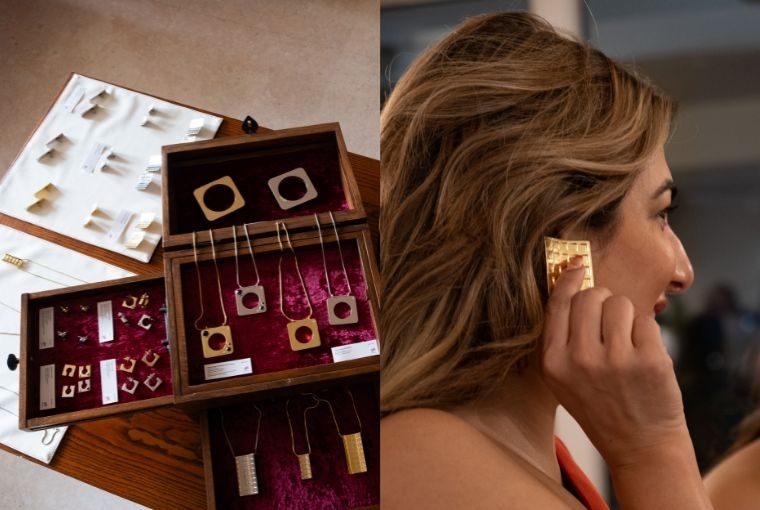
Could you tell us a little about the shapes of your jewellery—many of them are symmetric, a recurring motif is a square with an open circle in the middle. What is this design meant to represent?
There are certain types of architecture that have deeply shaped how I think about design, especially the brutalist landscape of Chandigarh, where I grew up. You see squares everywhere, clean edges, and the idea of less being more. That visual language naturally found its way into Maison Megh. Although a lot of the jewelry is minimal and full of straight lines, we take play seriously. If you look closely, we play with coloured gemstones and mixed metals too. In Jaipur, they traditionally call it ganga jamna when silver and gold plating are done together, and I love that harmony of contrasts.
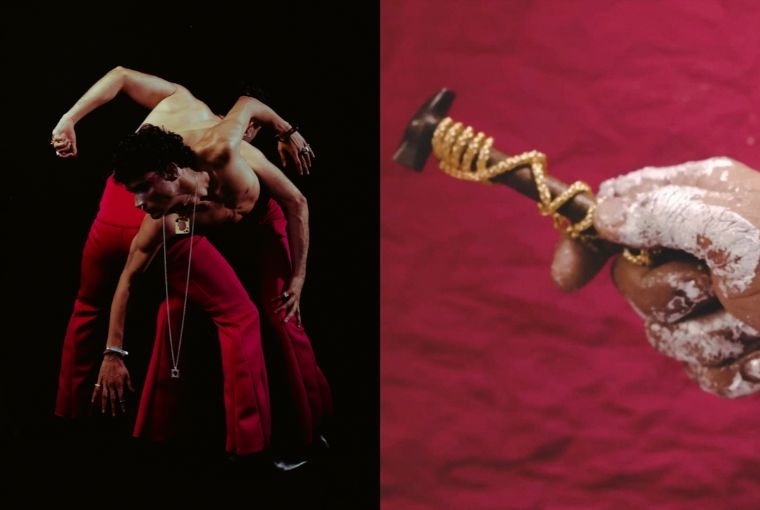
While I’ve always loved the square and the circle, the origins of Earth Is Square come from an exploration of how shapes hold meaning. The square represents grounding, stability, and structure, while the open circle at its center represents freedom and possibility. Our debut film, Earth Is Square, was inspired by Czech theatre and its abstract approach to storytelling.
What’s the story behind the name of your brand? Why Maison Megh?
The story behind the name is that I didn’t want to just call it Meghna. It felt restrictive. From the start, I was clear that the brand should go in all directions, not even just jewelry, it should be a house of experimentation. 'Maison' because I’ve always wanted to build a full creative house, not just a label. A place where authentic Indian performance, sound and movement can coexist through jewelry and or fashion. And 'Megh' because it’s personal, my name, yes, but also the Sanskrit word for 'cloud.' Maison Megh is my attempt of building something impossible to pin down.
When someone wears your jewellery, what kind of feeling do you hope to evoke in them?
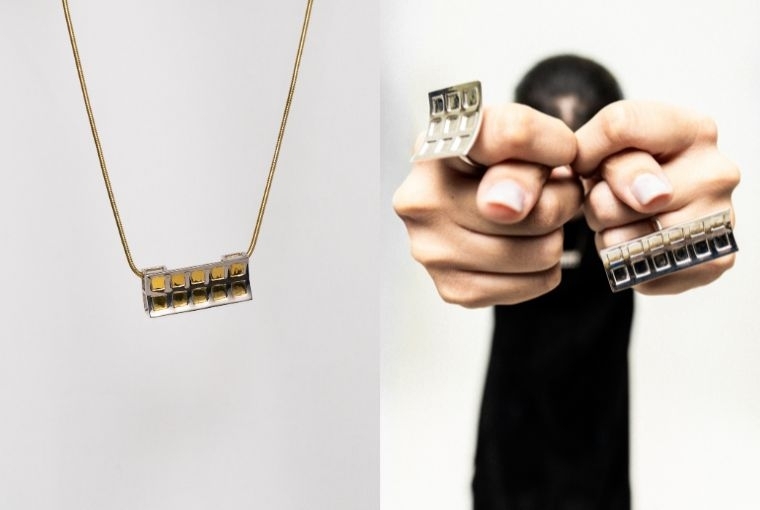
I really enjoy the process of putting on jewelry because there’s always an element of play. For example, my Kitth pendants can be worn horizontally or vertically, and the Edge pendant is loopless, so the chain cuts right through the shape. I want people to interact with my pieces differently each time they wear them. Even with the Edge hoops, you can buy one half with gems and one without. It doesn’t have to be a perfect pair. People feel happy experimenting and making it their own. I love the play of personalisation. It always brings a deeper connection to what you buy. I also want people to think about the story behind each piece — the film, the movement, the inspiration. For Earth Is Square, that connection came through the film, and for Kitth Kitth, through its striking imagery and sound.
Comfort and quality are everything to me. Every curve, clasp, and finish is considered, because good design should never need to announce itself — it should simply feel right. I want the person wearing Maison Megh to feel that quiet confidence, that sense of precision and ease that only comes from something truly well made.
Since your journey’s just begun, what are your hopes for the future?
We continue to tell very intentional and meaningful stories through the products we create. I hope to experiment more with our cross-disciplinary approach. We've used theatre, acapella, hip hop, Bharatnatyam in the past, and hope for people to connect with it like they have been! I want Maison Megh to show a holistic image of India and to keep finding new ways to experiment with silver. I hope my relationship with my kaarigars remains and grows, and together we can heavily conduct material explorations and make more shapes and objects. The goal is to keep building the house, brick by brick, piece by piece, to grow a movement of creatives who believe that luxury can be deeply Indian and global all at once.
Words Neeraja Srinivasan
Date 4-11-2025