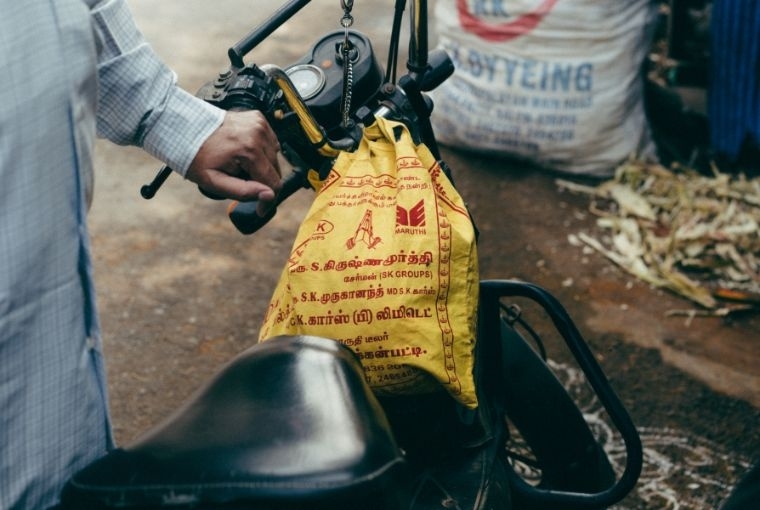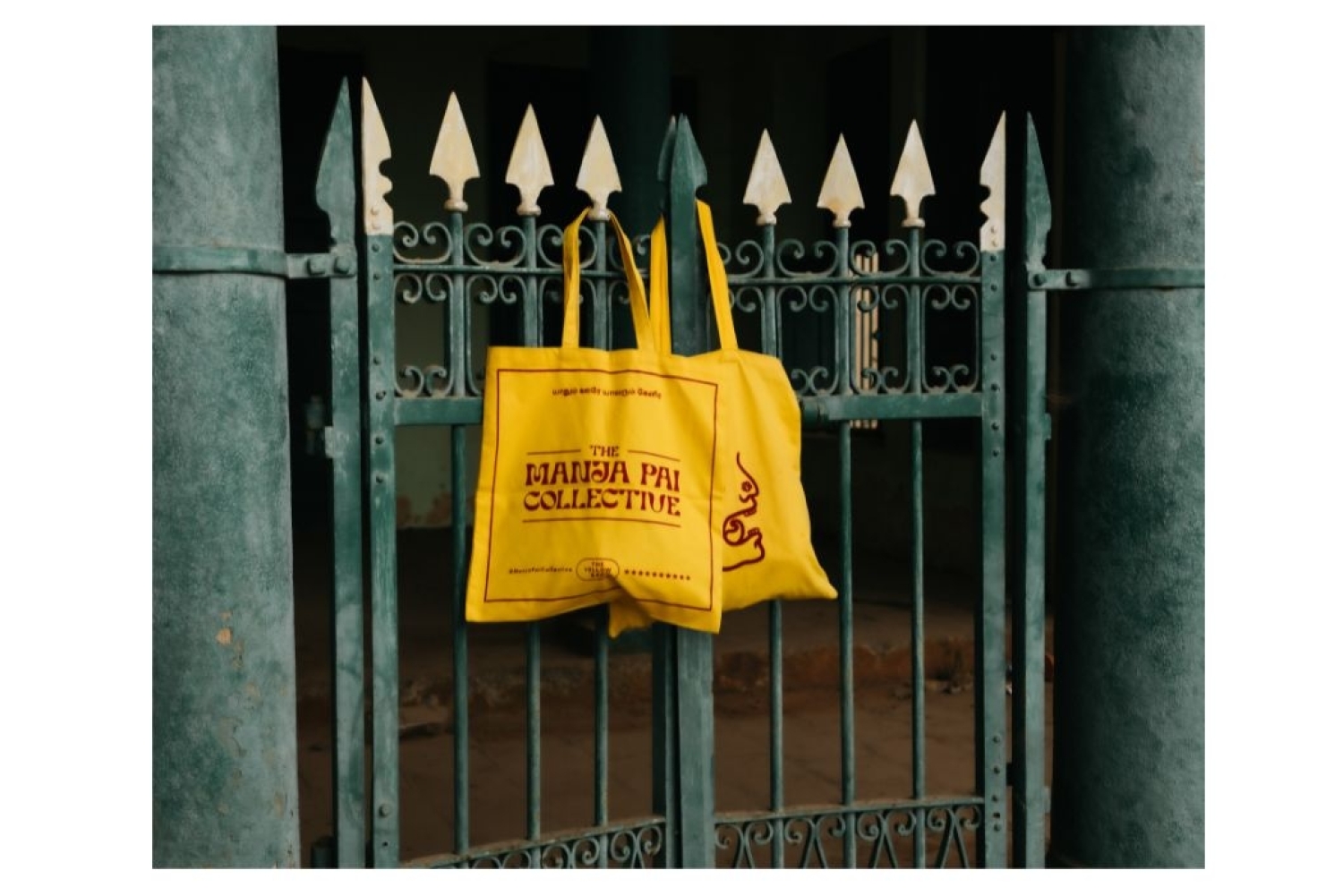
During their undergraduate years, the founders of The Manjapai Collective, Raajadharshini and Sangami, began thinking about the Manjapai as an object that everyone carried, but one that the younger generation was beginning to distance themselves from. They questioned why something so deeply embedded in everyday Tamil life had come to be seen as something undesirable or outdated, and why it could not be recontextualised and carried with pride.
They began researching the history and social significance of the Manjapai and started looking at ways of introducing the same idea as a tote. Because, in a way, it was the OG tote before totes were a thing. As part of this process, they conducted interviews with people across different cities in Tamil Nadu to understand their relationship with the bag. What they realised was that every single person had their own version of the use of the Manjapai and their own memories attached to it, irrespective of their background. For some, it was something they carried to the bank or the market. For others, it was used to store dried fish, keep gold safely before depositing it in the bank, carry gifts, or hold auspicious items. The Manjapai existed in many forms and carried many stories.
Growing up in the era of globalization, they were surrounded by new foreign objects like cute stationery, colourful backpacks, and things that were considered aspirational. Naturally, they had also looked at the Manjapai as an old-fashioned object that was ‘uncool’ to carry. They remember feeling embarrassed when a mother carried one and not wanting to be seen with her because they wanted her to be more ‘fashionable.’ Later, they began questioning what makes something fashionable and what makes something not, and who gets to decide these values.
When they began developing this project, they realised there was no Manjapai as an object on its own. There were Manjapais used as wedding return gifts or bags printed with shop advertisements, but there was not a Manjapai that existed purely as a design object. It was always connected to a social context, and that made it fascinating. During one of their conversations, they started thinking about the status objects take as a consequence of social hierarchies. That became the foundation of The Manjapai Collective; exploring the social lives of objects beyond their immediate use.
Were there any personal experiences with a Manjapai that shaped this idea for you?
Growing up, we saw it as something outdated and something associated with an older generation. But as we began questioning systems of value, we started understanding that ideas of what is ‘beautiful,’ ‘fashionable,’ or ‘desirable’ are not neutral and they are shaped by social and cultural structures. The Manjapai became a way to examine these ideas. It made us think about how objects gain or lose value, and how our relationship with them changes over time.
Tell us about the craft process behind the creation of your products.
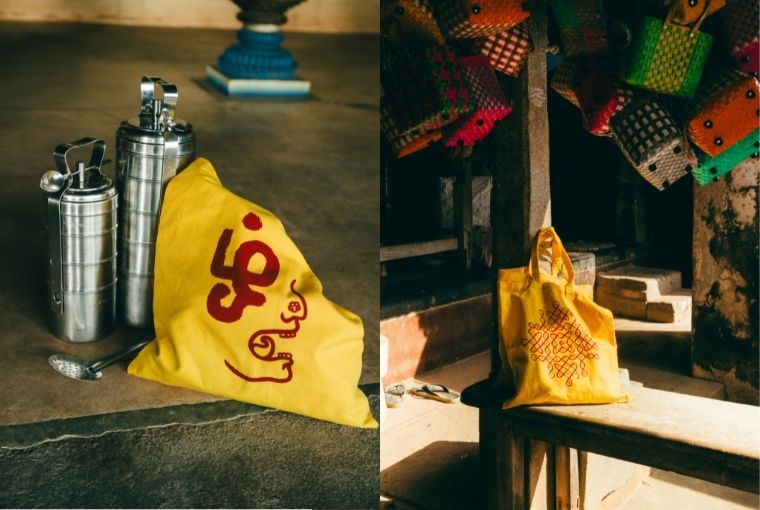
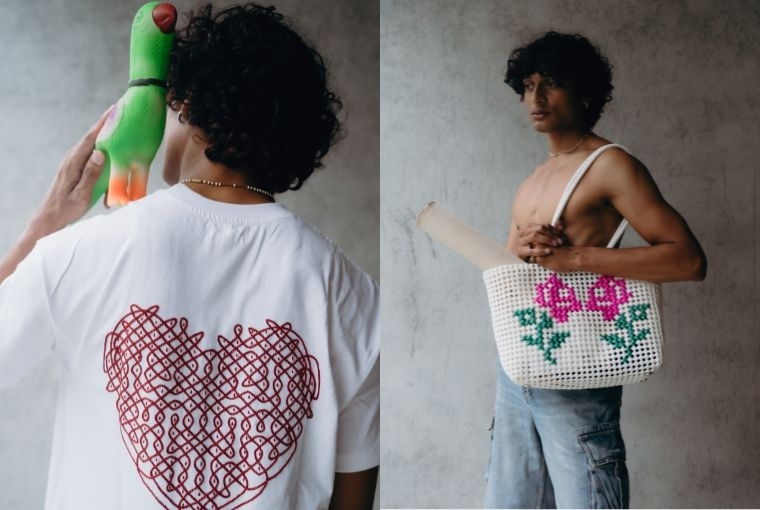
While we wanted to position the Manjapai as the OG Tamil tote for a contemporary audience, we also wanted to recognise and continue working with the makers who have traditionally stitched and screen-printed Manjapai bags for weddings and everyday use. We continue to collaborate with a small unit of Manjapai bag makers in Tamil Nadu, and we are working with them on our upcoming designs as well. For our other products, such as the koodai bags, we work with independent women-led self-help groups who make the baskets, and for our embroidered T-shirts, we collaborate with Porgai artisans. Across our products, we try to work with smaller communities and women-owned businesses, keeping the relationship between design, labour, and people at the centre.
Why is it important for you to celebrate Tamil identity through design? And how do you balance preserving cultural history while also making it relevant to younger generations today?
While we think of design, identity, and culture as separate fields, they are not really separate in reality. The sociality of Tamil lives is intertwined with the objects, their design and people. The balance between preserving cultural history and its relevance to younger generations is where our design shines. While maintaining central elements of the bag, be it the name or the colours, we change the form to a tote and make it more contemporary while also making sure its story gets passed on.
What is good design, according to you?
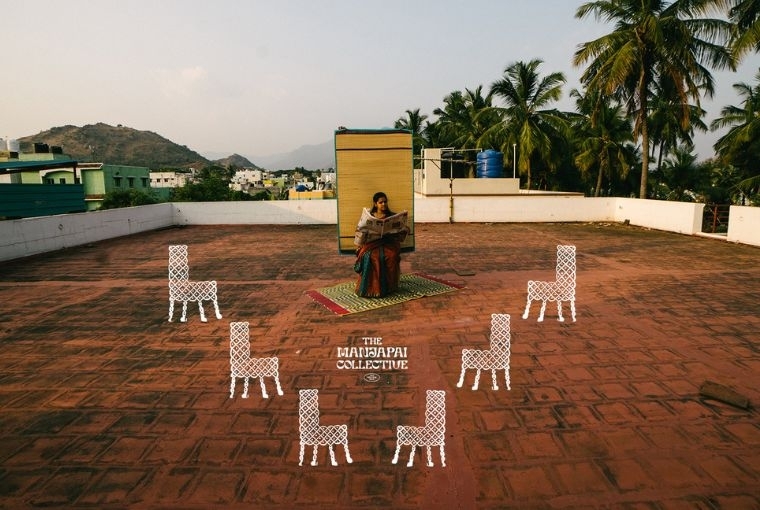
Good design is one that reflects the story of the object through the form it takes. It is design that acknowledges its history, its production, and the people behind it. A good design does not separate the object from its material and social realities but it brings those together.
Your work invites people to think differently about the objects they live with. What do you hope people take away from these encounters with everyday things?
When we say ‘everyday things,’ we are talking about things that are local, things that belong to us, things that have been designed, produced, and used within communities around us. The story of an object is never predetermined. Meaning is created through usage, through social interactions, and through the relationships people build with things. There is a mutual process of value creation between people and objects. Over time, certain objects become ridiculed or looked down upon. Objects and practices that are considered outdated or “uncool” are often those that are affordable, functional, and connected to everyday life. In contrast, objects that are considered luxurious are often valued not only for their function but for their association with status and opulence.
The meanings attached to objects are deeply social and political. They are not simply about aesthetics. Separating visual beauty from the material realities and labour behind an object is a privilege. Through our work, we hope people recognise the labour, histories, and communities behind the objects around them. These objects represent our stories, our civilisation, and our collective memory.
What are you working on currently and what can we expect from you next?
We are currently developing new designs across our product range and working on introducing new Manjapai totes that focus more deeply on the design possibilities of the object. Our hope for the collective is that, over time, these products become strong enough in their narratives that they can carry Tamil stories beyond their immediate context and take them to a global audience.
Words Neeraja Srinivasan
Date 30.6.2026