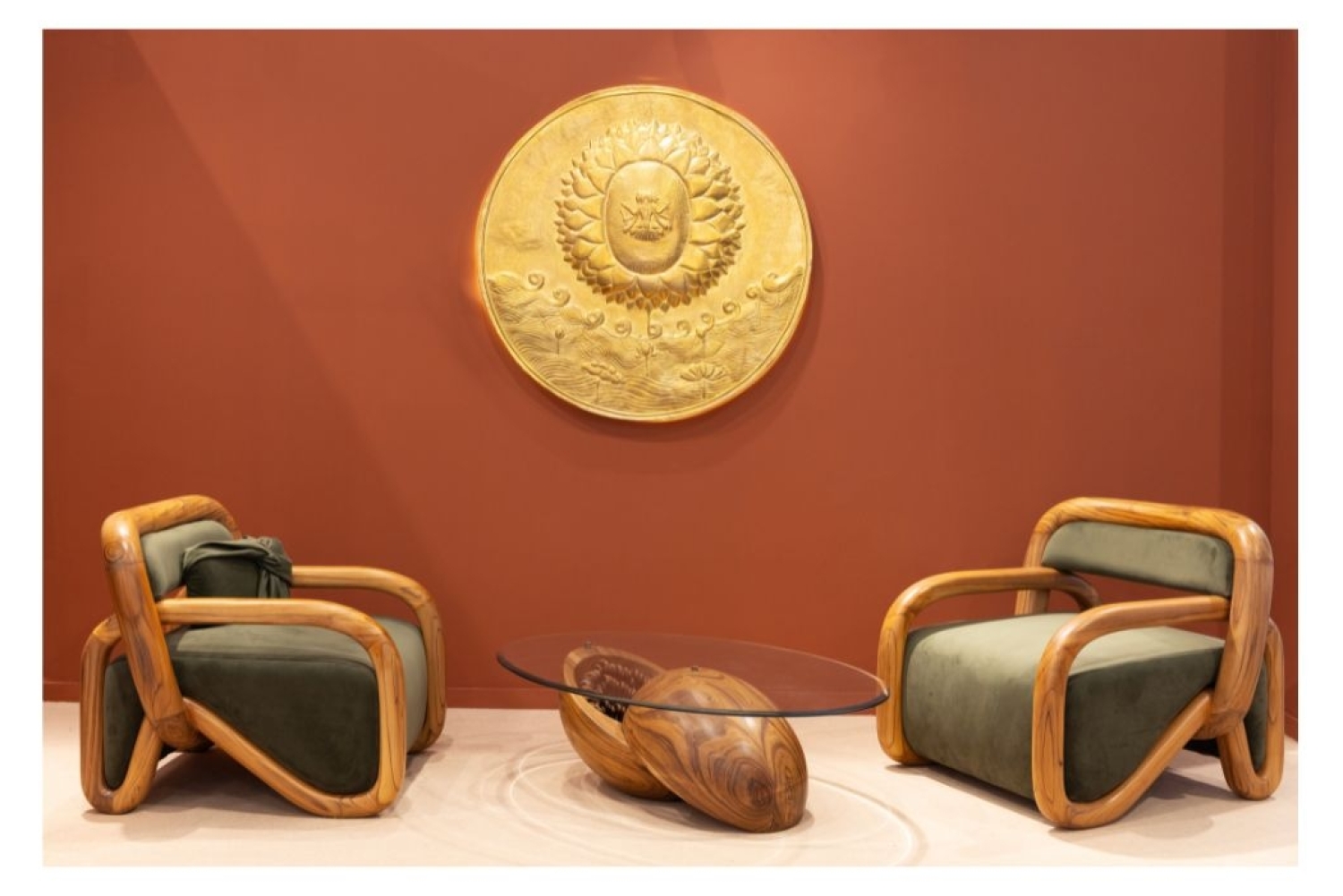
It is difficult to pinpoint a single moment that gave rise to Sarvatva, a design studio dedicated to transforming philosophical ideas into functional furniture. According to the founder Iteesha Agrawal, it emerged through a series of events that gradually led to its coming into being. The journey began with the intention of generating better livelihoods for artisans. Through multiple interventions with craft communities between 2021 and 2023, Iteesha arrived at a significant realization: if Indian crafts were to be truly preserved, they needed to be positioned and valued as luxury. This epiphany became the foundation of what would eventually become Sarvatva.
As she began researching how great luxury houses around the world evolved over centuries, another realization emerged. Most luxury brands are built around storytelling, materials, aesthetics, or heritage. Sarvatva, however, was envisioned as something rooted in an idea, a concept that could endure beyond collections and trends. The search for that idea began with finding a Sanskrit word that felt timeless yet contemporary. It led to Sarvatva, derived from ‘Sarva’, meaning all, and ‘Tva’, meaning the state of being. Together, it translates to ‘the state of being everything.’ The word embodies wholeness and completeness. It refers to a state of being where one feels whole, complete, and deeply connected with oneself, a state in which nothing is lacking.
Sarvatva’s designs are characterized by teak wooden frames, soft edges, and solid construction. They appear contemporary in form while showcasing traditional woodworking techniques. As the philosophy behind the brand evolved, its foundations became closely intertwined with the wisdom embedded within the Indian Knowledge Systems. These traditions carry timeless values, philosophies, and universal principles that speak to the very nature of human existence and humanity’s relationship with the world around it. This philosophy continues to guide everything Sarvatva creates today.
Design Philosophy, Drawing Inspiration From Indian Myths
Our design philosophy is rooted in the belief that objects should emerge from thoughts and ideas rather than aesthetics alone. During our research into Indian knowledge systems, we came across the Nasadiya Sukta [Rig Veda 10:129], one of the most profound cosmological hymns in the Vedas. What fascinated us was that unlike traditional creation myths, it does not offer certainty. Instead, it poses questions about existence, origin, and consciousness. It is speculative, philosophical, and deeply human.
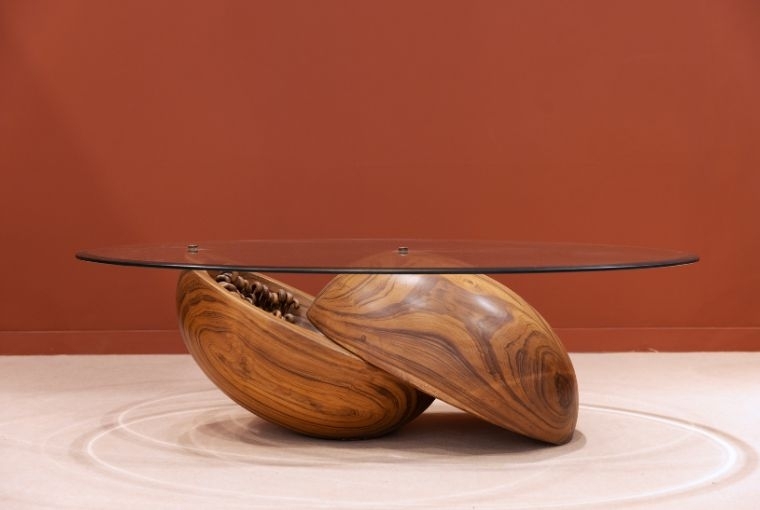
That discovery became the conceptual foundation of our debut collection, Tad Ekam. The hymn has no visual representation. This gave us the freedom and responsibility to translate thought into form. Rather than illustrating mythology, we sought to interpret a philosophical idea through craftsmanship. We reimagined a 400-year-old wood-carving tradition for the twenty-first century, creating sculptural forms and organic lines that attempt to embody the fluidity, mystery, and emergence described in the hymn. For us, ancient Indian texts are not repositories of motifs or symbols. They are repositories of ideas. Our work is less about recreating the past and more about bringing timeless philosophical inquiry into contemporary living.
Behind The Scenes And Preserving Craftsmanship
Nobody in that workshop had ever been asked to carve a philosophy before. That was the conversation we had to have first. When the renders were ready, we took them to artisans in a wood-carving cluster who had been doing extraordinary work for generations. But their vocabulary was traditional; familiar motifs, inherited patterns, forms they could carve with their eyes closed. What we were bringing them looked nothing like what they knew.
Most of them don't read technical drawings. Their training isn't classroom-based. It's handed down; father to son, master to apprentice, learned by watching and doing over decades. So we couldn't just hand over a file and expect a piece to come back. We had to sit with them. Talk. Try. Fail. Try again. Build trust slowly enough that they were willing to use their extraordinary skill on something unfamiliar. That took months. And honestly, it changed us more than it changed them. Because what we realised is that craftsmanship isn't a production method. It's a form of intelligence. Every cut a master carver makes carries generations of accumulated knowledge, not just how to shape wood, but how wood wants to be shaped. There's intuition in those hands that no render can capture and no machine can replicate.So when people ask why preserving craftsmanship is central to what we do, the answer is simple. We're not preserving a technique. We're preserving a way of thinking. The wisdom isn't in the chisel. It's in the person holding it. If that knowledge disappears, it doesn't come back. No amount of technology reconstructs it. And any brand that calls itself luxury while letting that happen isn't building lasting value, it's just selling expensive things.The collection didn't begin when we designed it. It began when they agreed to trust us with what they knew.
The Importance Of Imbuing Everyday Objects With Meaning
You sit in a chair every single day. That's not a small relationship. That's one of the most consistent relationships in your life. And yet most people put more thought into choosing a restaurant for Saturday night than choosing the table they'll eat at for the next fifteen years. We find that strange. We spend the vast majority of our lives inside rooms, surrounded by objects we've chosen, or more often, objects we've settled for. Those things shape how a day feels. A room that's been considered feels different to be in than a room that's been filled. You may not be able to name why, but your body knows. When an object carries meaning, when someone thought deeply about why it exists, not just how it looks, it ages differently. You don't get tired of it. You grow into it. It becomes part of how your home feels, how your mornings start, how your family gathers. That's what we're interested in. Not furniture that fills a room. Furniture that changes what it feels like to be in one. The objects you live with every day are either adding something to your life, or they're just taking up space. There's no middle ground.
Inside the Studio: Materials and Daily Practice
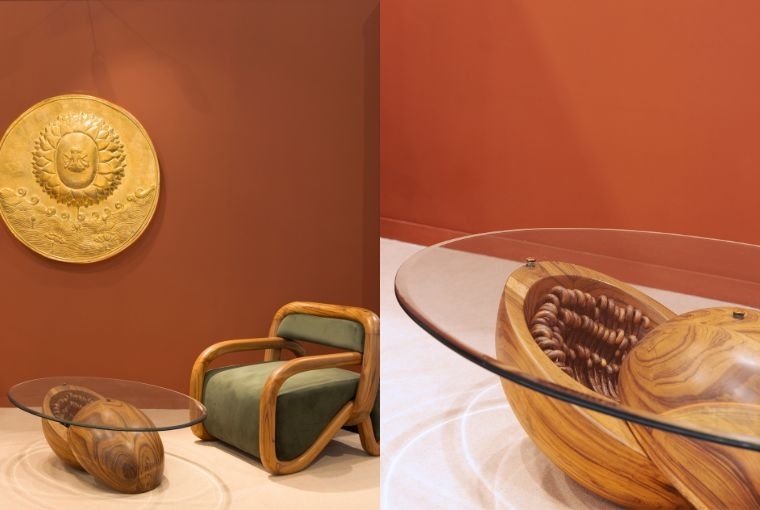
Teak wood remains our material of choice. It is among the finest hardwoods available in India, celebrated for its strength, longevity, and rich visual character. Its grain patterns, warmth, and ability to age gracefully make it particularly suited to creating pieces intended to last for generations.
As for the studio, most days are slow, and they should be. You're thinking, testing, discarding, starting again. But there's a specific moment that makes all of it worthwhile. It's when a piece crosses over from being a drawing into being a presence. It develops a gravity you didn't put there. People stop what they're doing and look at it. Not because it's finished, sometimes it isn't, but because the idea landed. You can feel it in the room.
The Future Of Collectible Design In India
India is at an interesting inflection point. The growing appreciation for local brands and indigenous craftsmanship has certainly created favourable conditions for collectible design to evolve. However, for the category to mature, it must move beyond appreciation for craft alone. The future belongs to design that combines exceptional making with compelling ideas. As collectors become more discerning, they will increasingly seek pieces that carry cultural relevance, intellectual depth, and a clear point of view. India possesses one of the world's richest craft traditions and one of its oldest philosophical traditions. The opportunity lies in bringing these two worlds together. When that happens, Indian collectible design will not merely participate in the global conversation; it will contribute something uniquely its own.
Words Neeraja Srinivasan
Date 16.6.2026