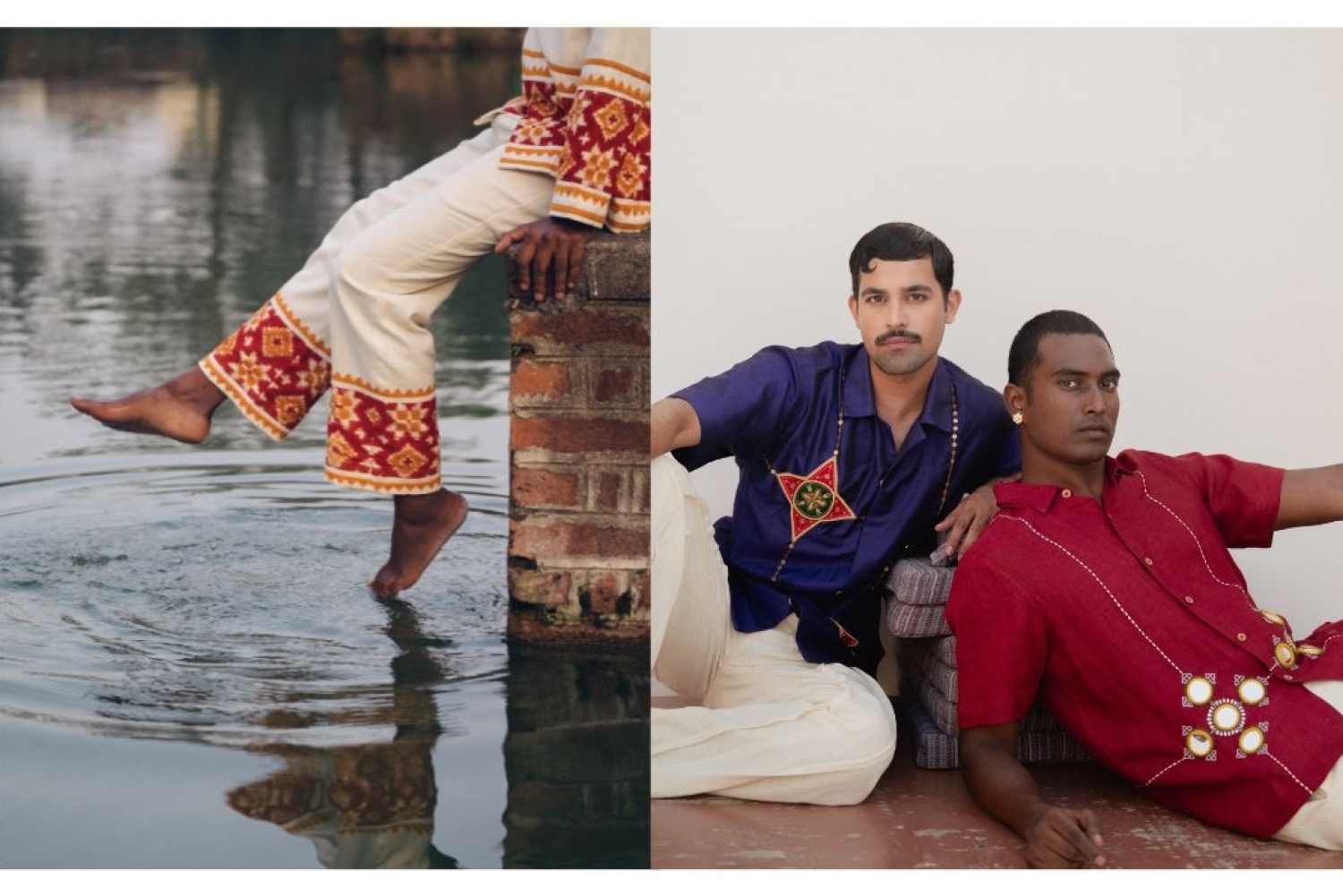
‘People started believing in the brand before I did’, Harsh Jhunjhunwala says, looking back on Aaram Viram's beginnings. In 2020, it wasn't really a brand yet. It was a handful of hand-block printed shirts made for friends during the uncertainty of the first COVID lockdown, stitched by a tailor working from the balcony outside Harsh's bedroom in Ranchi. Those shirts where the start of Aaram Viram.
Founded by Harsh and his childhood friend, Mridul Shah, the homegrown Indian label is all about comfort, craftsmanship and contemporary design. They pair Indian textiles with architectural silhouettes, weaving artisanal techniques from across the country. ‘These traditions have incredible depth’ discusses Harsh, ‘but our role isn't to present them as they have always existed. It's to reinterpret them in a way that feels relevant to the modern wardrobe and to a younger generation of wearers. For us, timelessness and experimentation aren't opposites, they support each other. If we can make someone fall in love with a beautifully crafted piece because it feels contemporary and effortless to wear, then we've also given those textile traditions a meaningful place in the present.’
That sensibility runs through their latest and Harsh’s ‘most personal’ collection yet, The Kept Things. ‘It was born from a period when my childhood home was demolished to make way for a new building. It was a strange feeling, realising that the place which had shaped me would no longer exist in the same form. What stayed with me, though, were the things we chose to hold onto. Not necessarily valuable objects, but everyday things that quietly carry memory. The Kept Things is about what remains after a place is gone.’ Over the years, Aaram Viram has slowly found its way to menswear, simply because that's where the founders felt the strongest creative connection. ‘We've become more comfortable designing for a specific audience rather than trying to appeal to everyone.’
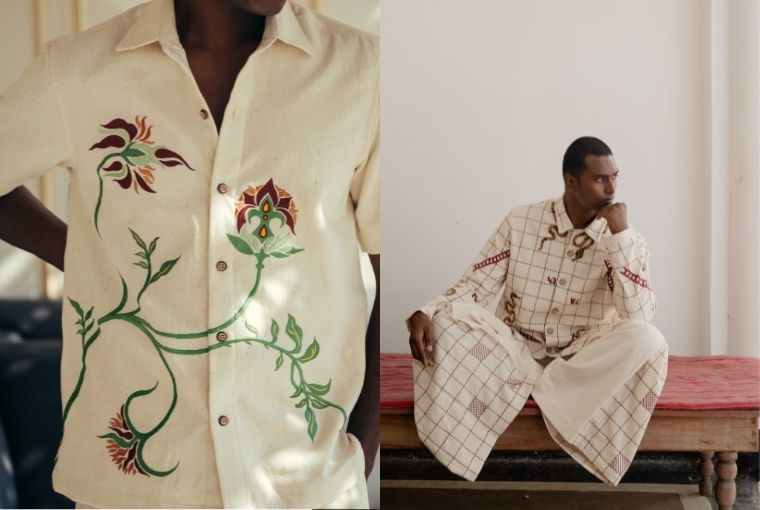
Aaram Viram works almost exclusively with Indian textiles and embroidery traditions, sourcing fabrics from weaving clusters across the country. The brand doesn't like portraying clothes as trends. The aim, he says, is to create ‘archival menswear’, pieces that feel discovered rather than manufactured, as though they've always existed and you've simply happened to find them. One garment will bring textiles from Murshidabad in West Bengal, another from Bagru in Rajasthan or Kutch in Gujarat. ‘For our Bhuj Overshirt, we worked with women artisans from Gujarat, who created the embroidery themselves with complete creative freedom. We then translated that craft into a contemporary silhouette that feels relevant to our audience while preserving the integrity of the embroidery.’ Bhuj. Ranthambore. Aravalli. Barmer. Colaba. These are all garment names from their label. They are not literal references to those towns, Harsh explains, but acknowledgements of the landscapes that shape India. ‘As we grow, we want Aaram Viram to remain unmistakably rooted in India, not just through the textiles we work with, but even through the language we use to describe our clothes.’
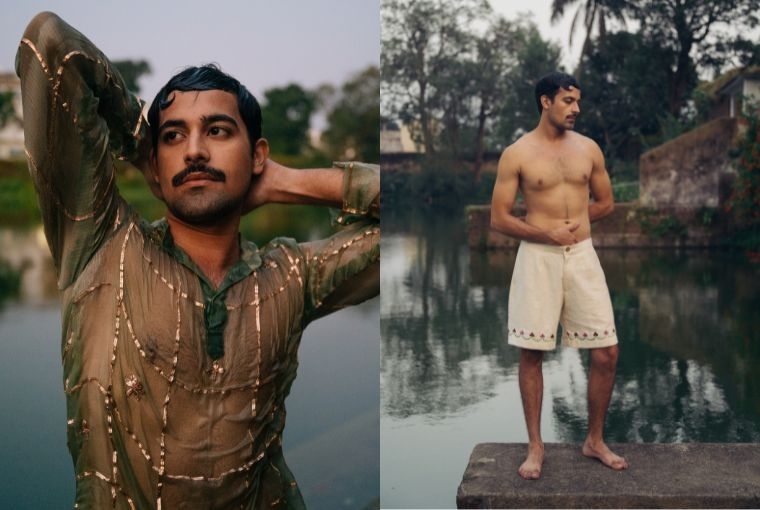
For all its associations with slow fashion, the co-founder wishes that people use the term more carefully. ‘It's become one of the most overused and vague words in fashion’, he says. ‘I don't think most people making that claim have earned it. Because of that, you will not find the word ‘sustainable’ anywhere in Aaram Viram's captions, campaigns, or website. I'd rather not use a word I can't fully stand behind than use it as decoration. Every designer, every brand can approach it in their own way. For us, it shows up in a few very specific decisions. We only use indigenous Indian textiles and techniques and we deliberately go to smaller weavers and artisans instead of bigger players or middlemen. It would be easier to work with larger units as they would be faster and more predictable, but we choose not to, because we want to give opportunity to the people who don't usually get picked first. There's a sense of gratitude and ownership [in them] that you don't get from a transactional, mass-production relationship. So slow fashion, for me, is fair labour, real craftsmanship, and choosing the smaller hand over the bigger machine every single time.’
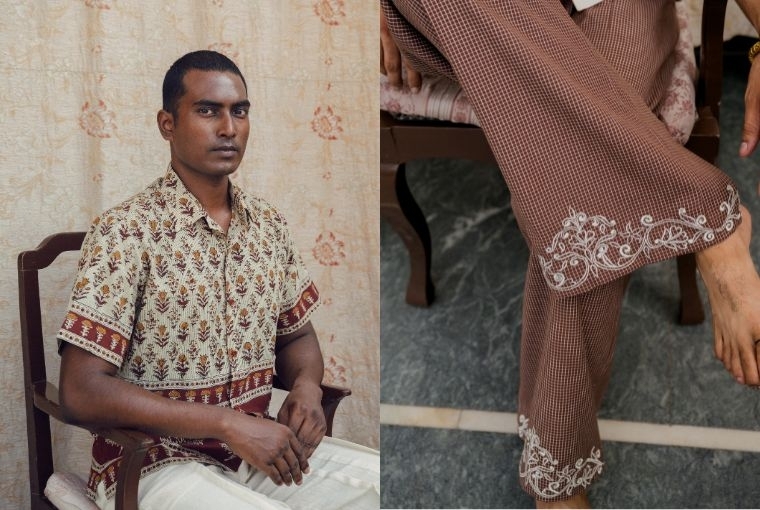
As the label slowly finds new audiences in India and beyond, he hopes it never loses sight of the values that shaped it in the first place. ‘We want to keep making clothes that people form lasting relationships with’. The next chapter for Aaram Viram is about exploring more textile traditions, collaborating with more artisans across India, and continuing to refine the idea of archival menswear that has shaped the brand from the beginning. Their future plans seem to circle back to the same act of curiosity that led a five-year-old Harsh Jhunjhunwala to secretly teach himself to sew on his mother's machine.
Words Nidhi Soni
Photography Hunar Daga
Date 9.7.2026