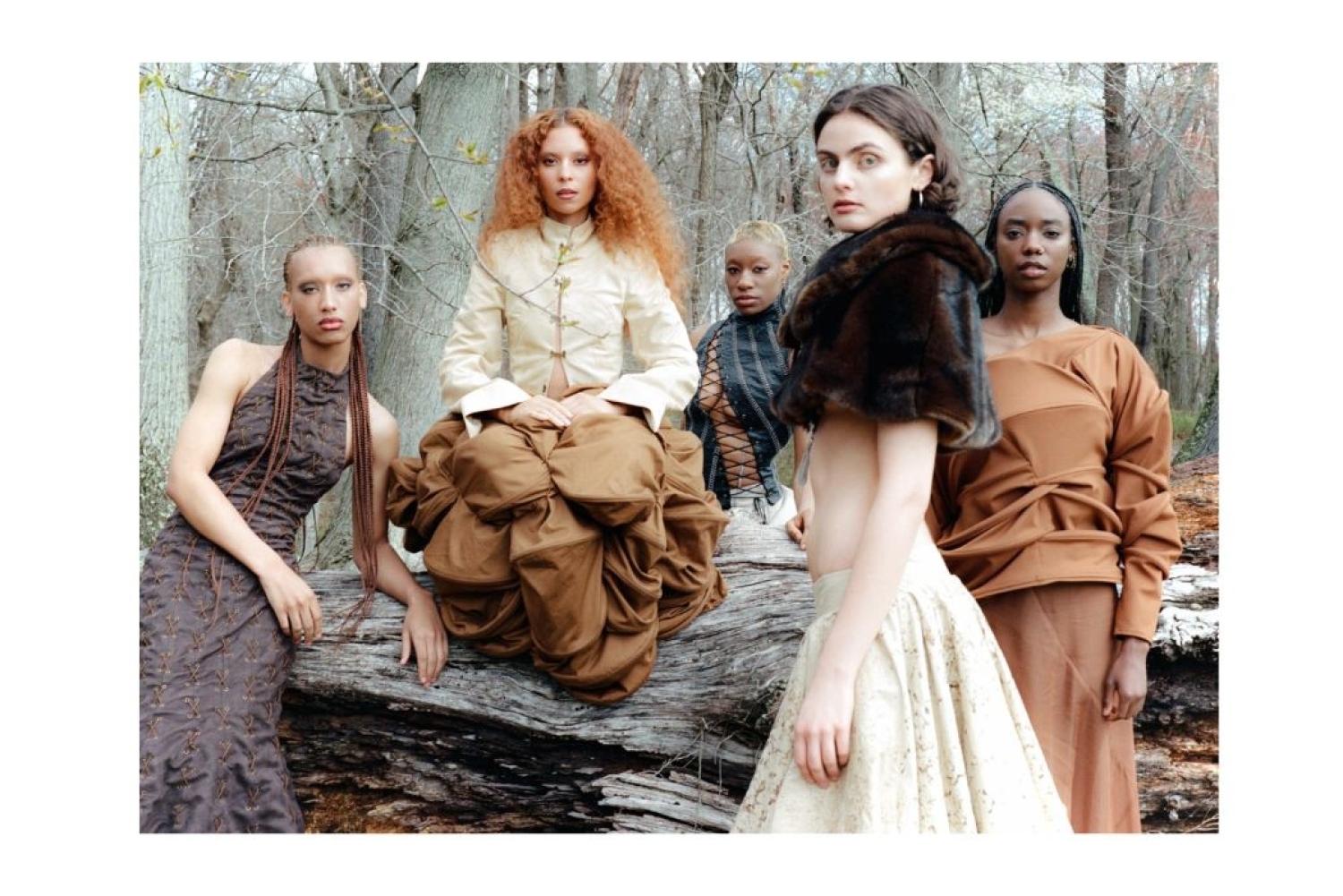
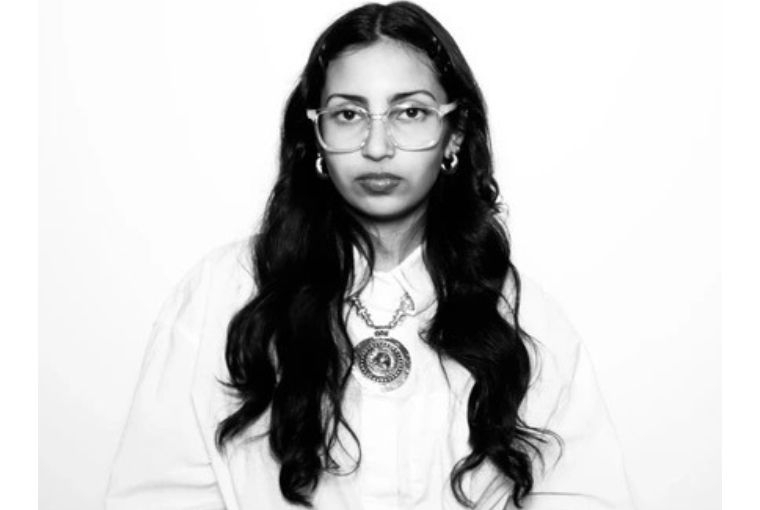
After moving to New York and graduating from Parsons School of Design, Shriya Myneni began building her practice, centred on transformation and the different versions of ourselves we evolve through. Her garments do not sit still on the body and feel as if they are shifting with the wearer, with silhouettes that morph and unravel on the body. Her designs feature heavy leather, faux fur, exposed lacing, exaggerated volume and draping that make each piece look as though it is being held together, pulled apart, and rebuilt, all at once. In In Pieces, Still Whole, presented through KidSuper’s The People’s Runway at New York Fashion Week, she explored identity in flux and the in-between state when something is changing yet somehow remains complete. Shriya is now focused on creating ‘a larger world around her clothes through image-making, styling, and deeper storytelling.’
Relationship with Fashion Design
Growing up, I was always aware of how much care existed around clothing. In the small things like what people chose to keep, what they repeated, what they packed when they moved, what they repaired instead of throwing away. Those garments always felt like they held more than just the fabric they were made from. I think that stayed with me, and it changed the way I looked at clothes. They were never just separate objects to me. They were connected to people, to routine, and to the places they had been. That is what drew me to fashion. I like that clothing sits so close to the body, but can hold so much beyond the body itself. Much of my work comes back to that idea of how clothing holds memory, change, and the different versions of ourselves we move through.
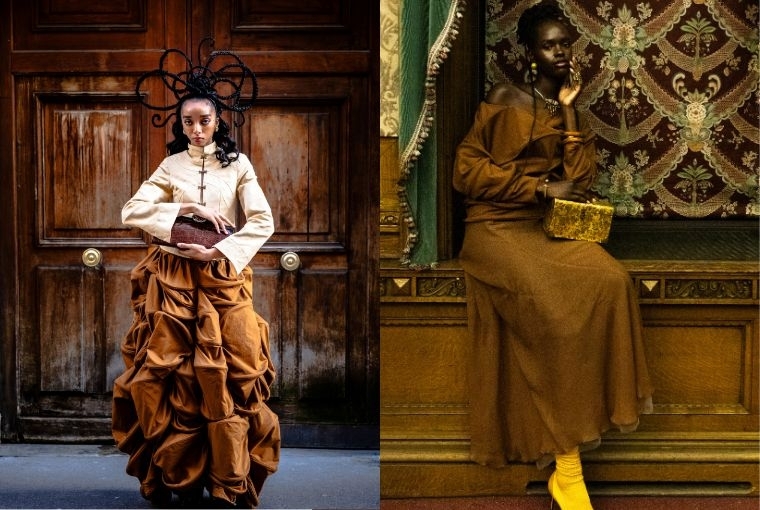
Fashion in Flux
My creative process is very much about bringing different influences together and giving them space to find a common language. It always starts with the story I want the collection to tell. Before I even think about specific garments, I try to understand the world I’m building and the specific feeling or question that’s driving it.
From there, the work develops through a lot of iterations and experimentation. I sketch, gather references, drape fabric, tear it down, and keep returning to the same ideas until something finally clicks. A piece rarely ends up looking exactly how I first imagined it. It changes constantly as I work on it, and I think that’s where my designs usually become the most honest. A lot of my work is centred on transformation, and I want garments that don't just sit static on a person, but feel like they are shifting and changing along with them.
Creating Beyond Barriers
The industry moves at such an exhausting pace, and the financial barriers to entry make it incredibly hard for new voices to survive, let alone create intentionally. There is so much conversation in fashion about newness, young talent, and fresh perspectives, but not enough conversation about what it actually costs to sustain those voices. I’d love to see more structured, long-term support systems built directly into the industry, similar to what KidSuper created for us in Brooklyn. For an independent designer, that kind of support can completely change what feels possible.
That experience also showed me what can happen when independent designers are not just given visibility, but actual infrastructure, mentorship, production support, and a platform. If we want fashion to stay innovative and culturally alive, we have to actively protect and fund the people who are making things from a place of pure creativity, not just mass commercialisation.
Showcasing at New York Fashion Week
Being selected by Colm Dillane and Brooklyn Borough President Antonio Reynoso for The People’s Runway was an incredible opportunity, especially coming right after graduation. It gave me the chance to present the work in a way that felt considered, supported, and much bigger than what I could have done on my own at that stage.
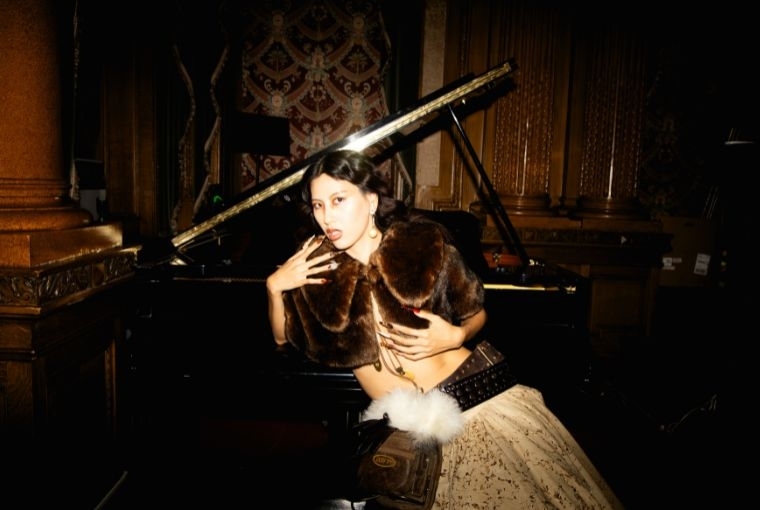
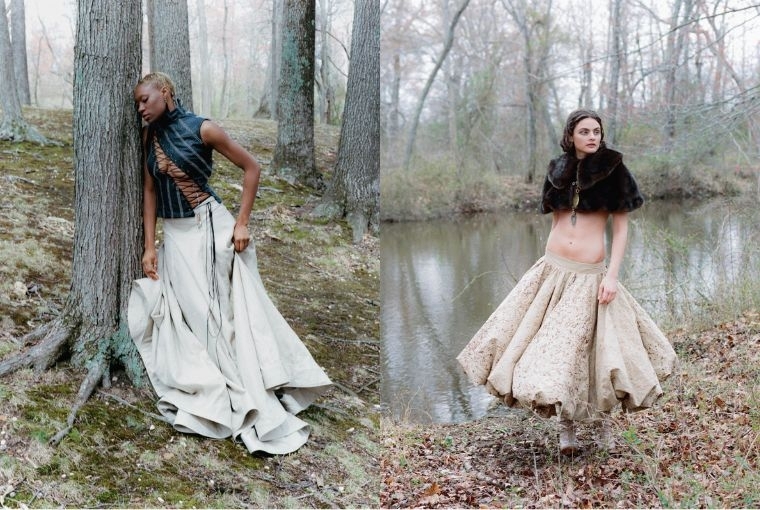
The collection I showed, In Pieces, Still Whole, came from a question I kept returning to, ‘how much of yourself can you remove before you stop being you?’ Before this show, my work had only been shown in student settings, where the focus is primarily on garment construction. The People’s Runway was my first time seeing the collection in a public, professional context. What made the experience so memorable was that it remained rooted in community. It didn't feel like a standard, exclusive fashion week show. There was real mentorship and collective support throughout the entire process, which brought the focus back to authentic storytelling and connection. For an emerging designer, it was a deeply encouraging way to begin my professional path.
This is an article from the June EZ. For more such stories, grab your copy here.
Words Neeraja Srinivasan
Date 29.6.2026
Shriya Myneni