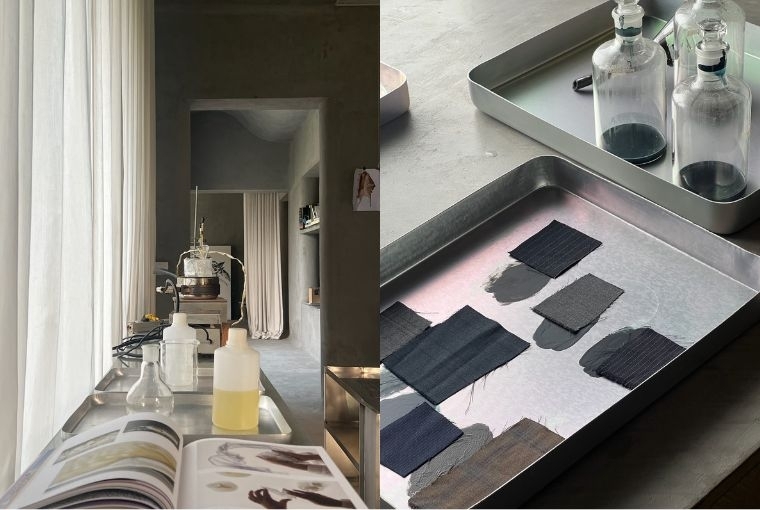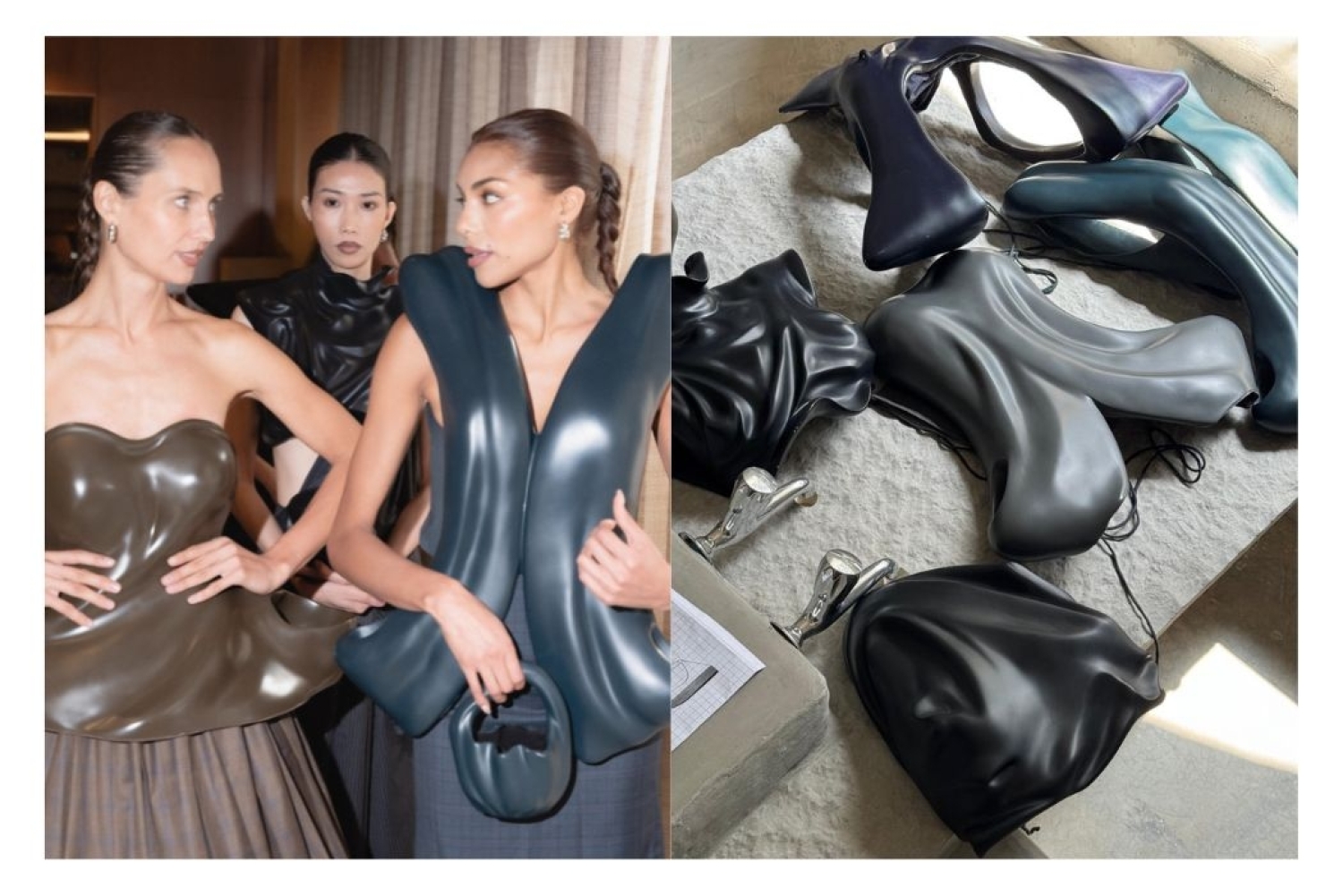
Devanshi Jain’s practice begins at the intersection of fashion, art and material research, where garments sit on the body yet exist independently as sculptural pieces. What emerges is an evolving label that treats the body as a site of display and extension, framing and distorting it through form.
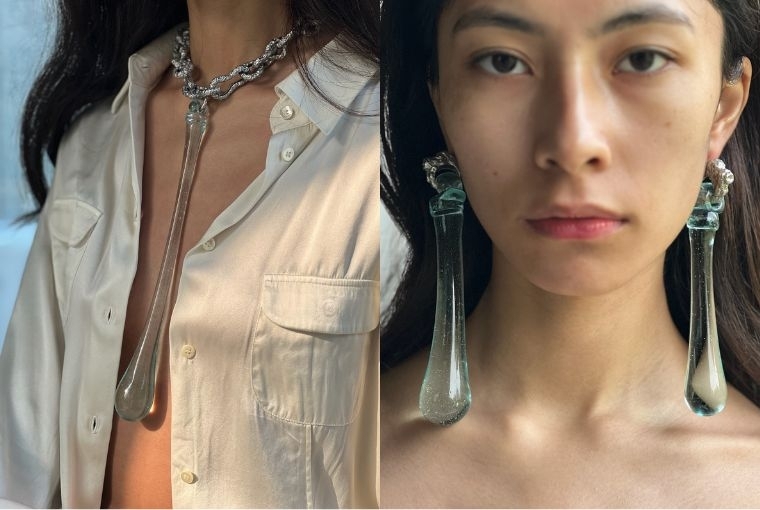
The garments are contoured or architectural in build, holding the body in precise, deliberate ways. Accessories are often fluid and organic in form, wrapping and pooling around the body in unexpected, interesting ways. Concept drives everything here, with material and process in service of the idea. Each collection or chapter unfolds like a non-linear autobiography, where ideas are translated into structure and silhouette. The result is work that holds its ground and resists trends while remaining deeply unique of its time.
The Beginning
My relationship with design began through fashion, specifically accessories, and an interest in creating objects that could sit on the body but also exist independently as sculptural pieces. Material wasn’t the starting point but it quickly became central. While researching ways to make these pieces, I was introduced to alternative material systems and biofabrication at Parsons in New York. That line of inquiry kept deepening over time and eventually became a core pillar of the practice.
The body, for me, is both a site of display and extension. The pieces are designed to exist in that duality; they frame, distort, and sometimes exaggerate the body, while still acknowledging their role in adornment. The label emerged from this intersection of fashion, art and material research. Rather than a conventional fashion label, it functions as an evolving practice; one that is interested in process as much as outcome and in redefining what luxury can mean today.
Visual Language
The visual language is concept-led, shaped by an interest in form, silhouette, and how pieces sit on and around the body. Each body of work begins with an idea. Materials are then selected, tested, and developed in response to it, drawn from an evolving library within the studio. There’s an architectural approach to the body. The pieces impose structure onto it; holding, extending, or disrupting it; while still operating as adornment. The practice operates outside the logic of seasons or trends, unfolding instead in chapters that allow each body of work to develop on its own terms. The ethos is to remain concept-driven, with material and process in service of the idea.
The Role of the Studio
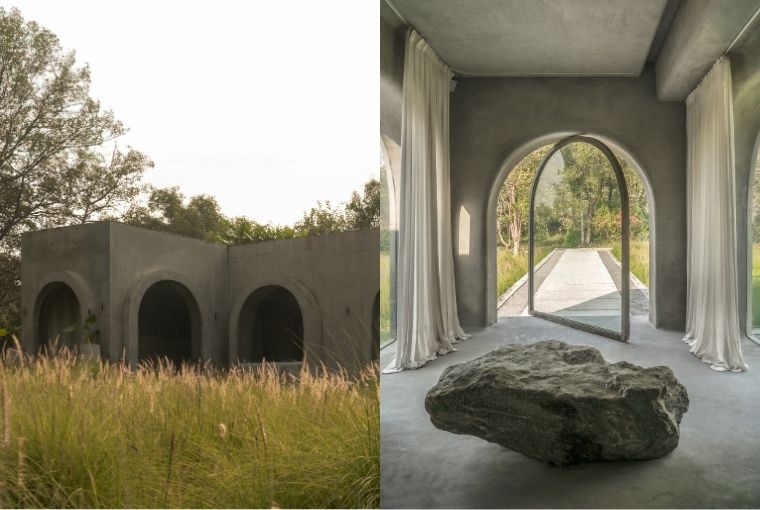
The studio occupies a 1970s structure originally constructed by my grandfather. When I returned from New York, I had a clear vision of what it could become; a site that could hold the practice in multiple ways. The idea was to treat it as a unified material field; fully concrete, raw, and continuous. The early language drew from European brutalism and an almost monastic spatial discipline but it has since developed its own identity. I collaborated with my sister, Devika Jain from Zerom Studio, and my friend Diya Sachdev to realise that vision. It was conceived as a space for making and for presenting the work through viewings, screenings, installations, and select collaborations where the work can be encountered and acquired within the context it’s created in.
It sits within an untamed forest, which is central to the practice. The studio operates within its surroundings; the wilderness and seasonal shifts are absorbed into the space. This is tied to the material direction of the work, which engages with biomaterials and biofabrication; systems that are derived from living sources. The space is an authored extension of the work with its own conditions and boundaries.
Decoding Biomaterials
We move across a mix of bio-derived, reclaimed and engineered materials, depending on what each concept demands. There's an ongoing exchange with material innovators and labs across different geographies, alongside continuous experimentation within the studio. Not all of this results in finished pieces but it builds an internal material library that informs the work over time.
In-house, we’ve developed materials such as hemp fibre-based bioresin, algae-derived compounds, mycelium-based systems, alongside experiments like growing crystals onto body objects. Others are sourced or adapted through collaboration; including root-grown textiles and protein-based materials. There's also a parallel engagement with reclaimed metal and glass, reworked into new forms.
Biomaterials, in simple terms, are materials derived from living systems or biological sources; they introduce a level of variability that you have to work with, rather than control completely. The studio operates as a site for prototyping and material development, feeding directly into the final pieces, which are produced as limited, collectible works.
This article is from the May EZ. For more such stories, read the EZ here.
Words Neeraja Srinivasan
Date 1.6.2026