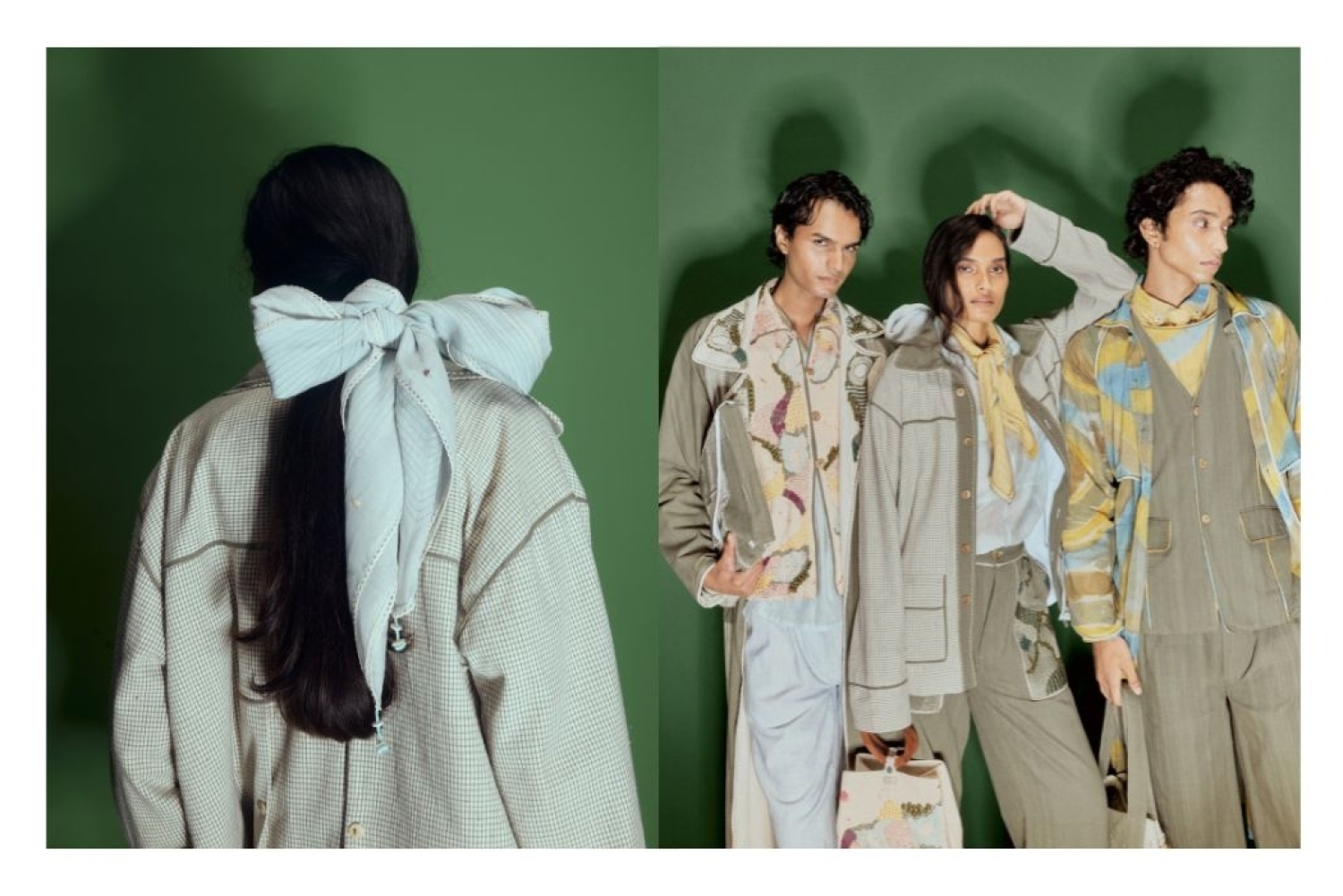
‘We wanted to challenge the notion of cotton being a thirsty crop.’ is what Drishti Modi and Rashmick Bose, founders of Lafaani, have set as the foundation of their label. Lafaani is a sustainable fashion brand that searches for balance between utility and beauty, intention and ease, responsibility and pleasure. With an appreciation for craft and a combination of academics and hobby, backed by research, Drishti and Rashmick design for longevity. Below, they share about the inspiration, materials and their design ideology.
Beginning
‘Its a combination of academics and the way we’ve been brought up.’ Drishti says as she describes that both her and Rashmick are postgraduates in Environmental Sciences; through the courses they were introduced to multiple aspects of sustainability. However, there was little mention of sustainability in fashion, she notes. ‘Growing up we’ve seen our mothers and grandmothers judiciously using clothes when they become too old,’ Drishti adds how it became her first-hand experience of fashion sustainability, which she intended to reshape.
Being a movie buff, her mind landed on a dialogue from the film Haider where the word ‘Lafaani’ was mentioned. It denotes, ‘your body is mortal but your soul is immortal.’ Drishti elaborates about the label’s name: ‘We didn’t want a namesake but something that brings the essence of immortalising the effort of the people. A simple word that eases on the tongue.’
Material
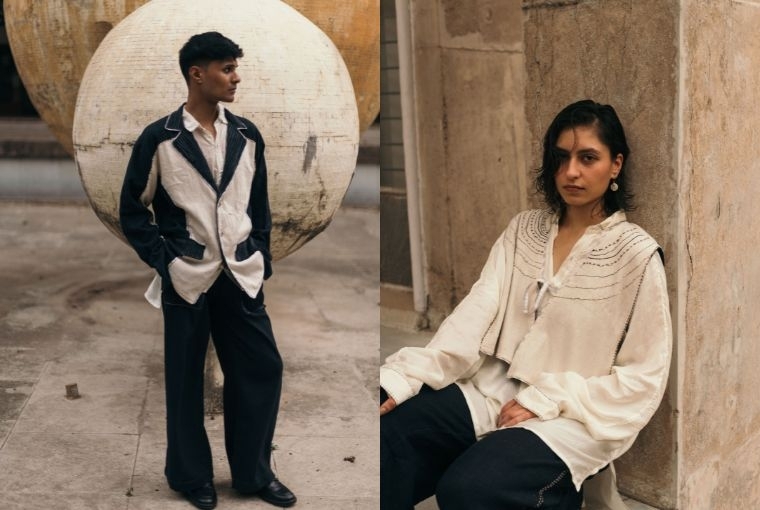
The label works with indigenous, rain-fed fibres such as Kala Cotton, Kandu/Brown Cotton, and Ponduru cotton.‘These materials are inherently intelligent in the sense of lower carbon footprint but also in the sense that these are grassroots species of cotton we’ve (in general) stopped growing. There is a lot of merit in the survival of these crops,’ Drishti explains their material choice. Further, Rashmick mentions, ‘activists like Medha Patkar’s work culminated in us an understanding of what material should be introducing the brand’s image.’ Moreover, ‘We like the unique hand feel (texture) it has,’ Drishti adds.
Design
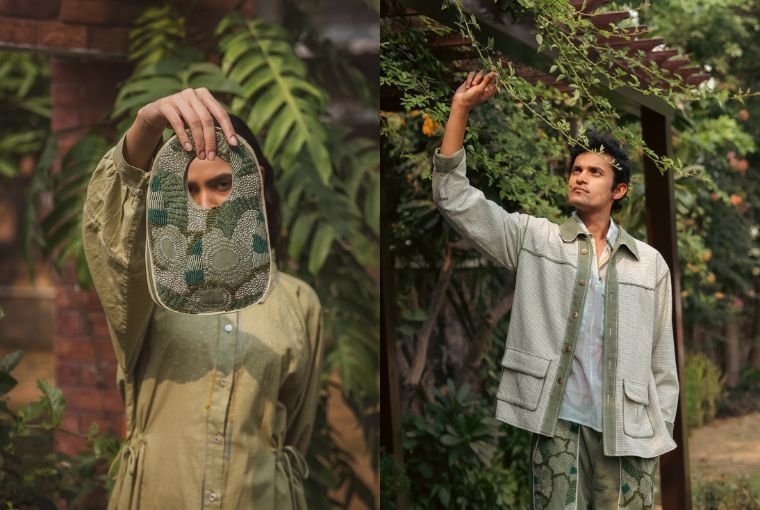
‘We wanted the clothes to be comfortable’ even for plus-sized individuals is what both the founders focus on when designing any piece. For this, they have ‘dual sizing options in the size charts,’ Rashmick says. There are elements like ties and drawstrings so the wearer is able to cinch if they like or loosen it up. Certain garments have the option of reversibility where the wearer gets an opportunity to wear these pieces on multiple occasions differently. The label focuses on the wearability of the clothes not just with respect to how they feel on the skin but how they can live long enough with the individual that too keeping in mind how the body constantly changes.
Drishti shares, ‘You can still produce fun-looking clothing.’ Wishing for people to ‘unlearn that sustainable fashion is boring and without colour.’ Further, she mentions, ‘handwoven denim’ is one of her favourite fabrics to work with. Adding that ‘how it isn’t your typical jeans. It can be of any colour,’ which she can use as a blank canvas, add a lot of embroidery, do ecoprinting on. For Rashmick, ecoprinting is a significant part of their design language. He elaborates on how even wasted temple flowers can be used as floral dyes.
Looking forward, ‘We want the Lafaani community to be an intersection of aesthetic and sustainability. Where the consumer becomes more aware of the value of the craft, to be more in touch with it.’ The founders believe that the value of a craft (on clothing) is in getting passed down to generations. For their future collections, the label focuses on being design-forward while sticking to their ideologies with sustainability.
Words Shruti Verma
Date 9.10.2026
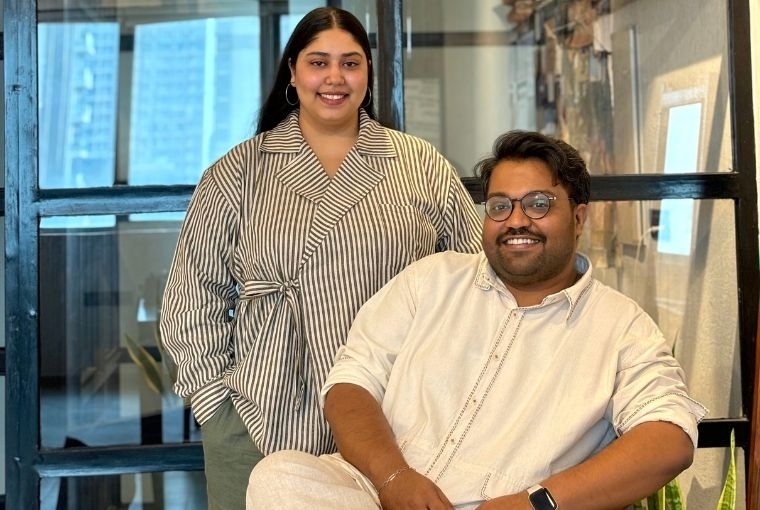
Founders of Lafaani, Drishti & Rashmick