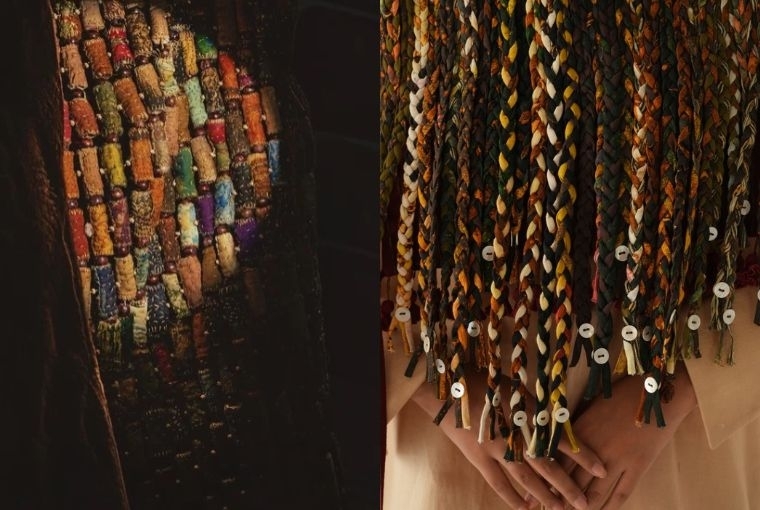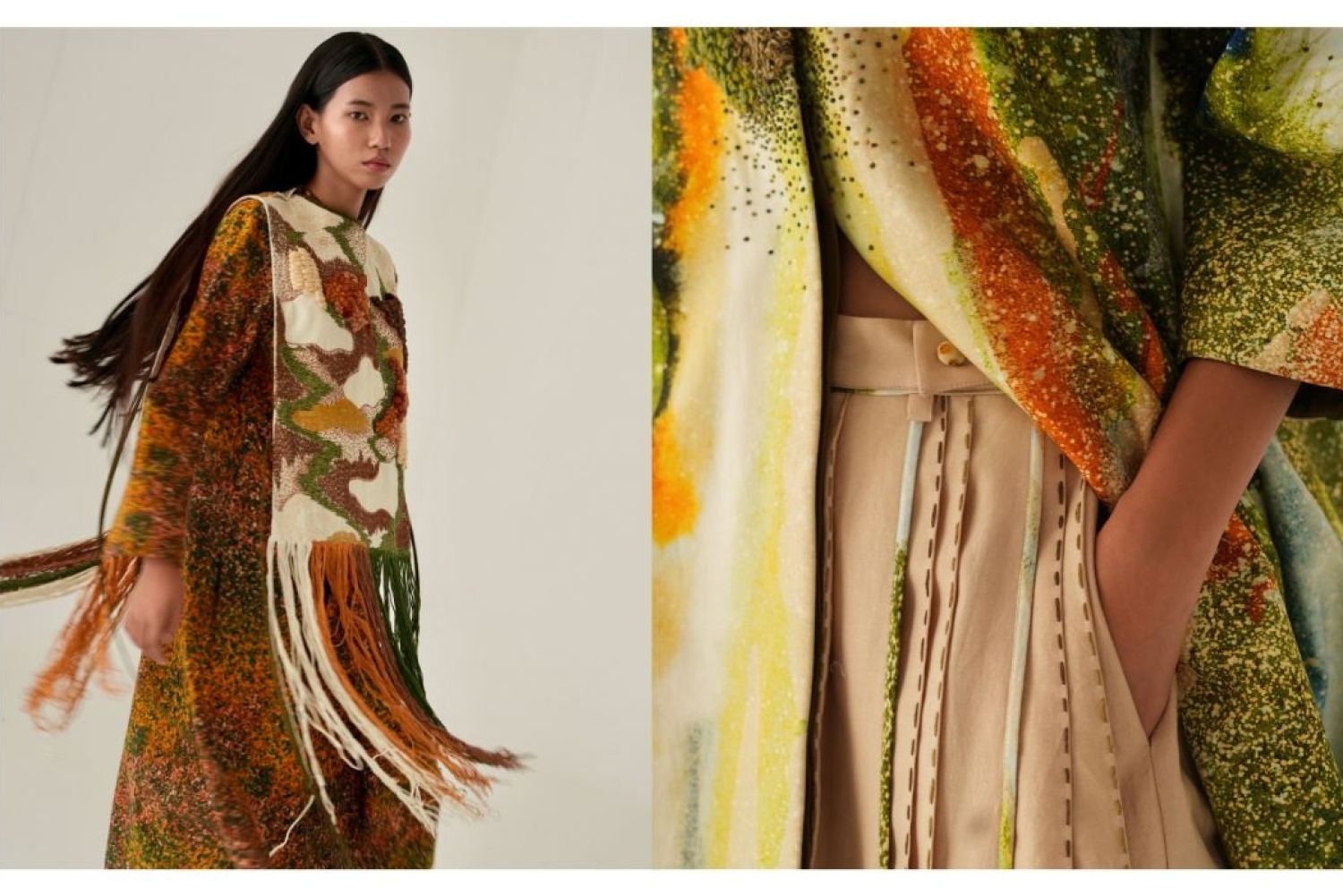
TIL by Ankur Verma just unveiled their latest collection, Still Becoming, at Lakmé Fashion Week 2026. In the days leading up to the show, we caught up with Ankur on his creative ethos, how he thinks about the elements of design and his very unique use of colour. The best kind of art is that which comes from the personal, and TIL arises from Ankur’s memories of his grandmother. Growing up, he would sleep beside her, holding her skin and observing the freckles, moles, scars and wrinkles that make each of us unique. The name, which translates to ‘mole’ in Hindi, is a personal tribute to his grandmother, who passed away in 2019.
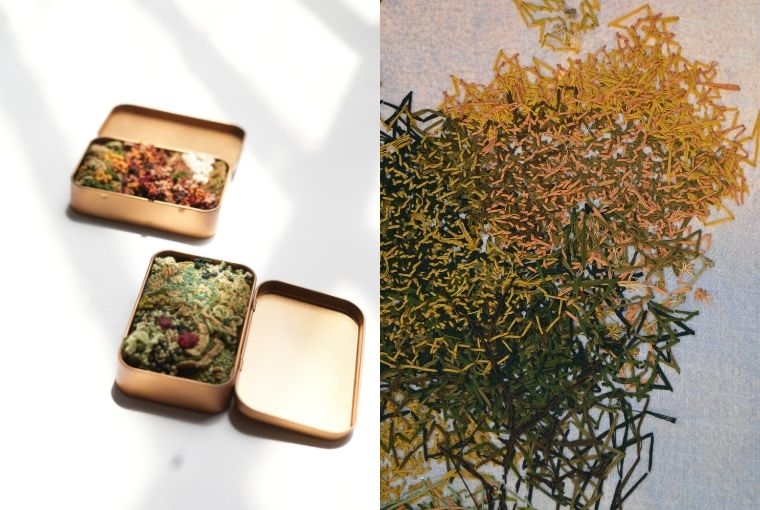
This fascination with the human body’s natural irregularities continues to shape his design language, finding beauty in the marks that time leaves behind. ‘We have been working on transforming discarded fabrics into new surfaces, almost like little textile terrariums, where something forgotten finds a new life.’ he says. In Still Becoming, intricate textures created entirely by hand through 100% thread work draw inspiration from skin, moss and nature, celebrating the patience, skill and craftsmanship of artisans, with every thread telling a story.
Could you tell me a bit about the roots of TIL and how it all came about?
TIL comes from a very personal place. The name itself means a mole in Hindi. Growing up, I was always fascinated by my grandmother and used to sleep next to her holding her skin and these little details of the human body, the freckles, moles, scars, wrinkles and everything that makes us different from one another. I have a very emotional connection with the name through my grandmother, who passed away in 2019. After spending years working with different design houses and understanding the language of luxury and craftsmanship, I wanted to create something that felt more honest and closer to who I am.
TIL was born out of this thought, to celebrate the human body in its most natural form. We don’t believe in hiding imperfections; we find beauty in them. Our textiles are inspired by skin, our surfaces carry stories, and our clothes are meant to evolve with the people wearing them. For me, TIL is not just about making clothes. It’s about creating something that feels human.
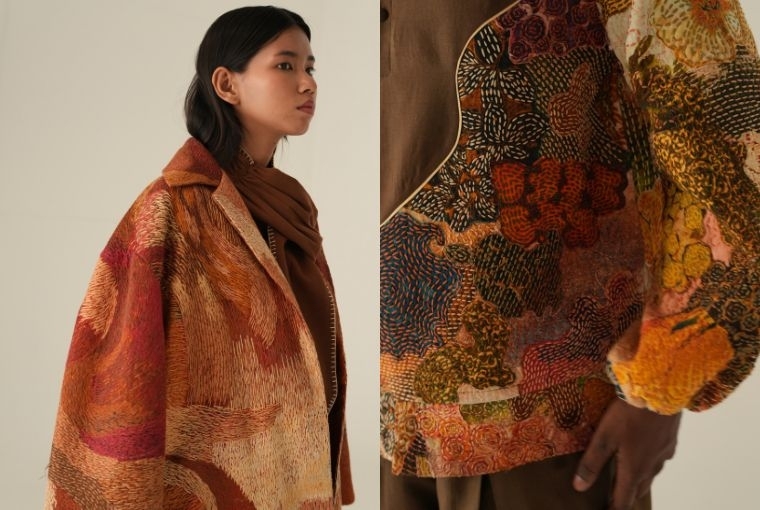
Prints are a significant aspect of your garment design. Where does the inspiration for these prints come from? And what draws you to them?
My inspiration has always come from things that we often overlook. It could be the texture of ageing skin, a patch of moss growing on an old wall, the irregular patterns of freckles, the movement of water or even the marks that time leaves behind on different surfaces. I have never been particularly drawn to perfection or symmetry. I find irregularities far more interesting because they feel alive. A lot of our prints begin as hand-painted artworks or explorations of textures in the studio. Sometimes we translate these into embroideries, sometimes into prints, and sometimes we build entire textile surfaces around them.
What excites me most is that nature and the human body share such a similar visual language. The veins of a leaf, the lines on our palms, the cracks in the earth or the wrinkles on our skin all tell stories of growth and time. I like the idea that a print doesn’t necessarily have to be decorative. It can be emotional, personal and even a little imperfect.
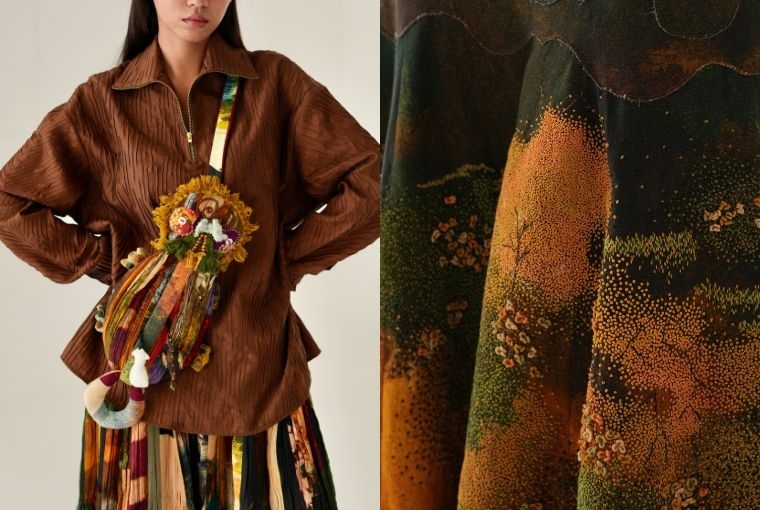
There is also a very interesting use of colour, especially in your Mirage collection: dark greens, royal blues, ochres, pinks, often all mixed into a single look or garment. The Forest Blazer from the Breathe collection even seems to derive inspiration from the natural world. Why is it important for you to keep clothing colourful?
I think colour is an emotion before anything else. I have always loved how nature brings together colours that we might never think of combining ourselves. A deep green leaf against a bright pink flower, moss growing over rust-coloured surfaces, or the way sunlight changes the colour of a landscape throughout the day.
With Mirage, I wanted to explore this freedom of colour, where different shades coexist without necessarily following conventional rules of matching. Even with the Forest Blazer from Breathe, the inspiration was not about recreating a forest literally, but capturing its textures, depth and organic irregularities of it and how I have treated it to a vitiligo skin. If you look closely you will understand why it is vitiligo.
I don’t believe that sustainable or conscious clothing needs to look muted or restrained. It can be joyful, expressive, dramatic and full of life. At TIL, we often work with earthy colours, but I love interrupting them with something unexpected, a bright blue, a scarlet red or a beautiful pink. I think these contrasts make the clothes feel more human, because we are all made of different emotions, moods and experiences.
Your co-ord sets are often accompanied by some very intricately designed masks as well. Could you tell me about the creative process behind making them?
For me, masks are an extension of our exploration of identity and the human body. Our faces carry so much of who we are, and I find it interesting to explore what happens when we reinterpret those features through textiles. Also, the whole point was to add masks to my show for making the audience focus on the clothes more than who’s wearing it as sometimes I like calling my outfits genderless. They are just beautiful clothes.
There is also beautiful hand embroidery all around. How does Indian craft sustain your practice, in terms of storytelling?
Hand embroidery is so deeply rooted in who I am as a designer that I have never really questioned its place in my practice. And when we talk about sustaining craft, I genuinely believe there is still an audience that values authenticity over trends, craftsmanship over mass production, and individuality over the noise of fashion.
So, I’m not worried anymore. Slowly but surely, I feel I’m finding my tribe, people who understand the beauty of something made by hand, who appreciate the time, patience and emotion behind every stitch. For me, sustaining Indian craft isn’t just about keeping a tradition alive. It’s about giving it a contemporary voice without losing its soul.
At TIL, we work extensively with hand embroidery, kantha, appliqué, quilting, patchwork and different forms of textile manipulation. We particularly love working with threads because of the incredible textures and dimensions they can create. What interests me is not simply preserving a technique in its traditional form, but finding new ways of expressing it. We might use embroidery to recreate the texture of skin, translate a landscape onto fabric or give discarded textile scraps an entirely new life.
What are you working on currently and what’s next?
We just unveiled our new collection, Still Becoming, at Lakmé Fashion Week on 16th October. This collection is particularly close to my heart because it explores something I have been thinking about for a long time: the beauty of growing, ageing and constantly evolving.
We have drawn inspiration from moss, the human skin and the quiet transformations that happen in nature. I love how moss grows slowly, adapting to its surroundings, finding life in the most unexpected places. There is something incredibly poetic about that. The collection also explores textile waste in a much deeper way. We have been working on transforming discarded fabrics into new surfaces, almost like little textile terrariums, where something forgotten finds a new life. Beyond the collection, we are continuing to explore international markets and collaborations, while staying rooted in Indian craftsmanship and our commitment to conscious design.
But more than anything, I want TIL to keep evolving without losing its honesty. I don’t want us to become a brand that simply follows seasons or trends. I want us to create clothes that carry meaning, pieces that people connect with and hold on to. Because at the end of the day, neither we nor our clothes are ever truly static. We are growing, we are evolving, we are Still Becoming.
Words Neeraja Srinivasan
Date 19.10.2026