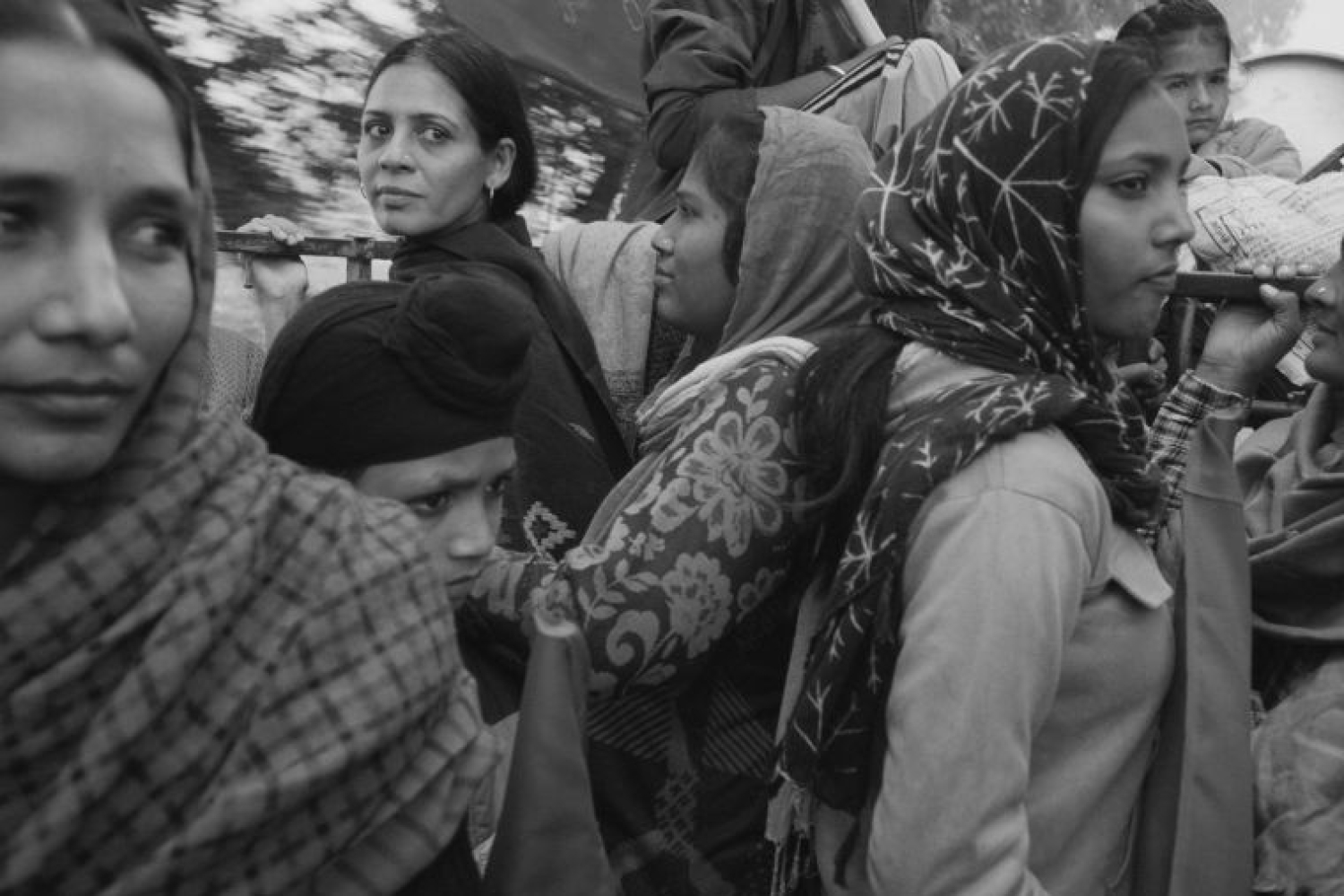
Shashank Walia's love for cinema came from his parents and then later in life, cable television brought Do Ankhen Barah Haath, Kaagaz Ke Phool, Deewaar and Ijaazat into the house. Chungking Express opened the door to world cinema, and at Jamia Millia Islamia, movies by Kurosawa and Maya Deren taught him to look beyond story. This is when he explored light and shade, texture and the interplay of sound and image. But cinema became the way of life at FTII. 'Looking back, it was less a moment of certainty than a gradual realisation that cinema was where I wanted to be,' he says.
Known as a cinematographer, including on Gurvinder Singh's Rehmat, Shashank has now made his debut as a writer-director with Birds in the Dark (Hanere De Panchhi). The film began as a documentary that never got made. In 2015, he and fellow FTII student Reema Kaur, now the film's producer, travelled across Punjab to record its folk music. The project lost its funding but in Balad Kalan, near Sangrur, they met landless Dalit agricultural labourers fighting for the right to cultivate the village's common land, the shamlat. Over the years, people from five villages became part of the journey. The result is a film that sits with the lives of Punjab's working people, engaging with questions of caste, class, desire, labour, queerness and dignity. The story asks poignant questions like who the land belongs to and who has the right to its fruits.
Shot in black and white, with long, still takes, Birds in the Dark had its world premiere at the Busan International Film Festival, where it won both the Audience Award and the New Currents Award.
Mauli Singh, who plays Dilraj, a Dalit farm labourer who shares her name, also handled the film's PR and festival strategy and brought Hansal Mehta on board as a producer. 'I wanted the world to witness Shashank Walia's Punjab,' she says. Now, as the film closes the Dharamshala International Film Festival for its Indian premiere, that Punjab comes home. More from both Shashank and Mauli below.
How did the story of Birds in the Dark come to you? Was it an image, a person, an event, or the farmers’ uprising itself that came first?
Reema Kaur, the producer of Birds in the Dark, and I first travelled to Punjab in 2015, when we were in our final year at FTII. We were exploring the possibility of making a documentary on Punjabi folk music for the Films Division. We spent time travelling across the state, hoping to find folk artists and discover the many musical traditions that existed there. The project, however, could not be commissioned due to lack of funds.
It was during this journey that we found ourselves in Balad Kalan, near Sangrur, where a group of landless Dalit agricultural labourers were struggling for their right to cultivate the village’s common land, or shamlat. We began spending time with the community, listening to their experiences and learning about the circumstances that had brought them together. What stayed with us was not only the injustice they were confronting, but also the strength with which they were organising themselves and imagining a different future.
That encounter gradually became the starting point for the film. It brought us into a world shaped by questions of land, caste, labour and ownership, but also by people’s aspirations and their efforts to claim greater agency over their lives. We began to understand that there was a much larger story here, one that could not be contained within the documentary we had originally set out to make.
Over time, the film developed through our relationships with the people we had met. People from five villages eventually became part of the journey, opening their homes and lives to us with humbling generosity. Their trust was fundamental to the making of the film. Looking back, Birds in the Dark emerged less from a story we had conceived prior but from the time we spent with the working people of Punjab and the questions that continued to grow out of those encounters.
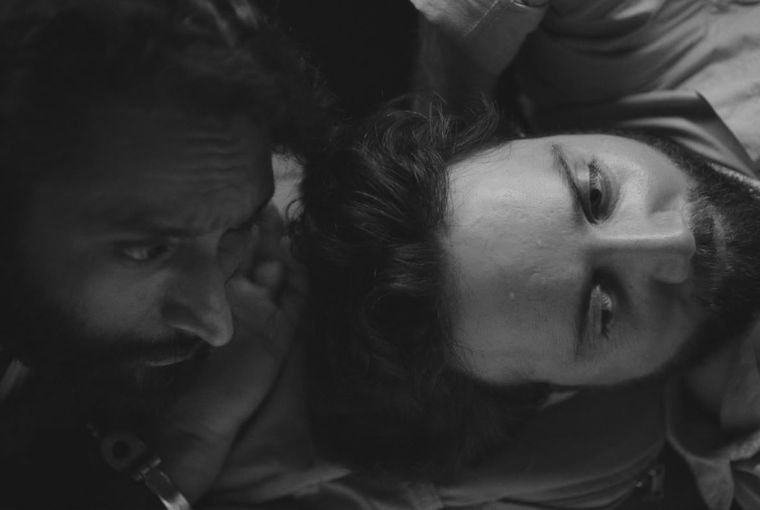
You wrote, shot and directed the film in black and white, with long, still scenes. How did you arrive at that language, and what was hardest about making it?
Birds in the Dark is rooted in the landscape of the village and the lives of its people, engaging with questions of caste, class, desire, labour, queerness and dignity. Alongside this engagement with reality, there was a poetic ambition: to explore how cinema might look beyond what is immediately visible and reveal the social and material forces that shape our lives.
For instance, when we move from an image of an agricultural labourer resting in a field after a long day’s work to the vast expanse of land and crops, we see a landscape of abundance. But a question also emerges: who does this land belong to, and who has the right to its fruits? For me, this is one of the possibilities of poetry in cinema. Images can speak to one another, create unexpected associations and raise questions without necessarily having to answer them. This sensibility shaped the film’s form in different ways. Black and white allowed me to play with light and shade, textures and tonalities, with what comes into view and what remains hidden. Montage and ellipses created gaps between moments, interrupting the seamless flow of images and leaving room for the viewer to wonder about what might have happened in between, or what lies beyond the frame. Sound opened up another possibility, allowing us to imagine events and spaces that we never actually see. In a way, the film is as much about what is left out as what is shown.
I have also always been fascinated by how time works in cinema. In certain scenes, I wanted the duration of a shot to allow something to change between the moment we enter a scene and the moment we leave it. Through the mise-en-scène and the sound design, that change might happen in a character, in our understanding of a space, or simply in the way we experience the narrative. A long take can allow us to remain in the moment and yet leave somewhere else emotionally or perceptually. Something shifts, a new door opens, and we find ourselves on a different plane of experiencing the narrative, the characters and the film itself.
The film is set in rural Punjab and moves between Punjabi, Kashmiri and Urdu. What is your own connection to Punjab, and what did you want to get right, or avoid, when writing a story from this place?
Both my maternal grandparents came from West Punjab, in what is now Pakistan, and migrated during Partition. Growing up, I heard stories of Partition, many of them painful and devastating. But my grandparents also spoke with great emotion about the lives they had left behind, the places they inhabited, the landscape and the cultural and social worlds that had shaped their everyday lives. Through these stories, I grew up with a sense of a place I had never known, yet somehow felt connected to.
Returning to the places our grandparents came from is a complicated proposition today. But perhaps we carry a part of that inheritance on this side of the border, in the Punjab we inhabit. I believe Punjab continues to carry something of the spirit of its Sufi fakirs, gurus and other philosophical and social thinkers: an idea of collective life founded on sharing, mutual aid and a sense of responsibility towards one another. The forces of capitalism have transformed Punjab, as they have so many other places, but I believe this spirit endures. You can still find it in the everyday lives of people, in the ways they come together, support one another and resist the idea that life must be organised around individual interest alone.
This was an important part of what drew me to the world of Birds in the Dark. I wanted to engage with Punjab not simply as a geographical location or backdrop, but as a living social world, shaped by its history, its struggles and its possibilities. For me, the question of land is inseparable from the question of how we live together and what kind of society we want to build.
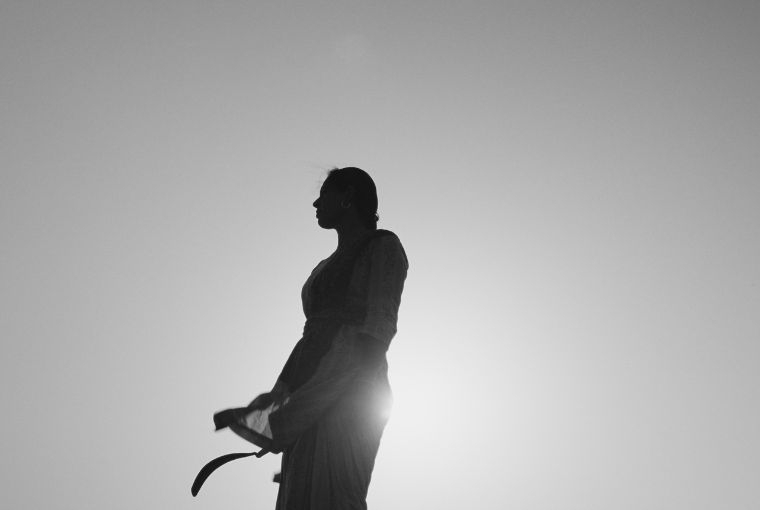
As a writer and director, what kind of themes do you see yourself gravitating towards?
People’s cinema is the space I feel most inclined to explore as a filmmaker. A cinema rooted in the histories of its people, the textures of their communities, and their everyday struggles and pursuits. There is a particular draw towards working-class lives and questions of labour, as well as the intersections between caste, class, gender, sexuality and faith, and how these shape our experiences of the world. None of these can be understood in isolation. They constantly overlap and influence one another. That is also why Birds in the Dark can be described as an intersectional film.
At the centre of this work is a desire to question capitalism and the way it shapes our understanding of the world and how we ought to live. We have been made to believe that there is no alternative, that the social and economic structures we inhabit are simply the natural order of things. That inevitability needs to be questioned, and the possibilities of living otherwise explored. Collectivity and solidarity are among the most potent alternatives we have, and love, in its many forms, is perhaps one of the most powerful ways to resist the logic of capitalism.
Cinema, I believe, can do more than simply present the world as it exists. It can help us imagine other ways of living, drawing from possibilities in the past that have been lost or forgotten, as well as those that might lie ahead. Cinema can open a window to a world beyond the limits of our present reality, to an alternate way of being and living together.
Were there any directorial conundrums that came your way?
Perhaps the biggest challenge is to arrive at simplicity, or sahaj. Despite all the tools available today and the formal possibilities and design sensibilities we bring to filmmaking, the challenge is to use them in a way that allows the film to arrive at a state where nothing feels imposed or overstated. Representing life on screen is a matter of responsibility. The conflicts that shape people’s lives cannot simply be reduced to plot points or dramatic devices. They require us to look more closely, to observe and reflect, and to leave room for the viewer to do the same. With Birds in the Dark, the endeavour was to find a form that could encompass people, their relationships and desires, and the landscape they inhabit over an extended period of time, without forcing their lives into a predetermined narrative. For me, this is the challenge of arriving at sahaj: using a considered formal design to reach a simplicity that allows life to unfold on screen in all its complexity.
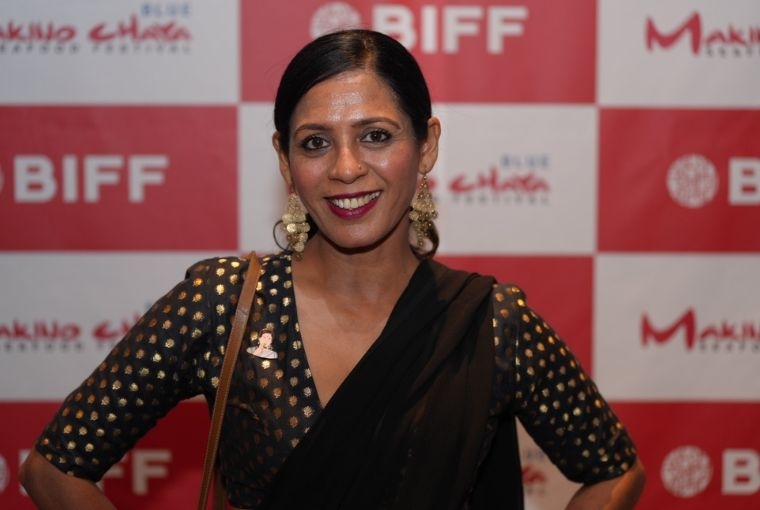
Mauli Singh
Mauli, you acted in the film, but you also handled PR and festival strategy, brought Hansal Mehta on board and raised the entire post-production funding. When did you realise your role would go beyond acting?
When I came on board Birds in the Dark as an actor, I had already worked as a producer on the Oberhausen-winning short film Rammat Gammat and the Sundance-premiering feature Fire in the Mountains, where I had also handled festivals and PR, apart from having worked as a film publicist for a decade. So, when Reema and Shashank approached me to play Dilraj, it was natural for us to discuss funding, among other things.
During pre-production, I reached out to many people, but it wasn’t easy to raise money for a black-and-white indie film with no stars and a complex storyline, especially at the script stage. However, I had immense faith in the film. I knew that if we could pull off the shoot, we would find a way to raise funds for post-production. That belief grew much stronger during the shoot, when I saw the stunning visuals. I knew Shashank was a rare talent and was creating something truly magical. Throughout the shoot, I kept telling him that our film would go places, and he would just laugh shyly.
I’m so glad Hansal sir saw that magic in the film and came on board as a producer, helping us finish it and take it out into the world. A lot of established filmmakers present films, but very few have the courage to actually put their money behind a black-and-white independent film. I’m really grateful to Hansal sir for believing in the film and championing it.
And how did you prep for the role?
It was a long process. Shashank is a perfectionist, and he took his time finalising the cast. He auditioned many actors before deciding to cast me. We were in talks, but the process of casting Dilraj took almost a year.
I also had my apprehensions about playing a Dalit woman from a village who works as a farm labourer. Although I was born and brought up in Punjab, I’ve spent most of my adult life in cities, including nearly 20 years in Mumbai. I wasn’t sure if I would be able to embody the character convincingly. But Shashank was very sure about me, and he helped me overcome my doubts and fears. We did a workshop with the actors before starting the shoot, which really helped all of us. By the time we began filming, we felt ready to embark on this exciting ride.
Shashank is very collaborative and open to suggestions. He had shared the script with me early on, and we had several discussions about Dilraj’s character, who, interestingly, shares my real name. He guided me through my preparation without ever putting pressure on me. He gave me reading material to help me understand Punjab’s Dalit and political history, along with articles about the Dalit woman whose life inspired my character. Raising post-production money for an independent black-and-white Punjabi film is a hard pitch.
What made you believe in this project so strongly, Mauli?
I’m a very instinctive person, and I also think I have a natural ability to spot talent! I had seen some stunning black-and-white photographs of the farmers’ protest taken by Shashank, and I first met Reema and him at the farmers’ protest in Delhi. When they approached me for the film and shared the script, I was fascinated by their vision of Punjab. The story was about marginalised people, with strong female characters, queer men and, at its heart, the power of a collective. The landscape was expansive, with much of the story unfolding across vast open fields, forests, rivers, on a boat and in the narrow lanes of a village, across different seasons. The imagery was evocative, poetic and politically charged. It was a Punjab I hadn’t seen explored on screen before.
Punjab is far more complex and layered than the romanticised landscapes of Yash Chopra’s mustard fields or the Punjab of Abhishek Chaubey’s Udta Punjab, seen through the lens of its drug crisis. It is a land of many untold stories, lived realities and worlds that Indian cinema has barely begun to explore. I wanted the world to discover and experience the Punjab that Shashank Walia has so evocatively brought to life on screen.
“For me, as someone from Punjab, it’s really special to see this story travel so far and connect with audiences who may come from very different cultural backgrounds. It reminds me that when a story is told with honesty and conviction, its emotions can transcend language and geography.”
The festival plan led to a world premiere at Busan and two awards; the Audience Award and the New Currents Award. What was the strategy, and what does it mean to you, as someone from Punjab, to see a story from here connect with audiences in Korea and beyond?
I always believed Birds in the Dark would do well on the festival circuit, but my biggest concern was its runtime. The first cut of Hanere De Panchhi was over three hours long, and Shashank wanted to submit that version to festivals. It’s incredibly challenging for a three-hour debut feature to find a place at an A-list festival. After a few unsuccessful attempts, Shashank reworked the film and brought the runtime down to two hours and 16 minutes. That was the cut that made it to Busan.
I’m incredibly grateful to Berlinale consultant Anu Rangachar for championing the film and to Busan programmer Park Sun-young for seeing its merit. **The Busan audience was amazing. The film resonated so deeply with them that we won the Audience Award. The jury was also unanimous in giving us the New Currents Award. To top it all, both awards came with a cash prize, which made the recognition even more special. We even got to meet one of our favourite filmmakers, Majid Majidi. It couldn’t get better than that!
And now, we’re having our Indian premiere at the Dharamshala International Film Festival, one of my absolute favourite Indian film festivals, where the film will screen as the closing film. I was the festival’s publicist in its formative years, so it holds a special place in my heart. It feels lovely to return to the festival with a film of my own. I can’t wait to watch Birds in the Dark with Indian audiences!
For me, as someone from Punjab, it’s really special to see this story travel so far and connect with audiences who may come from very different cultural backgrounds. It reminds me that when a story is told with honesty and conviction, its emotions can transcend language and geography. I’m excited for audiences back home to discover this Punjab, too.
Words Hansika Lohani
Date 30.10.2026