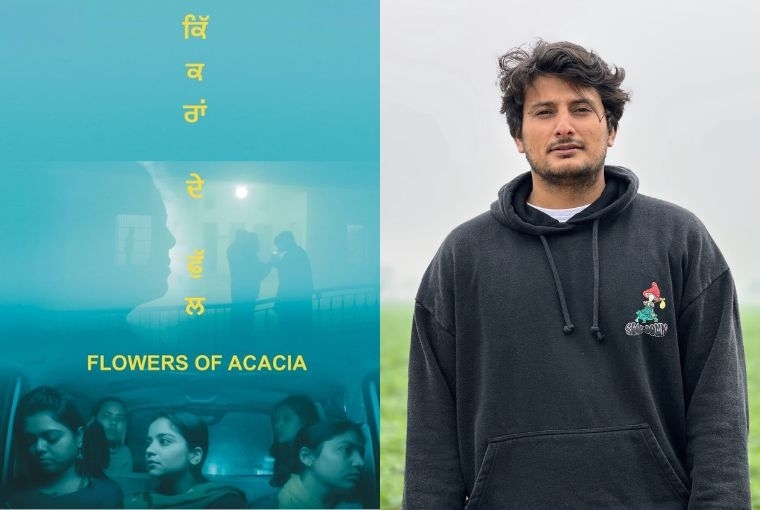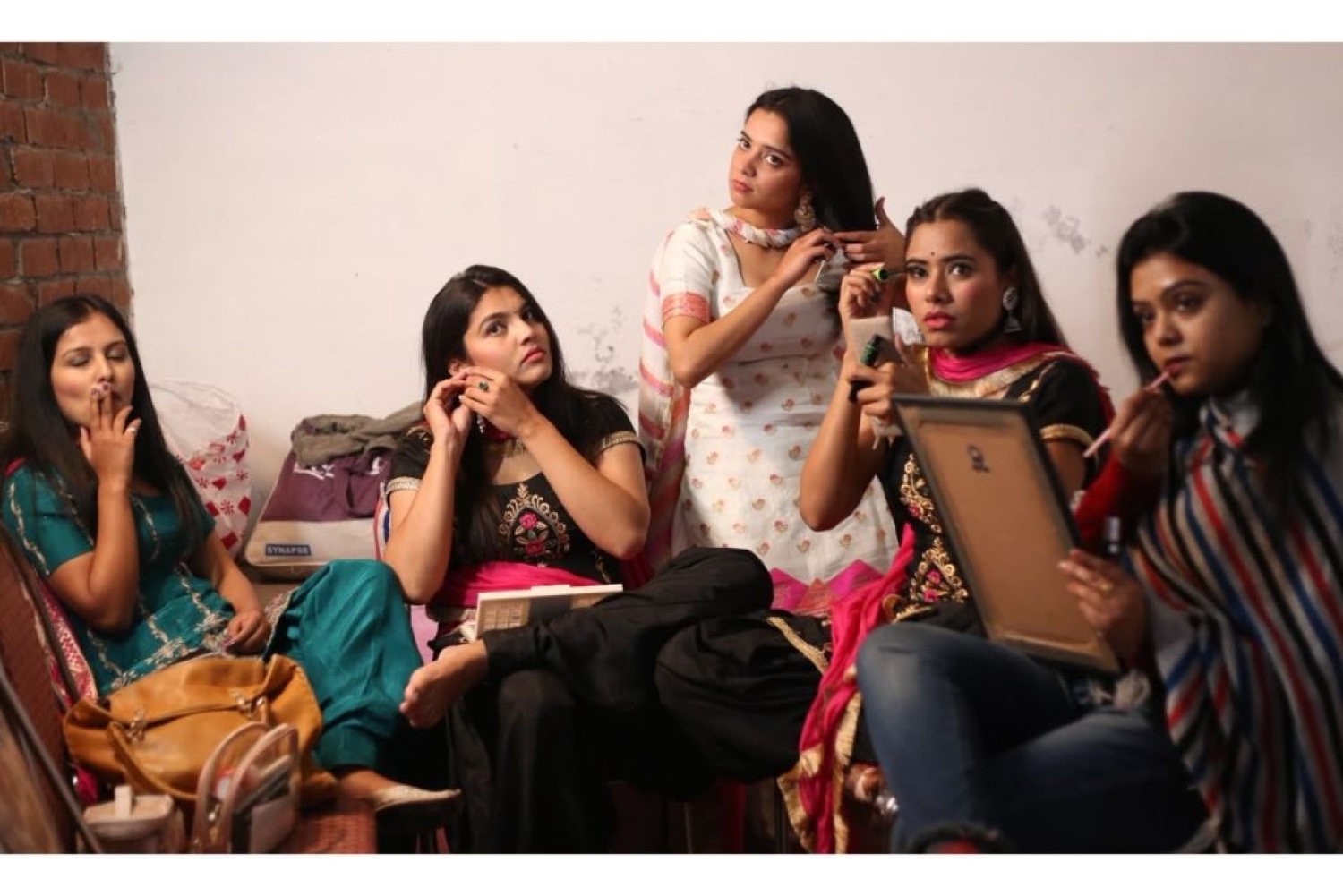
Behind the lights, music and colour of Punjab’s weddings, Anmol Sidhu’s Flowers of Acacia (Kikkran De Phull) turns toward the lives that adorn these celebrations. Inspired by a real story that stayed with him for years, the film looks at Punjab’s wedding orchestra dancers: their dreams, struggles and realities they navigate in a deeply patriarchal world. The Punjabi independent feature premiered as the Centrepiece Special Night selection at the New York Indian Film Festival 2026 and has since travelled to the Indian Film Festival of Melbourne, where it is nominated for Best Indie Film. Anmol first made his mark with Jaggi (2022), a critically acclaimed film that showed violence, masculinity and the pressures that shape young men. This time, his attention to difficult questions finds a very researched lens in Flowers of Acacia, where he tries to showcase another overlooked corner of society.
Ahead of his film screening in Melbourne in two weeks, I talked to Anmol about the making of the film, his relationship with realism, the influence of Russian literature on his storytelling and the questions that continue to shape his approach.
Where did you grow up and how has your upbringing shaped the way you observe stories?
I come from a very small village, Kauloke in Punjab. If we needed groceries, we'd have to travel about 20 kilometres to the nearest town. We didn't even have a barber in the village, just to give you an idea. That's the environment I grew up in. I went to a government school. There were a lot of teachers in my family. My grandmother was a principal and my grandfather was a PT teacher, so that was the kind of household I was raised in.
Growing up, I also had epilepsy, so I didn't go out much. I mostly stayed at home. Because of that, I wasn't allowed to watch television either. I hadn't seen popular films like Sholay or Karan Arjun. In fact, I think I watched my first film only in 2011, when I was around 17 or 18.
My mother loved writing and reading a lot and I picked up that habit. I still read a lot today. I studied literature in classes 11 and 12. When I scored well, my family, who probably thought I was good for nothing until class 10, decided I should do a BCA degree. That's how I ended up in Chandigarh. For a while, I tried modelling because people suggested I should. Then someone told me to try theatre, so I started learning acting. I spent some time doing theatre before moving into directing plays. Later, I got a job where I made a documentary. That led me to making short films and eventually, Jaggi, my first short film, happened.
Flowers of Acacia was inspired by a real incident. Could you take us back to that?
Andrei Tarkovsky says that a filmmaker recreates his childhood. The world I portray in this film is the same one I grew up in. The culture I show still exists in my village. As a child, whenever I went to weddings, the orchestra dancers seemed almost like ghosts to me. I had never seen such daring girls, at least in my immediate society, who’d confidently go on stage and dance with so many people around them. Some touching them, some drinking alcohol, others teasing. None of it felt normal to me. I was always curious about who they were and what their lives were like.
Then, after I moved to Chandigarh, I heard about a dancer who had been shot. She was dragged off the stage and treated in a horrific way. That became the driving force behind this film. I wanted to know about her life and about those ‘ghosts’ from my childhood. I wanted to understand who they really were.
Who were the people you engaged with during the process, and how did that influence the story?
I wrote this film over two years and it was shot over a period of one and a half years. During those two years of writing, I travelled with many wedding orchestra groups. They would call me and tell me where they were performing on a particular day and I would go along with them.
That experience introduced me to many realities of the young girls who join these orchestras. They are often pushed into this profession because of different circumstances and compulsions. I saw how a new girl would join the group and try to adjust, without even knowing how to handle the crowd or what to expect. I got to know all these things.
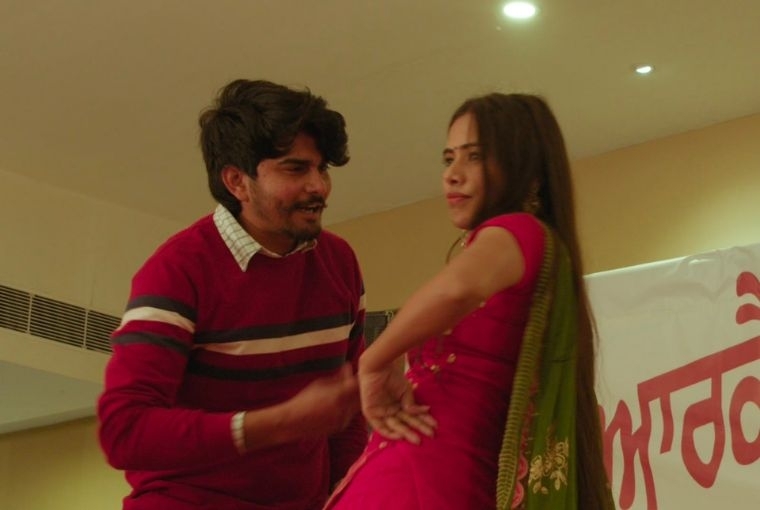
When we started casting, my actors also began performing alongside the actual dancers. All our filming took place at real weddings; there were no sets. For eight months, we only shot at real marriages. I spent a lot of time with them, writing and trying to get them to open up. It was not easy to break the ice and understand the many shades of their lives.
What does realism as a principle mean to you as a filmmaker?
When I did theatre with my guru, Chakresh Kumar, I understood the true foundations of acting. After that, I went deeper into my learning by reading (Constantin) Stanislavski and (Jerzy) Grotowski, which helped me develop my own approach. In all my films, I don't want to include anything that cannot be found or supported in reality. I am wary of unnecessary pauses, cuts and close-ups for example. To still make the overall impact interesting, I do other things. We’d shoot a scene for five to six days. We’d do a long single take. Sometimes, we have shot a scene for 25 days straight. I want to include all the real-life mundanity, of two couples fighting, people talking and going, etc. I also keep the external music to a minimum. I try to keep it so that the audience watches the film like an observer. Flowers of Acacia specifically is so realistic that a lot of people, who sent me e-mails after the premiere, felt like it was a documentary.
What conversations around rural women’s lives in Punjab did you want the film to explore?
There are many conversations to be had about the lives of women. They have it really hard. When I spoke to the dancers, they found it difficult to open up to me. They weren't able to speak freely. That, in itself, shows how deeply patriarchy has been internalised. Even other women look down on their profession. The common attitude is, ‘This is a man's job’. You know, if I ask my aunt how she is doing, she immediately breaks down in tears. No one takes the time to speak to her. They are treated almost like animals, expected to clean, sweep, cook and take care of everyone else. Their lives are such that when someone simply asks how they are, they break down because no one has spoken to them like that in a long time.
How do you see the portrayal of women in Punjabi cinema today?
Punjabi cinema derives a lot of its influence from Punjabi music. I have many problems with Punjabi music. If I tell you the core of our songs it is this: you can't afford a jet, but I'm in the jet. You can't afford a Rolls Royce, but I'm in the Rolls Royce. And these words, with the intonation of ‘ni’ are addressed implicitly to women. 70-75% of these songs are demeaning to women but they can't even write a song without a woman. All those things get translated the same in cinema. Women are used not in an agentic way but in an ornamental way. When boys in the 8th to 10th grade bracket listen to these songs, they subconsciously form a skewed perception of women. And to undo it, it takes a lifetime.
Jaggi is also a tough statement on masculinity. Do you see a continuation or a conversation between Jaggi and Flowers of Acacia?
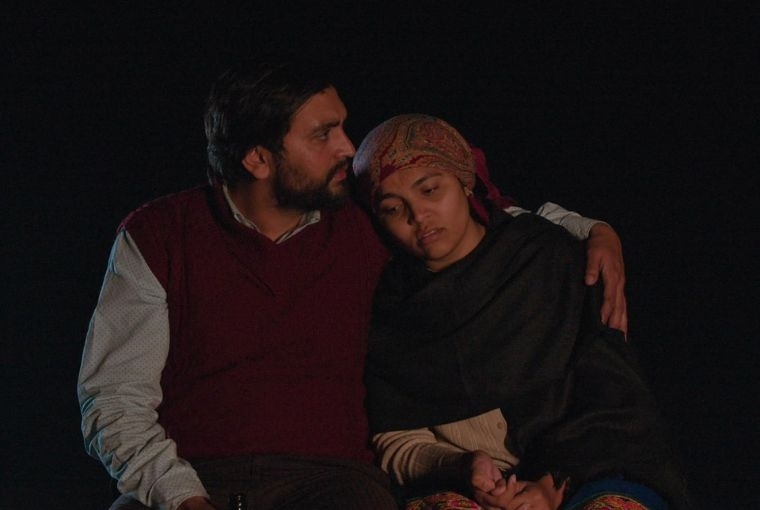
The common thread between both my films is that they focus on people, subjects and conversations that are often ignored or left unspoken. They look at topics that are considered taboo things that everyone is aware of, everyone is a part of, but no one wants to talk about. My films are my way of starting those conversations. Even the title Flowers of Acacia comes from this idea. Acacia flowers are very fragile. They don't have any value. I mean, if you touch them, they die. They are just made to be looked at, not collected.
As an independent filmmaker, what opportunities and hurdles did you face along the way?
Everyone told me that I should have gone to Cannes, Berlin, Sundance, TIFF. But I come from this small state here in Chandigarh and I didn’t have any links. I didn't know what the journey of this film could have been. Making the film itself took a lot of time. I also didn't have the budget to make it the way I wanted to, so I ended up handling a lot of the sound and other technical aspects myself. But it's okay; challenges are bound to happen.
Lastly, what are you working on next?
I am working on another film as I mentioned. I haven’t named it yet but it’s also a story set in a village.
Words Nidhi Soni
Date 29.7.2026