Photo Credit Dirk Skiba Fotografie
Photo Credit Dirk Skiba Fotografie
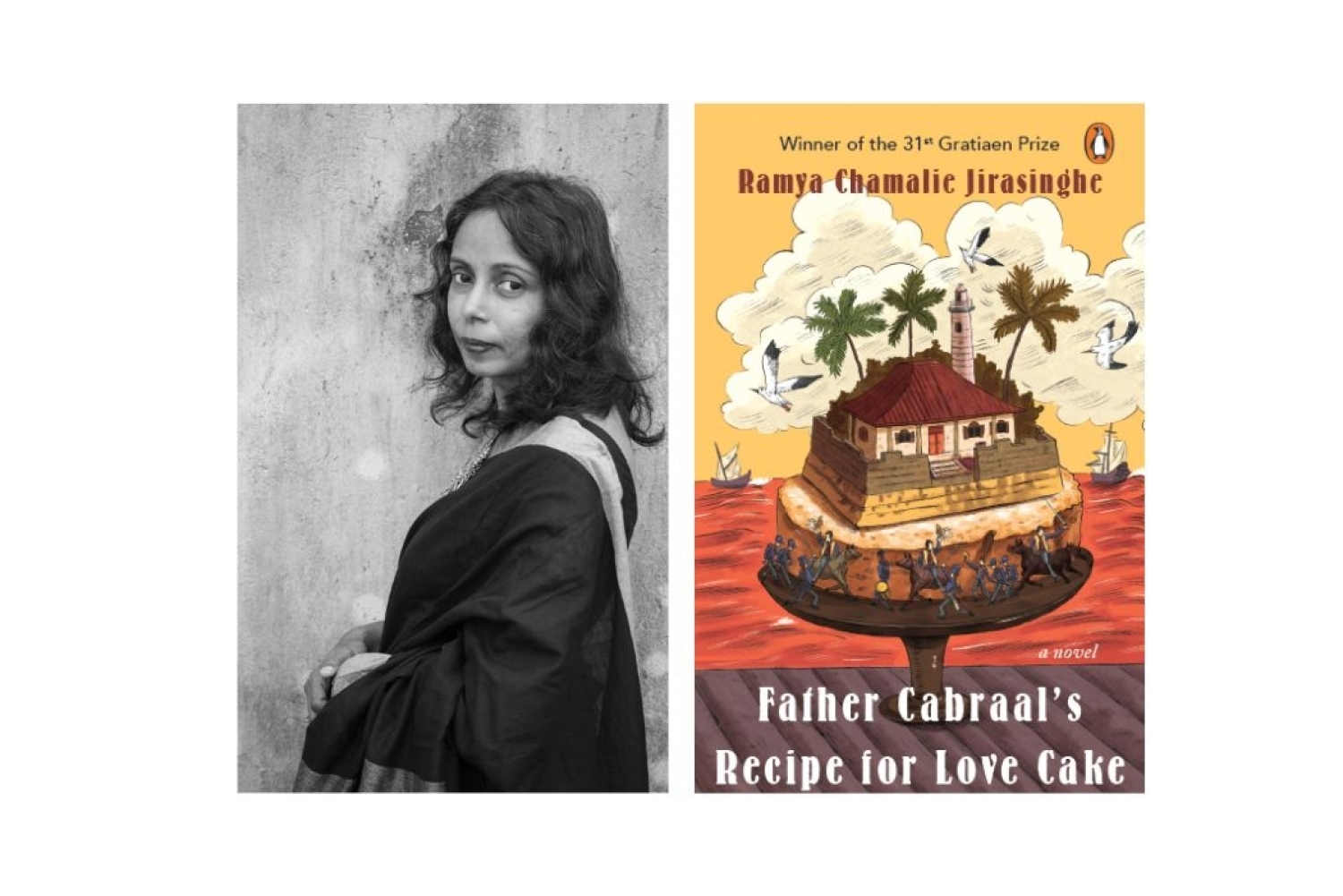
For Ramya Chamalie Jirasinghe, the author of Father Cabraal's Recipe for Love Cake, the novel began with a fleeting image that refused to disappear. 'There was no plan to write a novel when the start of the story first popped into my head’, she recalls. What began as a single paragraph written for a 2009 competition by the Guardian newspaper would remain untouched for nearly eleven years before finding new life during the isolation of Covid, when many other disparate things converged: more political turbulence in Sri Lanka, and her interests in history, human rights and love for cooking. ‘Suddenly, there was a story.' We delve into the creation of her novel, writing across two timelines, and interpreting legacies of colonialism.
How did the story for your debut novel find you?
There was no plan to write a novel when the start of the story first popped into my head. In 2009, the Guardian newspaper in the UK ran a competition as part of the Orange Prize (which is now known as the Women’s Prize for Fiction). It called for the first paragraph of a fictional book called The Letting Go, which was judged by the founder of the Orange Prize, Kate Mosse. On the spur of the moment, the idea of a woman making a love cake in the Galle Fort came into my head and I jotted down the paragraph and sent it off. That entry was selected by Kate Mosse as one of the runners up. It remained a paragraph that never got anywhere for almost eleven years, until Covid struck. Then came the isolation of Covid and many other disparate things converged: more political turbulence in Sri Lanka, my interests in history, human rights and love for cooking. Suddenly, there was a story.
What first inspired you to tell this story across two timelines?
After I wrote the first paragraph of a woman in a house, an inherited house built by a colonial ancestor at that, the story gave me no option but to use that device of parallel timelines. In some way, I had to answer the question of ‘but what about the others who lived here’. It is one of the many questions that have always fascinated me when I visit a place or encounter objects owned by others: who were these people, how did they live, what did they feel?
Why did you choose food as a central thread in the novel?
It was never consciously planned. This is my debut novel (my work before has been poetry), and I experienced what Stephe King calls the ‘what if’ situation, where the characters drive the plot. I am sure that there is something to King’s theory that the story in a fossil that is already there, the writer has to dig it out. I just started ‘excavating’. On a personal note, I come from a family of great cooks. Recipes handed down from generation to generation are still circulating in the family. This is true for most families but in countries like India and mine in Asia, this is a fact. The book takes its title from the Sri Lankan love cake, which is a colonial by-product of unbelievable ingenuity. The cooks here substituted local spices and ingredients to create something unique and redolent with spices and dripping in sweetness. Also, during Covid, food and safety came to the forefront. Afterall, our survival instinct has those at the base. A woman living alone in a house making a cake seemed liked the perfect gateway for a story that weaves the personal with the historical.
What drew you to explore the legacies of colonialism through personal stories?
Living in Sri Lanka, an island that was colonised by the Portuguese, the Dutch and the British for over 500 years, colonial legacies have seeped into all aspects of our lives. It starts with everyday words such as ‘sapattu’ to ‘iskola’ and goes on to the food, the architecture, the customs, the law, and some of the vocations resulting from colonial trade systems. We are knowingly and unknowingly governed by that colonial encounter even today. The story’s setting was a Dutch fort, the result of colonialism, and such places still have families that can trace their links to their colonial ancestors. And from there, the leap from the historical into the personal was easy. The two timelines too, then became an essential narrative device.
Tell us a little behind the thought process of choosing a fictionalised Sri Lanka as the landscape for this story.
This is one of the wonderful things about creative fiction and poetic licence: the author creates people and settings! What I did was layer the lives of the characters with real colonial incidents, but they had to be taken from different places and times. The collar on the slaves was something primarily from the Dutch colonial encounter, the inquisition and burning at the stake from the Portuguese encounter in Goa etc. When this happened, I realised that such layering meant that I couldn’t limit the world I created to one colonial experience in one location. The nature of the colonial encounter, its gruesomeness and its extraction of people (here as slaves) and resources, and its focus on commodification of its subjects, was best captured in a fictional location. In Father Cabraal’s Recipe for Love Cake, all these aspects meet on the bodies and minds of characters.
What are you working on currently and what’s next?
A young child once trafficked as a beach boy and now living as the caretaker in the home of a failed politician has walked on to the page. I must see where he takes me!
Words Neeraja Srinivasan
Date 16.3.2026