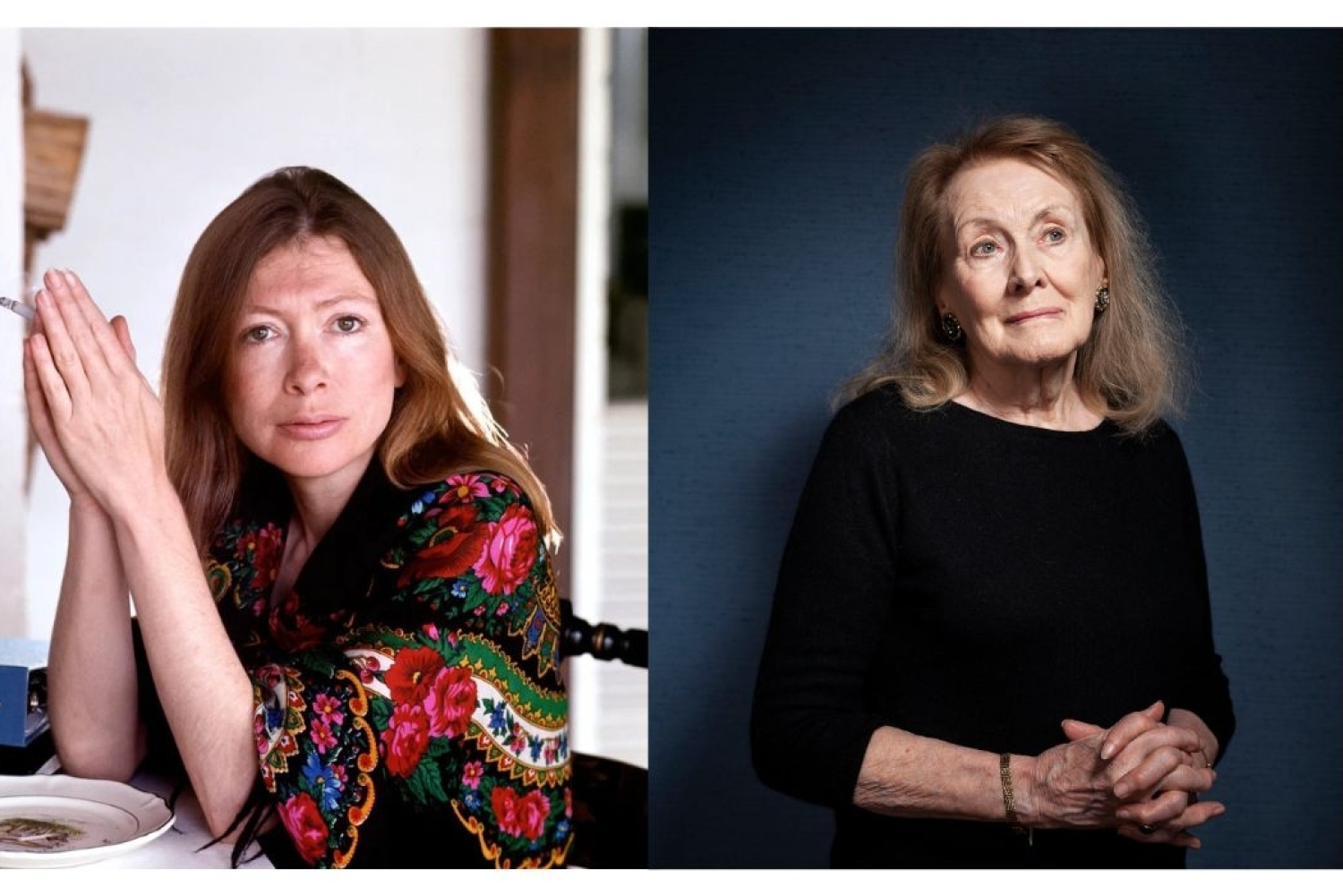
L: Joan Didion, photo by Henry Clarke R: Annie Ernaux
L: Joan Didion, photo by Henry Clarke R: Annie Ernaux
Non-fiction writing allows us to inspect even the most familiar. A lot of non-fiction writing combats the obsession for life to be monumental and grand, while recognising that our daily endeavours and pursuits of the everyday are the one thing that ties us all together. We bring to you a reading list of some of the best personal essays by incredible writers, all of whom provide cutting insight on the human condition.
The Crane Wife
Ten days after calling off her wedding, CJ Hauser writes about going to Texas to study whooping cranes, unsure how to be a person who calls off a wedding. Among strangers who took care of each other, in this essay, she confronts a relationship where she learned to survive on less. Studying cranes teaches her to ask what is ‘enough to survive’. It is a meditation on love, nature and relationships.
On Keeping A Notebook
The essayist of all time Joan Didion reflects on why she keeps a notebook, calling it ‘a peculiarly compulsive’ act, to record facts and also to capture how things felt to her. What seems like observation of others reveals the implacable ‘I.’ Notebooks become a way to remember, to stay on nodding terms with the people we used to be, and to keep lines open to ourselves.
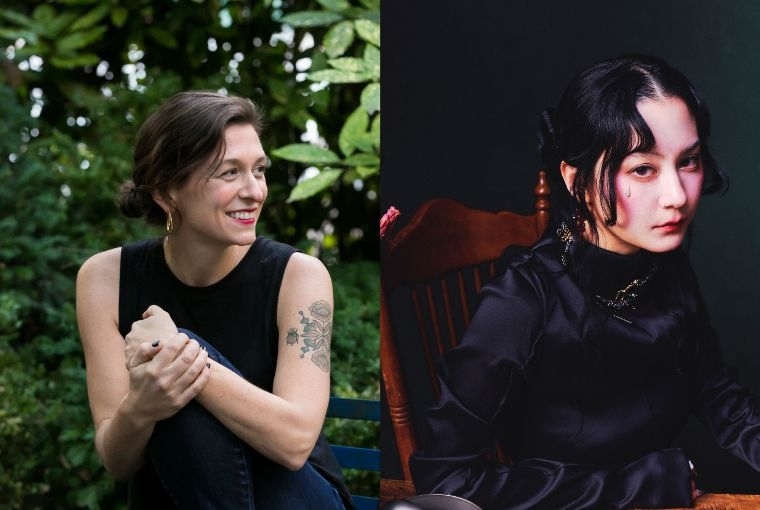
L: CJ Hauser, Photo by Beowulf Sheehan R: Michelle Zauner
Real Life: Love, Loss, and Kimchi
Michelle Zauner writes against white guys on TV telling her what to eat, recalling a childhood of being ‘the half-Korean girl’ ashamed of her difference, except in food. After her mother’s death, when even kimchi became impossible, memory returns through cooking. Following a YouTube channel, she reconstructs taste and grief. Food becomes a delicious tribute, a way to feel closer to her mother.
The Fourth State of Matter by Jo Ann Beard
Jo Ann Beard ties the ageing of her dog, a vanished husband, and the ordinary rhythms of work with the sudden violence of a campus shooting. Lives are ticking like alarm clocks, then shattered. In the aftermath, she struggles to understand, moving through shock and grief. In a fragile ‘plasmapause,’ she sits in stillness, where grief, memory, and love hang suspended, a place of equilibrium.
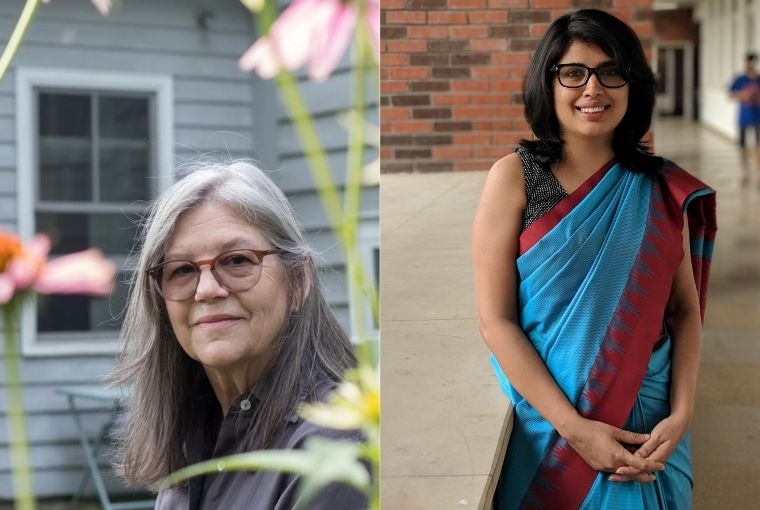
L: Jo Ann Beard, Photo by Richard Beaven, R: Sumana Roy
My Mother’s Feet
Sumana Roy traces her mother’s pain through her feet shaped like the letter ‘C’, reading them as history, sacrifice, and remnants of a previous life. Care becomes interpretation, learning to read what is never said. Small acts like cutting hair and trimming nails carry tenderness and guilt, and even as the body fails, language persists.
The Other Girl
In this essay, Annie Ernaux addresses a sister who died before she was born, existing only as a secret. Through photos, objects, and silence, she traces a childhood shaped by absence. For her, writing becomes a way to confront this void, to reckon with a self that felt like ‘the double of another girl.’
The Ancient
The Ancient traces Anuradha Roy’s life in the hills through the lens of Ama, an old housekeeper who came with their hill house and slowly becomes central to her life. Ama is sharp, controlling, and deeply knowledgeable, able to observe everything, and the essay documents their friendship.
Words Platform Desk
Date 21.4.2026