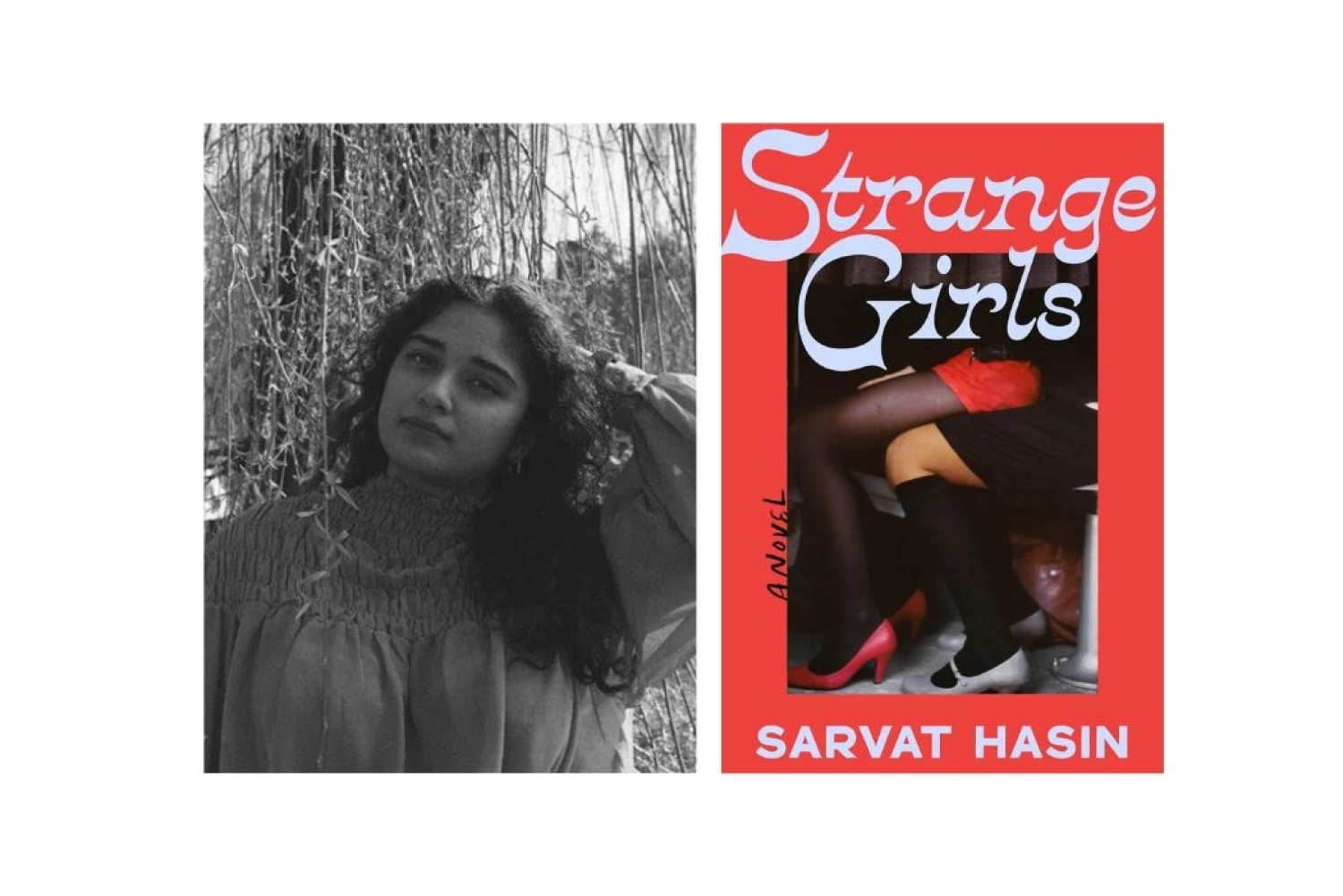
If there is one thing contemporary literary fiction has taught us, it is that the strangest female characters make for the best, most compelling protagonists. Sarvat Hasin, in her debut book Strange Girls, traces the fragile afterlife of friendship, drawn to the very tense space between past and present selves. Ava and Aliya begin with a similarity of experience and passion, but adulthood pulls them apart through more practical things. She explores a friendship as a kind of break-up, where ‘the rules were unclear, and closeness curdles into something dark.’ Rooted in the intensity of university, when ‘there’s all of this time to pour into another person,’ the novel lingers in what remains.
There is a very tense space that exists in the friendship of two people who knew each other in the past, and then reconnect as grown adults. What drew you to the idea of two estranged friends confronting their past?
Who we choose to be friends with defines us. I was interested to explore how this changes as we get older: it feels every decision as we descend into adulthood brings us either closer to or further from our friends. Youthful friendships are defined by a similarity of experience and passion. As adults, we seem bound together by more practical things: proximity, marital status, employment.
Ava and Aliya, the titular 'strange girls' of the book, start their friendship focused on their similarities but once they leave university, their differences begin to tear them apart.
I was wondering about your approach to writing female characters, and in specific, female friendship. Could you elaborate?
I was interested in writing a break up where the rules were unclear. Friendships can be full of all the same intense feelings and jealousies that accompany romantic love but this is rarely acknowledged. I wanted to write about the dark and uncomfortable feelings in those relationships: what happens when the closeness curdles into something dark.
As someone who just graduated college a year ago, I was also wondering what you mean by the ‘ties forged in the intensity of the college experience’. How are these ties different from any other?
There is a way of falling into each other that feels so much more possible at university (to me) than it does anywhere else. You’re away from your parent’s homes, not yet in the world of work and other responsibilities. There’s all of this time to pour into another person.
It’s also a time when young people are looking to define themselves: who are you going to be? What kind of woman, what kind of man? We look for these models in our friends and grow beside them.
Were there any inspirations, literary or otherwise, that guided your writing?
Often, I found myself reaching for the books that Ava and Aliya read together in the novel and send each other. Campus novels like The Secret History. Novels about transformative but hidden relationships like The Age of Innocence.
Late in the editing process, I saw Claudia Weill’s film Girlfriends which captured the pain and intimacy I’d been reaching for while writing the novel.
Why do you write, and what does a good day of writing look like for you?
When I’m in a draft, the world shrinks to the world of my novel. A good day is a thousand words and a walk or a run to clear my head. That’s why I write I suppose: because when it’s going well, it feels like all you need. When it’s going badly, I would rather be doing anything else in the world.
What are you hoping for readers to take away from the story?
The experience of publishing this book has been so unique because so many people have come to me to say: I’ve had a relationship like this and I continue to be haunted by it. When people feel it speaks to an emotional truth for them, that feels like the book is doing what I’d hoped it would do.
Words Neeraja Srinivasan
Date 15.4.2026