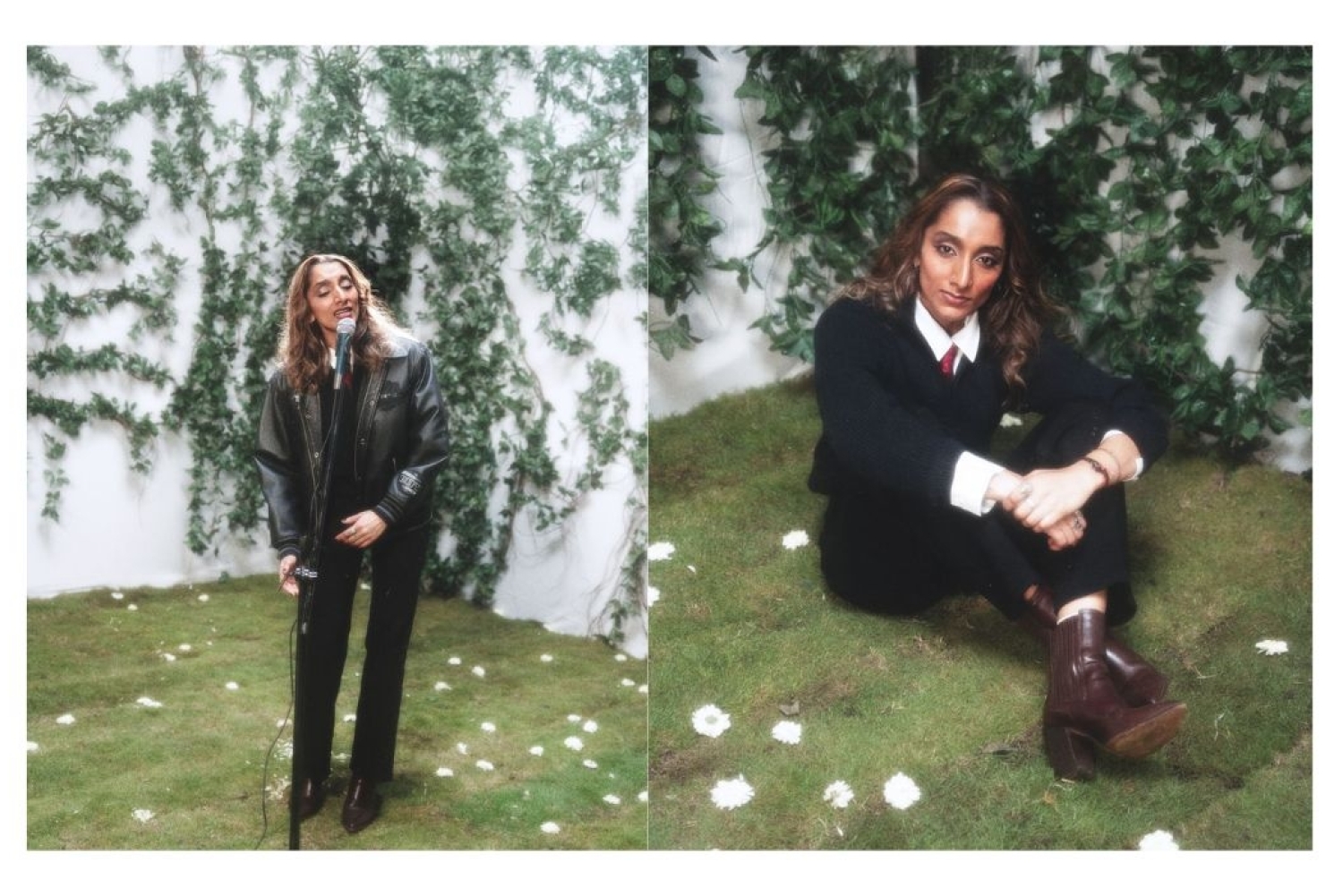
Before Bombay the Artist started mixing beats, she stood in lines to make a name in cinema. Although at the moment, she thought she blew up her whole life but looking back, she sees them as a turning point. A Dua Lipa concert changed her perspective: if people could love a pop star from another culture, why couldn’t they connect with someone singing their own stories? So she locked herself in a room and began to create music born from the same cultural soil as her listeners, echoing shared feelings, traditions, and rhythms, yet transformed into something irresistibly catchy and fun. It will feel familiar to you but is refreshingly new.
Her songs, like Sufne and Naina, reveal her vulnerable, relatable side, while her latest track, Caught Out is her boldest offering yet. It is quirky, unapologetic, and bursting with that unmistakable Punjabi sound. We sit down with Bombay the Artist to dive into her inspirations, process, and what Bombay means to her.
Talking Truth
When I first started writing music, it was a mix of things; some were based on my own experiences, childhood memories, and others were just scenarios I wished would happen. But over the past year, especially since moving to Mumbai to make music, my writing has become deeply personal. For example, Sufne was inspired by some - one I was seeing at the time. After we broke up, I imagined what could have happened if things had worked out, so the song reflects a positive twist I’d hoped for. Songs like Naina are also very close to my heart. That one came from a place of feeling trapped and longing for change. Creating the video was a conscious decision to explore what I really want to express through my music. Now, I find that my writing often reflects my real-life experiences without me even trying. I’ve received messages from women, saying they can relate to what I share, particularly after Naina. They thank me for putting their feelings into words and giving them a sense of connection. I try to keep my writing as real, direct, and detailed as possible, because I want it to reach and maybe even help people in their own journeys.
Bombay & Her
My dream of becoming a famous actor was shattered in Bombay. Leaving the city, I felt utterly defeated; I had fought hard to come here and pursue acting, but after fail - ing, I felt lost with no other direction. From the age of 12 or 13, acting had been my goal, so the disappointment was deep. My life changed significantly as I went from financial comfort and security to struggling with my finances. Yet, stepping away from Bombay led me to music; it was through a concert in the same city that I found a new purpose. So while Bombay broke me, it also gave me some - thing profound and, in a way, called me back for the right reasons. When choosing my artist name, I insisted on including ‘Bombay’ because of my longstanding fascination with the city and because it gave me music. The ‘artist’ part wasn’t limited to singing or songwriting as I dabble in fashion and other creative stuff also.
Bombay is special to me; it made me a real person. I grew up sheltered in a white neighbourhood in London, where my Indian dad provided everything. Bombay really toughened me up; it made me who I am. The city holds deep meaning for me.
Caught Out
My journey into music began with Desi Hip Hop and early support came from friends at a Delhi-based hip hop record label. These relationships grounded me in a vibrant, creative community, fueling my passion for experimenting with musical genres and styles.
The track Caught Out is the perfect example of this experimentation. I had written something unique and brought it to my producer, noticing that we had never explored a true Punjabi sound together. Around the same time, I introduced my producer to the music of Chamkeela, a legendary figure in Punjabi music. Inspired, he watched Chamkeela’s videos and we decided to incorporate elements like the traditional toombi, letting Chamkeela’s influence shine through our work. The entire process felt organic and authentic, the theme and sound emerged naturally as we collaborated.
One thing that sets my music apart is that I write, compose, and sing all my songs. Growing up speaking Punjabi, shaped by my grandmother’s roots in Multan, brought an even deeper connection to my work. My grand - mother’s dialect included unique words, some so distinct from standard Punjabi that, as a child, I wondered if she’d invented them. Today, I proudly use those words in my music, even if they aren’t entirely conventional. It’s my way of carrying her legacy forward and connecting personally to every song.
Words Hansika Lohani
Date 15.12.2025