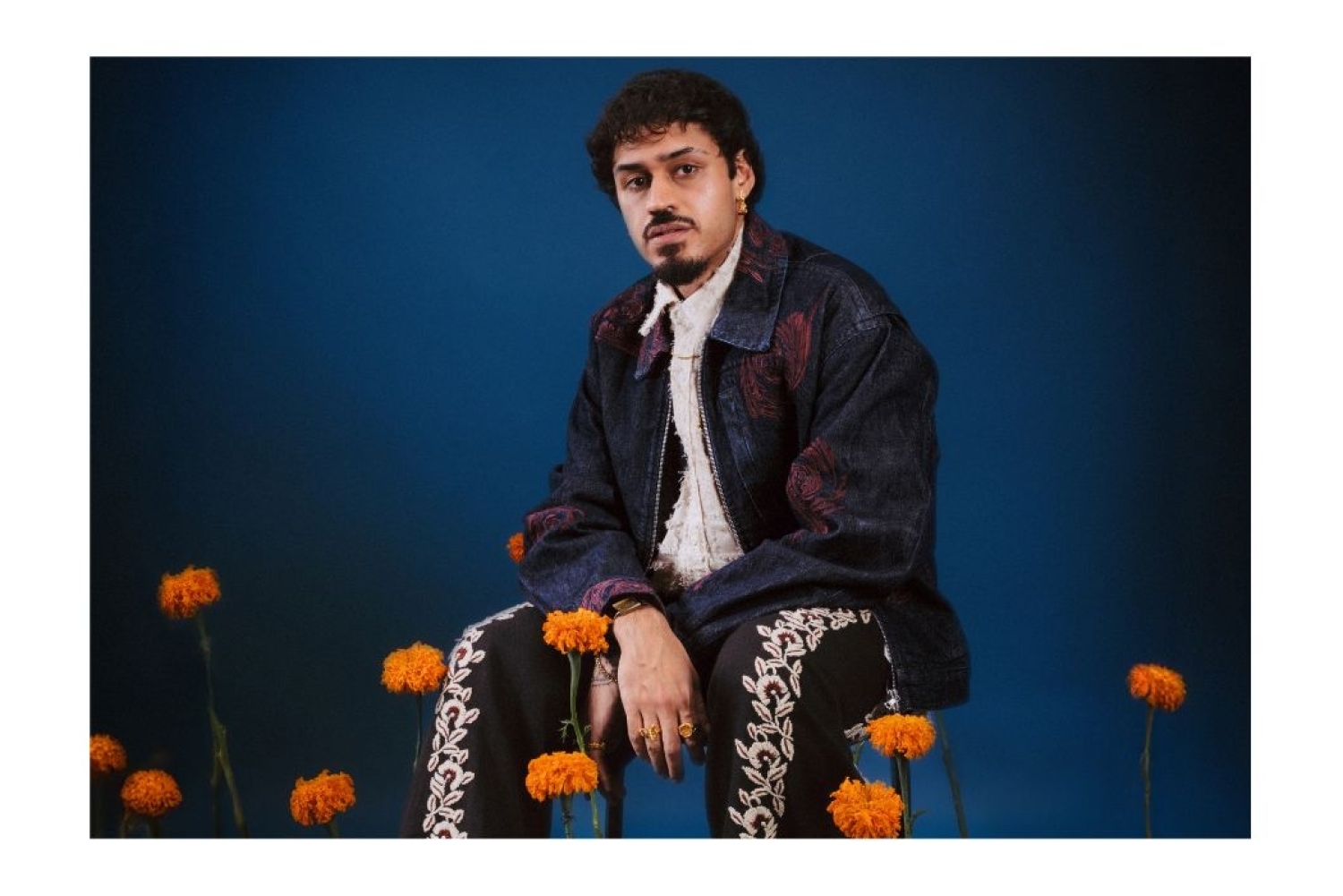
‘Creating contrast in your music is really important; it’s what gives it that emotion,’ thinks Dhillon, better known as Darama. He is a producer and DJ from London, making cinematic bass music from the British Asian experience. Known for carving out a distinct sonic niche at an unconventional 110 BPM, Darama works with a specialised software-based digital audio workstation (DAW). These usually include violins, a euphoric lead synthesiser, bright chords, rhythm sequencers, time-stretching tools and more. Below he talks about Refractions 03, the concluding EP of the series with three tracks along with his collaboration on FolkSoul Vol 2 with Sound of Women.
What is one experience you would like to turn into a track someday?
Recently I’ve been thinking a lot about my more localised experience of growing up on the outskirts of London, Redbridge to be specific. It’s a very multicultural area but to be honest had a bit of a small town feel to it at points. I moved around a lot when I was younger and remember spending a lot of time on buses just kind of daydreaming and thinking about the future. I’ve been reflecting on those moments a fair bit recently and would love to create something that encapsulates that feeling of yearning and blissfulness that you get whilst daydreaming in the in-between moments you have as a teenager where the possibilities feel endless and the noise outside dies down a little.
How has your relationship with South Asian identity changed as your music has travelled through club spaces, festivals and online communities?
I started Darama as a way to explore that identity so it’s hard to put into words how affirming the journey’s been and to see that exploration resonate with different people. It’s made me feel quite proud of my own experience within the wider community and given me the confidence in what I have to say with my art. I think as time’s gone on it’s also made me realise there’s more to explore about identity and how the cultural aspect of it interacts with all the other experiences you have.
What instruments or textures define the emotional world of the final EP of Refractions?
I’d describe the final EP as quite uplifting and cinematic and a bit of an indicator as to where I see my world going in the future. I was trying to create that sense of escapism that I get when listening to electronic music using a brighter aesthetic than I’d previously experimented with. To do that I used a lot of vocal elements, manipulating them with pitch, delays and granular effects to give it that implacable but dense feel. Combining that with a lot of strings and pads really defined the soaring emotion I found myself honing in on throughout. The basslines operate as the antithesis of that, creating a contrasting bittersweet feeling, so I made them deliberately very deep or quite aggressive sounding.
As the final track of Refractions 03, what did you want Give You Something to leave behind for the listeners?
That track was actually quite inspired by the label Night Slugs and that nocturnal quality a lot of the output from the label has. I think I had this image in my head of that moment in a club when you’ve met someone that you have some chemistry with and you’re kind of getting freeze frames of them in between strobes and flashing lights. Although, if I’m honest, I’m a firm believer in letting the listeners or consumers of any art come to their own conclusion, especially as I’ve grown as an artist; I like when there’s more room for interpretation. It brings up more interesting conversations and my favourite thing is hearing what other people took from it. I often don’t really know what I’m trying to convey when I’m making it and am more just following the emotion generated by the sounds I’m messing with and then figure out how to put it into words after!
Folksoul Vol. 2 brings together producers working across left-field club music and hip-hop. What did that community context bring to your track?
When Noni-Mouse contacted me about the project, I was immediately drawn to the ethos and idea. It felt like a very natural fit for where I’m at in my journey so I mainly just wanted to see where the amazing samples could fit into my productions. They were clear about respecting the original work and I wanted to honour that and build the rest of the elements around it. I feel in a great place as an artist currently where I’m making stuff I don’t really hear that many comparisons to so I was excited to bring that vibe to the project and hear how it sounded in the context of the other amazing producers on the project.
Was there a layer in Barse Din Ko that you added late in the process that changed the entire mood of the track?
There are quite a few glitchy-sounding percussion and electric-sounding textures that I added later on which I think really make the track sound unique and kind of make it sound a bit more modern. Again, I was thinking about contrast and the rest of the drums have a dustier, old-school quality so I wanted to have a point of difference. I think it really accentuates the slightly industrial, moody energy the track has.
What can the fans look forward to?
I’m going to take a little break from actually releasing music; I’ve put out a lot of material over the past few years and want to take time to really hone where my sound is going and give myself space to experiment. But I want my audience to be involved in that process so I plan to be a lot more open with it online, sharing influences, ideas and the process itself. I want the next release to feel collaborative and think I can do more as an artist to be closer to those who support me and give back.
Words Shruti Verma
Date 4.11.2026