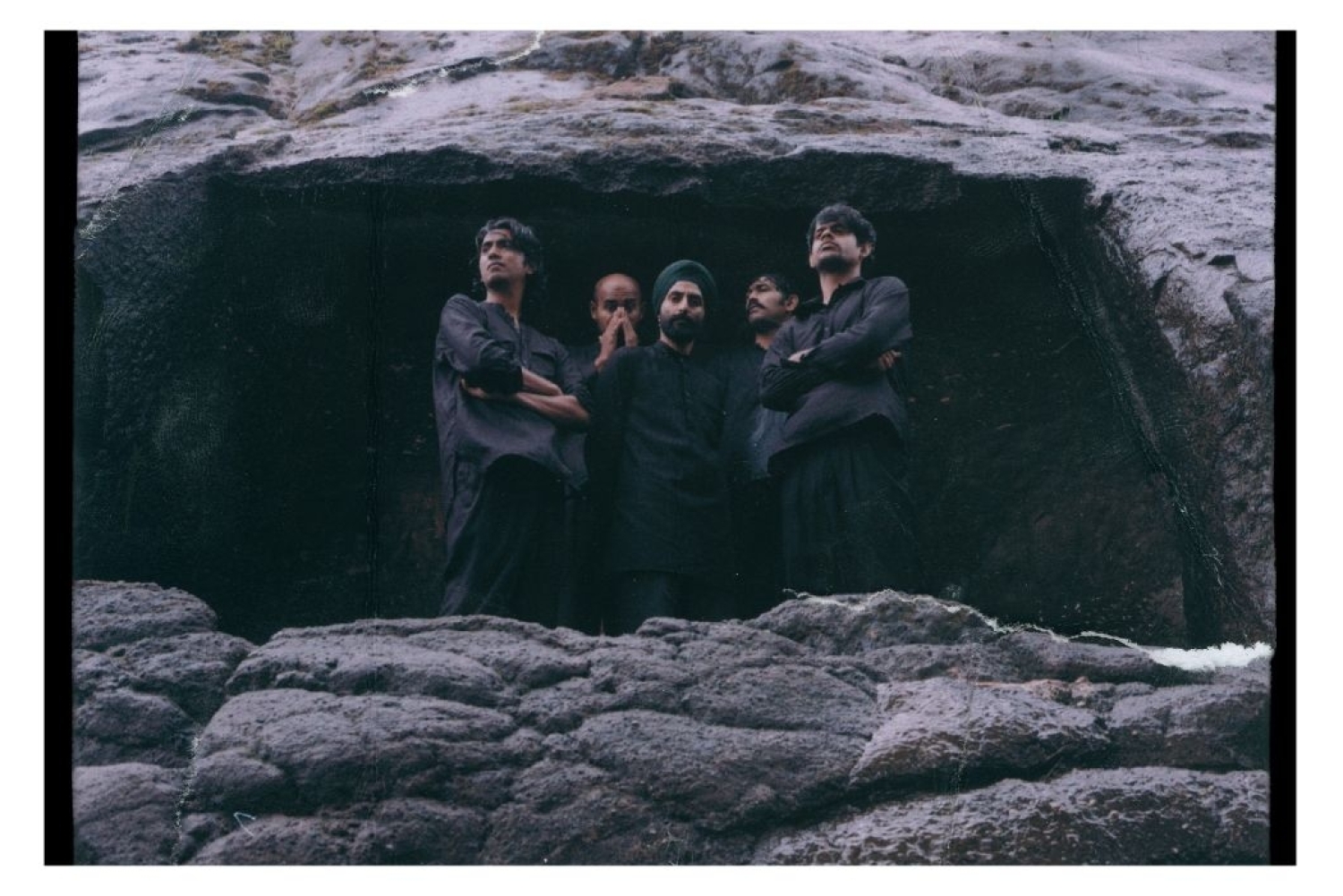
An innovative audio-visual collective, Excise Dept explores surrealism and digital absurdities with reflections on identity, nationhood and intergenerational Partition trauma. The band features artists: Rounak Maiti, Karanjit Singh, Siddhant Vetekar and Andrew Sabu. Their music is built using traditional and modern instrumentation, featuring a mix of guitars, harps, strings, pianos, drum shuffles, synths and heavily textured ambient loops. Below, they discuss their latest album SHOPNOBHUMI as they walk through the inspiration, genre, structure and what lies ahead.
What set this album in motion?
We had talked about making work around the partition for years, well before the album took shape. A lot of it came from things we absorbed growing up: the portrayal of 1947 in movies, nursery rhymes, songs we rote-learnt in school, stories passed around at home. The most personal piece was an oral history recording of my maternal grandmother, where she recounted growing up in a newly independent India and the cost of personal freedom against societal expectations. After she passed away, that recording grew in importance and it eventually became the main component of the track FREEDOM.
We are deeply fascinated by how India itself was founded on really lofty, philosophical ideals, like those of self-actualisation and secularism. One could interpret these are idealized dreams and our shared histories are often built upon dreams like these. SHOPNOBHUMI picks those dreams apart and confronts the idealized notions that have built our identity and nationhood. So it’s a heavy, anxiety-inducing dream, one that’s carried by a constant sense of yearning, separation, pain and euphoria. On GHONO GHENNA we suggest India is a motherland, a dreamland and a deathland too.
What does that lack of structure allow emotionally and sonically?
Improvisation leaves us very open and vulnerable as musicians and writers and it’s exciting to occupy that space. Even on our first record, there were a lot of songs that were produced without much attention given to structure or grid. Things slow down, swell and fall apart a little haphazardly but it leads to some beautiful mistakes and coincidences too.
The final album, while carefully composed and arranged, proudly wears a lot of its impurities, mistakes and glitches on its sleeve. We’re very intentional about what constitutes a “mistake” in the recording - the bits we go in and correct, the bits we leave in on purpose. That felt like the most honest way to make a record about the faults of collective memory.
Could you tell us a little about the genre of the album?
The great thing about making a hip hop album, followed by a folk/drone/shoegaze/ambient album, is that there truly is no blueprint left at this point. We’re kind of free to make work that feels honest and urgent, no matter what format, genre or style. SHOPNOBHUMI is a gathering point for all of our influences, some even stretching to before we made our first album. We wanted to make something that was a little difficult to sit with, hard to pin down and constantly shape-shifting.
Our debut was a hip hop record and this one isn’t yet in spirit it’s very close to our earlier work. The genre changes and the feeling stays. This collage-like approach, where we stitch ideas together across a lot of recordings, samples and sessions, is something that we hope comes across as the main ethos of EXCISE DEPT.
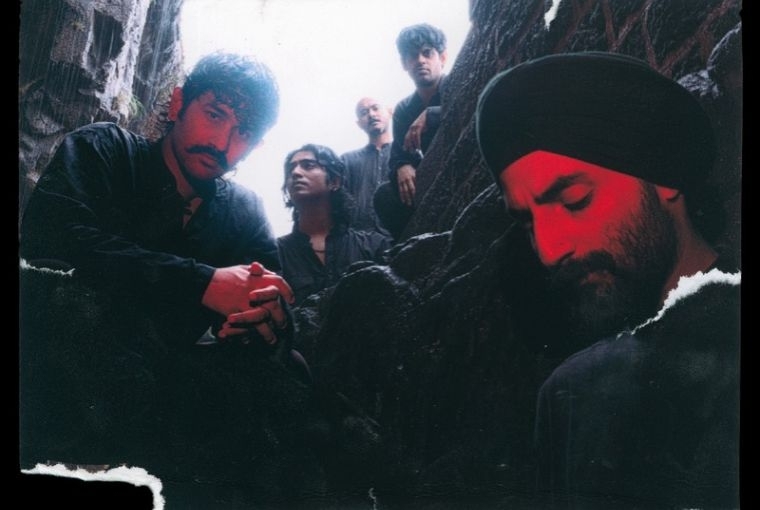
How has working on this album been different from the previous one?
SKMGM VOL 1 was a messy summation of the five years before it: emotional, funny, grotesque and visceral. It was very sample-driven and chronically online. SHOPNOBHUMI was a true effort of improvisation, composition and arrangement. It started with all of us huddled at my home in April 2025 with synths, a sampler, mics and drums plugged in and constantly recording. Then it moved through studio sessions at Island City Studios in Mumbai, our home studios in Mumbai and eventually Abbey Road, before being mastered by Stefan Betke in Berlin. We also gave ourselves a lot more time. We culled the tracklist and dove very deeply into the nuances of every note, every texture.’
Which track was the hardest to finish and which one taught you the most about what this album wanted to become?
I wouldn’t say anything was difficult as such but certainly tracks like JCR and SHAUK required a lot of effort to bring to the finish line. That’s mainly because their arrangements are very long, they unfurl deliberately and there’s simply just a lot going on in them. The ending of SHAUK, for instance, is built around a glitched-out drum loop with two overdubbed drum kit parts, as well as a huge tapestry of synths, dub fx, guitars and vocals; it really was a labour of love to go in and craft it.
FREEDOM taught us the most. It was completely off the cuff, an open-ended jam at Island City Studios and Sid ran the live recording through a bunch of time-based processing. We had essentially made the instrumental just like that. When my grandmother’s recording found its way onto it months later, it showed us that the simplest, most unguarded moments were often the ones that carried the most weight.’
What does the next phase of EXCISE DEPT sound like?
Honestly, we don’t know yet and we like it that way. The collective is a living breathing thing and in some ways the new ideas and sounds and images we make just emerge naturally. It’s perhaps too early to tell. We’ve been discussing the possibility of making something more confrontational and noisy, something that is a lot outwardly propulsive. There is certainly more coming in terms of merchandise: physical releases and wearables too.
We stand at a precarious crossroads where we’re witnessing huge sociopolitical tides shifting around us, while also being conscious about ourselves getting a bit older with every passing release. I think whatever the next release/work sounds or looks like, we hope it will be us just reflecting on the times with pure honesty and authenticity.
Words Shruti Verma
Date 26.10.2026