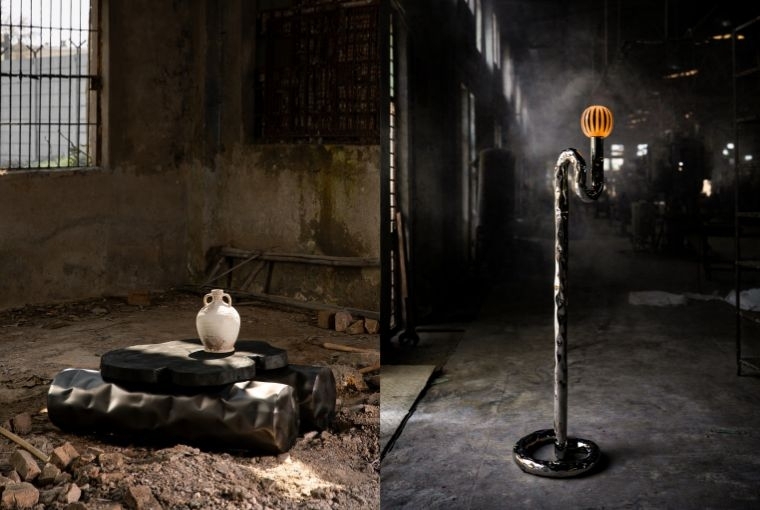
The founders of Nitush - Aroosh trace the beginnings of their practice to their early exposure to contemporary design and a deep material exploration that eventually shaped the philosophy of the studio. They became more aware of how objects can carry a sense of identity and authorship, and recognised an opportunity to build a strong and distinct visual language.
In their early years, they worked directly with stainless steel, spending close to two years exploring its behaviour, testing techniques, and understanding how it responds to pressure, force, and manipulation. This period of material exploration went on to form the foundation of their practice. Nitush - Aroosh grew out of this process. Over time, it evolved into a clearly defined way of working where the material, the process, and the final form remain closely interconnected, and where each piece can be traced back to an individual voice.
Your work challenges the industrial image of stainless steel. Could you tell us more about this idea and how you execute it?
Stainless steel is usually seen as something precise, controlled, and static. We were interested in what happens when that control is disrupted. Our process involves forming the material under pressure and then working it manually. The surface is not applied or decorated. It is a result of force, impact, and resistance. Because of this, the material begins to register what it has gone through. The polished surface then interacts with its surroundings, so the work is never fixed. It shifts with light, movement, and context. That is where it moves away from an industrial reading and becomes more responsive.
A lot of your designs feature uneven surfaces and textures, and it seems like you are drawn to interesting, unconventional forms. Why is that important to you?
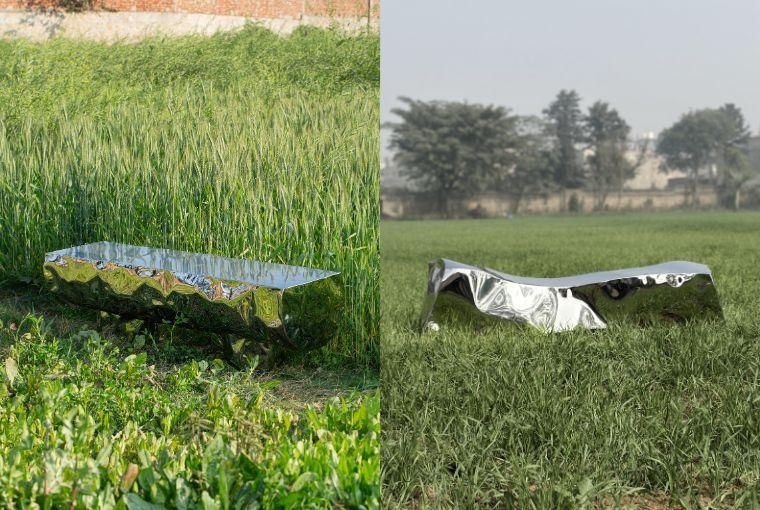
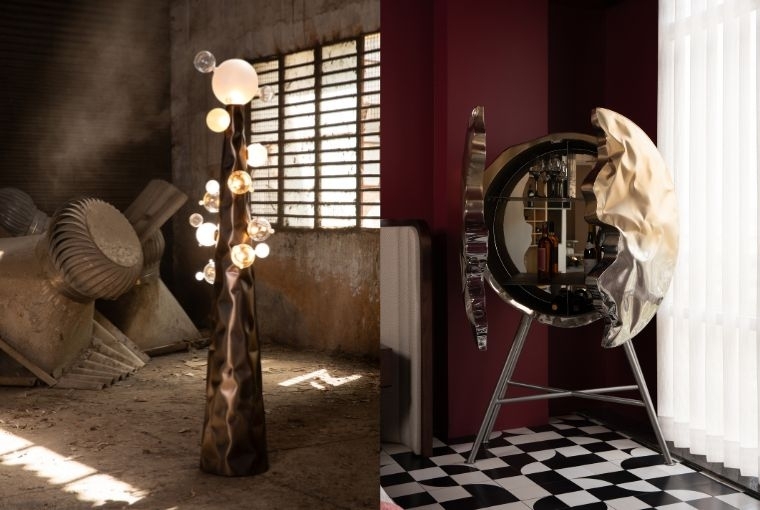
The surfaces are inspired by the movement of water, translated into metal so that it feels as though that motion has been frozen in time. The polished, uneven surface distorts reflections and gathers its surroundings, allowing the piece to shift with light and with the viewer, rather than feeling static. This idea carries into the forms as well. We were never interested in following conventional shapes. The pieces are conceived as statement objects where function is present but not restrictive, allowing the form to develop more independently and feel specific to our practice.
Tell us about your creative process, and how something goes from an idea to a piece of furniture.
It usually begins with a very loose idea, often just a form or a condition we want to explore. We sketch, but the real development happens through making. We work directly with the material, testing how far it can be pushed, how it reacts, and where it starts to resist. That dialogue shapes the final form. A piece is not finished when it matches an initial drawing. It is finished when the form, structure, and surface feel resolved together.
Can you tell us the story behind a creation that is closest to your heart?
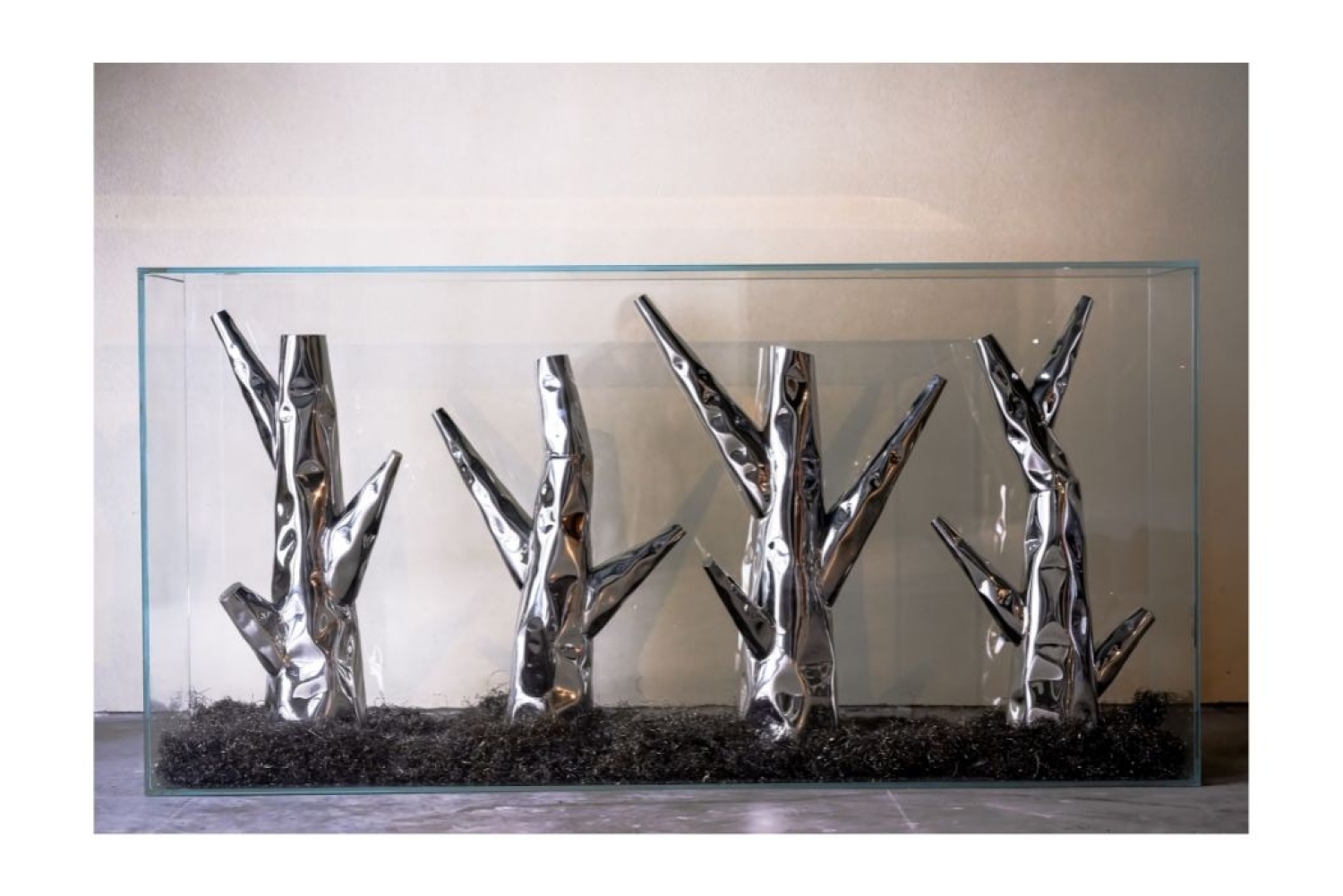
The Future Archives series is particularly close to us. It began with thinking about memory not as something you recall, but as something that remains embedded in material, as traces of time, growth, and use that stay within a form. In this series, forms derived from trees are translated into stainless steel, not as literal representations, but as vessels of retained presence. Beneath them, beds of metal scrap, drawn from our own process, introduce another layer, one shaped by industry, use, and residue. The work brings these two conditions together, allowing memory from nature and memory from industry to exist within the same form. That relationship felt important for us to articulate.
According to you, what’s the next big thing in design?
There is a growing shift towards authorship and material intelligence, with less interest in trend driven forms and more focus on work that has a clear internal logic. People are responding to pieces that feel specific to a maker, where the material, process, and outcome are closely tied.
Alongside this, there is a renewed focus on innovation in techniques, using process itself to arrive at a new visual language. This is also bringing a shift away from overly narrative driven work towards something more grounded in material honesty and exploration. The future is not about new shapes alone, but about a deeper engagement with how things are made and what they carry.
Words Neeraja Srinivasan
Date 3.4.2026