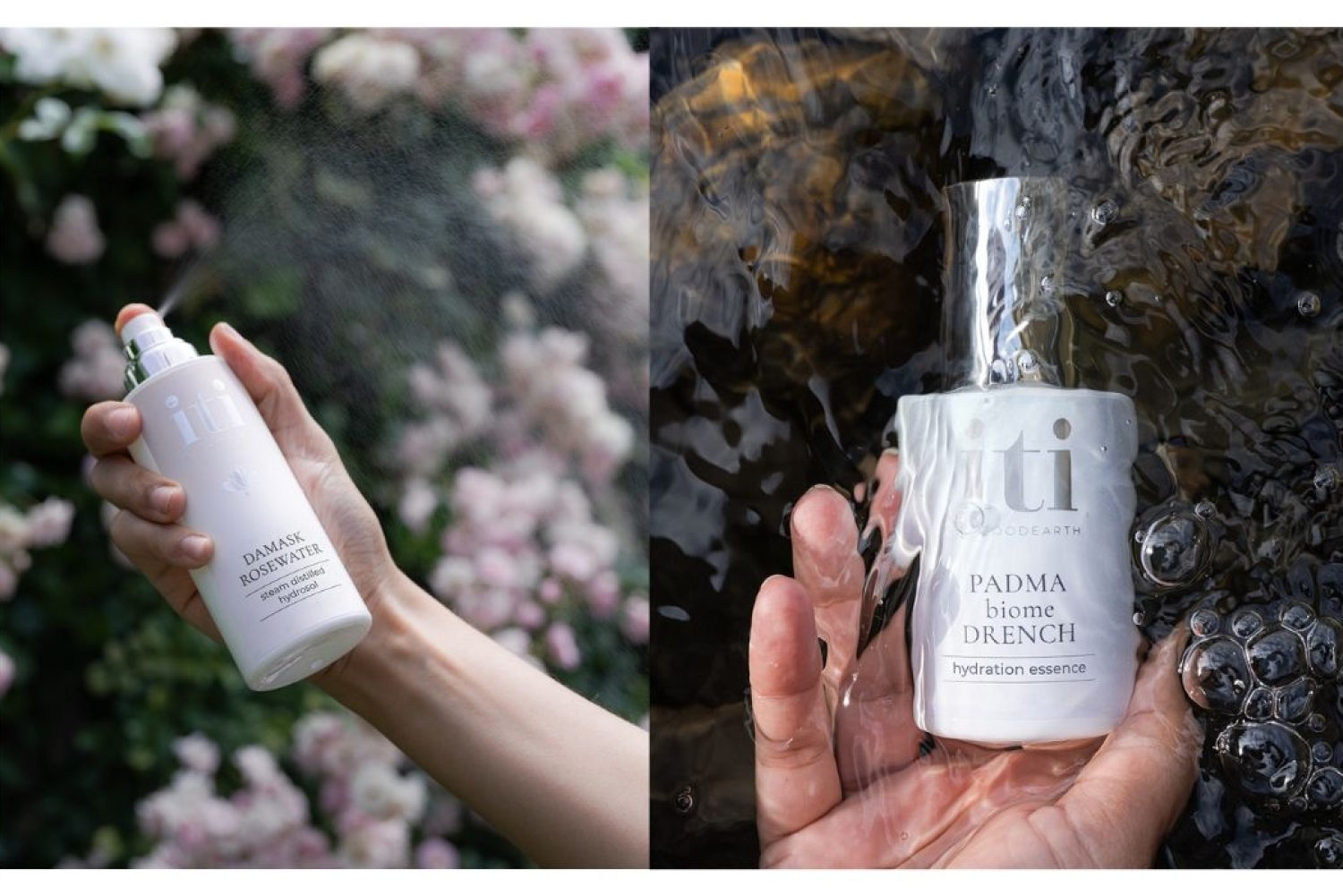
There are brands, and then there are brands that make you feel something before you’ve even touched a product. Good Earth has always been the latter. Walk into any of its stores blindfolded, and the scent alone will tell you exactly where you are. It is that same sensorial certainty that founder Anita Lal has now bottled into Iti, her new skincare line, a personal reckoning born of years of allergies, self-formulation, and a deep reverence for India’s age-old beauty wisdom. When Anita deconstructs Iti, she reminds us that India’s oldest beauty wisdom never needed reinventing, only remembering.
Good Earth was born from your passion for pottery and a desire to celebrate Indian craft. What personal impulse sparked it? Was there a similar moment of your quiet obsession or discovery that drew you into skin care?
Good Earth was my way of celebrating the colours, the joy of our heritage and even the depth of our culture. That's how I started Good Earth: as a celebration of our culture, our roots in terms of colour, design and storytelling. Of course once you're interested in such things, everything starts naturally coming together. I love scent, I love purity, but the skin care per se became an obsession because of a personal reason and I just couldn't use any skin care, I had become allergic to everything because of how strong they were and then eventually over the next 15-20 years I started creating my own skin care and that eventually evolved into creating a line, it became actually a line called Paro Nityam, which had all the purity but it had basically oils and powders and then eventually we realised that to offer with so many botanical actives, so much science which has discovered so many actives, so we decided to incorporate that in the Iti range. So the Iti then had serums and what you call creams and all of the things that you need for targeting special skin areas of concern.
Your design philosophy has always been unapologetically Indian. How does that translate into a skin care line?
Well, I am Indian, so what else should I do but create something which comes from what is a part of me, what has been part of my ancestry, what is part of my heritage, my culture and our culture, I'm saying as an Indian, as we are all Indians. That's why Good Earth has its own authenticity; we've never moved away.
The lens is always from our lens, it is our design eyes, Indian. That doesn't mean that you don't, that you get insular. Through your design eyes you can incorporate designs, patterns, ideas from any part of the world. That goes without saying, you don't want to be insular. Similarly, in my skin care, the basic is from the wisdom that we've had over the centuries of how to look after our skin, we've had, this has been happening for 5000 years and even earlier, that we've had ways to look after through oils, through pastes, through the Vedas talk about it and there's a Kama Sutra which tells you so much about how to beautify yourself, how to keep your hygiene, there's so much. So it comes from there and the Himalayan wisdom of course which Himalayan Soma, the Rishis, they spoke about the elixir of the plants that come from the Himalayas, we've used that wisdom but we've also used the latest technology that the science world offers and that is really to my mind a global, what you call, it's something that is global and you pick up out of that whatever you like.
My only differentiation is I only and only pick up what is botanical and comes from nature. I don't pick up anything for my skin care which has got any petrochemicals, petroleum, any sort of silicons, anything that the body doesn't recognize, I don't put that. But the rest, its soul is Indian, its scents are Indian, all the, every product of mine has scents from across the country. So yes, its soul is there and then we still overlay it with whatever is modern technology and bio-scientific.
“I am Indian, so what else should I do but create something which comes from what is a part of me, what has been part of my ancestry, what is part of my heritage, my culture and our culture. ”
Good Earth revived crafts like Kansa metalwork by connecting artisans directly with urban consumers. Are there any traditional Indian beauty rituals, ingredients or makers you are helping, or you are hoping, ITI will bring back into everyday life?
Yes, absolutely. In fact, one of our biggest joys is that we are already working in the Himalayas and in Ladakh and in the rest of the Himalayas also, but basically a lot are from Ladakh and the whole Himachal area, where we are working directly with, thanks to our own family, what you call, our family company from the Royal Enfield Social Mission, which is all about the Himalayan culture and to promote everything in the Himalayas.
They have put us in touch directly with people who are collecting the berries, who are collecting lay berries, who are collecting rose hippo. So we are in close touch with them and we hope over time, as we grow, so will they.
And this is only one part, but we are picking up roses, the pure rose oils, pure rose water, and of course we are also taking oils from all parts of the country, like essential oils, sandalwood, whatever we can, it's geranium, kheora, frankincense, it's just so many things. So everything we are doing is more or less being sourced, the clays are sourced from here and eventually we hope that that will help the communities that we work with.
You've spoken about running Good Earth like a family, flexible, women-led, built on loyalty. Is it structured the same way or does launching a new brand give you a chance to experiment with a different kind of culture?
We look after each other, we respect each other and we have a joint passion and a commitment to what we are doing.
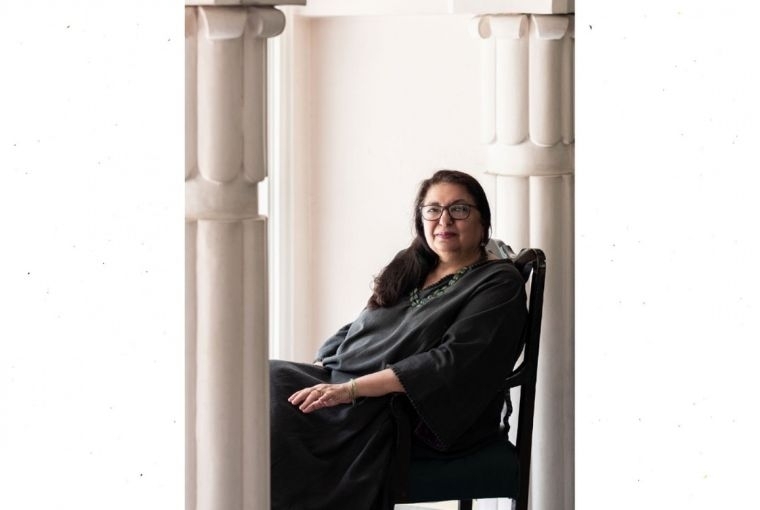
Anita Lal
With Good Earth, you've always viewed the world through an Indian lens rather than the other way around. What does Indian luxury look like when it's something you put on your skin instead of in your home?
Yeah, actually the India that I was talking about earlier is also the home of luxurious skin and body care. If you go back to the Vedas, we used to make oils with a hundred ingredients. So, for us, this is only a continuation. We've been using uptans and we've been putting saffron and we've been having sandalwood paste, using oils, using so many things that this luxury has always been there. What I'm just doing is bringing it into a way that it can be used in the current context with. So, luxury to me, means something natural, which comes from the finest oils, the finest fragrances, the finest ingredients and is put together mindfully in a way that people can indulge themselves when they not only look after their skin and their body but also elevate and uplift their soul and their spirit. For me, that is luxury.
Words Hansika Lohani
Date 1.5.2026