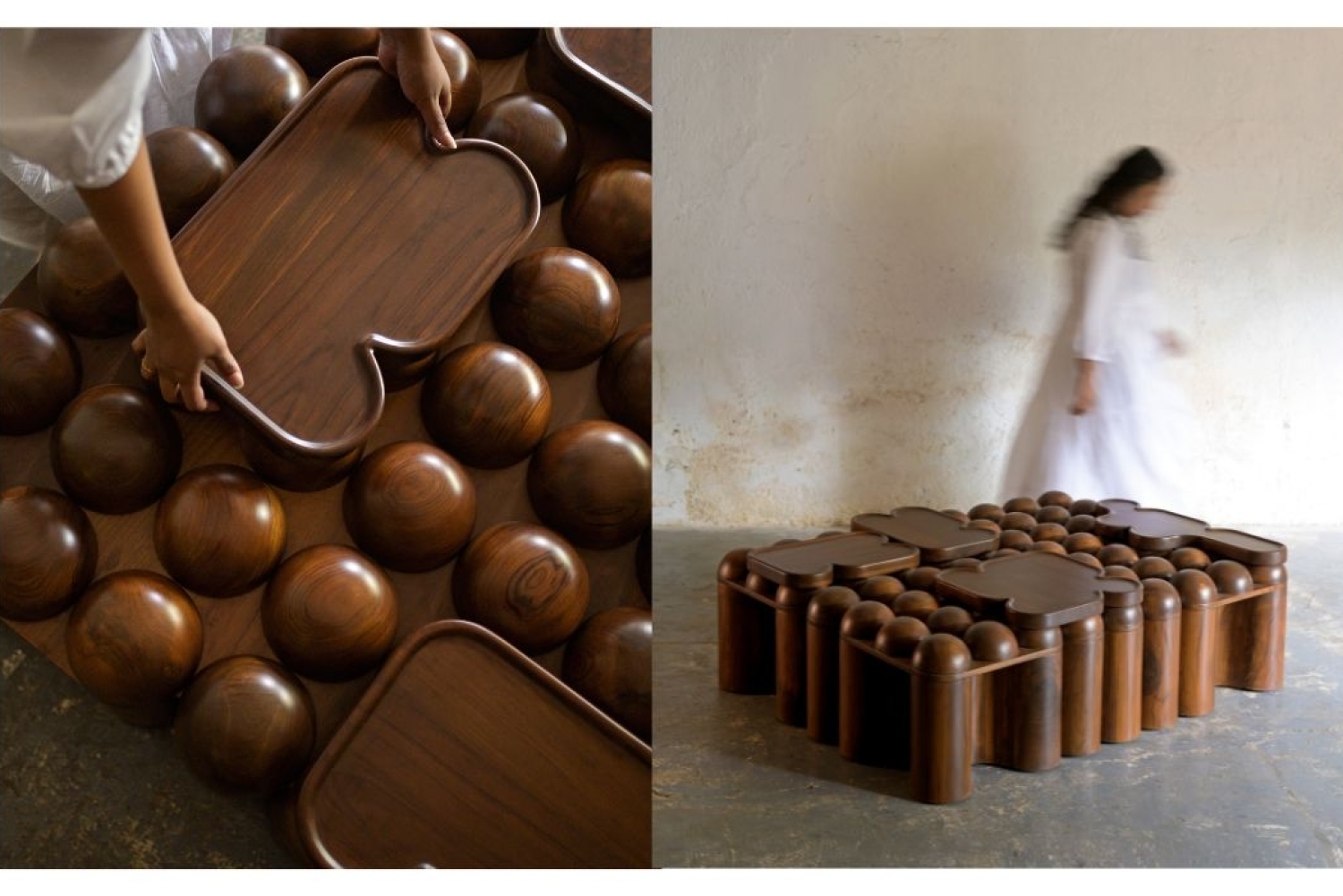
The name Studio Indigene speaks not only to process, but also to the indigenous craftsmanship carried in the hands of woodworkers who once built temple interiors. It is from this lineage of artisans that architects Tanvi Deolekar and Shubham Mestry began, early on, to absorb a deep understanding of complexity and precision in wood, gradually translating that knowledge into a contemporary design language. This exchange between architectural vision and generational craft lies at the heart of the studio. Tanvi and Shubham bring form and proportion; the karigars bring centuries of material knowledge that ground every finished piece.
Wood remains the studio’s constant. Tanvi and Shubham are drawn to it for the warmth it carries and for the way it makes a space feel lived in. At the same time, they push it beyond the expected language of Indian furniture-making, approaching it almost as a sculptor would: as a medium for bold volumes, rhythmic repetitions, and unexpected forms. As a result, their work sits deliberately between the functional and the collectable.
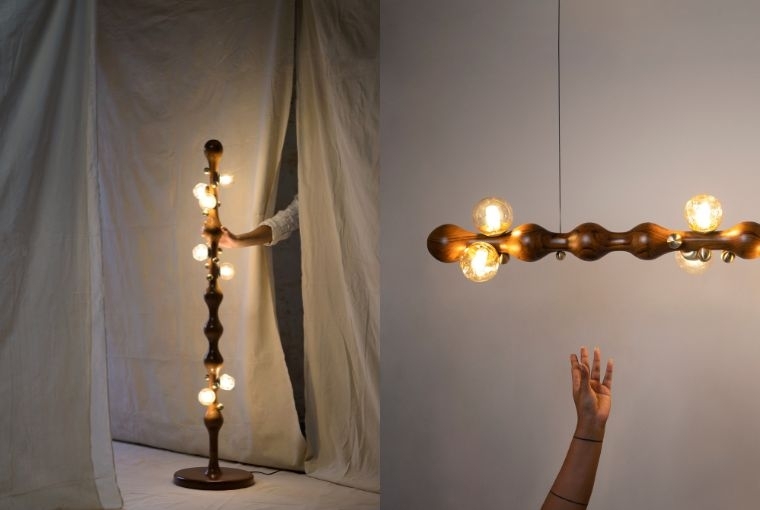
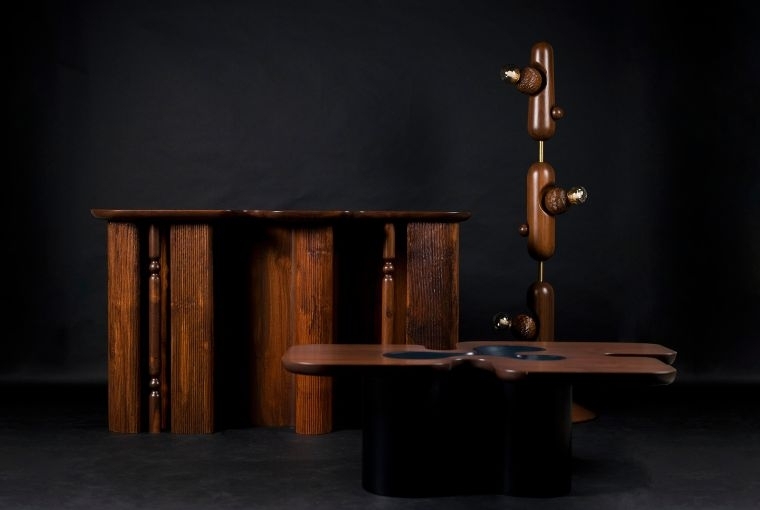
This balance between sculpture and utility is perhaps most evident in their Scallop and Stem collections, where a single design vocabulary unfolds across different typologies and scales. In Scallop, the same hemispherical language that gives the centre table its bold, shell-like identity also shapes a pendant light, allowing each object to remain distinct in function while belonging unmistakably to the same family. Here, form comes first, then opens itself generously to multiple possibilities.
The Name Indigene: Indigenous Craftsmanship and Processes
For us, the name Studio Indigene was never about creating products that looked overtly traditional or regional. It was more about understanding and learning from indigenous craftsmanship and processes, and then adapting those techniques to create pieces that could resonate on a global level. Early on, we began working with karigars who traditionally specialised in intricate temple-making in wood. We were deeply inspired by the complexity and precision of their craft, and gradually started translating those skills into the language of our own designs.
In that sense, 'Indigene' speaks more to the process and craftsmanship behind the work than to the visual outcome itself. In terms of our design sensibility, we are deeply interested in form, proportion, and volumetric play, while still maintaining a sense of restraint and minimalism. We enjoy pushing wood beyond the associations of traditional furniture-making in India, and instead exploring it in a way that feels sculptural, contemporary, and almost collectable, much like how one might perceive a postmodern cast-metal piece. At the same time, we want our work to feel subtle and timeless. The pieces should have a distinct identity and presence, yet remain adaptable enough to belong naturally within different kinds of spaces and quietly shape the atmosphere around them.
Contemporary Practice: Movement, Form & Function
The idea behind the Scallop centre table began with our desire to create a piece that felt interactive and brought a certain sense of movement and dynamism to an otherwise everyday object. The concept of movable trays actually came before the final form itself; we were interested in how a centre table could constantly shift and adapt depending on how it was being used. As the design evolved, we also wanted the piece to stand strongly as a sculptural object in its own right. The repetitive hemispherical forms became the perfect way to resolve both ideas simultaneously: they allowed the trays to move and interact seamlessly, while also giving the table a bold, rhythmic visual identity. In many ways, the piece sits between functionality and sculpture, which is something we’re often interested in exploring through our work.
The name 'Scallop' definitely came later, once the form had already revealed itself. Looking back, the layered, shell-like quality of the piece naturally lent itself to the name, but it was never the starting point or direct reference during the design process. Interestingly, the table also became a significant piece in the recognition of our work, and remains one of the designs people connect with the most.
Form First but Various Functions
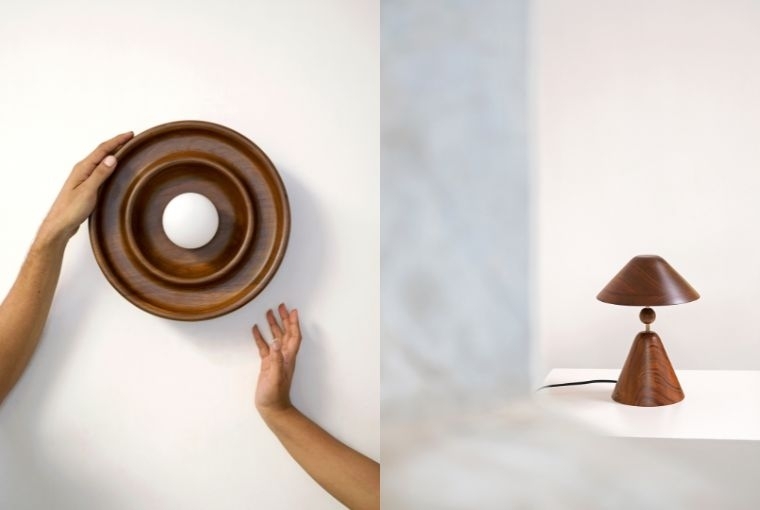
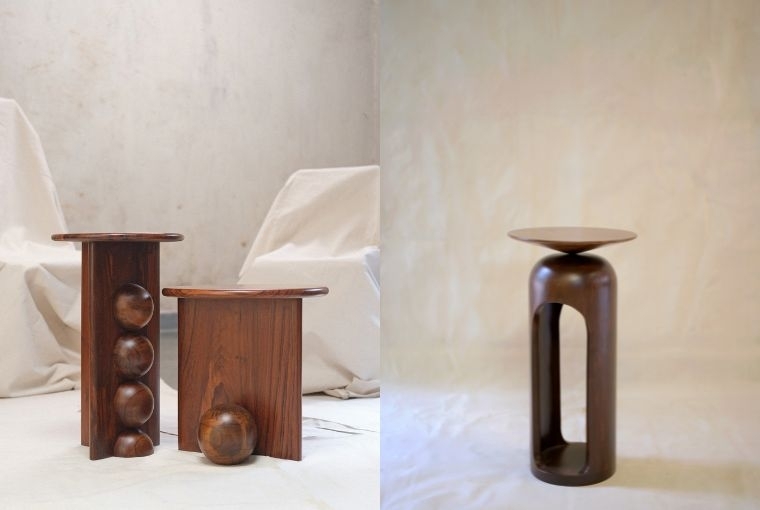
When we design, there are times when the form actually precedes the function. In those instances, we enjoy experimenting with how a single visual language or structural idea can translate across different utilities and scales. Once a form feels strong and resolved, we like to explore how it can evolve into multiple objects while still retaining a cohesive identity. This approach has worked particularly well for us in collections like Scallop and Stem, where the same core design vocabulary naturally extended into different typologies; whether that was a centre table, a pendant, or other functional pieces. It allows the collections to feel interconnected, while also giving each object its own distinct purpose and character.
From Paper to Form
At the very initial stages of designing and sketching, we try not to think too much about limitations. Allowing ourselves that freedom is important, because it helps ideas develop more intuitively and without restriction. Once we begin to see potential in a particular form or concept, we start internally resolving proportions, functionality, and structure. But the most interesting part of the process usually begins when we sit down with our karigars. A large part of bringing our work to life comes through discussion, experimentation, and the exchange of ideas on how something imagined on paper can realistically be translated into a physical object. That dialogue is incredibly valuable to us because it often pushes the design further than what we had initially envisioned. We’ve also been very fortunate to work with karigars who are genuinely excited by the kind of pieces we create. Many of them come from backgrounds rooted in traditional woodcraft and temple-making, so there’s a shared sense of curiosity in seeing how the same skillset can be adapted to produce something entirely contemporary and unexpected. In many ways, the process becomes collaborative; we bring the vision, and they bring generations of knowledge and craftsmanship that ultimately shape the final piece.
On Wood, Time, and the Making of Heirlooms
While we always try to design forms that feel adaptable enough to belong in a variety of spaces and contexts, for us, it is really the material itself that gives the pieces their timeless quality. Wood has existed in furniture-making and home decor for centuries, and we believe it continues to remain relevant because of the warmth, comfort, and sense of familiarity it brings into a space. We were always drawn to wood because of the way it makes us feel. There is a certain softness and warmth to it, and no two pieces are ever truly identical because of the uniqueness of the grain. That individuality gives every object a sense of character and permanence. Another important aspect is longevity. Unlike many materials, wooden furniture can age beautifully and still be restored over time. A piece can be repolished years later and feel almost new again, which makes it difficult to discard or replace. In a way, the care and intention involved in maintaining wooden objects naturally allows them to become heirlooms; pieces that gather memories, evolve with time, and are meaningful enough to be passed on.
Words Hansika Lohani
Date 19.5.2026