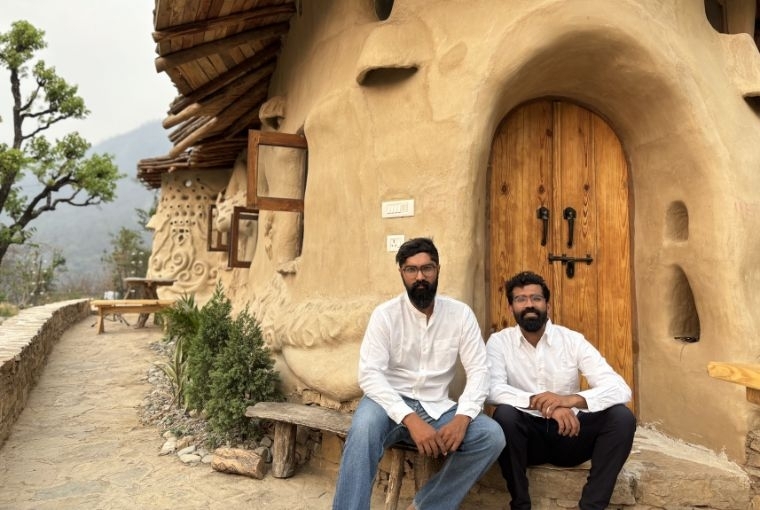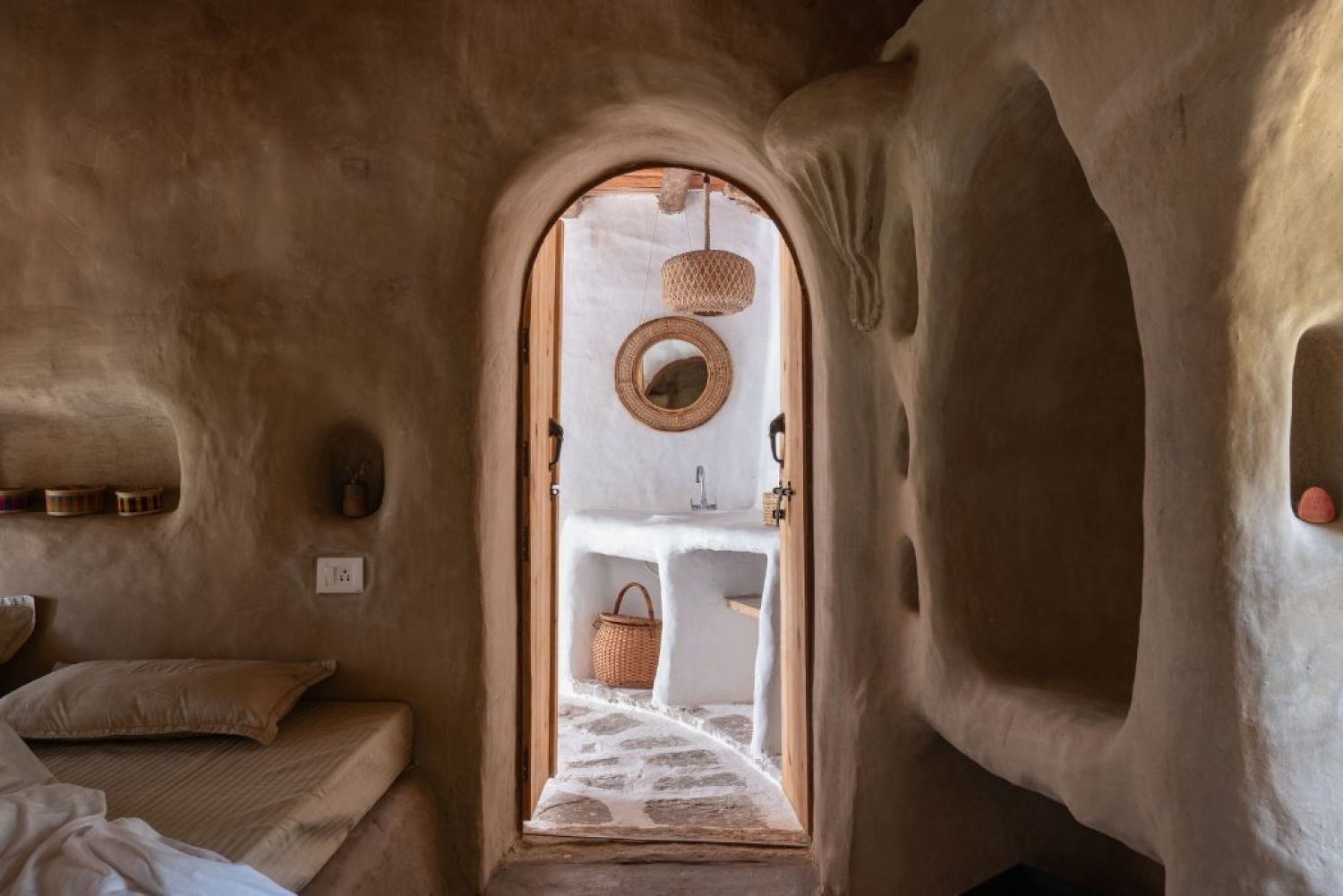
Tiny Farm Lab was born from a re-examination of life’s essentials: food, clothing and shelter. Envisioned as an interdisciplinary, rural, design, research, build and innovation studio in the woods in Rishikesh, India, working at the intersection of indigenous wisdom, art, design, technology and science to rediscover ancient practices, investigate layers of the bioregion, it brings out newer perspectives to shape futures. Architects Ansh Kumar and Raghav Kumar, the founders, talk about creating spaces rooted in care, community and consciousness.
Awakening and Shift to Rural Design
Our journeys were different but converged on the same realisation. After graduating, Ansh deepened his art practice while freelancing in rural mountain settings and volunteering on farms. His work was tied to land and community. Raghav worked for three years at a multinational architecture firm. Despite designing platinum-rated ‘green’ buildings, he realised they were far from sustainable. The disconnect between architects in air-conditioned offices and labourers on site became clear.
We were both drawn to the tiny house movement, questioning how much one really needs to live well. Just before the lockdown, Raghav quit his job to volunteer in rural projects, but then the pandemic changed everything. Like many, we found ourselves asking existential questions. We saw how uninspiring most built environments were and understood that construction is responsible for nearly 40% of global carbon emissions. That discomfort and climate anxiety became the seed of Tiny Farm Lab.
Nature as Collaborator
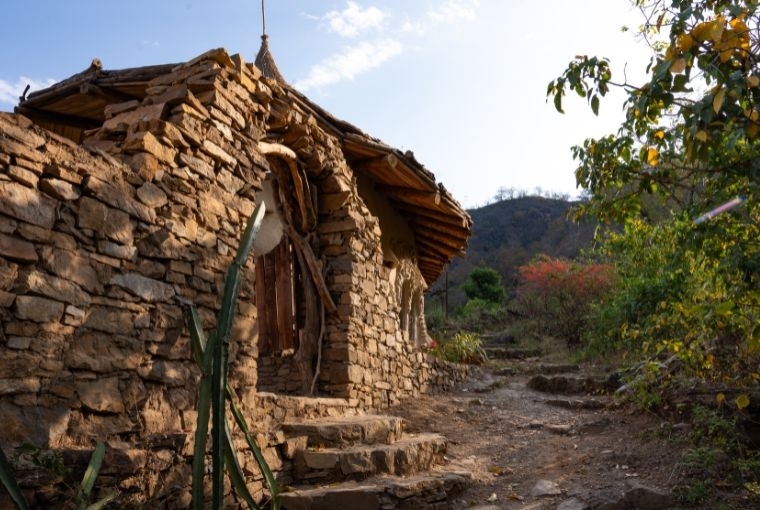
Nature and the site itself take centre stage as the principal architects. We approach each project by celebrating materials and honouring every landscape. Our experiments explore the potential of fungi, bacteria, algae and plants as collaborators. We have worked with mycelium to create art, with SCOBY to develop kombucha leather and turned coffee grounds and seaweed into bioplastic prototypes. Most recently, we hosted a residency with Portuguese architect Inês Barros, where we crafted with wild clay, bhimal fibre and lantana stems. These explorations remind us that design is not only about form but relationships. Tiny beings hold potential for shaping the future.
Local Ecosystems
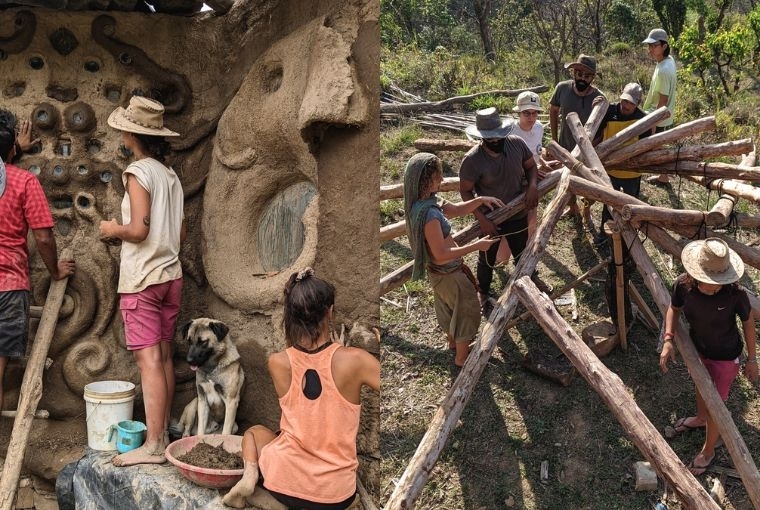
This belief has guided us in all projects. The Tiny Farm Fort was built with a hundred people from eighteen countries and twenty five locals. It showed how powerful many hands together can be. That spirit continues to guide us. In Agra, we worked with farming staff to renovate an adobe house, training them but soon they innovated on their own. In Rishikesh, restoring a colonial haveli, we collaborated with traditional masons and fresco artisans, reviving cultural memory. In Hampi, café owners trained alongside us to build an eco-resort. Across projects, the outcome is the same: when people contribute, they belong to it. The social impact is tangible. In Rishikesh, mason Arjun built his own home, Bhuri Devi now sends her daughter to school and Neelam is saving for her daughter’s marriage. By employing locals, we renew skills and restore dignity. Our work is an act of repair.
Sustainability
For us, sustainability is not a checkbox. It’s about the interdependence of all life, balanced between the ecological, social and economic. Today, the word is often reduced to greenwashing. We believe we must go beyond sustaining to regenerating land, water, crafts, communities and culture. This means designing buildings that can return to earth or reuse materials. It means honouring local knowledge and creating livelihoods. Sustainability is not just minimising harm. It is creating beauty and belonging, spaces that nurture people and the planet.
Words Neeraja Srinivasan
Date 25.4.2026
Photos Tiny Farm Lab, Atik Bheda, Aishwarya Lakhani
This article is an excerpt from our November 2025 Bookazine. For more such stories, purchase the Bookazine here, or at select bookstores.