Principal Architect and Co-Founder of Play Architecture, Senthil Kumar Doss, begins his process with memory, material, and the body. Born in Thanjavur, in the looming shadow of the Brihadeeswara Temple, he had his earliest encounters with form less about buildings and more about permanence: stone as time, scale as silence. Drawing cars and bikes as a child, Architecture was, as he puts it, something that found him, shaped as much by personal loss and survival as by formal training under figures like B. V. Doshi.
There was also the time spent in Auroville, where he learnt to see, unlearnt precision, and embraced imperfection. These experiences would eventually coalesce into Play Architecture, his practice, rooted yet experimental, tactile yet speculative.
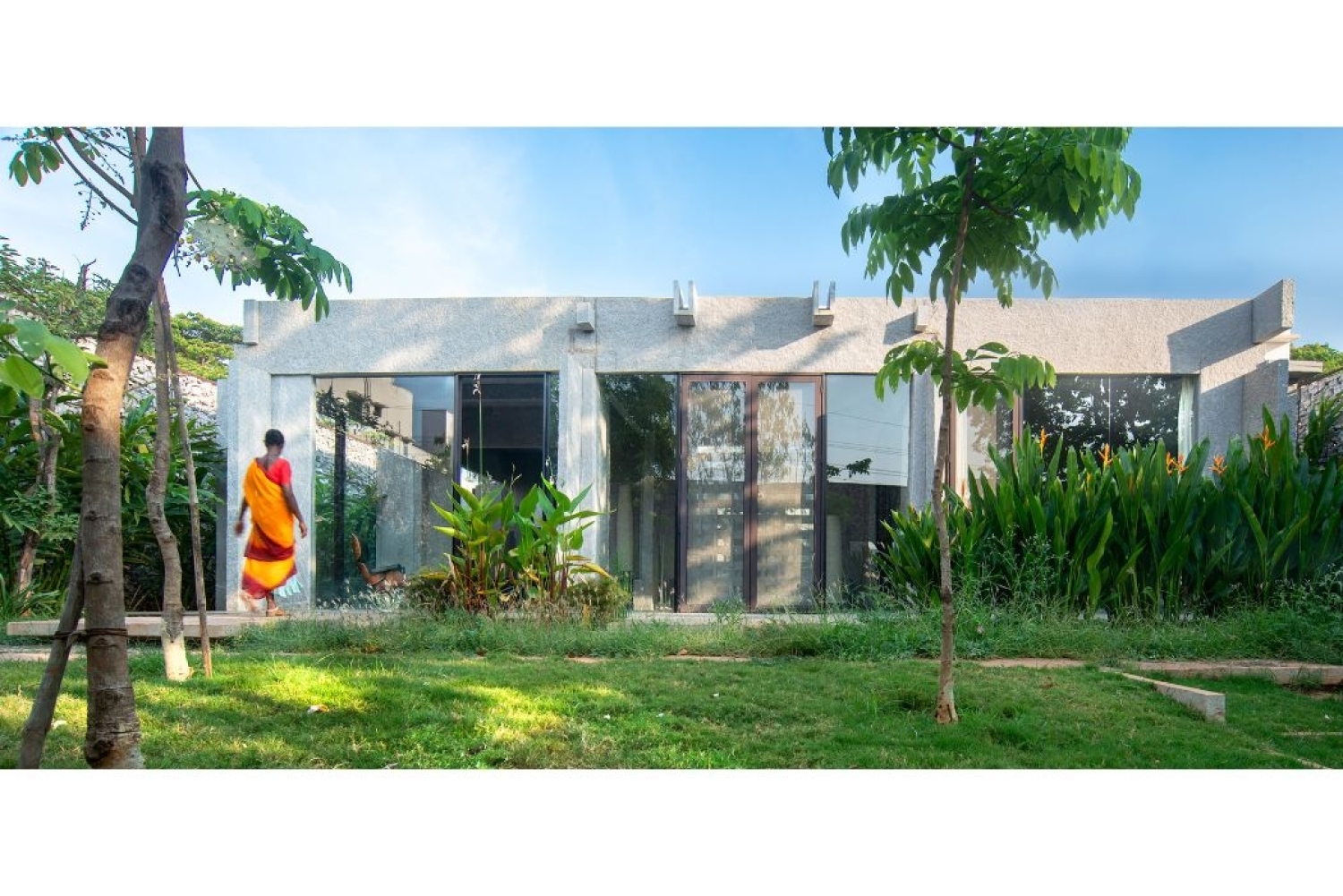
At the centre of this dialogue is also the OHHo House, recently recognised by the Royal Institute of British Architects. The project becomes a lens through which Senthil’s ethos sharpens: a rethinking of material intelligence through chapdi stone, a return to tectonic honesty, and a quiet but firm argument for low-carbon, locally grounded construction. Exceprts below.
What was the beginning of Play Architecture?
Play Architecture and experimental practice, where we position ourselves between a critical regional approach and parametric processes—creating work that is rooted in context yet forward-looking. For us, architecture cannot exist in isolation; it is an intersection of material, culture, climate, and human touch. The tactile dimension is especially important, touch allows both material and user to reveal deeper truths.
You often describe Play Architecture as “exploring the edges of making.” In the context of OHHO House, what did that exploration look like in terms of structure and material decisions?
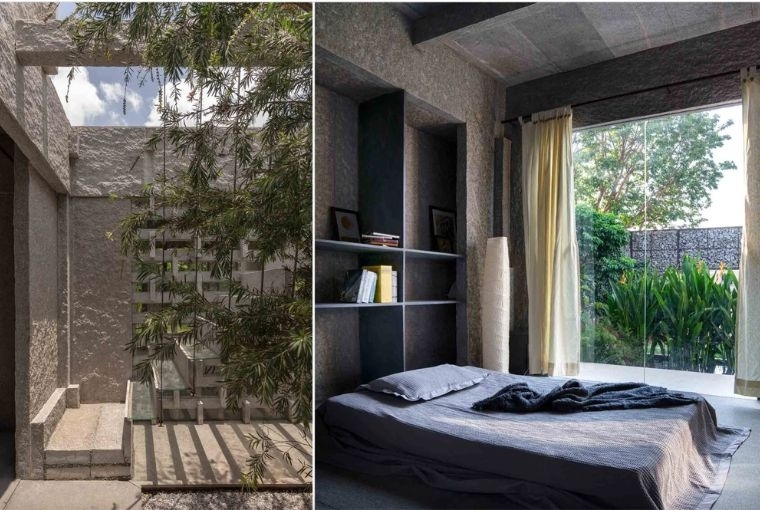
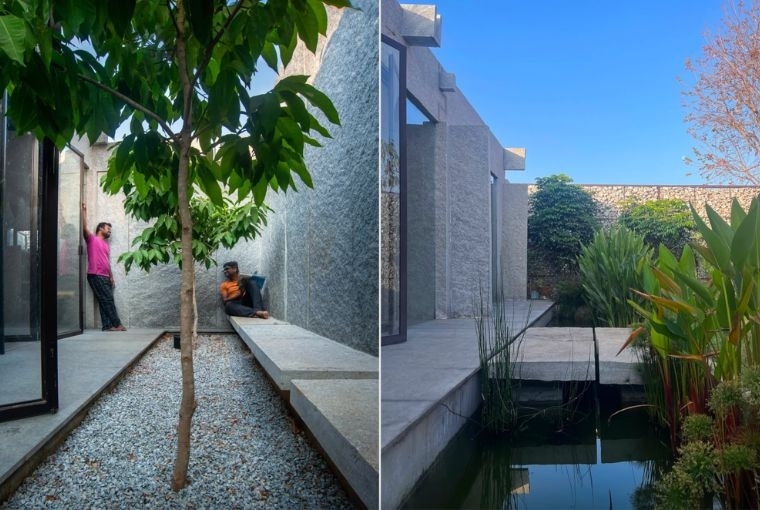
The OHHO House embodies these ideas of integrity and contextuality. In this project, context informed material, material demanded a new tectonic, and that tectonic—combined with function and climate—became architecture. The use of Chapdi stone, traditionally quarried as slabs, required us to rethink its application structurally and tectonically. Rather than imposing conventional systems, we allowed the material’s inherent properties to guide innovation.
We revisited the traditional idea of using stone in tension—something often dismissed by modern engineering but proven through centuries of South Indian architecture.
You work between India and the UK. What lessons from India influenced how you now approach projects in very different climates and cultures?
At a broader level, I see immense value in the dialogue between different worldviews. India’s spiritual and intuitive understanding of living, when combined with the scientific rigor of places like the UK, has the potential to create architecture that is both deeply human and highly refined.
Full-scale prototyping and on-site refinement seem central to your practice. Was there a specific 1:1 test or on-site adjustment at Oh Ho House that fundamentally changed the design?
Through full-scale, 1:1 mock-ups, we were able to test, validate, and collaborate with engineers to develop a viable structural approach. This process extended to all elements of the project, from joinery to glazing, ensuring that every detail was resolved through direct engagement with making. This project demonstrates that meaningful sustainable and regenerative architecture does not require scale—it requires intent. By reinterpreting history through a contemporary lens, we aim to inspire a renewed appreciation for traditional knowledge systems among younger generations. The principles of modularity, integrity, and cultural relevance explored here are inherently replicable.
OHHO House has been recognised by RIBA. Beyond the accolade, what do you hope this project and its chapadi stone system signal to the profession about low-carbon, locally rooted construction?
I strongly believe that materials like stone—abundant, recyclable, and enduring—can play a significant role in reducing reliance on carbon-intensive construction methods. When used responsibly, they offer a pathway toward a more sustainable and regenerative built environment.
Lastly, what do you think is the next big thing in design?
Ultimately, the future of architecture lies in learning from nature—its efficiency, adaptability, and quiet beauty. Nature does not strive for aesthetics; it evolves through necessity, and in doing so, becomes beautiful. That, to me, is the direction architecture must take.
Words Hansika Lohani
Date 18.3.2026