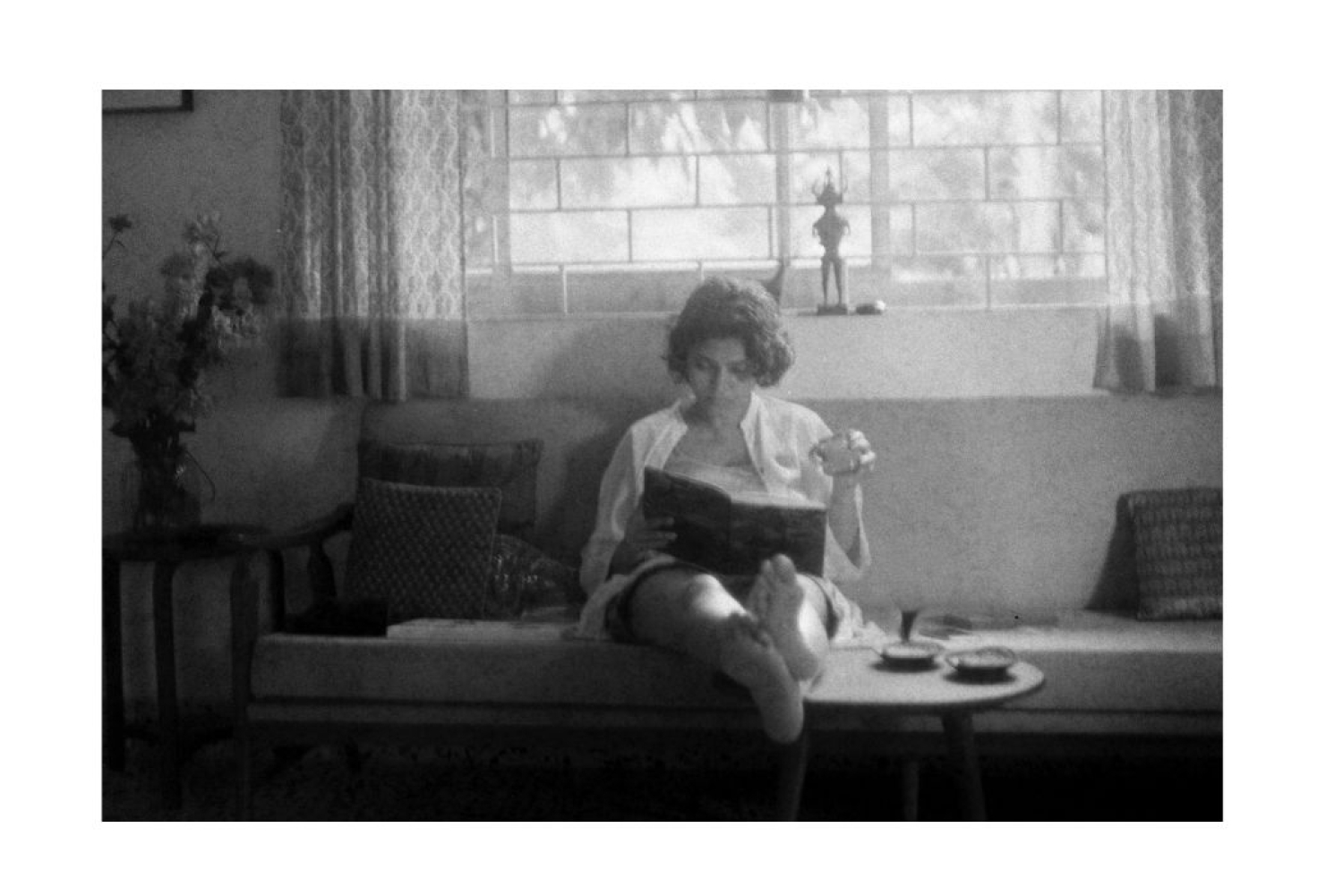
Photography Srinivas Kuruganti
Photography Srinivas Kuruganti
The arts have been a part of Rukminee’s journey right from the start. Studying at NID helped hone her craft and today, more than two decades later, she works across various design disciplines while also writing, teaching and publishing. The minimalism and intentionality in her design work endorses her belief that design for the sake of design and over-designed things make for bad design.
Design is invisible. Good and bad. However, there is a distinct difference in the experience and response. According to Rukminee, it’s much easier to give examples of bad design because they are everywhere. ‘So often designers make objects that no one really needs or they use inappropriate materials. But I’ll give you two examples of good design from work done by two of my contemporaries: Both Neelakash Kshetrimayum and Ishan Khosla have designed typefaces: Neelakash designed a unicode font for the Meetei Mayek script—a huge step in keeping the script alive, not only in Manipur where it had been subsumed by the Bengali script until very recently, but also in the world. Ishan’s Typecraft project shines a light on some regional art forms in India with playful and collaborative typeface design projects that use, for instance, embroidery made by Rabari women in Kutch, or Baiga and Gond tattoos. These projects have a community impact and have been executed over years of attentive work.’
Book design has been at the heart of Rukminee’s practice and the books she has designed are uncommonly thoughtful, layered and special. Today, her attention to detail and superlative craftsmanship spans twenty-five years and over a hundred publications; however the joys of making them and holding them when they are complete is still omnipresent. ‘One never knows what will emerge from the raw material. It’s always surprising to me how the material, the conversations, interactions and influences of the moment find their places in the design of a book. It may be the films I have watched during that period, or a chocolate box I have admired for a moment, or a photograph that a friend sent me... anything can ignite ideas because while I am working on a book, I am thinking about it constantly. So my senses are primed to look out for relevant parts of the whole picture that I am trying to resolve. Things fall in place very gradually through this process of assimilation of thoughts and experiences, and numerous trials on paper.’
While the design happens in solitude, the answers are reached collectively. ‘I ask many whys... like a child. I try to understand the need to make that particular book, who it is for, why it is for them and so on. I have to get a very exhaustive understanding of what needs to be communicated, to whom and why; and then figure out how best to do it. Often it’s not possible to get so much clarity and my own interpretations kick in... I become part author of the project. The people I collaborate with see and understand this and we share authorship.’
Rukminee took us through five books that hold a special connection to her practice and her heart.
Words Shruti Kapur Malhotra
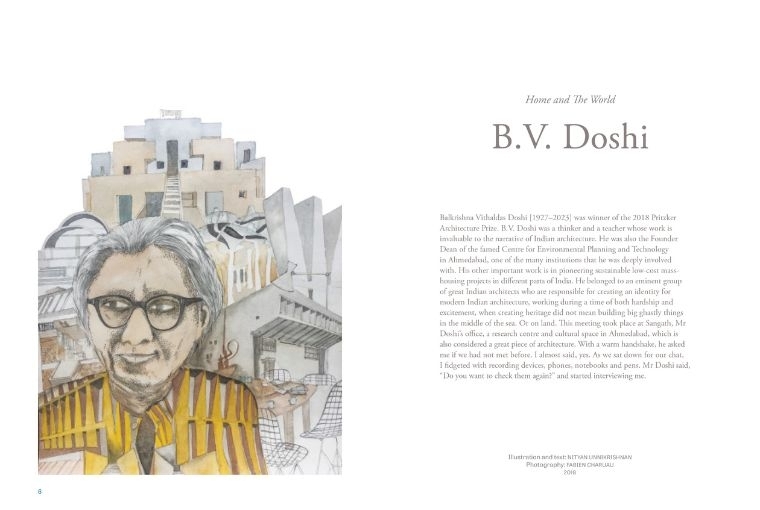
Spreads from Platform's 20 years, 20 interviews published by Platform, 2025
The Art of Book Design
Platform: '20 Years 20 Interviews'
I think I can say that I have seen Platform from its infancy to adulthood and now, with its first book it’s quite a serious adult. 20 years! I’ve been the magazine’s art director for 18 of these 20 years, redesigned it twice as it grew and its personality transformed, and Shruti and I always knew that the books were afoot. We were very excited to dive into the archives and pull out interviews for the first book which is one of many to come. Books are my natural habitat so it wasn’t hard to pull myself away from the Platform magazine look to the Platform book look, but neither is it easy to create a fresh identity while keeping the core of the old one intact as both need to co-exist. So this was a challenge albeit an enjoyable one and the book was released at Platform’s 20-years event in October.
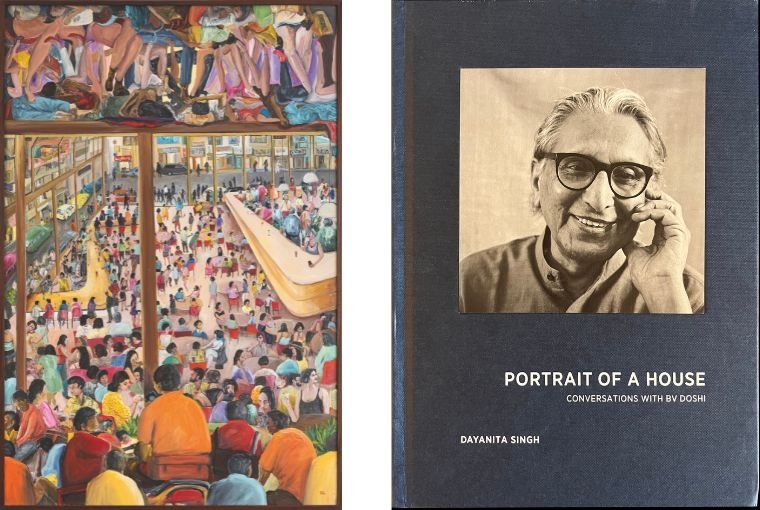
Book cover and spine from Nityan Unnikrishnan's The Centre Cannot Hold published by Letterpress, 2025, Dayanita Singh's Portrait of a House: Conversations With BV Doshi published by Spontaneous Books
Nityan Unnikrishnan: 'The Centre Cannot Hold'
Nityan is my life partner and I have probably seen every single piece of work he’s produced from start to finish. However, he makes many, many works that we never see again once they leave his studio and find other homes. I felt the need to document his work and what’s better than a book for that? Books are permanent collections held in pages between covers and anyone, anywhere can have them. His book is the first one that I have published as Letterpress and it was a very long design process as there was so much material to consider. Nityan has always kept sketchbooks and I wanted to include material from these in the book. Some excellent writers have written on each of his shows and of course there were paintings and sculptures made over almost 15 years. It was quite challenging to get all of this to cohere. To be honest, I had been attempting to make this book for a few years and kept abandoning it because of how complex it was and how close I was to it, but as he is one of the exhibiting artists at the Kochi Biennale this year, I decided it was a very good deadline to give myself and produce a book before the biennale opened. So here we are with, what I think, is a pretty unique book: it’s not linear, I designed it almost like a photobook, creating text-sketch-painting-sculpture relationships as one turns the pages. There’s a very interesting conversation with the artist in it and pages from his sketchbooks that are woven in.
Dayanita Singh: 'Portrait of A House: Conversations with BV Doshi
This photobook about family and love, light and buildings, and conversations on how spaces are inhabited was made as a tribute to BV Doshi by Dayanita Singh for his 94th birthday. The challenge here was to privilege the text and the images equally and to co-relate them as well. It’s harder to do this than it looks and here is where editorial skills with both text and images come in handy. For me, it is always important to push the artist’s ideas to the fore and let the viewer experience the design rather than making the design itself stand out.
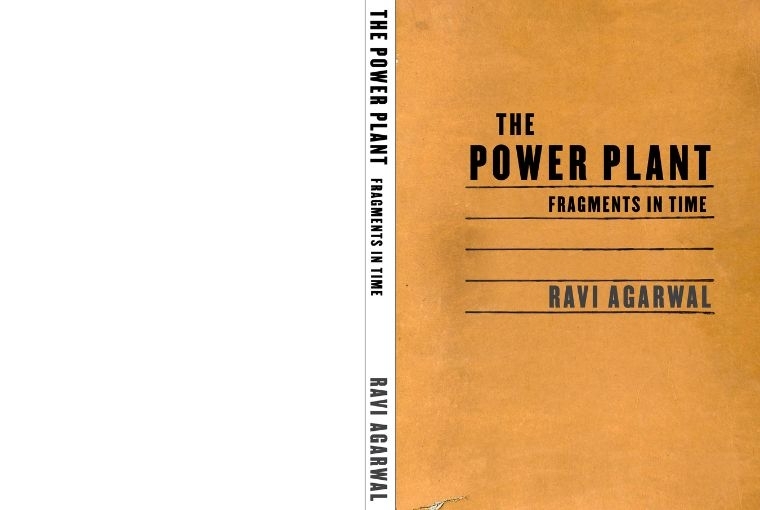
Ravi Agarwal's The Power Plant: Fragments in Time published in 2023
Ravi Agarwal: 'The Power Plant: Fragments in Time
For this book, Ravi Agarwal approached me with an archive of his photographs of a power plant, his writings, some artworks as well as sketches and notes from his diaries. Weaving all this disparate material together was the main challenge but, interestingly, as I designed this book with images of an industrial space that used coal, the white pages of the book began to jump out. It was as though I was unable to process pristine whiteness and the subject, coal, together. I kept wanting to mark the pages and so I did. There are no clean, white pages in the book and eventually even the edges of the book got a lick of charcoal black. It is the most satisfying thing to assign meaning to each design decision: the materials, colour, type and size.
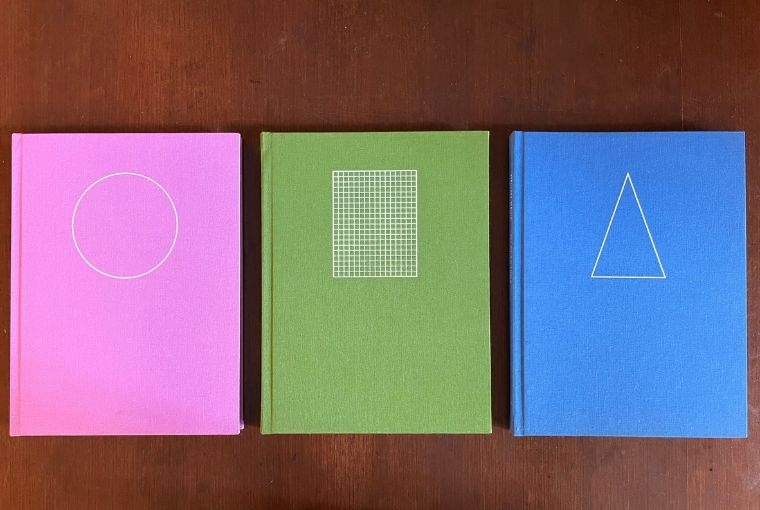
Bharti Kher's The Trick is Living and Selected Bindi Works published by Nature Morte, 2022
Bharti Kher's Trilogy
Bharti Kher’s oeuvre as an artist is stunningly varied and the three books are about discrete parts of her practice. Yet they are all, like her practice, inter-related. The Late Aveek Sen, Bharti Kher and I put our heads together for weeks in Bharti’s studio, making, unmaking and remaking the books and working on providing visual clues, like in a detective game, for each element: the cover, end papers, section dividers, quotes etc. The books are playful and dynamic like much of Bharti’s work.
Words Rukminee Guha Thakurta
Date 14.3.2026
This is an article from the November 2025 Bookazine. For more such stories, buy the bookazine here.