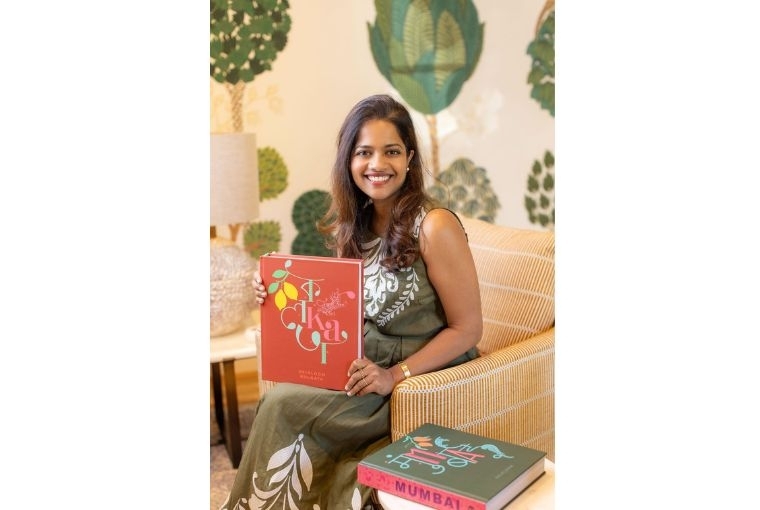
For Sri Bodanapu, food is a language of belonging, a quiet keeper of memory. Every bite recalls a story, a grandmother’s touch, the aroma of a street corner, the hum of a festival. She believes food holds this power for all of us, anchoring us to where we come from and to the people and places that have shaped us.
This deeply personal, almost instinctive relationship with food sits at the heart of Heirloom Cities, Sri’s design-led publishing house that documents the cultural ecosystems around food. The project traces the layered, evolving narratives of cities, showing how migration, history, community, and everyday rituals shape what ends up on a plate.
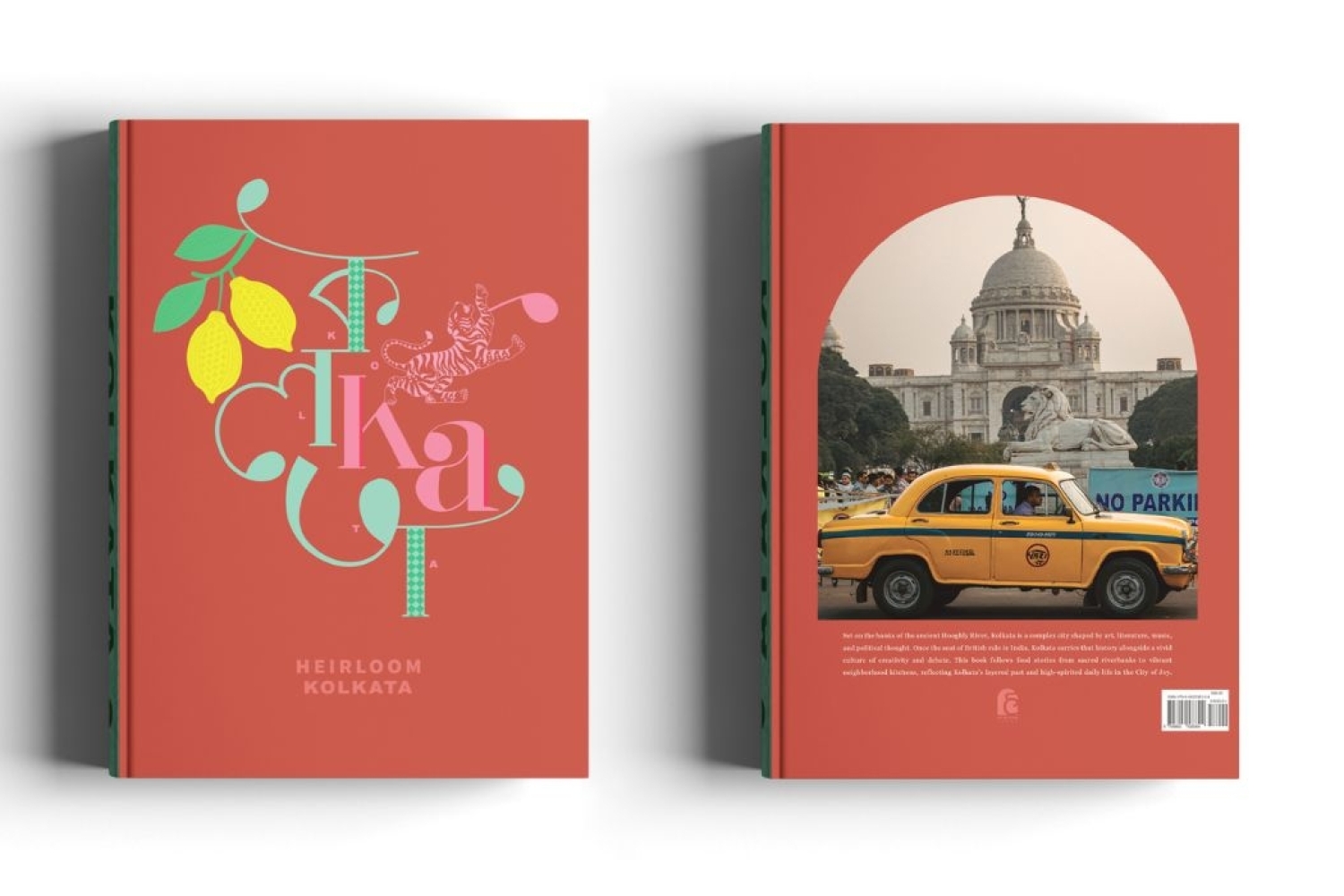
The series began with Mumbai, which launched worldwide in May 2025 and went on to win the Gourmand Awards - often referred to as the “Oscars” of food-culture publishing. The second title, Kolkata is set to launch globally later this month. Through these books, Sri and her team build a richly detailed portrait of urban life through a culinary lens. It brings together personal essays, lived experiences, photography, and illustrations that feel as a thoughtfully crafted cultural document.
Speaking to us over Zoom from San Francisco, Sri reflected on the urge to document what feels at risk of being forgotten and on her ambition to build a living archive of cities through the language of food.
Could you tell me about the exact moment or experience that pushed you to create Heirloom Cities?
We had moved to India during the pandemic for two years. As part of my work in publishing, I was constantly on the lookout for interesting books in this space: books that talked about food not just as recipes, but as culture and as a storytelling platform. I remember, ironically, it was in London. I was standing in the coffee-table book section at Harrods, looking at this incredible display. I must have seen two to three hundred coffee-table books, and there was just one book on India, and that too on Jaipur, written by an international brand.
I thought to myself that we have such an incredible legacy of food, culture, communities, and people, but all we have managed to put out into that space is one book on Jaipur that truly belongs on an international table, alongside other storytellers taking a similarly design-rich approach. That is when I had the realization: I want to do this. I want to create a space where we can tell stories about these iconic cities.
The idea was: how do we take these stories coming out of Indian cities and present them to a global audience in a way that is very elevated from a design standpoint? Most of what I had seen up until then fell into two buckets: beautifully designed recipe books, or very academic books that dive deep into history. I felt there was a gap where you could marry those two approaches in a way that feels approachable and digestible for a very diverse audience.
It does not have to be only for someone who wants to cook and take the book into their kitchen. It also does not have to be only for someone willing to sit and read 350 pages of history. It can be for someone who simply loves storytelling from different cities, stories that open their eyes, break stereotypes, and educate them in some way.
For example, when you think about perceptions of Indian food in the West: even in San Francisco, which is such an incredibly vibrant and progressive city, I would say 75 percent of the Indian restaurants are still takeout places serving the familiar staples, such as chicken tikka masala, dal, and garlic naan. There are only a few now that really focus on regional cuisine, fusion, or lesser-known dishes. For me, the goal was to exist in that in-between space, telling stories that people have not yet discovered.
How do you choose the cities you focus on, and what makes Mumbai and Kolkata particularly significant for you?
For me, Mumbai felt like a very powerful starting point because I wanted a city that was recognizable on a global scale, but that also really represented constant movement and energy, rooted in a lot of history and tradition while still being one of the most contemporary and modern cities in India. I wanted the first city to reflect all of that and, as a new brand, I also wanted a name that people would instantly recognize, so that when they see Mumbai they feel curious to explore what is inside.
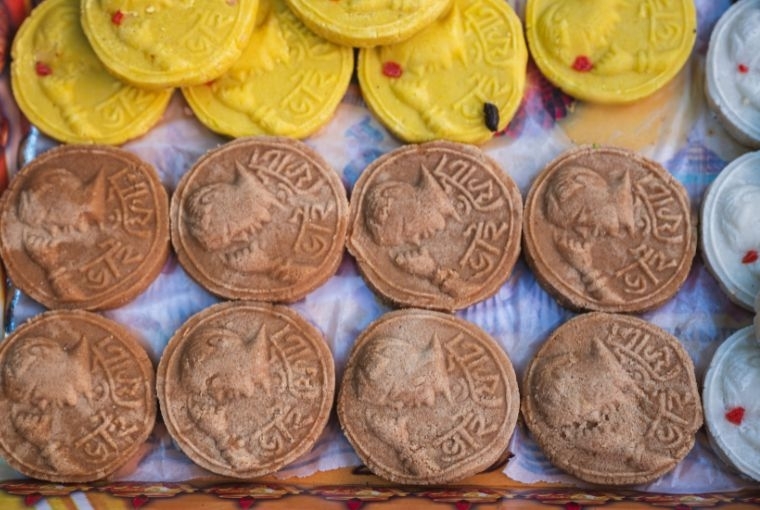
When it came to choosing the next city, it was very important for me to highlight the regional aspects of Indian cuisine, because one way to break stereotypes is by showing the depth, diversity, and variety that exists within Indian food. So we chose another iconic city with its own distinctive cuisine, which in my opinion has not received the international attention it deserves: Kolkata. When I visited, it felt almost as if time had stopped in the 1970s, with yellow Ambassador taxis and old buses; coming from Mumbai, with its fast-paced hustle and energy, Kolkata felt like the exact opposite. I also loved discovering how many dishes were completely new to me, even though I love food and have lived away for a long time, from dhina torka to mutton panteras to pithe puli, and I felt that this incredible variety really deserved to be documented.
I want to understand the process of curation for every city. Cities with such vast food cultures… what conversations do you have with the curators about the curatorial process of which places, cafes, and experiences to talk about?
There are two different ways in which I research. As you can imagine, the city is incredibly important, but the team that tells the story is equally important, because that is where I always say we are a design-led publishing house. We consider ourselves to be very elevated in terms of storytelling, but ultimately I want it to be rooted in a very authentic experience for the reader.
My goal is not to go out there reporting on Michelin-starred restaurants or what won the James Beard; that is a different sort of space. My goal is to take what feels very authentic, very real, very lived in, and bring that to a larger audience. This is why, for me, the alignment with both the city (where we can bring out these stories) and the editorial team that can really help bring these stories out is very important. To further answer your question, one part is obviously visiting the city and experiencing it. For both Kolkata and Mumbai, I got really lucky with the editors. Mumbai’s editor is a well-known writer, editor, and journalist called Rushina Munshaw Ghildiyal, and I experienced the city through her. We went on an expedition and ate at our favourite places. My favourite place is Soam; I love chaat.
It is about just observing and seeing where the stories that need to be told are. I like to believe that I am a little bit more observant because I come from the outside, and I think that allows me to observe these cities from a different perspective. I am an Indian who grew up there but has lived away for an equal amount of time: I am Indian, very rooted in that food and that culture, but this experience of living away really allows me to see what I would want to hear about as somebody living in the West, what a global citizen would want to hear about, and what stories feel authentic. Is it the Soam experience, is it eating street-side chaat, is it going to Bombay Canteen? It is a mix of all of this, as you will see in the Mumbai book. What we want to do is be very representative of every part of what is happening in the city.
Moving to your upcoming book, Kolkata. Talk to us about creating this piece. How different is it from Mumbai, and what relationship do you share with it?
My first trip to Kolkata was when I started working on the book. I had done a lot of research before that and had really zoned in on that city as being our next book in the series. We have an incredible team: Anindya Sundar Basu and Madhushree Basu Roy, a husband-and-wife team who run a creative agency called Pikturenama. I felt that their form of storytelling was very in line with ours. It is very authentic, very representative of the people, the communities, the streets, and the kitchens. They bring a very sincere form of storytelling, which I really like.
So I first visited Kolkata for the book, met the team, and we hit the ground running. I generally love places deeply rooted in culture and history, so for me, that felt like an automatic connection. When we started, we wanted to look at markets, because we wanted to use them to visually show how different the produce is between Mumbai and Kolkata. In Kolkata, we found an abundance of squash blossoms and banana flowers. In Mumbai, we did a lot of potatoes, of course. I thought, let us show this diversity through the markets.
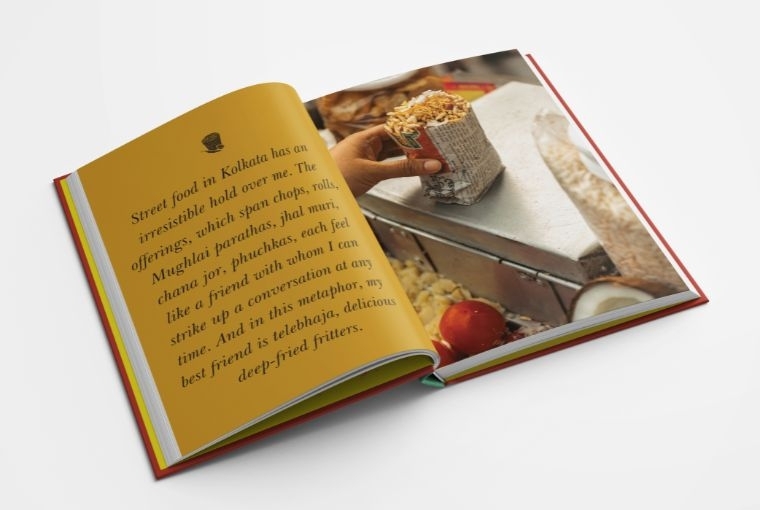
Then we went on to tackle two chapters: chai nashta and street food. In Mumbai, street food is heavy on chaat. In Kolkata, it was more about Kathi rolls, and then the telebhajas, all of the deep-fried snacks that we get everywhere. There was also something very distinct, like eating your bread dipped in chicken stew in dark, brisket-like gravy. It was very different in that sense. For me, the goal was to approach each city with the same eyes and show our readers how different these cities are. That is where you can really break those stereotypes of one country, one food. Instead, it is more like, even if you look only at street food, look at how much diversity there is. Look at how people call a puchka different names in every single city. That is what I wanted to surface in each of these chapters.
What are the other cities that we can look forward to?
We have Dubai in the pipeline right now. We already started working on it a couple of months ago. As I said earlier, my goal was to start from India and then move outward from there to Asia. We have also just started doing some groundwork in Bangkok and Colombo in Sri Lanka. Dubai was one of the cities that I visited a lot after we moved to India. I felt that, especially living in the West, many of these cities in the Arab and broader Middle Eastern world are completely covered in religious and political discourse. We do not often look beyond that. What I found, especially with Dubai, is that it is such a melting pot of immigrants.
I still remember having a meal with Lebanese dishes like Kaak and Manakish, and of course, pita bread. It made me think about what an incredible legacy of food the Arab world has. From how they bake their bread, to how they pickle, to their layered biryanis and their meats, and their sweets like Ma’amoul, everything is incredible. If you go to Deira and eat at the local Iranian or Afghan bakery, you will get the most incredible bread and the food is amazing. Nobody is telling that story. We are still feeding into the same stereotype of Dubai as the Vegas of the East, a place of glitz and glam. Underneath that image is a layer of history, immigration, trade, and immigrant communities that have built that city from the ground up. That is the food whose story really needs to be told.
Words Hansika Lohani
Date 16.4.2026