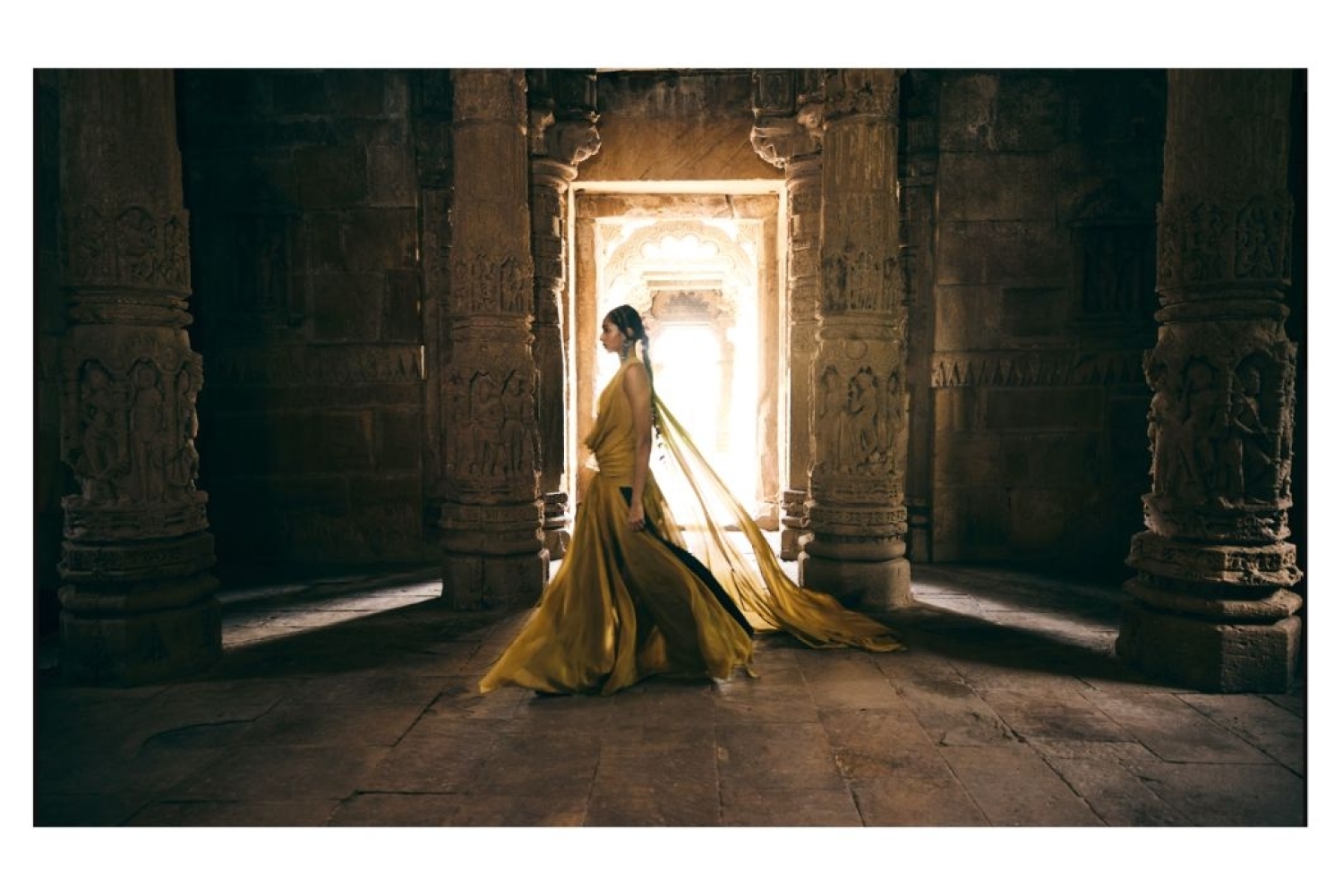
‘Fashion can come from living and experiencing things, rather than always beginning with a conventional idea,’ says Shivani Aggarwal, founder of Indian pret-wear label ANI. Passionate about vibrant prints, ANI features self-hand-painted prints and minimal patterns, with versatile pieces meant for any occasion, redefining how apparel can be flexible with the preferences of the wearer. Below, Shivani talks about how she built ANI, the ideology behind it, its relation with art and what lies ahead.
Creation
Launched in the uncertainty of the pandemic, ANI was created from unexpected happenings like a small tie-dye collection from Holi party clothes. The major realisation, however, happened when Shivani started receiving press opportunities with respect to her documentation of her design school submissions on social media. Making the best use of her opportunities, she took a leap of faith and trusted her creative abilities.
Working on surplus fabric, experimenting with silhouettes and ideas, Shivani and her team designed with intention. ‘Instead of beginning with the idea of what we wanted to produce and then sourcing everything from scratch, we often began with what already existed and asked ourselves how we could transform it,’ she adds. This mindset still influences their creative decisions.
As ANI balances sustainability with the commercial pressure with their collections, Shivani mentions, ‘Sustainability, for us, is not just about a particular material or label we attach to a collection. It is about being conscious of what we produce, how much we produce and whether a piece has enough character and longevity to be worn repeatedly. Even with collections as vibrant as Karnival, the intention is not simply to create more. It is to create pieces that women connect with and want to keep returning to.’
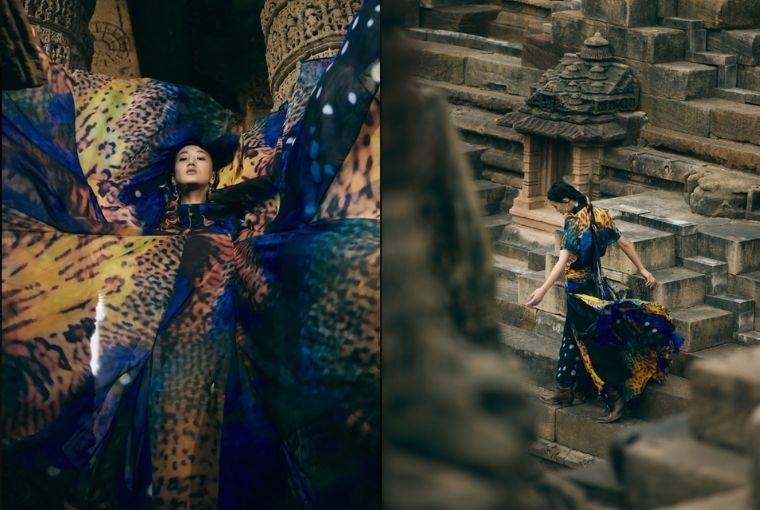
Ideology behind ANI
The name ‘ANI’ comes from Shivani’s name. Wanting the name of the label to ‘feel personal but also open enough to become its own identity,’ she chose the nickname that her grandfather called her affectionately. She went with its simplicity and uncomplicatedness.
This personal touch is reflected through their pieces. As a feminine pret wear brand, ‘We think about the Indian woman very instinctively because that is who we are designing for. There is a constant dialogue between the global references we are inspired by and the way women here actually dress, move and live.
The ANI woman is not a singular lady; she can come from any part of the country, be of any age or have a completely different personal style from the next woman wearing ANI. What connects them is the way they use clothing as a form of self-expression. Representation is important because fashion should reflect the women who actually wear it. It also helps us as designers. Seeing our clothes on different bodies and different kinds of women constantly teaches us something about fit, proportion and styling.
With ANI, femininity doesn't necessarily mean something delicate or traditionally feminine. It can be expressive, playful, bold and sensual. We use silhouettes, colour and print to explore that idea while ensuring that the clothes feel comfortable and considered on Indian bodies. Ultimately, the clothes need to work in real life. They have to move with you, whether you're travelling, celebrating, going to dinner or simply going about your day.’
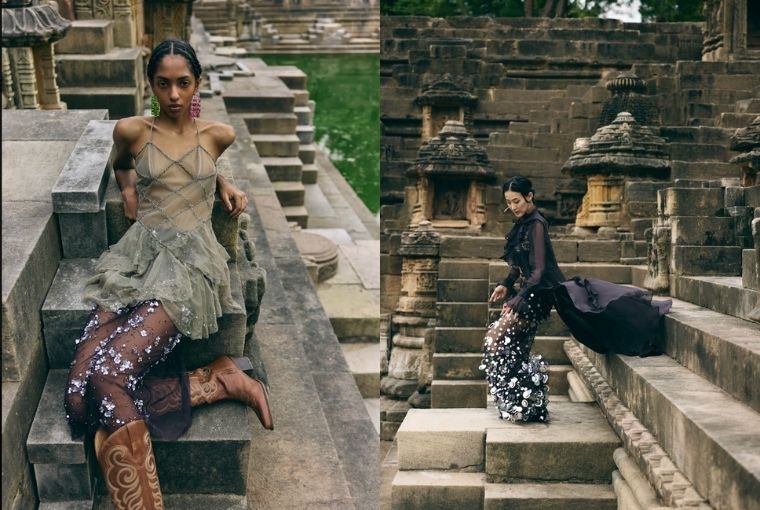
Inspiration
‘I find inspiration less in one particular artist or movement and more in the visual world around me. Indian art, textiles, architecture, nature and craft are constant references but so are contemporary art, photography, travel and landscapes.
For Karnival, the sea became a particularly important visual and emotional reference. We were interested in the way water connects seemingly distant places; coastlines, cultures and communities and how nature constantly moves through cycles of growth and renewal. The flower became an important motif within that world. Rather than treating it as an isolated botanical element, we imagined it as part of a larger ecosystem. That led us towards coral-inspired geometry, fluid forms, painterly colour and layered botanical narratives.’
Commenting on the maximalism and minimalism discourse, Shivani notes, ‘Fashion is most interesting when it allows both to coexist. Maximalism and minimalism don't necessarily have to be opposing ideas. ANI naturally has a strong relationship with colour, print and statement silhouettes, but there is always an intention behind the exuberance. A bold print can still have a very considered silhouette and something visually dramatic can still feel effortless when you wear it. For me, the question is less about whether something is maximalist or minimalist and more about whether it feels authentic to the person wearing it.’
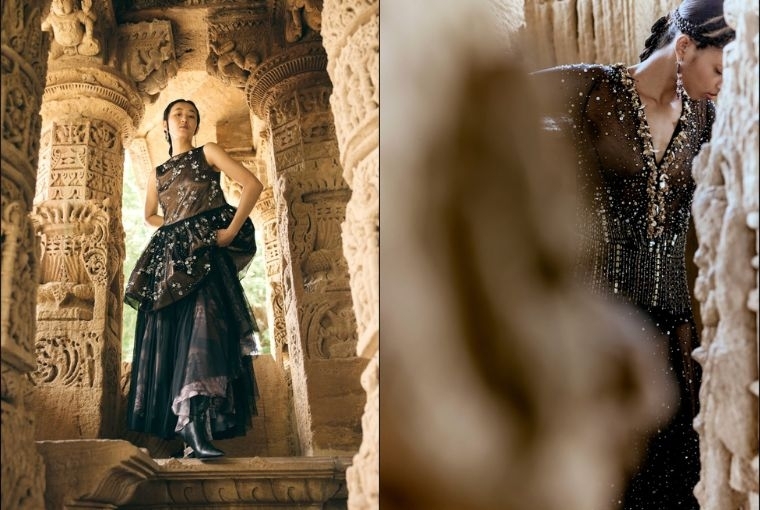
Ahead
‘I would like art to become an even deeper part of ANI's universe. We already approach each collection almost like a visual narrative and Karnival is a good example of that the collection began with an idea about the sea and evolved into a larger conversation around nature, connection, memory and movement.
I'd love to explore collaborations with artists, photographers and other creative practitioners but also look beyond conventional collaborations. Art could enter the world of ANI through textiles, installations, objects, imagery or even the way we present a collection. For me, the exciting part is allowing the boundaries between fashion, art and everyday life to become increasingly fluid. In hindsight, that period (pandemic) taught me to embrace uncertainty. ANI has always evolved through experimentation and I think that continues to be an important part of how we work.’
Words Shruti Verma
Date 25.9.2026