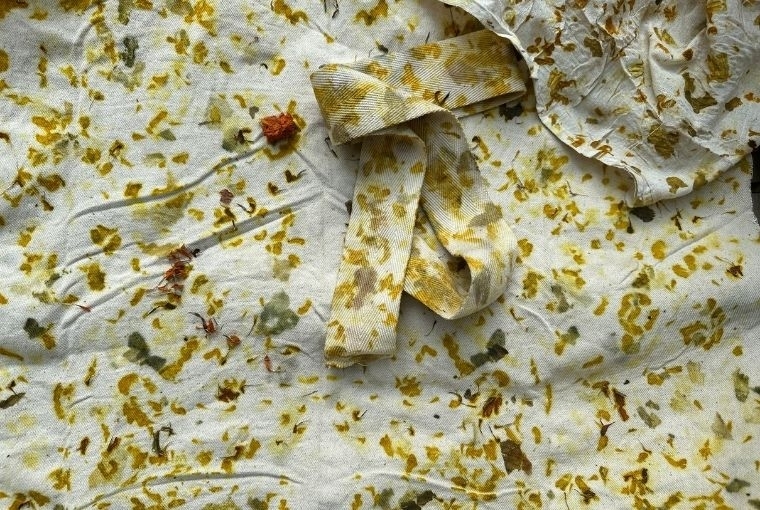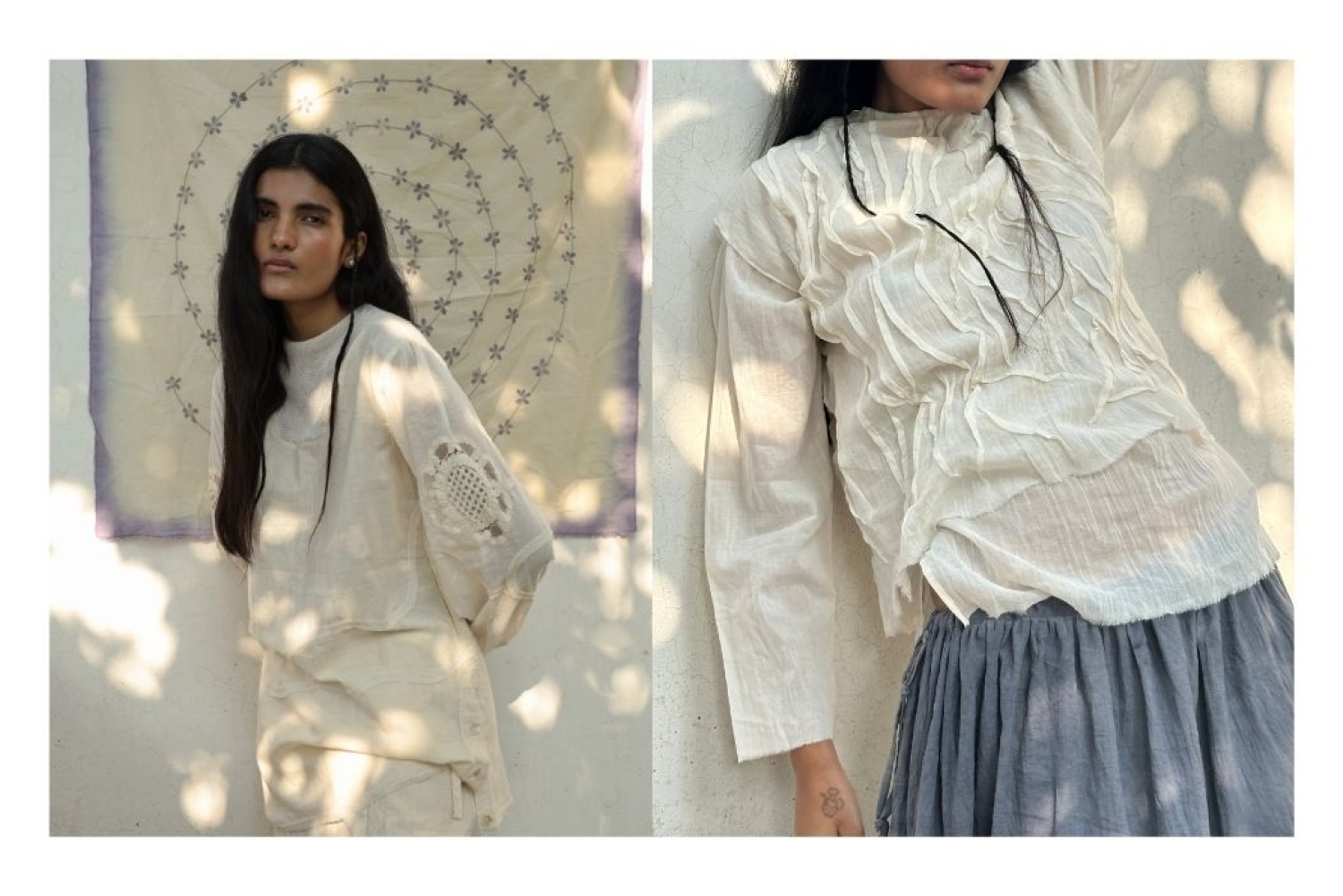
‘An 'imperfect' garment is simply one that carries the fingerprint of life and human hands, rather than the sterile uniformity of a machine,’ expresses Mridu Mehra, founder of earth-conscious textile label Kokun. Rooted in the soil it borrows from, Kokun is steeped in natural dyes, raw textiles, botanical printing and zero-waste techniques, with each garment coaxed into being gentler on both skin and earth. The brand took shape in the pandemic when Mridu stepped away from city life and let herself be slowed by Mukteshwar and Raghurampur. Below, Mridu talks about how her communion with the natural world blossomed into Kokun’s embrace of beauty in variation and impermanence over the rushed and mass-produced.
Dyed by the Hour
‘Working with natural materials made me realise how different it really is to be a natural dyeing artist and to run a label that makes naturally dyed clothes. Natural materials operate on their own timeline, not an artificial production schedule. You can't force a flower to steep faster or rush textiles to absorb pigments.
In fast fashion, perfection means absolute predictability: every batch identical, every detail and color synthetic and static. But when you work with natural materials, perfection in that sense is an illusion. An imperfection becomes beautiful the moment one stops viewing it as a flaw and starts recognising it as novelty. It becomes beautiful when one notices the slight variations in a golden yellow didn’t come from a chemical code, it came from how the marigolds held their pigment that day, or the temperature of the water, or the touch of the artisan’s hands stirring the pot. That shift in perspective is Wabi-Sabi in practice: finding quiet joy in things that are natural, fleeting, and authentic.
We don’t start with trend boards or sketching silhouettes; we start with what the earth is offering in that moment. The mood of a collection is often dictated by the season. We forage leaves, grow plants and flowers and use our kitchen waste like walnut hulls, onion peels and avocado and pomegranate rinds, preserved over time. Using these elements and watching them interact with our undyed textiles is where the real visual direction takes shape.’
It Takes A Village
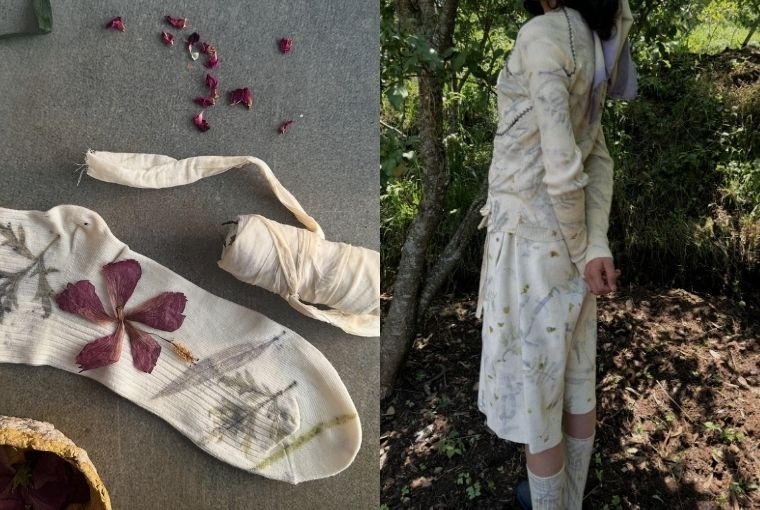
‘Living in both these places [Mukteshwar and Raghurampur], especially spending extended time in Raghurampur during the lockdown, completely transformed my perspective. I was struck by two things: the outrageously gifted talent of the local women, and the unacknowledged nature of their labour. The patience and resilience of every woman I met there was truly something to carry forward, along with, of course, empowering them, so that their effort never goes unnoticed and unappreciated again. Everything organically led to another. We began organising, training, and creating consistent work opportunities for these women, bringing their skills into Kokun’s production.
Working with the women across Mukteshwar and Raghurampur hasn't just supported our process; it has shaped Kokun's identity in infusing heart into the craft. Their hands bring a level of care, patience, and warmth to our garments that no automated factory could ever replicate. It shifted our focus from just making clothes to building a community-driven ecosystem where rural women get the economic independence they deserve. Kokun truly takes a village, because every garment we make is a shared labour of love between nature, our dreams and the extraordinary women who bring it to life.’
The Shoonya Project
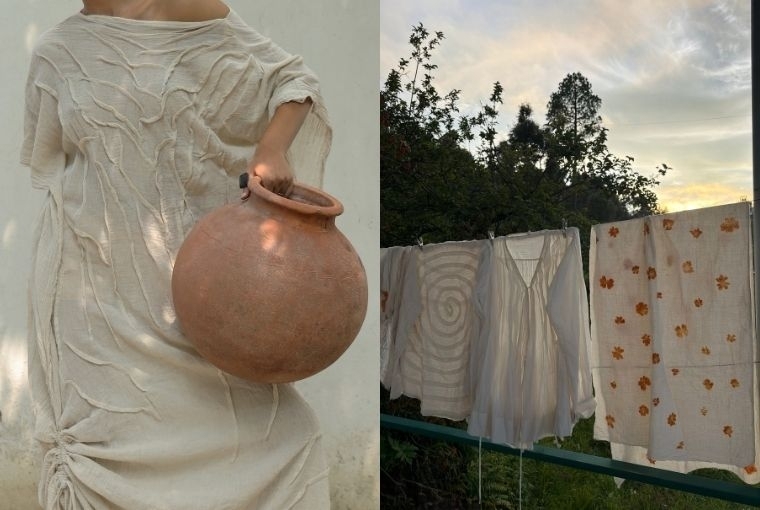
‘Shoonya literally means zero, and the project is our effort towards a more circular design process. No matter how carefully one drafts patterns or cuts fabric, the tailoring process inherently leaves behind offcuts and scraps. In fast fashion, those end up in landfills. For us, those leftovers, alongside the swatches from our natural dye experiments, are the starting point for the Shoonya Project.
We work primarily with our own in-house textile offcuts and dye-test swatches. We source dead-stock natural fabrics that have been sitting forgotten in warehouses across Delhi, Lucknow, Bangalore, or Tamil Nadu. We take these dead-stock knits and fabric remnants and deconstruct them to entirely new hand-knit pieces and patchwork textiles.’
Ahead
‘The biggest challenge of running a slow-fashion label in a fast-paced industry comes down to resisting the pressure to lose your individuality in order to speed up. Scaling up while preserving artisanal integrity, working and training local craftswomen in small batches means we have to consciously choose slow, sustainable growth over rapid expansion. The global fashion machine operates on constant trends, mass production, and instant gratification, whereas our process is intentionally slow, intuitive, and bound to nature's rhythm. We operate on a made-to-order model to eliminate inventory waste and personalise garments according to preferences and different bodies.
To me, good design today is about the entire lifecycle and the intention behind a beautiful object. I believe good design comes from the earth and can return to the earth without leaving a scar. It begins with natural elements and ends by breaking down naturally, completing a clean, respectful cycle. Beyond its relationship with the planet, good design is defined by longevity and care. It is crafted with enough love, integrity, and quality that it can be mended, repaired, and worn for years, or passed down as a cherished piece rather than discarded after a season. When a garment is made with that level of mindfulness, sustainability is simply the natural result of good design.’
Words Nidhi Soni
Date 31.8.2026