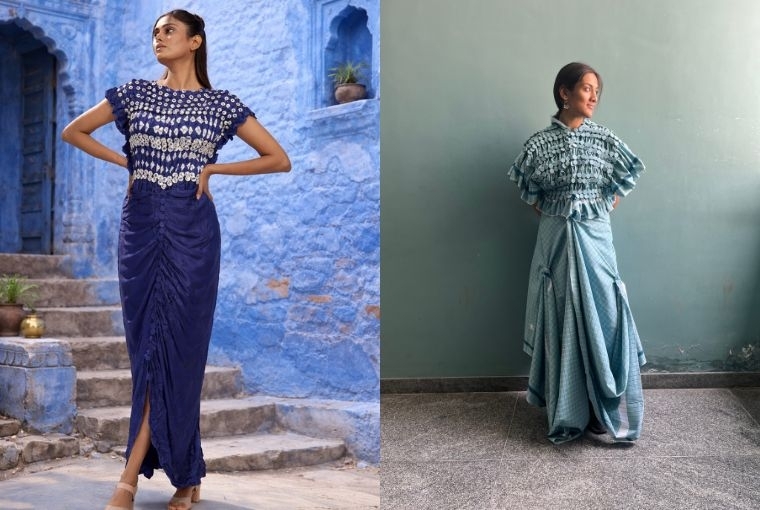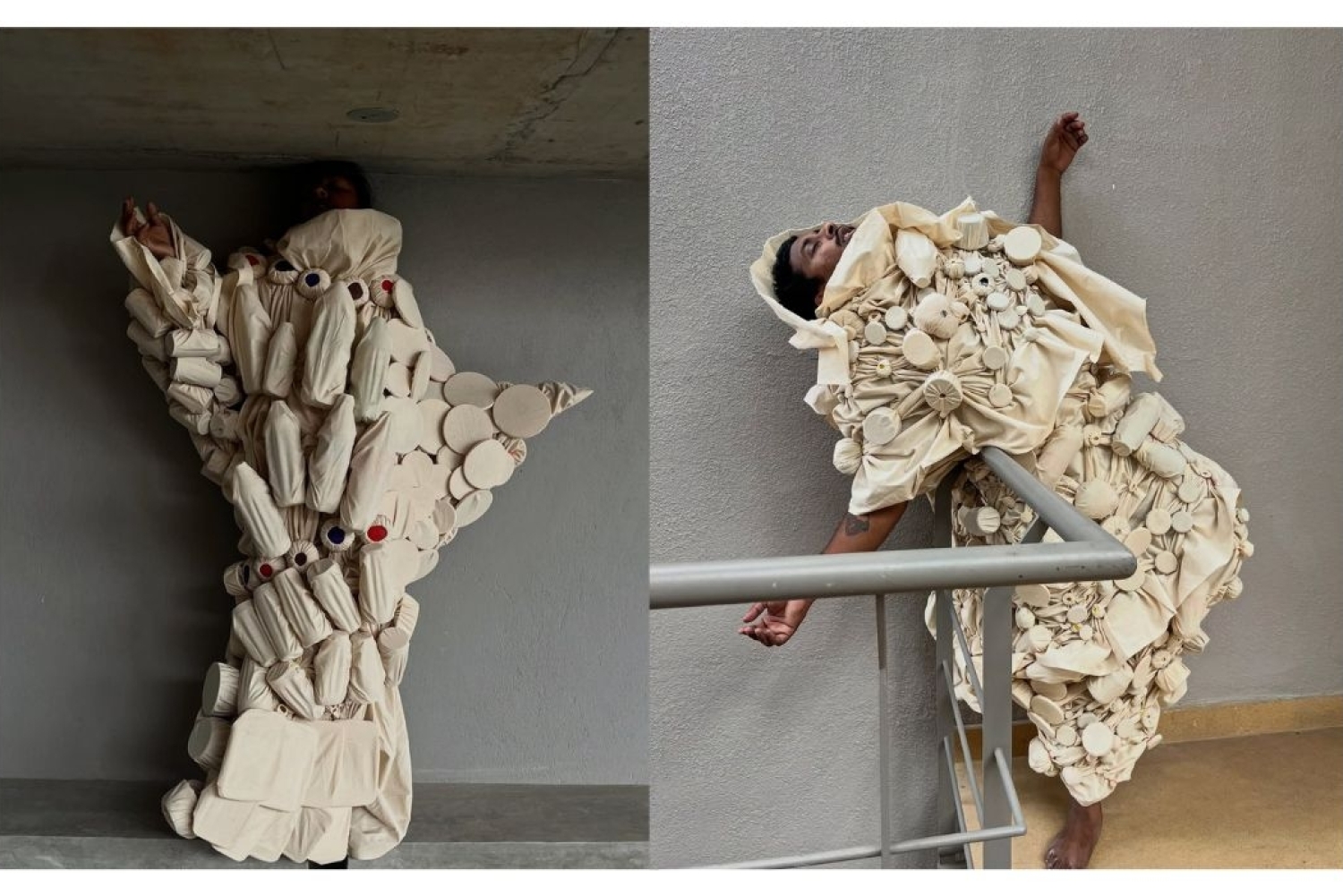
Founded by Anuj Sharma, Button Masala is a no-cut, no-stitch design system that transforms buttons and rubber bands into a method of construction. Built around the idea of zero wastage and adaptability, the technique allows fabric to be shaped, joined, and reconfigured without sewing. A single piece can shift from trousers to a dress, a jacket to a bag, or even into objects like lamps, curtains, and cushion covers. Ingrained in experimentation and accessibility, Button Masala is designed to be learned intuitively and used by anyone. Through workshops and teaching, Anuj has expanded the method into a growing space for innovation and textile-based art.
Developing the Technique
I was born in Rajasthan, and in the 80s, water scarcity was very real. So, I think my basic understanding of how to use materials and resources wisely comes from there. It was very natural for me to be sustainable. It’s not just now, I’ve always been mindful of using materials, how much to use and where to use them. As a kid, I saw my grandfather wash his hands on a plate, clean the same plate with the same water, and then drink that water. That’s the kind of upbringing I had. Once I was at NID, I didn’t like the idea of stitching because it always felt like there was only one way of making clothes, and if you didn’t like to make clothes that way, there was no other option. I didn’t understand why there wasn’t another way and it frustrated me, though obviously I couldn’t do much with the stubborn education system.
Button Masala was originally made as a concept of buttons and buttonholes. I came up with the idea after seeing someone button a shirt incorrectly. From there, I developed this technique using buttons and buttonholes as a concept, and then presented it at Lakme, and realised it was something I needed to work on further. The current Button Masala is an outcome of that original idea. I’ve always worked for my own pleasure in terms of how to use design to make my life better, and that’s really the origin of Button Masala.
The Process
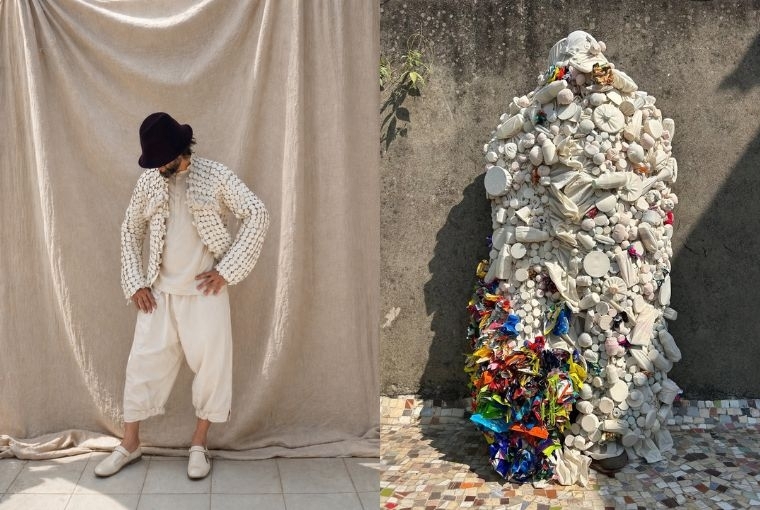
One day, I was fiddling around and tied a rubber band between buttons to save time, and that gave me the idea of using buttons, rubber bands, and fabric together. Button Masala is a technique where you can use rubber bands and buttons to tie fabric together, or tie two fabrics together, and that becomes a joinery system. It allows garments to be made without cutting the fabric and without sewing. It becomes a very simple method that is one size fits all. It can be shaped in different ways, and whenever you want, you can remove the buttons and bands again. It’s machine washable, and what’s interesting is that it can be learned by anybody in very little time. It allows freedom of design, which allows democracy within design, that I really want people to understand.
Interpreting Sustainability
Sustainability is a word I understood very late as a term, but in my life I’ve been practising it since childhood. I think sustainability is not when you do something because people are watching you, scrutinising you, or because it carries your name. Sustainability is something you do when nobody is watching you.
Sustainability is about you as a person. You are the person who carries that idea, and people are what matter. If you’re sustainable in your life and you’re not wasting energy and resources when nobody’s watching you, then you’re fine. Otherwise, most people I know are sustainable in front of everyone and very wasteful in everything else they do. They take cars where they could cycle, take flights where they could go by bus or train, and keep air conditioning and lights running all day in their sustainable showrooms. That’s not sustainability. We often think that if somebody is working with Indian fashion or Indian craftspeople, then they are sustainable. Material has very little to do with it. It’s about every aspect of your everyday life that makes a difference.
The Future
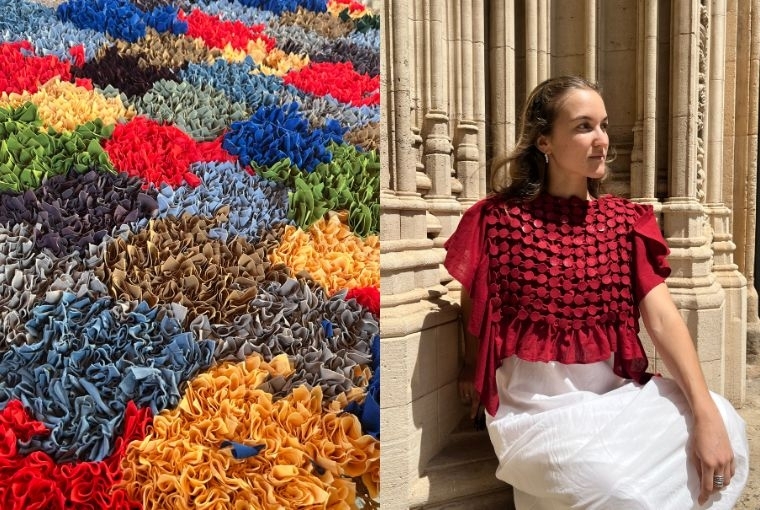
For the last few years, I’ve been focusing more on collaborations and working with people who already know their own fields well. That comfort of collaborating with someone who can take care of their side of the job is something I’ve really been looking at. Alongside garments, inventions, and other products, I would also like to look at art and maybe even housing materials using fabric, which is very much possible, though we haven’t had the chance to fully explore it yet. There’s also been a lot of travelling and teaching over the years. I travel about 250-260 days a year, teaching Button Masala and related work. Travelling with the technique and meeting people, that’s what I enjoy the most.
Words Neeraja Srinivasan
Date 28.5.2026