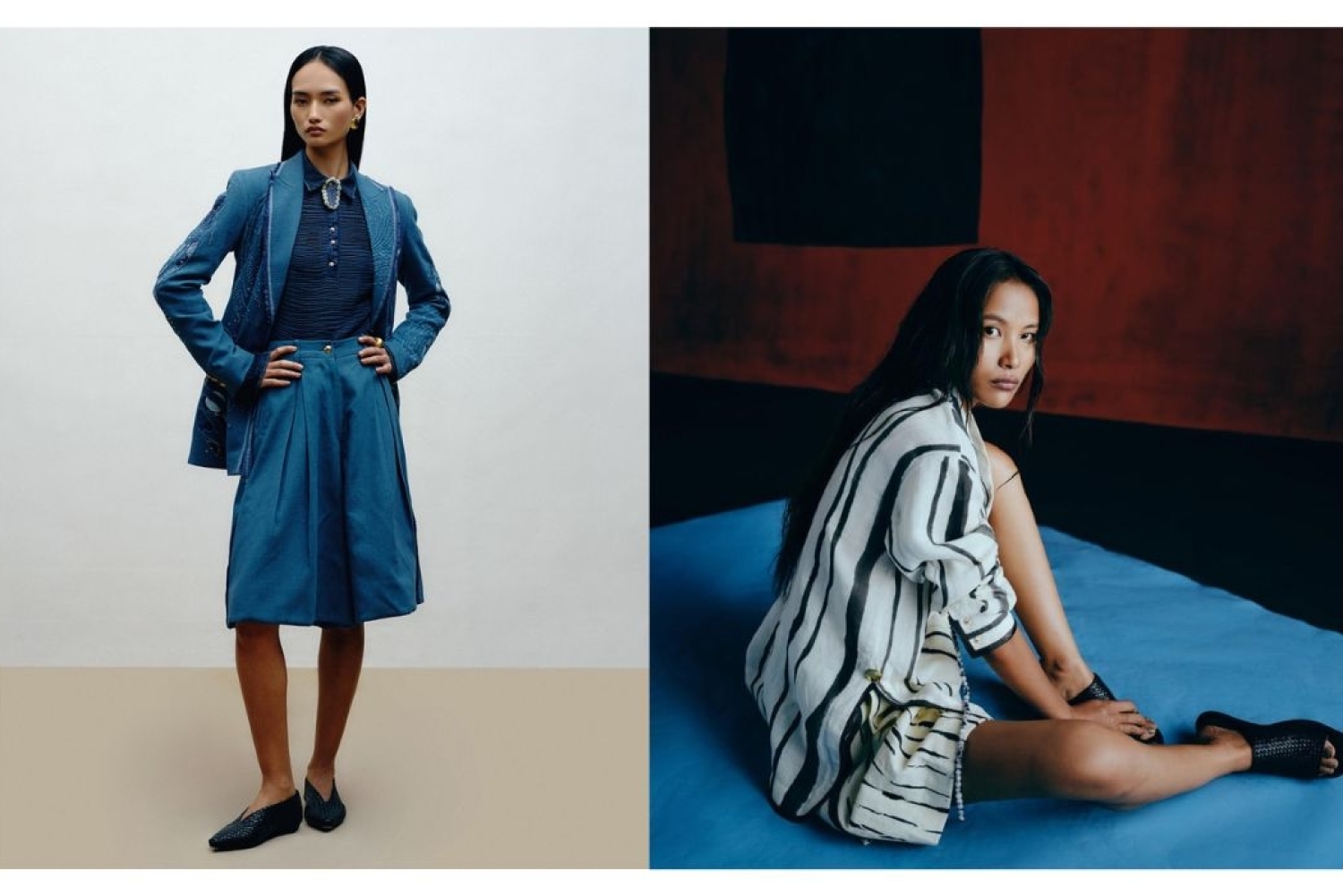
In today's world of contemporary Indian fashion, many labels work with craft, but very few place weavers at the very centre of the creative process rather than the end of it. Combining an artisan-first philosophy with a thoughtful interplay of materials, textiles, and techniques, Dulari is a label that invites a closer look. At first glance, its garments are striking for their sculptural silhouettes and understated palette. Look closer, and you'll find Barmer appliqué, handwoven cottons, natural dyes, and various local textile traditions assembled seamlessly into each piece.
‘We’re drawn to fabric that ages and softens with wear the way good leather does, since a Dulari piece is meant to be kept, not replaced next season.’ says Krish Bajaj, the founder, who veers away from power looms and towards handloom textiles. Dulari’s colours; deep blues, luscious greens and scenic yellows are striking, and their dyeing process relies on materials over trendboards. In a fashion landscape driven by constant novelty, Dulari does not simplify craft for the West.
The Roots of the Label
Dulari didn’t start with a business plan. It started with a conviction that craft was being treated as decoration when it should be treated as authorship. Neha [my mom and co-founder] and I kept circling the same frustration, watching Indian textile traditions get flattened into a heritage story for Western buyers, like the artisan’s job ends where the designer’s begins. We wanted a label where the weaver’s hand shapes the garment as much as the sketch does.
Turning Craft Into Objects with Meaning
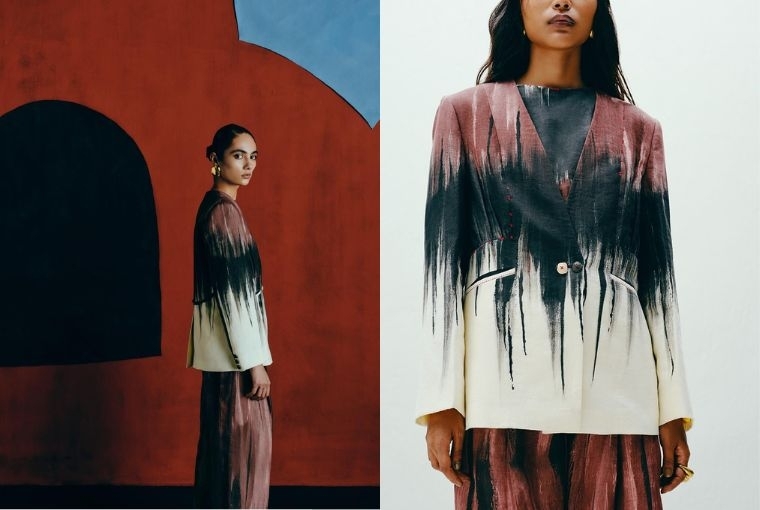
It’s a layered process, not a single hand. Our textile designers and silhouette designers sit with the artisan before a single thread gets cut, and Jahnvi [Bansal], as creative director, holds the whole thing together so the craft technique becomes the design language rather than a heritage we preserve untouched. Memory shows up in what we refuse to correct, a slight shift in weave tension, a colour that moves between batches. That’s the human hand left on record, and we design around it instead of smoothing it out.
Materials the Label is Drawn Towards
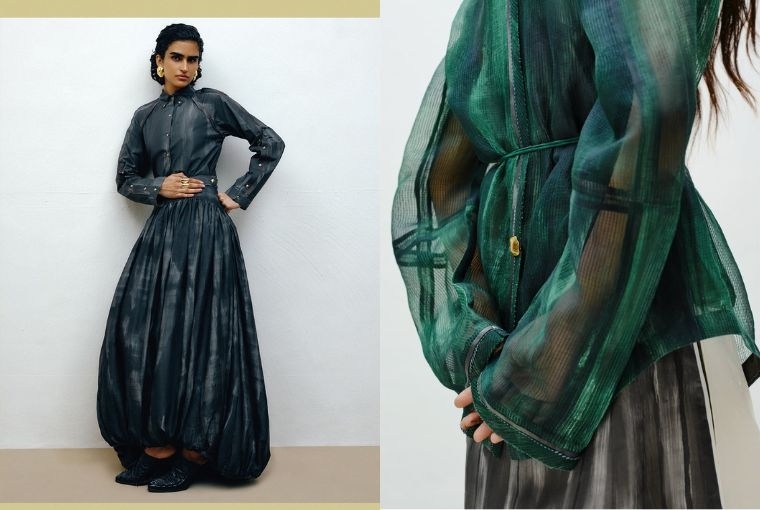
Handloom textiles only, no power looms anywhere, including linings. Natural dyes, because that’s the practice, not a claim we added for marketing. Chanderi silk, eri silk, khadi, handwoven cottons. We’re drawn to fabric that ages and softens with wear the way good leather does, since a Dulari piece is meant to be kept, not replaced next season.
Developing Colours
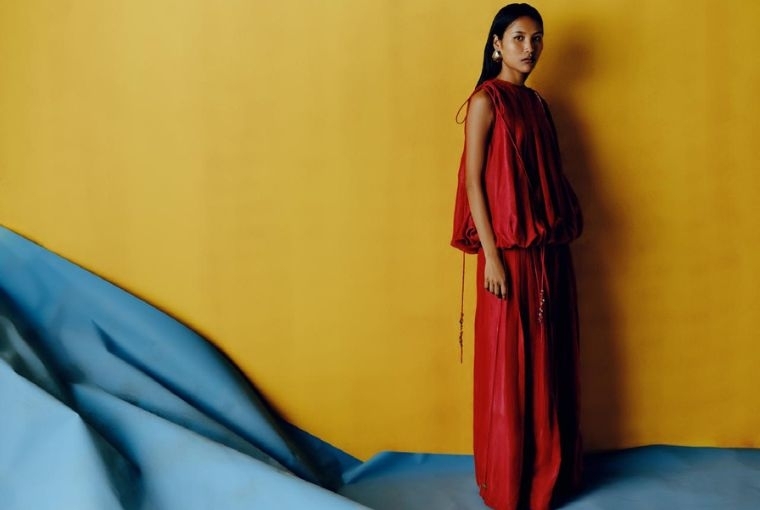
They come out of natural dye work with our artisans, so the palette is a byproduct of material honesty rather than a trend board. Our debut collection began with indigo and unfolded into a spectrum of blue, green and shadowed neutral, then widened into yolk yellow, charcoal, deep teal, beetroot pink. The dye process carries its own variance, and we treat that as part of the design instead of standardizing it out.
The Dulari’s Philosophy
Each collection is its own world. The idea is to take one classic Indian art form and report it globally, so no two collections lean on the same craft twice. Our first was built around Barmer appliqué. The second is entirely hand-painted, and that one has a story behind it I think about a lot.
The artisan we worked with had spent his whole career painting florals, the same vocabulary passed down and repeated. Our team trained alongside him for three months, back and forth, pushing him toward something he’d never attempted. Partway through, he had tears in his eyes, not because it was difficult, but because he realized he could create something like this at all. His daughters had never shown interest in joining the craft. Watching him work on this collection, they saw it differently. That’s the whole philosophy in one moment, craft isn’t a static inheritance, it’s something that can still surprise the person who’s practiced it for decades, and that surprise is what makes the next generation want to stay.
Adapting Craft for Contemporary Silhouettes
Barmer appliqué is the foundation, and we pushed it into an appliqué-on-appliqué technique layered with hand painting and deconstructed pin-tucks. Alongside that, handwoven Chanderi and eri silk, khadi, and hand-painting. The adaptation isn’t simplifying craft for a Western silhouette. We ask the artisan to experiment with scale and abstraction within their own technique, and the silhouette follows what the craft does differently.
The Biggest Challenge
Getting read as Indian craft when the brand is built to sit in an international conversation. We price and present Dulari like craft-luxury, and the instinct from a lot of people is still to file it under Indian handloom, a different category entirely.
Words Neeraja Srinivasan
Date 29.7.2026