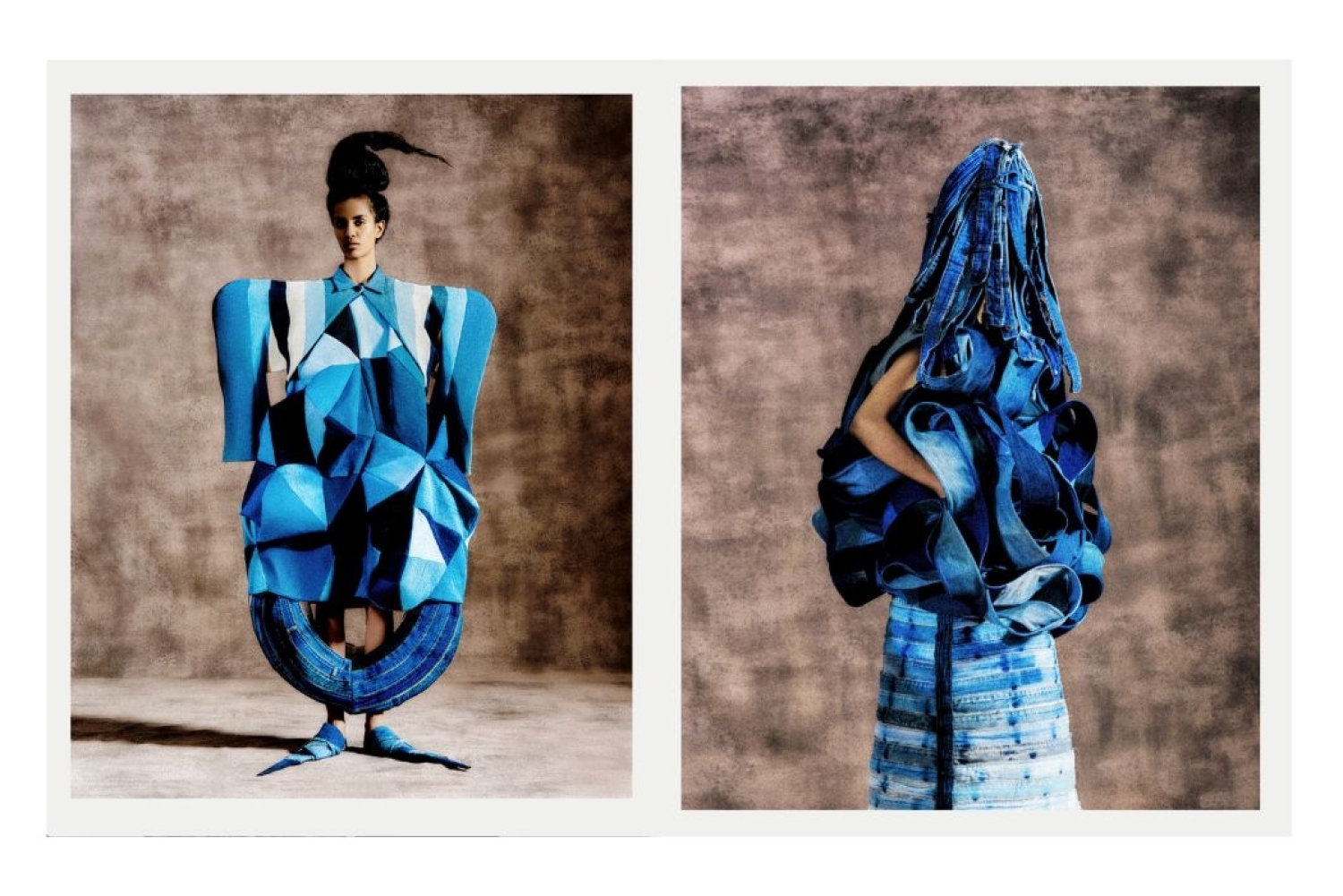
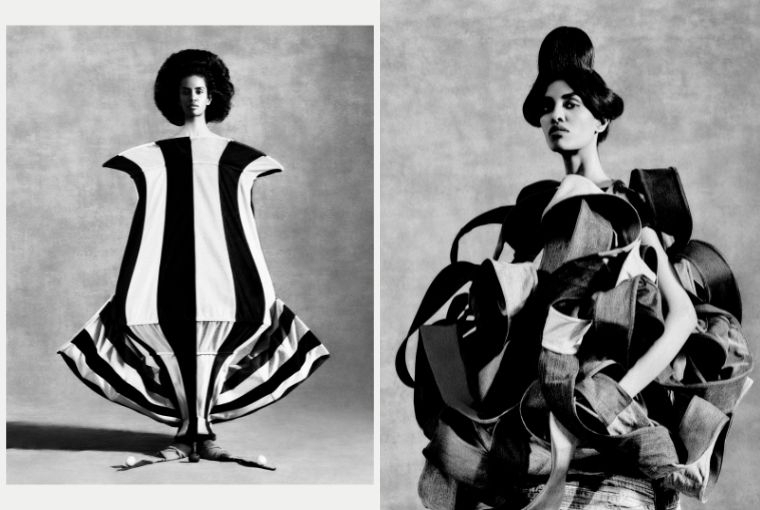
Anam Husain’s work is rooted in memory, movement, and material. Launched after years of reflection, the label emerges from a childhood steeped in stories of magic and travelling. Raised across many cities in India, Anam’s nomadic upbringing shaped a design language that sees craft as lived culture. From discovering corroded coins in her grandfather’s almirah to studying costume design in Paris and researching zardozi in Lucknow, each experience feeds into a practice that values sustainability, geometry, scent, and storytelling. Cut Putly, her latest collection, treats garments as sculptural, almost architectural forms, comprising bold, geometric silhouettes that are one-of-a-kind art objects with a conscience.
Creative Roots
My grandmother, who was a collector of handloom sarees and gold ornaments was my first creative inspiration. Growing up, I also watched my mother hand-embroider dupattas collected from every place we lived in, since we were on the move often. She learnt Aligarh appliqué work from the locals, Lucknowi zari kadhai, and Rampuri chattapatti gharara patchwork. She would take me to local markets to buy fabrics to have them stitched in designs that she would draw on little sheets.
My grandfather was a tour guide at the Taj Mahal. At my grandparents’ haveli, every corner held a vintage treasure. Sheesha, intricate perfume bottles, richly oxidised zardozi prayer pieces, elaborate carpets, hand-carved wooden gifts from visitors from Persia, and talismans like the evil eye from Istanbul. Everything was meticulously stored in large sandooks, which are now part of my design studio in Delhi.
When I was about ten, I discovered a secret almirah filled with old stamps and coins he had collected over the years. The coins had corroded with time, turning gold into shades of aqua-marine. Years later, when I went to Paris to study costume, I found the same copper corrosion on statues adorning the city. It was called Patina, and it became my first design collection. Moreover, during my design study at NIFT, we went to Lucknow to research craft in 2017. To my surprise, zardozi was being knocked off as plastic beadwork. Craft needed survival, and survival needed design intervention, which led me to start Anam Husain.
Movement and Craft
My design language is shaped by constant movement. My father worked in the Government’s agricultural department, which meant that every three to four years, we were on the move. I have lived in Rampur, Aligarh, Meerut, Farrukhabad, Kolkata, Hyderabad, Lucknow, and now, Delhi.
These experiences shaped my understanding of culture as something lived and practiced every day. For me, craftsmanship is the purest expression of the values a place holds. It is where identity, history, and community intersect using art as a medium and a tool, and it has naturally become central to my work and design language today.
I deeply value intricately laboured, ethically produced local craftsmanship, with a conscious focus on sustainability. My inspirations stem from deep-rooted memories, stories, nostalgic life moments, and treasured collectibles from a bygone era. Above all, nature remains my greatest muse.
Scent and Memory
Scent, to me, is a gateway to memory, a key that unlocks nostalgia, which lies at the heart of my design DNA. My childhood could be summed up in the earthy, mineral aroma of multani mitti. Cut-Putly, my latest collection, carries the scent of wooden smoke from a bonfire in Jaisalmer. I used this narrative as a metaphor for patriarchy, where women were elaborately adorned yet constrained. In the collection, geometric forms reflect puppet-string tension, and caged silhouettes suggest restrained movement.
Storytelling in Design
To me, design is the most powerful way to tell a story. When I encounter a design I truly resonate with, it makes me feel seen and understood in ways I never expect and I cherish that quiet, inward journey. I imagine someone, somewhere in the corner of the world, living through similar experiences and finding joy, recognizing their grief, reclaiming freedom, or rediscovering sensuality through my work.
This article is an excerpt from Platform's May Bookazine. For more such stories, grab a copy here.
Words Neeraja Srinivasan
Photography Jacky Nayak
Date 8.8.2026