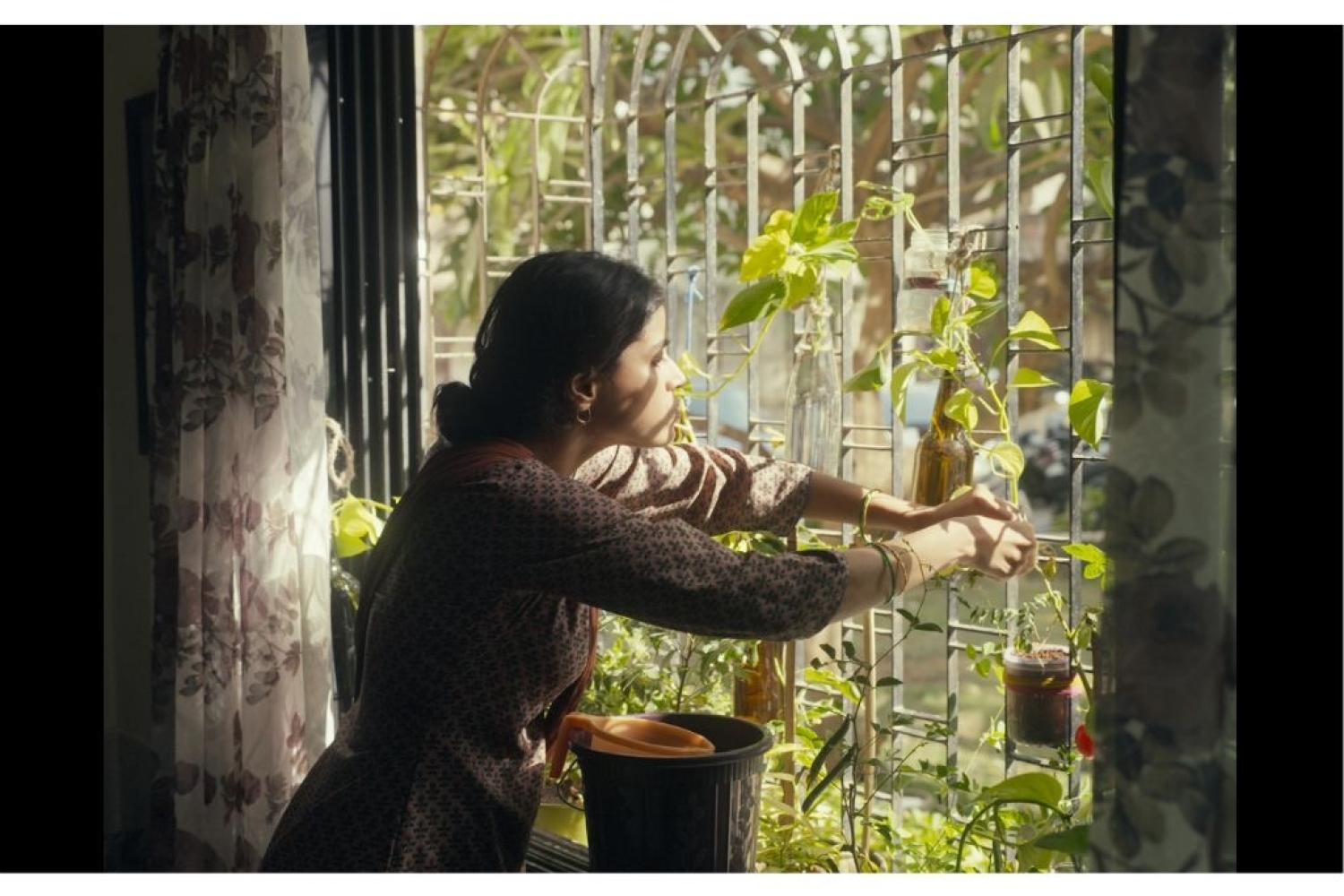
Filmmaker Surya Balakrishnan’s short film, Deepa Didi, is a love letter to Bombay; to its apartments, their transient inhabitants, and the quiet caretakers who give them continuity. It centres on the lives of a househelp and a tenant, exploring the subtle, often unnoticed acts of care seamlessly woven into daily routines. Within the city’s ever-shifting mosaic, where tenants move in and out with the rhythm of change, it is often the househelp who stays behind, silently preserving a sense of permanence.
“What I love about Bombay apartments is that tenants come and go, but the househelp often remains. Every neighbourhood has its own set of didis, and over time, they form a relationship not just with the people but with the apartment itself. That was very important to the film,” Surya explains. explains.
Through Deepa, the film’s central character, Surya shows us the life of someone who finds home in another’s space. Her routine, making tea, dusting shelves, tending plants, is filled with devotion, even when her efforts go unseen. Yet Deepa’s quiet compassion anchors the story, reminding us that home is not only made by those who live in it, but also by those who care for it.
Her debut feature documentary, Amarkatha, is currently in post-production. Set in Kashmir, it offers an eco-political exploration of the Amarnath pilgrimage and its impact on faith, ecology, and livelihoods. Deepa Didi, which premiered at the Indian Film Festival of Stuttgart, also screened at at IFFI, Goa. Her previous two shorts for Terribly Tiny Tales, Arre Baba and Kheer, were well received, with Kheer earning a Filmfare nomination in 2017. Most recently, she directed two episodes of the critically acclaimed Amazon Original series Khauf, for which she received a Filmfare OTT nomination.
What inspired the short film, Deepa Didi?
This film was seeded in a friend’s home, listening to him speak, not just fondly, but with a rare awareness of the small, almost invisible gestures his didi, Deepa Didi, left behind. Tiny traces of care were woven quietly into the routine of his days.
None of this is new, of course. We all come back to clean homes, plants taken care of, and food cooked. It’s what keeps us going, what allows us to step out into the world and conquer our own battles while they hold the fort and treat our little homes like their own worlds.
For me, it was simply about bringing what was always in the background into the foreground. And once I truly began noticing it, these small moments slowly transformed from ordinary to special. And somewhere in that shift, in the act of truly noticing, this film took root.
Where did you find the house in the film, which is a character in its own right?
What I love about Bombay apartments is that tenants come and go, but the house helps often remain. Every neighbourhood has its own set of didis, and over time they form a relationship not just with the people, but with the apartment itself. That was very important to the film. Deepa needed to feel completely at home in that space- like she knew every little corner, every plant, every patch of sun that moved through the house. That familiarity defines her presence, even when she herself is just a quiet shadow in the background.
What fascinated me most about this apartment was how the outside world was always present inside it. In Bombay, you can always look into people’s homes, and inside, you can always hear life from outside- the sweeping sounds, the idli-wala’s cycle bell, a car reversing, kids playing. That constant hum of Bombay became an important layer in the film. I love how our sound designer, Teja Asgk, shaped a sonic world that held all of those sounds together so seamlessly.
The apartment also played beautifully into their dynamic: when she leaves, he doesn’t notice; when he leaves, she always does.
Also, a special mention must be given to the use of light in the film; were those choices intentional?
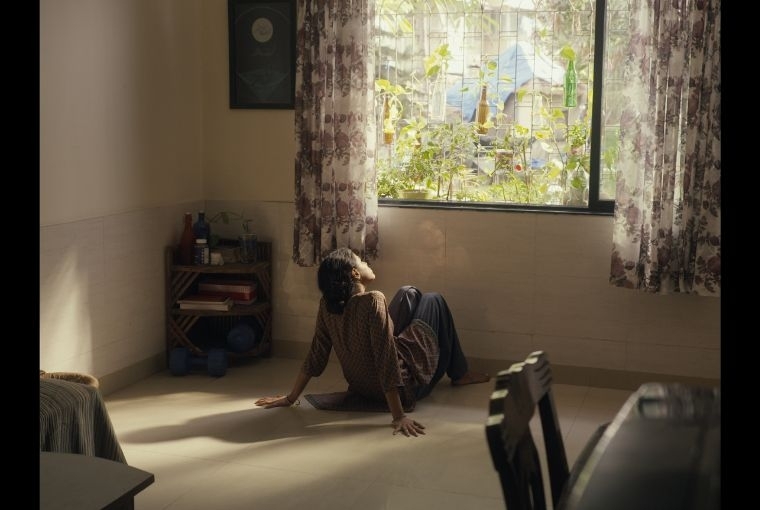
For me personally, any place I spend long hours in has to have a lot of natural light. Bombay has so many buildings packed closely together that light often becomes a luxury and Deepa’s own space, in all likelihood, gets very little of it. So this one patch of sun in the tenant’s home becomes precious to her, just as it would be to me.
What Manoj Karmakar, our cinematographer, did beautifully was build the entire visual language around that light. He studied how the sunlight travelled through the rooms, how it shifted across the day, how it touched the plants, how it bounced off the old Bombay flooring. All those small observations became an unspoken extension of Deepa’s relationship with the home.
I remember a line the writer, Deepanshu Malik, had written “Deepa presses her cheeks against the cold tiles.” Now, I didn’t know if this visual, when shot, will reflect the mood and emotion we wanted to create but when we placed her within this apartment and within its warmth, its light, its shadows, it all made sense.
This was also a very different choice of genre after the horror series that you shot for Amazon Prime called Khauf. How much was the process different?
Deepa Didi first came to me around 2018. After that, Deepanshu and I spent more than a year talking about little things that inspire us, observing tiny everyday joys, and collecting scattered moments that eventually shaped the film. He took all these random thoughts and turned them into a beautiful script. It’s also a genre I lean towards. Slice-of-life, gentle, intimate storytelling. That’s the space that feels most natural to me.
Even though we ended up shooting Deepa Didi much later, the story had lived in me long before Khauf entered my life. Khauf, on the other hand, was a completely different challenge for me. A new format, a new tone, a genre I don’t usually lean towards but because Smita’s story was so powerful, and her script was so sharply rooted in her own life, it became a challenge I was genuinely grateful to be a part of.
How much do you involve yourself in the screenwriting process?
I’ve realised I’m happiest when I’m closely involved in the writing. Not formally or technically, but in the early conversations. With all my shorts so far, and even the ongoing projects, I love spending time with the writers. Just talking about something that happened, or someone we came across, the little things we find funny or beautiful or strange.
I always feel like I do the easy part and the heavy lifting, turning all of that into a strong structure with rhythm and emotional flow is what the writers do. And I genuinely love coming back to it later and reading it almost as a new viewer. There’s such deep joy in seeing how these small, loose ideas slowly take shape and become a clear, beautiful script.
As for what kind of director I am… honestly, I’m not sure how to label it. But I do know that I love working across formats and juggling different kinds of projects at the same time. I carry learnings from non-fiction into fiction, from shorts into long formats, mixing it all up in my own way. And I think that’s what I enjoy most about getting to do what I do.
What are you working on next?
I’m working on a few different ideas across formats, just staying at it and trusting that one of them will find its moment soon.
Words Hansika Lohani
Date 10.12.2025
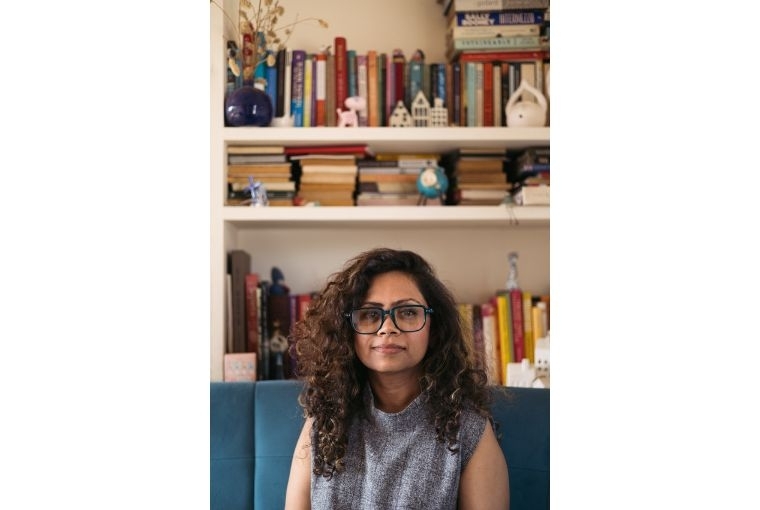
Filmmaker, Surya Balakrishnan