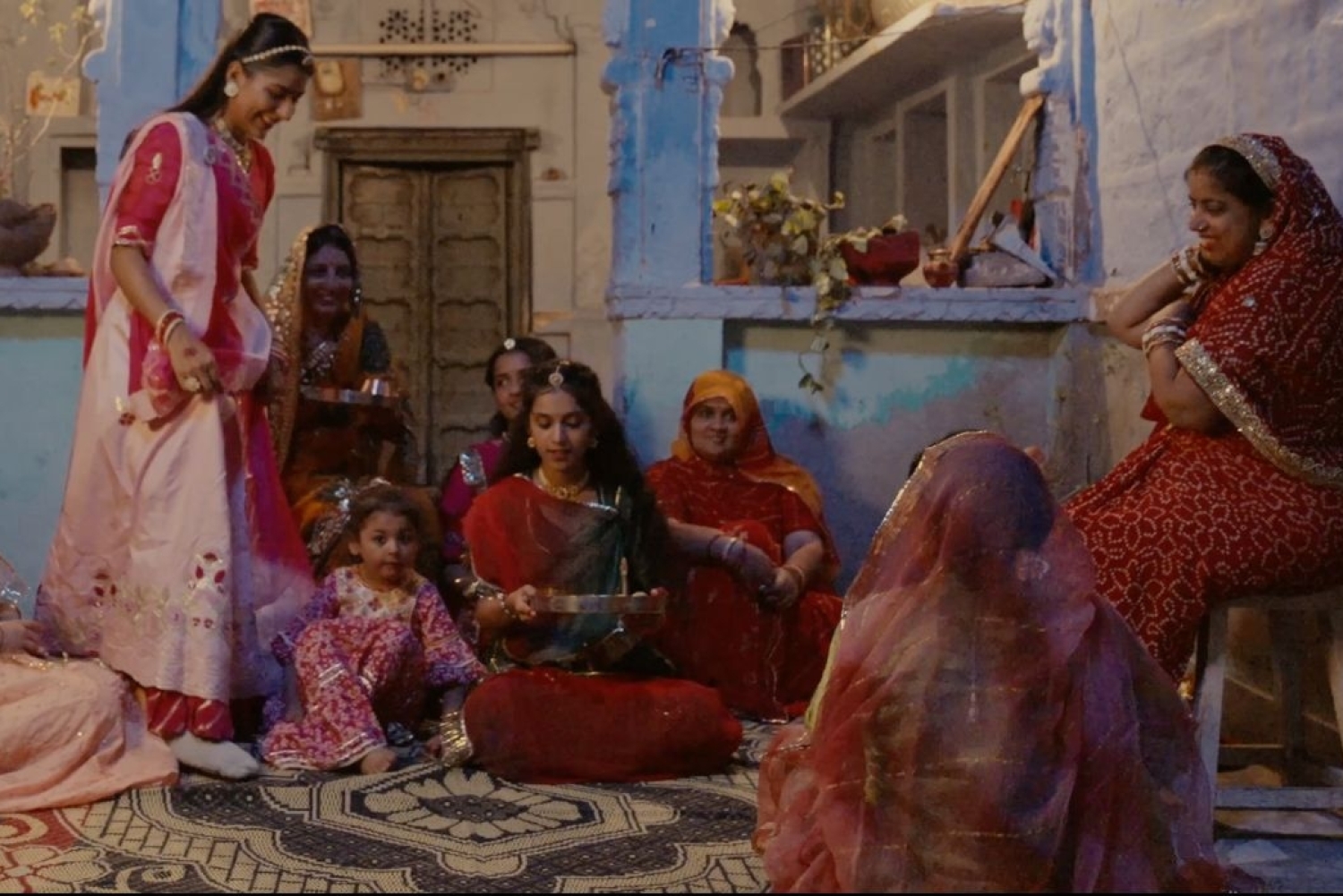
Taruna Khatri’s cinema finds its place in the quiet interstices of everyday life. In her latest short film, Aapkarmi, the Rajasthan-raised filmmaker threads together the tender and the difficult in a series of fleeting moments. Growing up on the fringes of Jodhpur, Taruna’s deeper awareness of patriarchy and the subtle misogyny around her crystallised only in her early twenties, a period that now quietly informs the questions she brings to her work.
A similar sensibility anchors Aapkarmi. It is set in a real Jodhpur home and was filmed with the support of a generous neighbourhood crew.
In the film, Taruna brings a lived understanding of doubt, disillusionment, and self-invention. The film is more than just a story set in Rajasthan; it is about a landscape that shaped her and asks what it costs to step out of line when the world insists you remain devout, dutiful, and unquestioning.
Farther Than Distance
Farther Than Distance came directly from a journal entry - “I am farther than the distance between us”. I was trying to articulate this sense of feeling distanced and detached, even as I might be physically close to someone. I’ve often felt alienated and quite isolated, especially in my friendships. Farther Than Distance is a visual film that takes one through this experience of isolation. It was my first ever film and I tried to steer clear from references. I was inspired by Albert Camus’ The Stranger and Lars Von Trier’s Melancholia, works that have made some uncomfortable parts of me feel seen. I wanted to make the audience feel seen too. The film was received well by my peers, and premiered at the Jio MAMI Mumbai Film Festival in 2023, and was also officially selected at IFFSA Toronto, and Sehsuechte International Student Film Festival, among others.
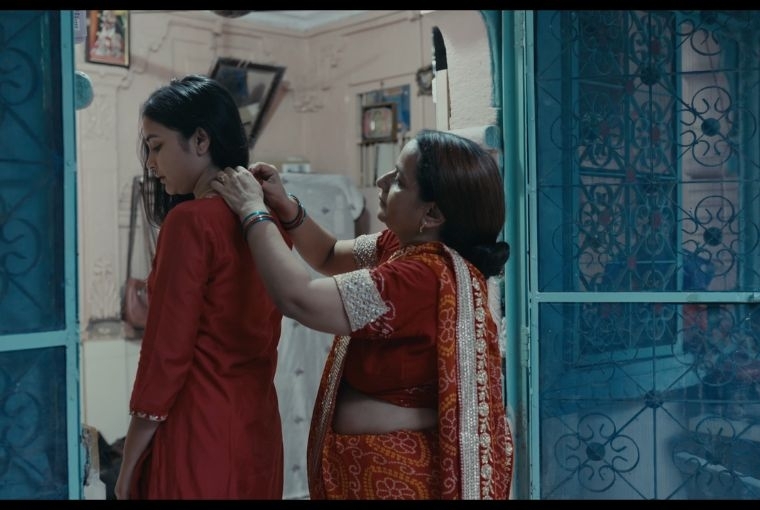
Daughters Against Patriarchy
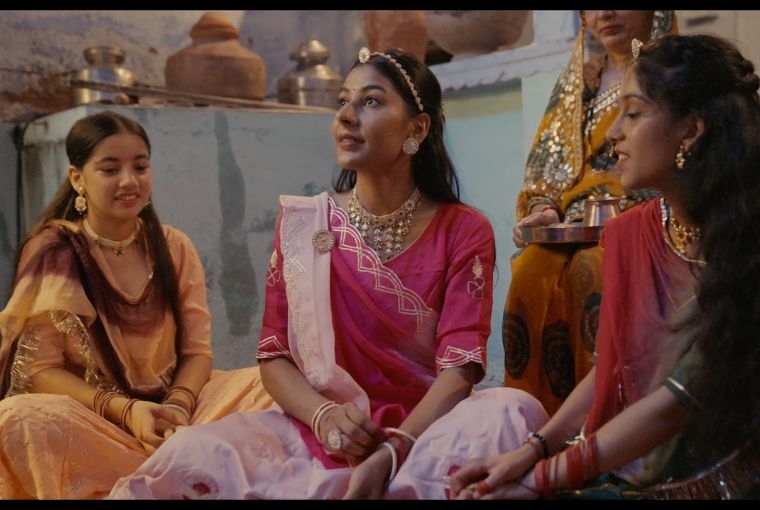
I had a bunch of ideas while I was ideating my Graduation project. An incessant image that kept coming to me was that of a teen girl leaving home, having undergone a kind of change. This was combined with another strong memory, that of the Teej ritual. Teej was a common practice in my early life and I used to fast along with my mother and sisters. I used to be quite excited for it too (eager to do grown-up things like kids often are). The ritual was an odd, almost funny one and the words used never left my mind.
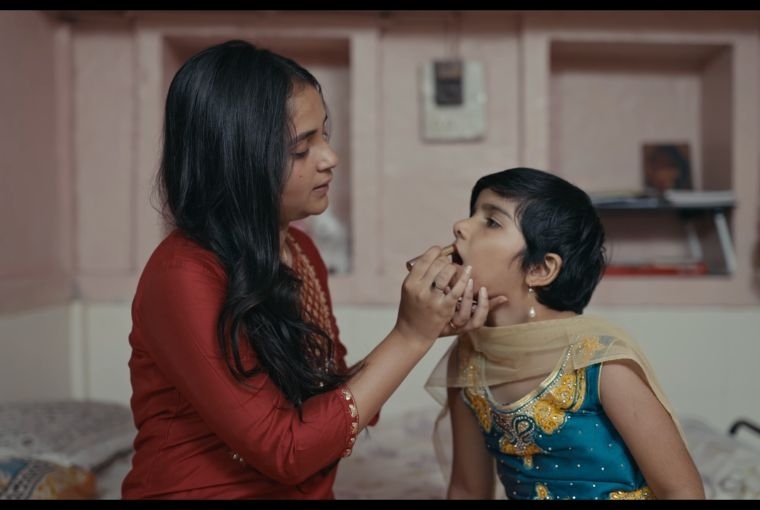
The story of Aapkarmi, comes partly from personal experience, but it is fictionalised to a good extent. Barkha’s experience in the context of Teej is not my experience. Barkha’s frustration with patriarchy, the patriarch and the forces that uphold it is all me. Barkha is a sweet concoction of myself and my eldest sister, who was actually the rebel in the family (though she was rebelling for different things. Part of her rebellion is also captured in Bina’s character). By the time I grew up, I didn’t have to rebel. My parents too had grown up. My sisters laid the ground for my independence. Vishu is what I remember purely of my feelings as a young girl around the festival. Of course, there was a lot of emulation and admiration toward my elder sisters, and I tried to capture some of that in the film.
The Cast
I saw Tanishka (Barkha) in a film called Flowering Man at MAMI 2023, and reached out to her for an audition as I was going into production. I was instantly drawn to her. My aspiration was for all the performances to be quite subdued and subtle, and she brought that out perfectly. For Vishu’s character, I was looking for a 9-10 year old young actress but wasn’t able to. Quite close to the shoot, my casting was still incomplete. My mother told me about Uma (then only 6 and a half years old). She is a family friend’s daughter. She had never acted before, but she performed excellently in an audition. I re-wrote some scenes to accommodate her younger age. She was a delight to have on shoot, and not only remembered her lines well, but actually surprised me by emoting so well. I continue to remain in her awe. I got really lucky to be able to cast Swati Vyas for the mother’s role. She’s a graduate of National School of Drama and runs her own acting school in Jodhpur. There was no need for an audition. I met her at her home, and the two of us had a long chat about traditions, women’s lives, and shared some life stories with each other over a chai. Not only did she bring her experience to our set, but also her presence as a teacher and guide.
Lingering Sense of Quiet Rebellion
The idea with the conclusion of the film was to feature small, memorable gestures and acts that leave the audience with hints at the cause of Barkha’s defiance. The contrast between her plain hands and other women's henna-stained hands is enough of a symbol. The film gets its name from a Teej Katha, which tells the tale of an Aapkarmi daughter. The word Aapkarmi literally means ‘somebody who makes their own fortune’, yet the Teej Katha twists the concept in a regressive fashion. There are two ideas in the end; An Aapkarmi daughter of a king, who gets punished in the Katha after declaring her independence; and an Aapkarmi daughter in a simple Marwari house-hold, who refuses to participate in a festival whose messaging is flawed.
Next Up
I am fascinated by the prevalence of Therapyspeak online and am working on writing a story of two young, flawed, obnoxious female characters who are both its victims and propagators; before life forces them to seek real psychological help and truly connect with their inner worlds.
Another idea I am working on explores the dynamic between two couples - one working class, and another upper middle-class. A domestic help has a violent fight with her husband and seeks asylum in her employer’s big bungalow for a few days. Her employers decide to play judge and try to advise her and her husband, giving them examples from their own marriage, which the audience witnesses to be extremely flawed. The domestic help also has a baby girl, who gets caught between her own mother’s resentment; and the abundant affection she receives by the lady of the house - whose love is unencumbered by any real responsibilities towards the child. The idea is to re-think the position of working class women as one with a lot more agency, especially compared to the ‘Sethani’ that has never been allowed to work.
Words Hansika Lohani
Date 27.3.2026
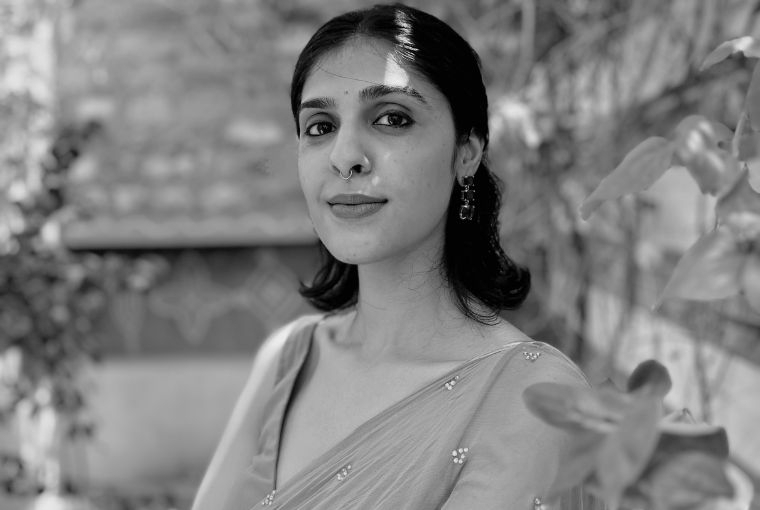
Filmmaker, Taruna Khatri