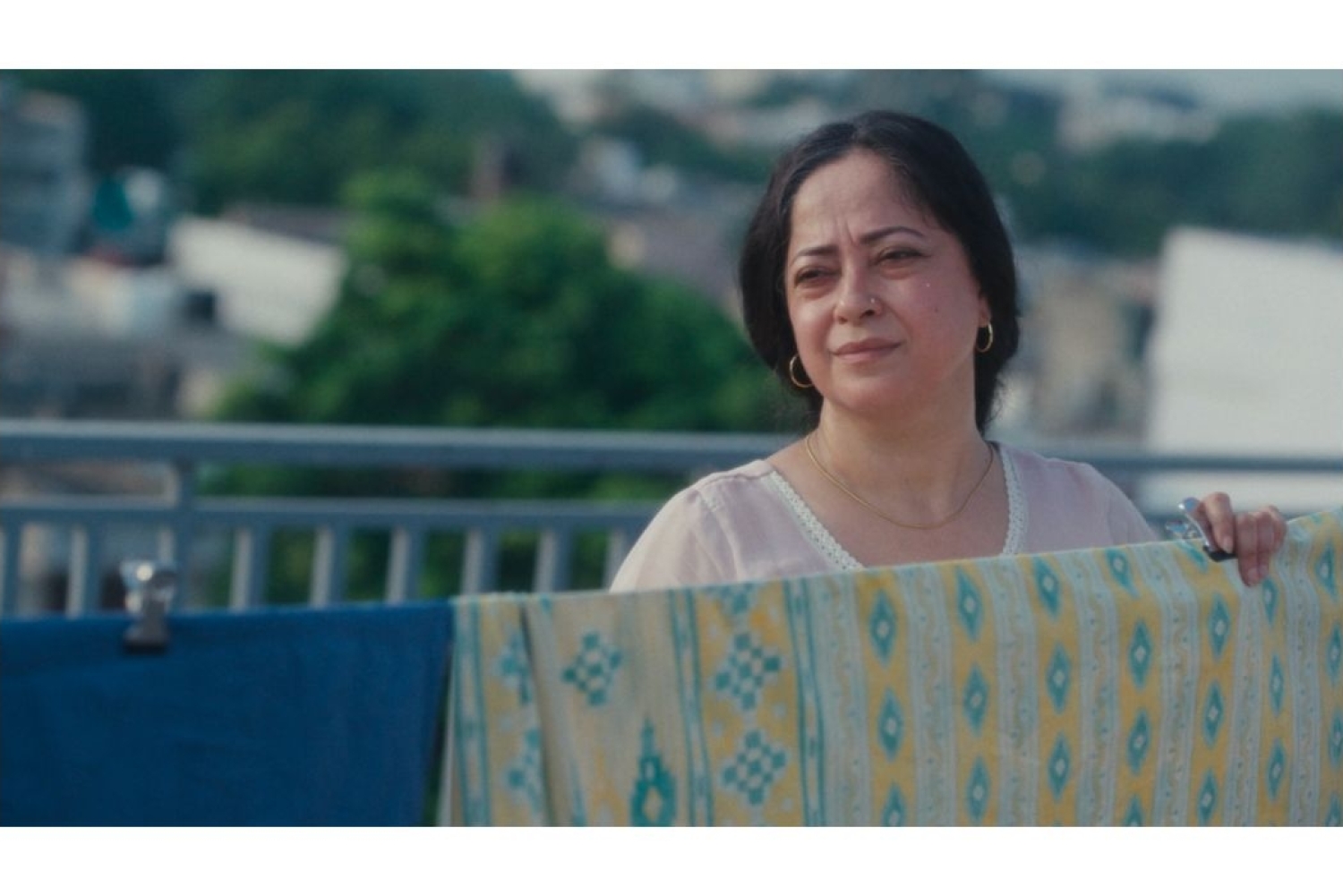
Warm Shadows emerges from Aakash Chhabra’s attempt to understand his mother beyond the role of a mother, shaped by themes of longing, and unspoken tensions. The film adopts a fragmented, non-linear structure to hold ‘the gentleness and the weight, the protection and the parts…that remained unseen.’ Drawing from personal memories and silences within Punjabi families, the film also elegantly reflects how secrets shape relationships through what is left unsaid.
Chhabra’s journey with the film was equally personal. ‘I didn’t have much formal film training then, so the project drifted for a while,’ he says. In 2022, while living in Busan, he revisited his early writings and reshaped them into an essayistic short which became Warm Shadows. Originally titled Nighiyaan Chhavan, from a phrase meaning mothers are a source of shade and shelter, the film reflects both the gentleness and the weight within motherhood.
The Approach to Non-Linear Storytelling
The film’s structure is inspired by Michael Layaz’s novella My Mother’s Tears. I read it in the summer of 2019, and its fragmented story about a son returning home after his mother’s passing, trying to understand who she truly was, stayed with me. Its themes of longing, memory, and unspoken tensions within the protagonist’s family felt very close to my own life. A week later, I wrote a full-length screenplay mirroring a similar non-linear structure about my relationship with my mother over the years, in an attempt to see her beyond the role of a mother
I didn’t have much formal film training then, so the project drifted for a while. In 2022, I was living in Busan and feeling a bit unmoored, I revisited those early writings and applied for the Rough Edges Uncode Film Fellowship. I chose the chapters that felt most personal and rewrote them as an essayistic short which became Warm Shadows. The film’s original title Nighiyaan Chhavan comes from a colloquial saying 'Maavan Thandiyaan Chhavan' which translates to mothers being a source of shade and shelter. In the film, I wanted to acknowledge that motherhood isn’t just comfort and complexity. My mother’s personal anecdotes which often moved between different timelines felt like a way to hold both: the gentleness and the weight, the protection and the parts of Priya’s life that remained unseen.
On Achieveing Restraint
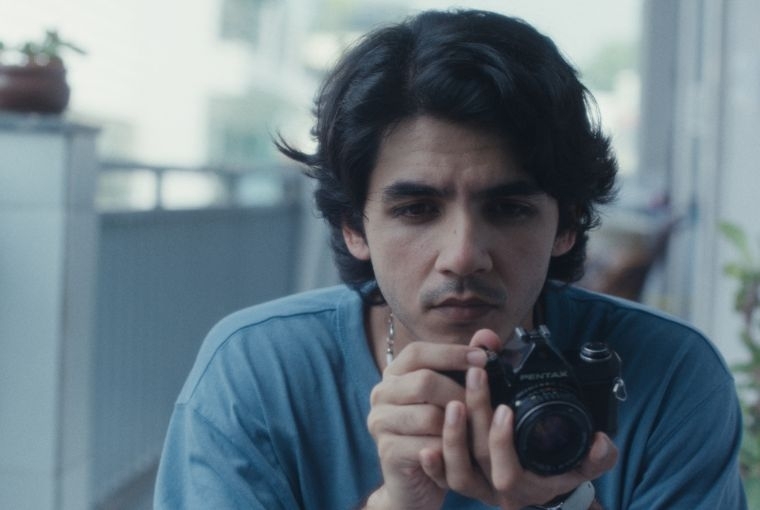
It was very important that the actors playing Priya and Raag both came with lived experiences in the exact specific geographical regions where the film comes from. Sheeba Chadha and Lakshvir Saran were both our obvious first choice. It is sort of serendipity how everything fell in place. It was an absolute gift working with both of them. They’re both incredibly intuitive actors with a body of work that speaks for itself. Even though we had very limited rehearsal time, they both arrived in Gurgaon, where we shot the majority of the film, with a deep understanding of the material. We had a few individual readings before the shoot and one collective reading session together right before we started filming. The restraint came from both of them trusting each other’s instincts.
My approach was mostly about giving them emotional direction rather than technical notes, talking about what a moment feels like rather than how to play it. Everyone in the crew focused on creating a quiet, comfortable space on set so they could bring their own rhythms and inner life to the characters. With actors like them, the best method is often to step back and let them breathe inside the scene.
The Heart of the Mother-Son Relationship
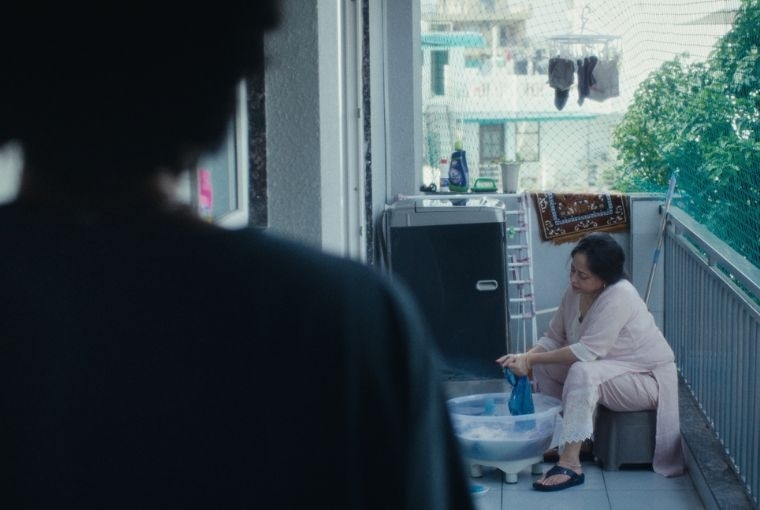
Most of the chapters in the film were written as it is from the mother-son relationship I had observed living in a joint family from an early age. In most Punjabi families, people hide things not because they want distance, but because they fear hurting those they love or breaking the image of an ideal family. This is especially true for queer people, whose identities are often negotiated quietly, through silence, coded behaviour, or double lives. The secret becomes a form of protection, but also a burden.
For young people living overseas, the distance creates another layer. They grow in environments that allow more openness, while their families back home still hold on to traditional expectations. This furthers that emotional gap where you’re changing, but you’re also trying not to disrupt the world you come from. So secrets become the bridge, a way to survive two realities at once. In both cases, secrets shape relationships through what is left unsaid. They create tenderness and tension at the same time, love that wants closeness, but fears the cost of honesty.
The Imagery of Ceramics and Vases
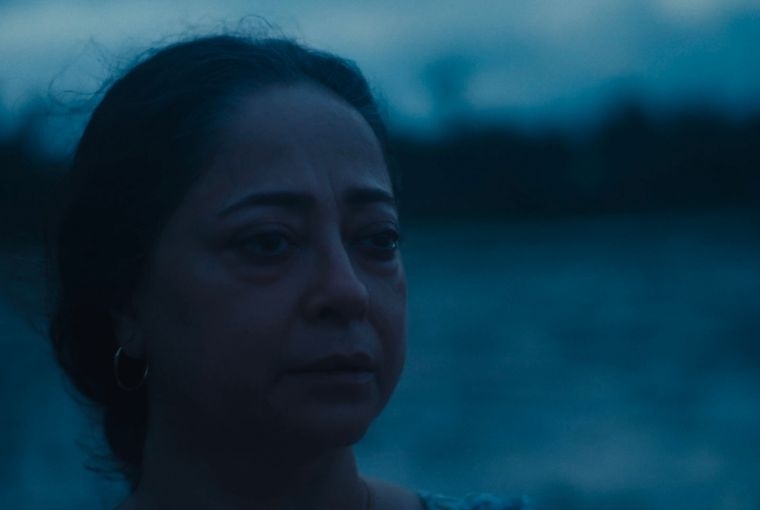
The imagery of ceramics comes from something very personal. My mother learnt pottery when she was young, but like many women, she had to let go of that part of herself as she became a mother. The pottery scenes in the film are a way of honouring her desires that got buried somewhere under domesticity and traditions.
I’ve also been deeply influenced by a lecture by Tsai Ming-liang, where he spoke about working with one’s hands, be it cooking or sculpting, as an extension of artistic practice. Ceramics, thus, became a natural answer. You’re always striving to make something perfect, but it rarely turns out that way. And yet, there’s a beauty in those imperfections, in the act of shaping, breaking and letting go. That tension between control and surrender felt close to the themes of the film.
The Future
I’m presently working on my feature debut, I’ll Smile in September which is being produced by Akanga Film Asia. It follows Kismateen, a 20-year-old brass band trumpeter who loses the love of his life and gets his teeth knocked out on the same day. The film traces his attempt to move on by slowly finding his smile again. We developed it through Produire au Sud Nantes, Torino Film Lab’s The Lodge and the Red Sea Director’s Program with Spike Lee.
I’m also in post-production of two new short films. Indications, which explores memory and grooming in public spaces, starring Adil Hussain. It is a film about seeing and being seen. It’s inspired by John Berger’s line from Ways of Seeing: 'Men look at women. Women watch themselves being looked at.' The other short is called Your Place Is Empty, set inside a photobooth, which follows a queer couple, played by Lauren Robinson and Millo Sunka, exploring the complexities of modern dating relationships.
Words Neeraja Srinivasan
Date 19.3.2026
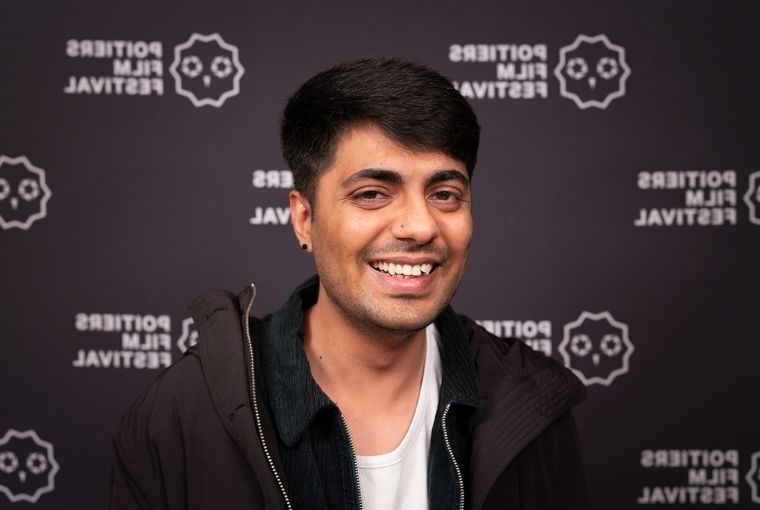
Filmmaker, Aakash Chhabra