When frames buckle, colours fade and reels tear, old cinema risks losing the marks of its moment, its politics, music and architecture, to time. Lose a film and you lose far more than a story. To restore a film is to negotiate with that decay. Indian cinema has produced an astonishing archive of important stories. And thanks to a growing restoration movement, many of these films are returning to theatres and festivals as works that continue to ask something of the present. Institutions such as the Film Heritage Foundation and the NFDC–National Film Archive of India, alongside restoration studios, are returning beloved commercial classics and radical regional cinema back to life through 2K, 4K and even 8K restorations. This rekindled commitment to the country’s cinematic legacy means that watching these films today is an opportunity to see them as they were meant to be seen and to discover why they continue to shape the language, politics and emotional landscape of Indian films.
These are some of the restored Indian classics worth seeking out.
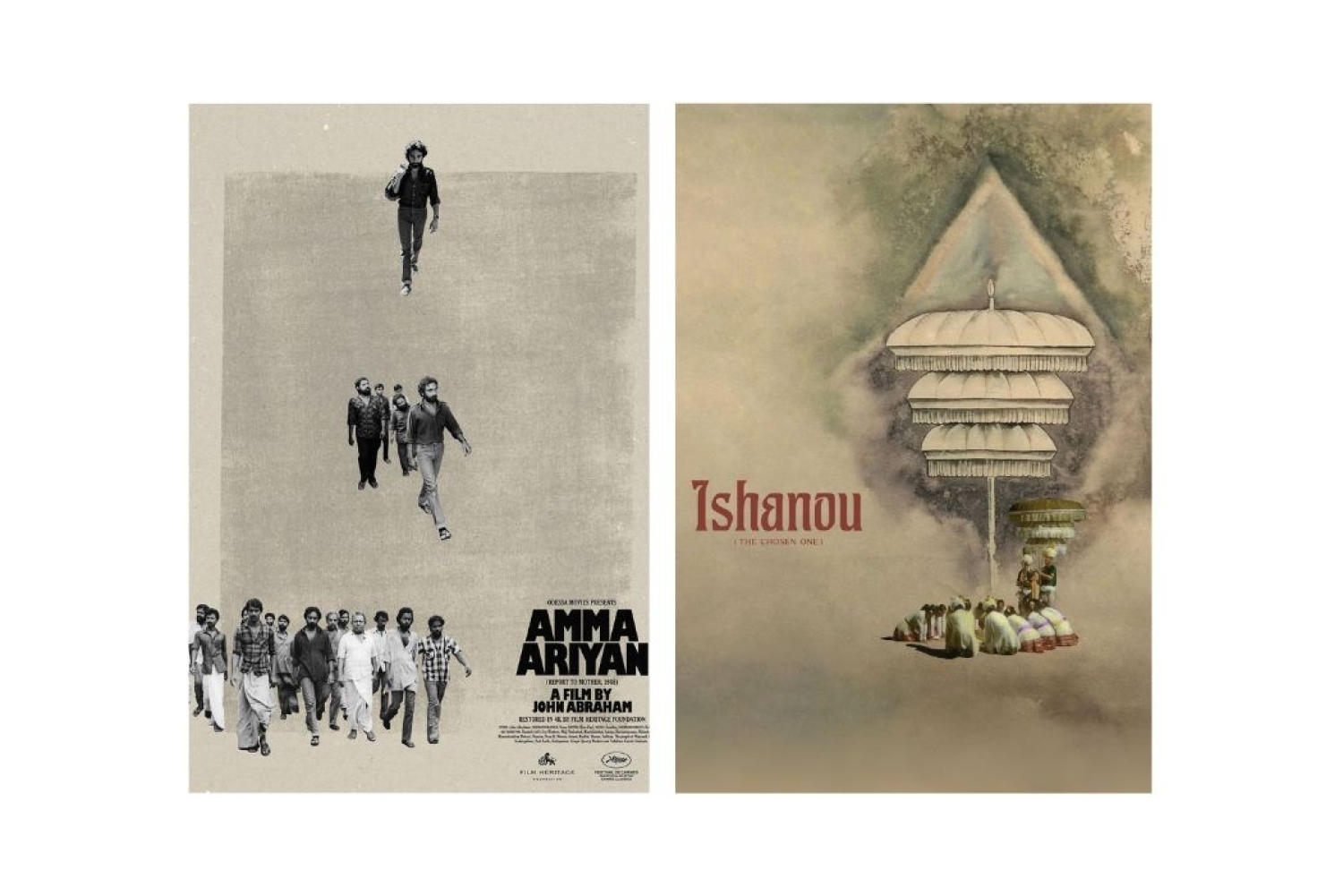
Ishanou [The Chosen One, 1990]
Aribam Syam Sharma's Manipuri drama, written by M. K. Binodini Devi, tells the story of Tampha, a young wife and mother who is mysteriously ‘chosen’ by the deity and pulled away from her family into the Maibi sect of priestesses. The film moves between the intimacy of everyday domestic life and the trance, ritual, dance and music of the sect, using that contrast to sit with ideas of devotion, loss and alienation.
Amma Ariyan [Report to Mother, 1986]
John Abraham's Malayalam film and also his last, is an experimental road movie that starts small and grows into something much bigger. Purushan sets out to tell a dead young man's mother that her son has died and the journey turns into a wandering meditation on friendship, memory, and radical politics in Kerala. Shot in black-and-white and blurring the line between fiction and documentary, the film reflects on the Naxalite movement, collective struggle and a mother's grief. It was made through public funding by the Odessa Collective and is now considered a landmark of Indian parallel cinema.
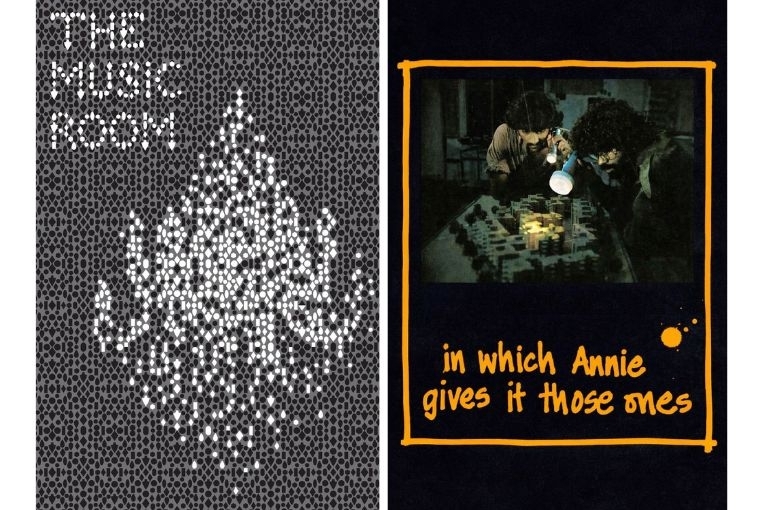
Jalsaghar [The Music Room, 1958]
Satyajit Ray's Bengali drama follows Biswambhar Roy, an ageing zamindar whose fortune is slipping away but whose pride refuses to. Even as his world crumbles, he keeps staging a lot of lavish music concerts, holding on to a life that's already gone. Set in Bengal in the late 1920s, the film plays old feudal grandeur against the modern world pressing in from outside. Chhabi Biswas is unforgettable in the lead and the film has come to be seen as one of Ray's most lyrical, melancholic works.
In Which Annie Gives It Those Ones [1989]
Pradip Krishen's cult film, written by Arundhati Roy, is set in a Delhi architecture school in the 1970s and centres on Annie, a rebellious, chronically underachieving student whose idealism keeps colliding with authority and academic failure. It's a film full of student politics and campus chaos, told with real wit and warmth. Shah Rukh Khan and Manoj Bajpayee both appear early in their careers and the film went on to win National Awards for Best Feature Film in English and Best Screenplay.
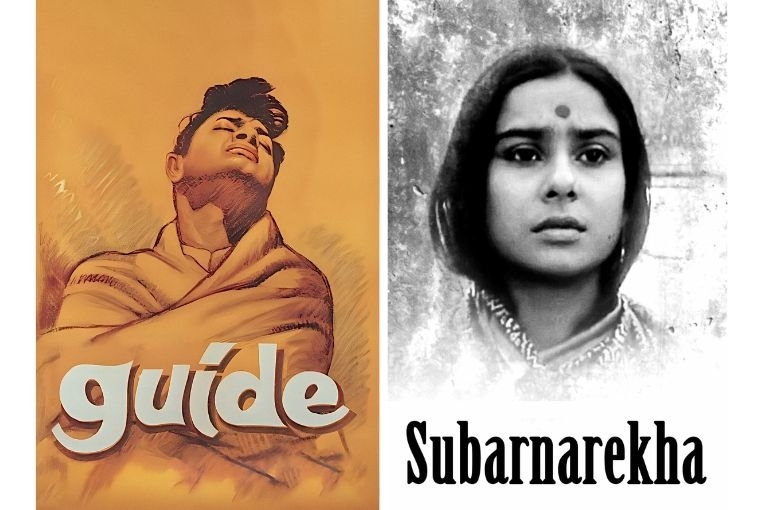
Guide [1965]
Vijay Anand's Hindi film, based on R. K. Narayan's novel The Guide, stars Dev Anand and Waheeda Rehman and follows a tourist guide and an unhappy wife who finds a kind of freedom through dance. Their relationship moves through romance, the morality of ambition, downfall and eventually something like spiritual redemption. S. D. Burman's music runs through the whole film and the storytelling has a lyricality to it. It's remembered as one of the great classics of Indian cinema and was India's official Oscar entry that year.
Subarnarekha [The Golden Thread, 1965]
Ritwik Ghatak's Bengali film is a tragedy of Partition, exile and everything that gets broken in the process. It follows Ishwar, a Hindu refugee from East Pakistan, trying to rebuild a life in West Bengal alongside his sister Sita and an orphaned boy, Abhiram. But as the years go by, caste prejudice, poverty and violence slowly tear the family apart. It's one of Ghatak's most powerful films, mixing raw melodrama with real political anguish and striking, poetic imagery to look at displacement and the broken promises of post-Partition India.
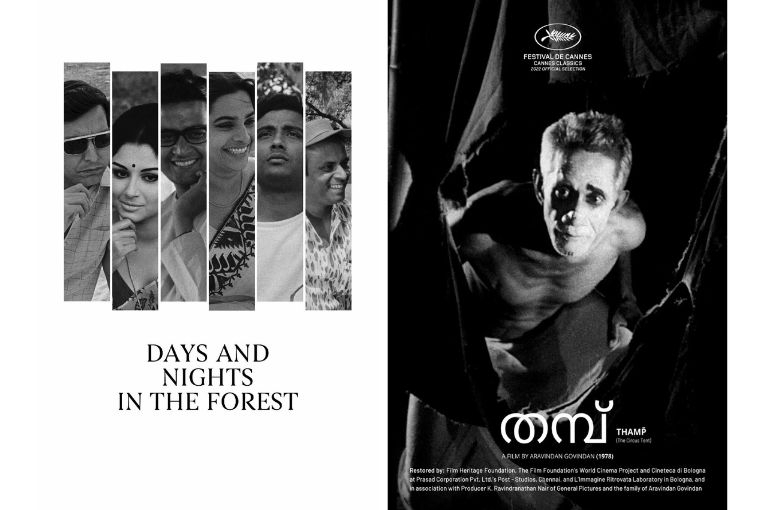
Aranyer Din Ratri [Days and Nights in the Forest, 1970]
This Satyajit Ray film follows four friends from Calcutta who head to a forest in Bihar to get away from it all, only to end up confronting their own vanity, class privilege and quiet emotional emptiness. As they cross paths with local villagers and two women from an upper-middle-class family, the film turns into a subtle, sharp study of desire, self-discovery and social performance. Based on Sunil Gangopadhyay's novel, it's one of Ray's most witty and perceptive films about the people it's watching.
Thampu [The Circus Tent, 1978]
G. Aravindan's black-and-white Malayalam film is about a travelling circus that rolls into a Kerala village and for a while, changes everything around it. Shot in a loose, semi-documentary style, it's less interested in plot than in just watching the performers, the villagers, the daily grind of putting on a show. There's a lyricism to it, an attentiveness to atmosphere and small gestures that adds up to something poetic. It's remembered as one of Indian parallel cinema's most understated works.
Words Nidhi Soni
Date 11.8.2026