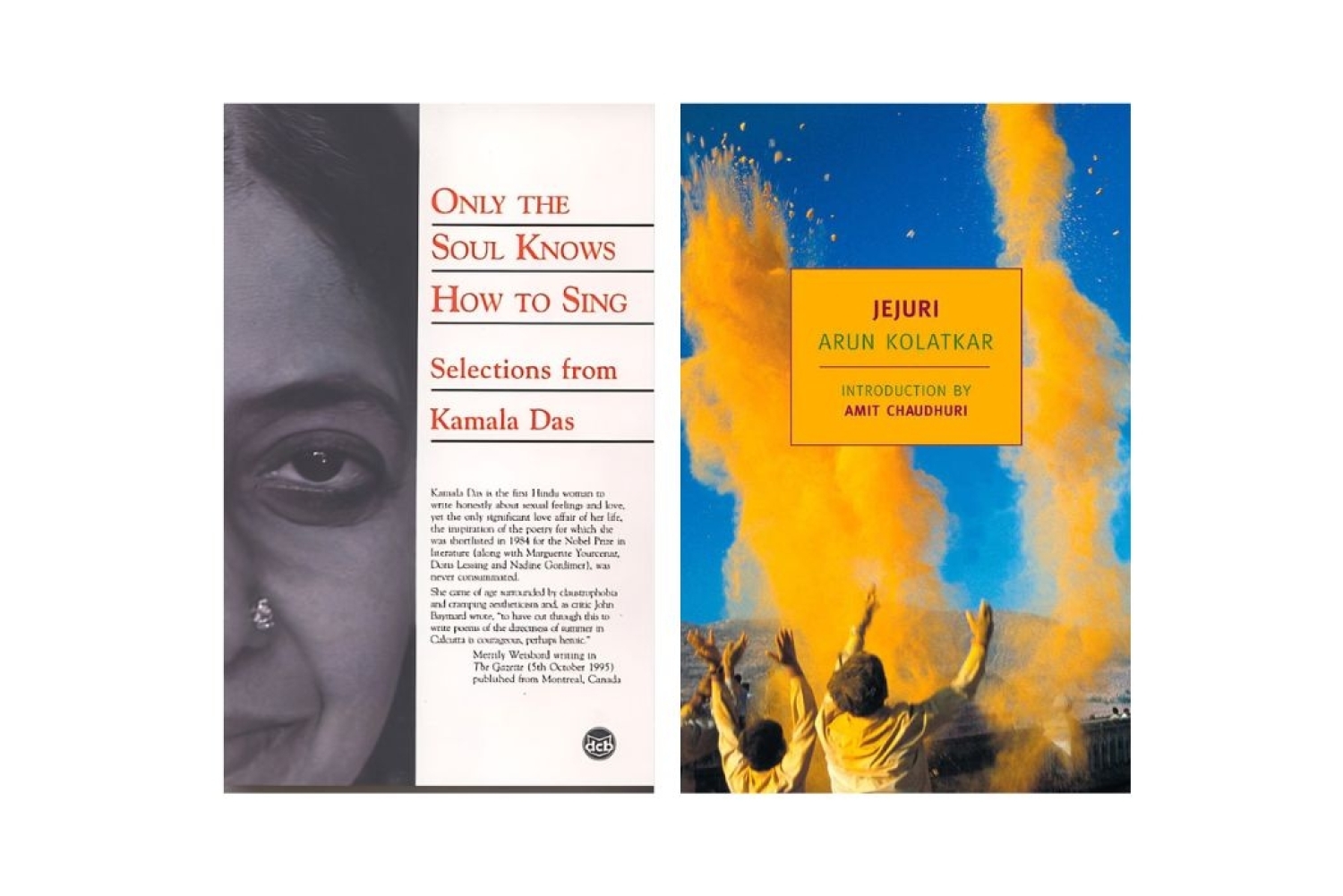
There’s a before and after in Indian poetry in English and it hasn’t always announced itself cleanly. Somewhere in the 1960s and 70s a generation of poets began carving out a confident literary space for South Asian literary expression. Until then, much of Indian poetry in English had been, by most accounts, derivative: thick with borrowed metres, reverent toward a Romanticism that was trying to prove itself legible to the wrong audience. But sooner or later came poetry that was formally daring, politically charged, and written when the literary world doubted there was an ‘Indian’ voice in English worth hearing. What united these poets was a conviction that poetry had to be answerable to the world it came from. The poets who followed, writing into the 2000s and beyond, inherited a literary space that had been fought for, and found their own arguments to make inside it. Whether engaging with questions of belonging, the agentic body, spirituality, or everyday life, these books are a collection of some necessary voices that attest to what poetry is for and who it speaks to.
Only The Soul Knows How to Sing
A retrospective anthology spanning Kamala Das’ career, this collection brings together poems that explore female desire, loneliness, domesticity, and spiritual longing. Writing in a fiercely confessional voice, she challenged the silence imposed on women, transforming personal experience into a universal language of yearning and self-discovery.
Jejuri
In a sequence of interconnected poems set in Maharashtra’s pilgrimage town of Jejuri, Arun Kolatkar examines belief through cracked idols, stray dogs, weathered temples, and chance encounters, not through grand narratives. Writing with wit, irony and linguistic experimentation, he blurs the lines between the sacred and the ordinary.
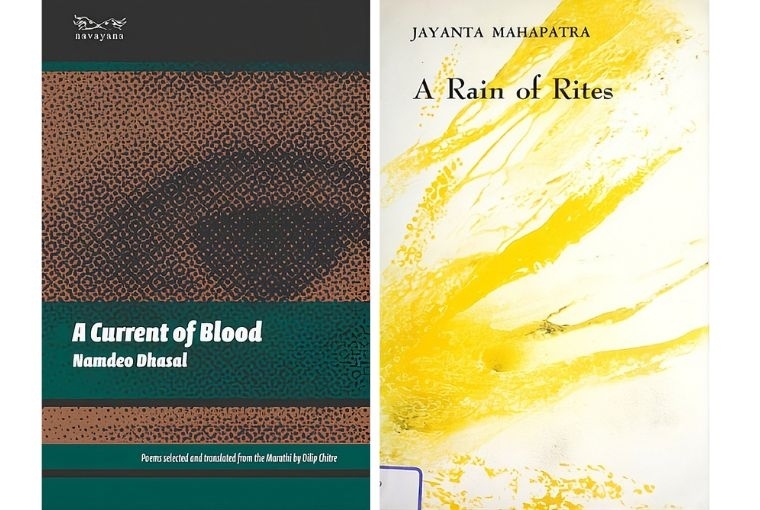
A Current of Blood
A Current of Blood introduces readers to the world of Namdeo Dhasal, one of the most influential voices of the Dalit Panthers movement. He chronicles caste oppression, poverty, violence, and survival and rejects literary polish in favour of a raw, visceral language that confronts realities often excluded from mainstream narratives.
A Rain of Rites
Jayanta Mahapatra turns Odisha’s temples, shorelines, and villages into a living poetic landscape. Her poetry moves through rituals, monsoons, fading light, and moments of quiet observation, finding meaning in the smallest details of everyday life. Writing with a painterly eye and a deep sense of place, Jayanta Mahapatra’s works are a series of luminous, lingering visions.
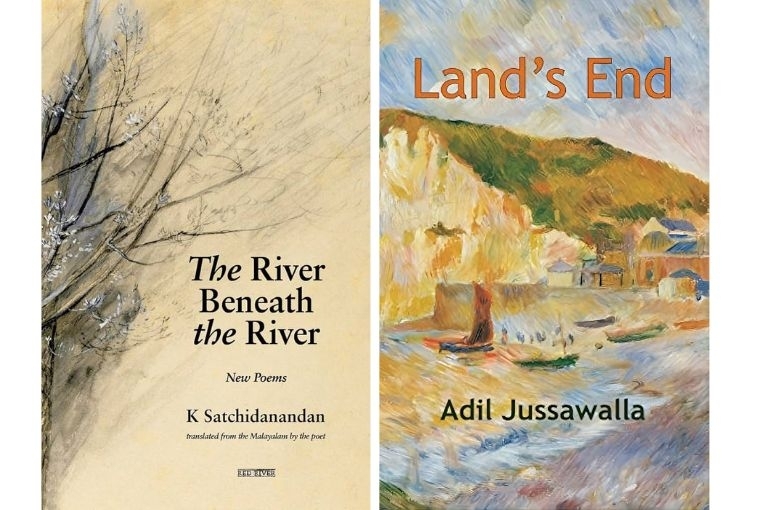
The River Beneath the River
K. Satchidanandan’s lifelong engagement with the movement of ideas, people, and languages across borders manifests itself into The River Beneath the River. The collection grapples with migration, displacement, ecological crisis, and the politics of language, while remaining rooted in the textures of everyday life.
Land's End
Adil Jussawalla's poetry debut, a young Parsi intellectual, educated at Oxford, caught between a colonial culture that shaped him and a postcolonial home that has no clear place for him, writes poems that are already asking the questions his generation would spend decades answering. Land's End is where one of Indian poetry's most restless minds first put his unbelonging into words.
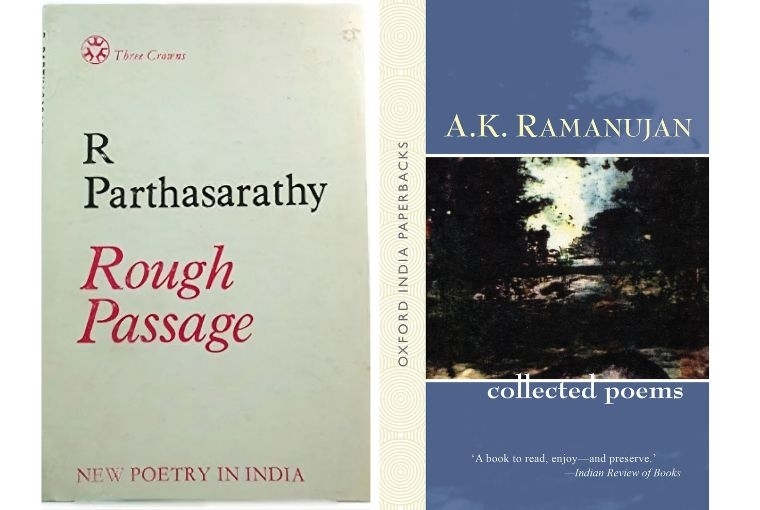
Rough Passage
In this single long poem, R. Parthasarathy traces a journey from exile to return, reflecting on migration and the uneasy relationship between English and Tamil. The result is an inward search for rootedness. Honest and unsparing, Rough Passage captures the emotional cost of living between worlds while refusing to simplify the experience into a story of homecoming.
The Collected Poems of A.K. Ramanujan
A poet, translator, and scholar, A.K. Ramanujan wrote from the crossroads of languages, cultures, and continents, exploring memory, family, migration, and belonging. His poems draw equally from Indian traditions and Western modernism, reflecting the complexities of a culturally hybrid life.
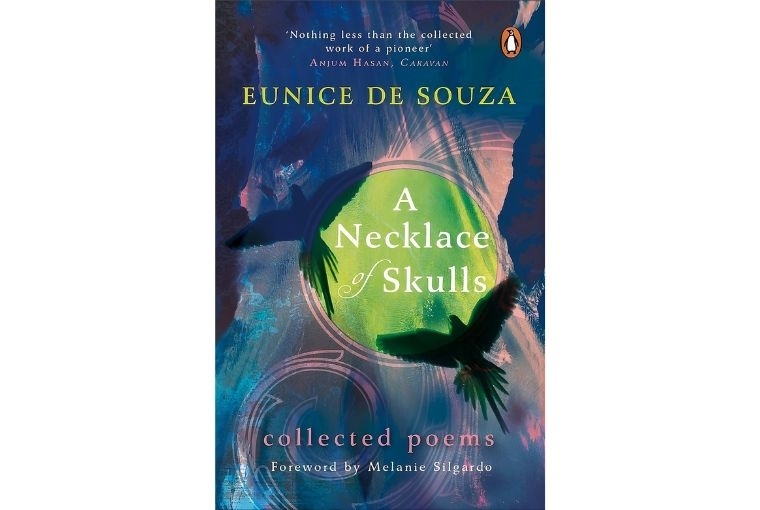
A Necklace of Skulls
This poetry collection brings together four decades of Eunice de Souza’s poetry, collecting her groundbreaking debut Fix among others. While her poems remain rooted in the Goan Catholic milieu that shaped much of her work, the collection reveals a writer whose concerns extended to gender, religion, family, and power, moving from sharp social observation to deeper emotional and psychological terrain.
Words Nidhi Soni
Date 23.6.2026