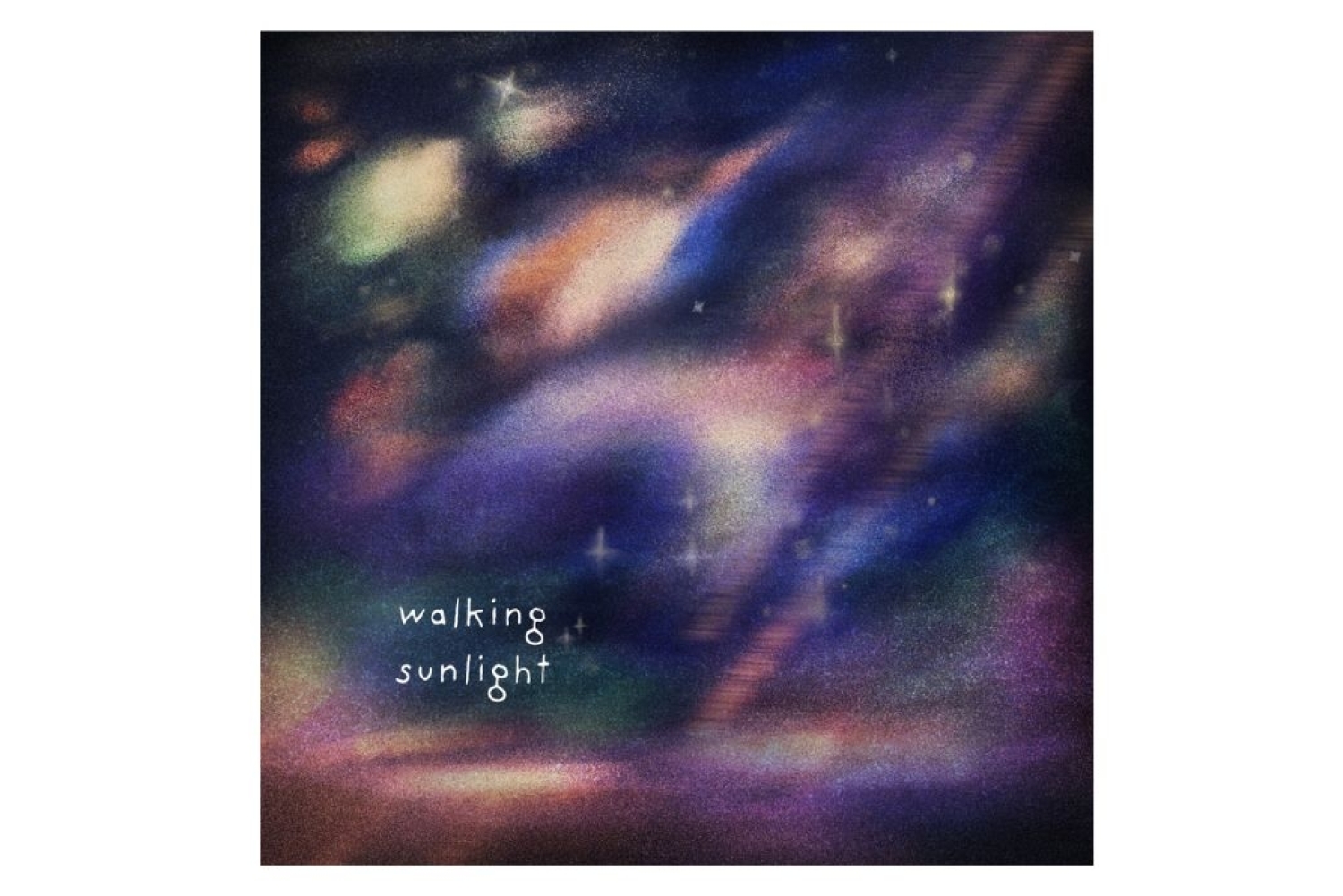
Three solid voices, two versions but one feeling: Walking Sunlight came together as an emotional experience, with each of the artists channelling their own encounters with loss and grief, and even moved to tears during the process.
Conceived during a songwriting camp, Walking Sunlight emerged as a heartfelt reflection on grief and the quiet courage it takes to rediscover joy through the presence of loved ones. The track is a collaboration between Dhruv Visvanath, Radhika Mohite, and JK, three artists whose shared vulnerability shaped its honest and tender sound. JK is a seasoned pianist and producer and his playing feels as visually evocative as it is sonically rich.
Since the song resonated deeply with all three, they crafted two versions, one led by Radhika, the other by Dhruv, each offering a distinct emotional tone and perspective on the same core sentiment.
The Beginning
JK: The starting point for the track was the brief we were given. There was already a starting point, and we were given a sonic reference for what the song should sound like. So we already had a pretty solid starting point in terms of what it should say.
Radhika Mohite: Because it was a brief, it was not one person who had the initial idea. I think that is also the best part of working in a group, because through conversation. You arrive at a point where you are like, 'This is something cool and let’s explore this direction'.
The Unboxed Songwriting Camp
Dhruv Visvanath: The songwriting camp felt like school. It was like hanging out with our friends and doing some fun activities from time to time. We were all new to each other. So that whole excitement of meeting new people, the whole idea that we get to hang out with each other and make some songs together, that was great. I work alone a lot, so it actually helped free me up. The fear of having this creative ego and wanting to make sure you get things your way was so much easier to let go of. It was nice to be surrounded by people who showed me a different path to express myself in a gentler and more accepting manner. It also taught me to be accepting and understanding and to listen better. Everybody should do a songwriting camp as much as possible, because it will just make you want to keep going. Every time you go to a songwriting camp, it makes you want to go to another one and another one.
JK: We get to learn so much from so many people. Our learning curve, which would otherwise be a normal slope, rises exponentially at the camp.
RM: It was a little intense, also because we had to finish everything in a day. I did not know that we would be capable of doing that or that I would be capable of helping in some way to complete a song in a single day. That just blew my mind.
The Sensibility
JK: It speaks to every person very personally, based on how people received it. For some people, it is hope. Some people see the lack of hope in it. Some people say it is the feeling of overcoming grief. So I feel like it is not just one thing.
DV: The way I see it is that people do not have the words to express something personal to them. For example, there was something I did not have the words to express for a long time, and all the emotional language that one could draw out in the form of a song was really important. In that way, the sensibility of the song was not created with the intention that I was going to answer something on my own or answer a question within me. It just made more sense that the world of the song built itself around what we were already feeling. It became a reality because it was the truth of what we were feeling, and that needed to be spoken.
Collaborations as a Way of Creating
RM: For me personally, I did not think it would be possible to make a song in a day. Before that, I thought music takes time. It takes a lot of effort, energy, and a lot of people to help you make it. But after this camp, I felt this was doable. I just need to find people who are willing to help and make something awesome. This camp was actually the reason why I started my song-a-month journey, so I am very grateful. I specifically chose to try different styles and genres as well while putting these songs out, but still being true to myself. It opened up a lot of my own preconceived notions about what I thought was possible.
DV: I learned that I want to play with JK all the time because he is so good on the keys. Haha! He is one of the best keys players I have ever seen. It is quite stunning. Also, I have always set myself a challenge, and the idea of completing something always makes me feel fulfilled enough to move on to the next idea. Otherwise, if you stop halfway through and you do not give yourself the grace to finish the thing before you accept something new in your creative process, it creates a cycle that makes you feel very unhappy. The fact that we were able to finish songs within a day was important. I was so used to doing it by myself because that was my process. But this time, some of the weight was lifted off my shoulders. When I managed to do a bunch of things and also got to observe things happening in a good way, that was really cool for me.
JK: I think I would have never made a song like this otherwise. To have a song like this in my list of songs is amazing. I feel lucky.
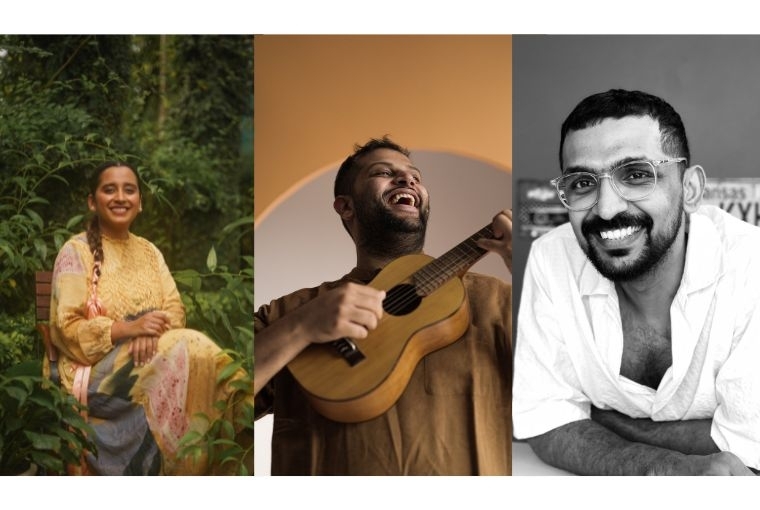
L-R: Radhika Mohite, Dhruv Visvanath & JK
Creative Process
DV: We were asked to focus on a soul, funk, R&B kind of sound, something gentle and groovy. Exploring that musical space was new and interesting for me. Once I started to understand that direction better, it became much easier to borrow elements from you, Radhika, and from you, JK, and to build things together. After that, it was all technique: 'How can we make ourselves sound bigger; how can we sound grand?' It is just three people working on a song, but it should still sound big. Those are the kinds of things that can be quite surprising in a pleasant way.
For example, the process of recording the choir, or even laying down the bass parts. I remember playing the song on bass and JK reacting immediately. The decisions were easy to make. We were not wasting time arguing about how things had to be done. We were very quick: first, figure out the melody; then, decide on the line that works; then, choose the beat that fits over it. We made decisions efficiently and moved ahead.
Words Hansika Lohani
Date 2.3.2026