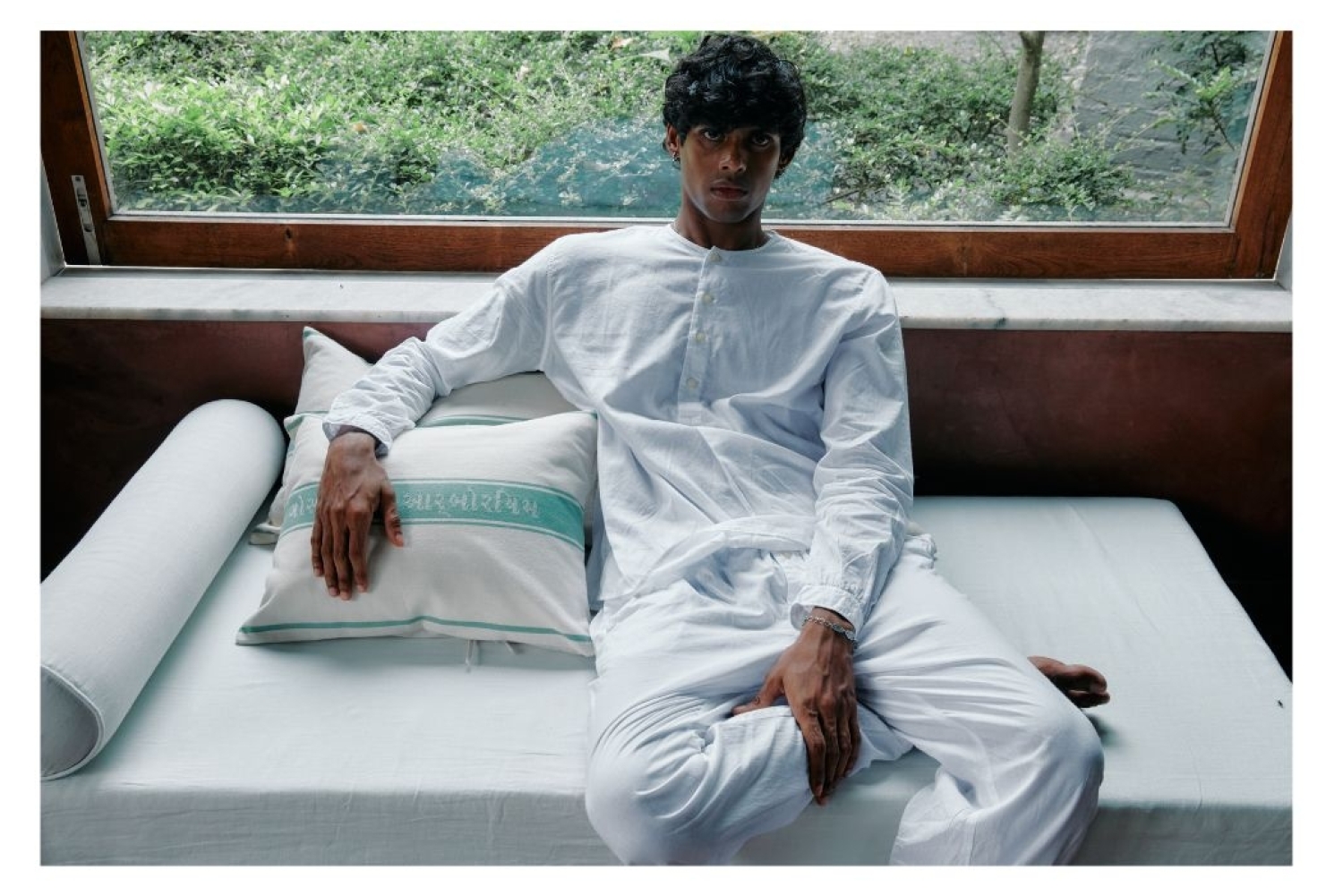
Nimish Shah has never been good at standing still. He began with Shift, a label of skirts, shift dresses and old-world charm. He then scaled up at Bhaane, and later traded the fashion calendar for a residency in Gujarat, where artists were invited to work on a textile-printing floor. Now he returns to Shift, not as a step back but as the one name that has always been big enough to hold his next move. It is an umbrella he can keep adding to, and it gives him the freedom to evolve without ever disowning where he started.
Under it, three things now run side by side. There is a pared-back line of perennial essentials, a slow-beat residency, and a home collection of small, dotted objects made with craft groups, each free to grow into its own universe. Running through all of it is cotton, India's most ordinary fabric, which Nimish treats like a home-cooked meal, ‘Not special, but it hits the spot’. He values it and feels rich for working with it. I spoke to him about reinvention, restlessness, and why going back to what worked can feel like the most exciting thing to do.
How do you keep reinventing and rediscovering yourself within the creative arts? What's your secret?
What we did last time, and we spoke at great length about the residency, is where it all started. It was creating ingredients to build something. A pantry of ideas and then assembling things which feel very familiar, but nuanced.
The residency kicked off as a thinking workshop, bringing more people into the Shift universe to make it bigger. Their own learnings were a giveaway as to what we discovered through the residency, and what other artists built. That was my takeaway for personal practice, which manifested into building this collection. It's synchronised because it's coming from a singular vision, but it's not choreographed to match each other. There are lots of ideas, and they will grow in their own spaces, across home and clothing.
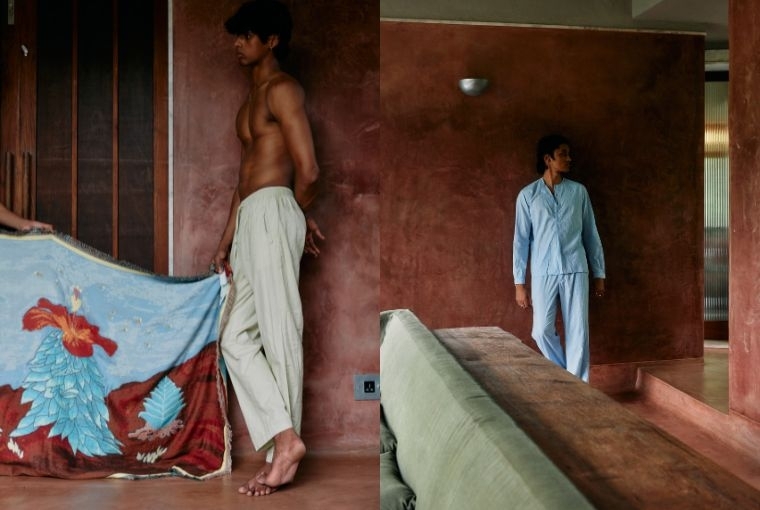
Coming back to fashion, there are runway shows and season collections…A lot is constantly happening. How has this space evolved since you put your brain to the residency and came back to it? What's making sense to you and what is not?
I feel there's a very personal sense of expression with all of us who make clothes. Despite there being so many brands and a saturated market, it is very joyous. There's something to feel good about when you make clothes, and it becomes very individual. We are all in creative businesses for our own joy, and you find inspiration to continue. But as a maker, evolution has been more in terms of editing, in terms of doing lots of things that I did 12 years ago. I don't think we need to change anything.
And the joy and the giddiness of going to do this again feels really good. And because it worked then, it will work now. There is the storytelling, and why and how it feels. But at the end of the day, we're making clothes. They are clothes for wearing and living in, and not going too far away from the purpose.
It's amazing that Shift is a name that can encapsulate clothes, art, so many things.
Isn't it? Thank you for identifying it. Honestly, that's exactly what I wanted. Even 15 years ago, my headspace was the same. I was like, I want to do other things, then come back to this, and do other things and keep moving. But never disown what I've done, which is beautiful. I'm glad you noticed. It can have so many meanings, and you can keep evolving under this umbrella. And that is why everything feels organic and natural and purpose-driven.
Many of us remember Shift for skirts, shift dresses, ditzy pants and a very old-world charm. Has that sensibility changed form?
No, I think it's expanded. I'm fairly binary with my approach to design. With women's wear, there was this old-world charm. Overall, even in men's now, it's all washed and worn and pre-loved looking, just seasoned clothes. So it has carried on. In that book, that woman's sensibility or that lifestyle sensibility is very evident. But I feel this is a more millennial take. Millennials now, unfortunately, have been cornered into defending their actions and their beliefs, and I feel this is pretty much that. It's like, no, we will still laugh all the way, no matter what changes, and our resistance to change or acceptance. So it's just another end of the universe, but it's pretty much there. It's the same woman and same man in the same life, but a little bit older within that universe.
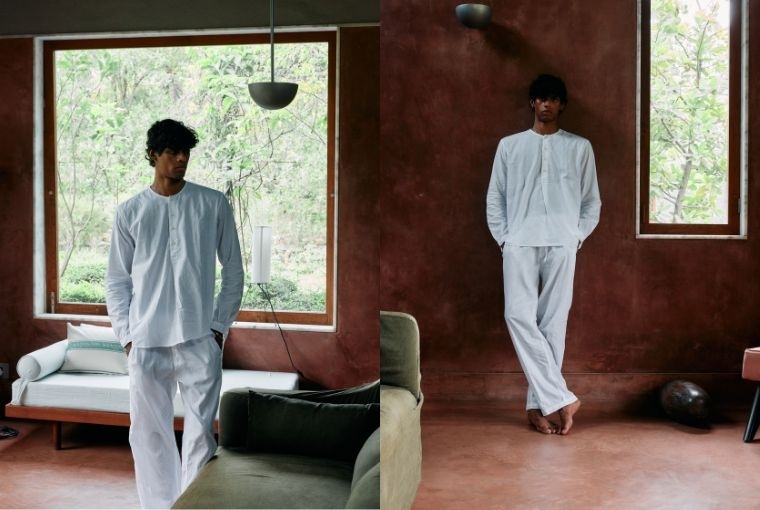
Desi cotton, the fabric that you work with, has also not changed.
Yeah, we started off using a lot of handwoven fabrics and a lot of organic certified cotton. It was always the working structure and the parameters, so nothing's changed. The conversation this time around is again to celebrate cotton. We think of Tweed and Harris Tweed and feel great, but it's revived craft. It is genetically specific to the region. We've historically supplied cotton to the whole world. While all Indians love cotton, I feel there's more to love and more to enjoy in the beauty. It's not so much a discovery of using anything. It's simply a nod to using something as generic as cotton and feeling really rich about it. It's like eating a home-cooked meal. It's not special, but it hits the spot.
With this relaunch, how do you want people to experience the brand? Shift was mostly online, with pop-ups you took part in. Is there a physical space you're manifesting?
We want to slowly crawl into space, because retail has evolved so much from back in the day when I used to sell Shift, and then moving on to Bhane and the learnings. Digital space is the primary medium for sure, because we get to talk to a larger audience. It's amazing to see how many people overseas are excited to order from us. The inquiries come from random places. It's so joyous again to see the online space for retail. But because it is such a concept brand, we need a physical space, and we're manifesting one, hopefully for next year. There will be clothes, but I feel the space has to be far more than just clothes.
I also read that you're working on a little home collection. Can you tell us more?
Again my sabbatical, starting with the residency, I've just been dabbling, finding things to do which I really enjoy like ooking at craft, looking at products other than clothing, because clothing is my first hand. It comes to me naturally. I didn't have to research or work hard on building a collection. Everything else- how I got there, the supporting act or the populating act to the main act- was the home collection, where we're working with different craft groups. We're looking at how to build a certain product, understanding materiality beyond textiles, and then using textiles as a bridge to home. As I said, home is dotted, and each piece will expand into its own little universe. Right now these are novelty objects. Not everything talks to each other, but they still fit into the scheme of things.
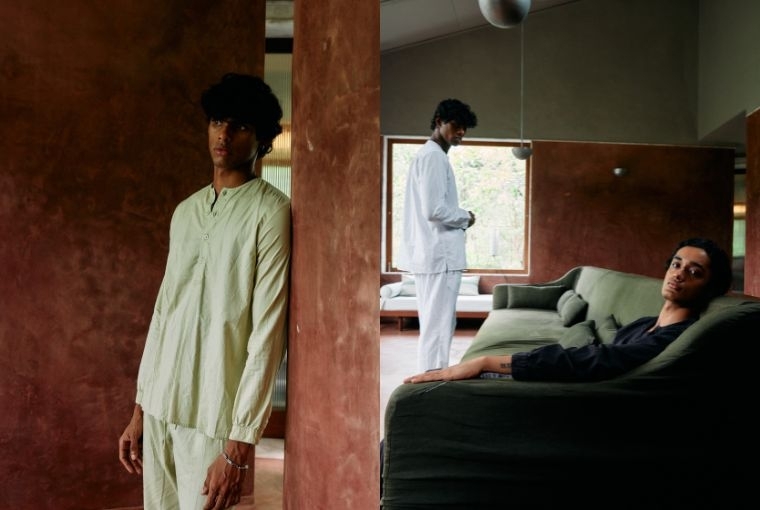
So there's the clothes, the home collection and the residency. Are you committed to doing all three together?
Yes, because they're not hyper-ambitious projects. The artists' residency is our giveaway to the community, bringing people to respond. It's really just an art camp or a creative thinking workshop for 10 days. It's going to be 15 days now, and then online work. The artists' residency is us opening our space and building a community where we start getting them to respond through the textile medium, which is very independent and an after-hours activity. And clothing, as you see in the collection, is a range of perennial clothes. They are essentials. It's a very lo-fi collection. It's got a slow beat and we just have to keep trickling.
Shift was one of the first few brands to take sustainability seriously, many years ago. Now every brand states that it's sustainable, but there's so much behind really being that. Where are we in that space right now according to you? Is the term being used loosely and not properly done?
No, but isn't it amazing that everybody's talking about it? That needle did move. We've been complaining about so many things, but to see it- even if it isn't greenwashing- the fact that customers are demanding, some brands are faking, others are trying, is commonplace, which is actually pretty good if you think about it. A lot of sustainable consumption and manufacturing is very compliance-driven and governance-driven. There will be periodic changes in laws, and a lot of those answers on sustainability need to happen, which is happening. From a human rights standpoint, we don't see a lot of child labour anymore. From an ethnic standpoint, we see women's inclusion. So a lot of social sustainability has moved forward; then it will be environmental, and it will evolve, which is really good.
Greenwashing is just collateral damage. If there's demand, and a lot of suppliers actually supply clean materials at an affordable price, that's where we need to be anyway. I don't think anybody needs to get a brownie point for being sustainable. It's good business practice. Unfortunately, we are marketing ourselves saying we are better than others. But even back in the day, we managed Shift purely because of design and not because we were using khadi or certified cotton. Nobody cared. I don't think my customers really knew what they bought. They bought because there was a certain feel-good factor. They could associate and relate, and it brought them joy. I think that's true for every brand. We love Issey Miyake, where it's a hundred per cent polyester, but there is a certain joy that a certain brand gives. So you can't break it down by material.
Are you still creating and getting inspired from Gujarat, or have you moved base?
I lived, for the last two and a half years, between Gujarat and Bombay, mostly Gujarat. But since we now have a bigger undertaking with the brand, I will live more in Bombay, but I still spend a lot of time between two cities.
Words Hansika Lohani
Date 14.10.2026
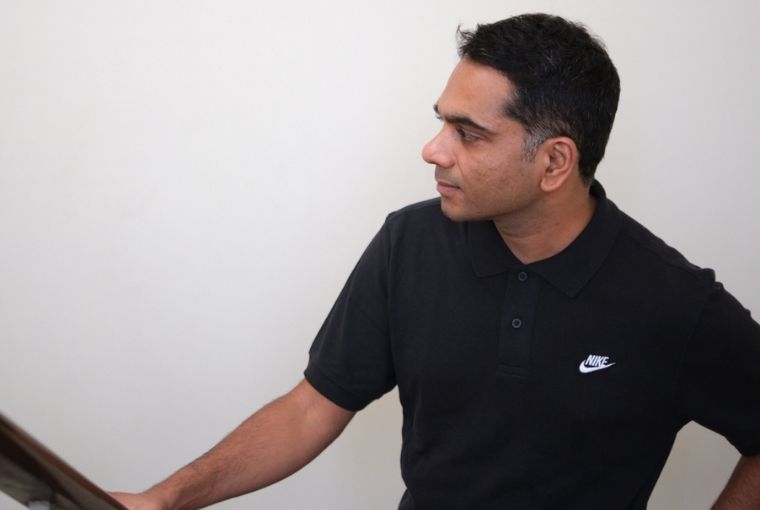
Nimish Shah