Photography Dwaipayan Mazumdar
Photography Dwaipayan Mazumdar
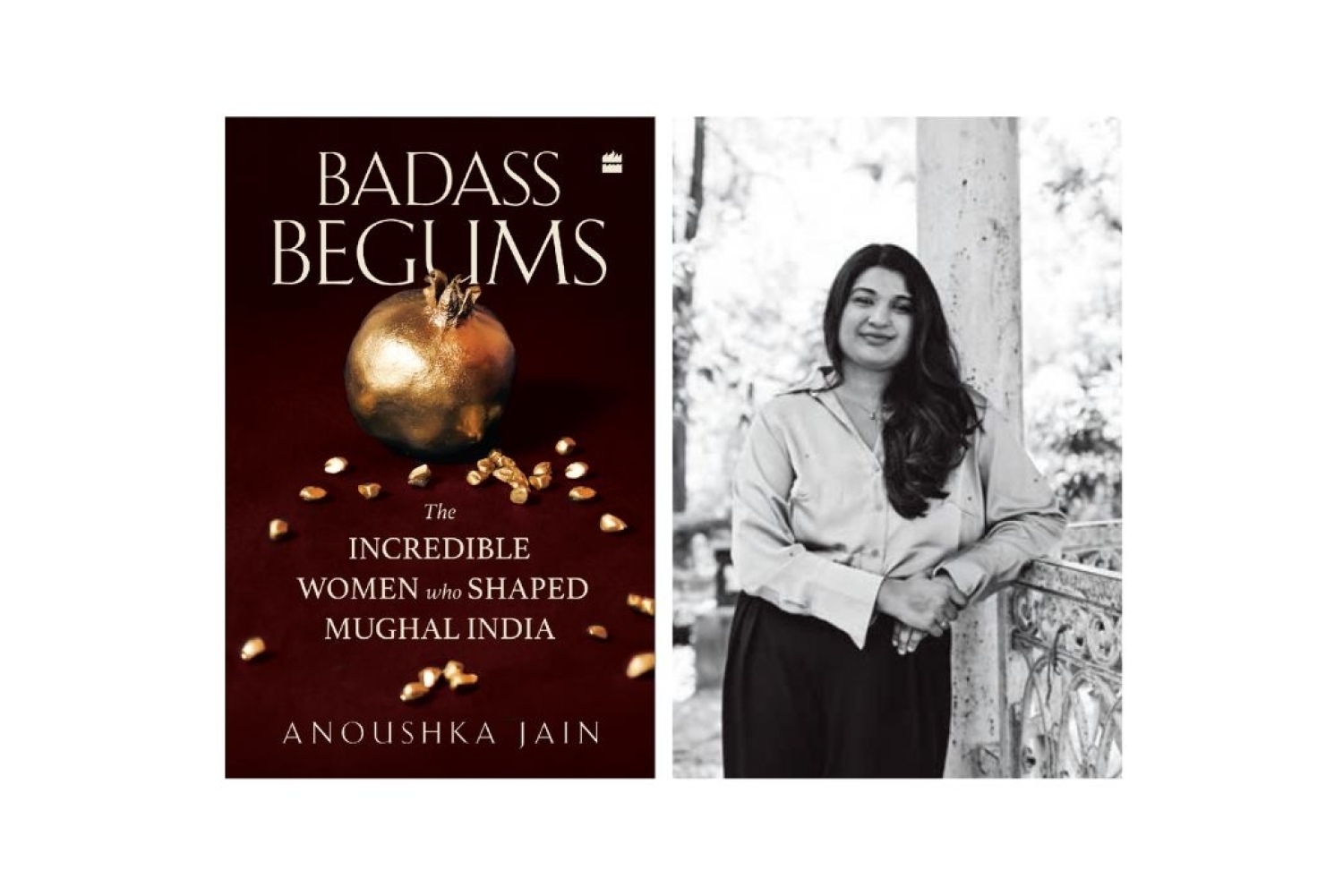
Badass Begums is, in the words of its author Anoushka Jain, ‘a very different take on history itself.’ While there are many books that talk about women in India, very few capture their stories in the way she has chosen to. Badass Begums, fresh and necessary, sets out to change that, giving readers an account of women, whose lives deserve to be remembered and retold.
Anoushka speaks to us about how the role of women in shaping Delhi’s architecture is often overlooked. The book documents monuments in Delhi, built by women and gives readers insight into their lives and the roles they played in shaping culture, politics and kingdoms. She highlights figures like Zeenat Mahal, Jahanara Begum, Begum Samru and others, who embodied defiance.
The Heritage Space
I studied history and art history, interned at Indira Gandhi National Centre of Arts and started Enroute Indian History seven years ago. My reason was very simple: I had seen a lot of men talk in public spaces. At the time, heritage walks were rare, and almost never led by women. And monuments were considered dangerous for women. At least, I remember when I was in college, the one thing my parents used to say is ‘don’t go to monuments alone, take someone along with you, go in groups’ and things like that. Enroute provides an opportunity where women can reclaim the monument space and thirty or forty people can come listen to them and engage in meaningful conversations.
From the start, I decided to hire only women to put them in public spaces, historically dominated by men and to reclaim monuments once seen as inacces- sible to them. Over the years, many young women have interned with us. We also run research and writing programs and every aspect, from guiding to filming to design, is done by women. Today we conduct over sixty different walks in Delhi, about ten to fifteen each month.
Delhi as Home
Delhi is a melting pot. My family has lived here for three generations, so we have adopted different traditions — Durga Puja, Rajasthani customs, everything. I do not identify with the idea of a ‘Delhiwala,’ because Delhi is a city of immigrants that accepts whatever you bring to it. And the heritage is unmatched, every mile has a monument. Yes, Delhi has a reputation for being unsafe for women but most cities are unsafe. That is why we started community programs like monthly ladies’ night walks, so women can reclaim the city. Being part of Delhi means acknowledging both its richness and its shortcomings.
Why Badass?
My editor and I debated what makes these women badass. Many were queens or begums with privilege but privilege does not always equal power, at least it might not have back then. Take Zeenat Mahal, who inherited a crumbling empire, or Jahanara Begum, who had to navigate powerful brothers without threatening them. Begum Samru, a courtesan, commanded an army of four thousand. To me, badass is not just defiance, it is knowing when to lose small battles to win the larger war and how to assert identity without being ostracised.
Research Process
Badass Begums began as a heritage walk. I thought turning it into a book would be easy but the narrative demands were much larger. Sources are often silent on women, sometimes just a passing mention in chronicles. Even basic details like their appearance or marriages are missing. I relied heavily on court chronicles, since these women came from privilege and were recorded. Mughal texts mention women more than many others. I also used traveller accounts, Persian, Urdu and European and compared multiple versions of events to piece together narratives. For the monuments, I worked with ASI records and archaeological texts. Some structures, like the Akbarabadi Masjid, are long gone but referenced in multiple sources. Each chapter begins with a memory from a heritage walk, then tells the story of the Begum, her architecture and how she is remembered today, since remembrance was their purpose.
Challenges
One challenge was fieldwork. While working on Begum Samru, I was interviewing shopkeepers near her building when a local leader confronted me, accused me of documenting illegally and a mob gathered. The building is heavily encroached and people fear heritage status will displace their shops. It became unsafe and I had to step back for a while. As for revelations, I loved discovering how Aurangzeb’s daughter Zeenat-ul-Nisa secretly helped the Marathas against her father’s wishes. Or Haji Begum, Humayun’s first wife, who raised Akbar and showed remarkable emotional intelligence. In one story, she tasted medicine herself before giving it to young Akbar, to prove it was not poison. These tender, human moments are rare but precious in the records.
Hopes for the Future
I want women to see that it is never too late to assert identity. Society tells women to be dutiful daughters, wives, and mothers, but these women were self-assured, and insisted on proving their merit. For men, the book offers a new way of reading history. Instead of kings and battles, it is about women shaping culture and economy, building sarais, bazaars and monuments that sustained empires. History is never made only on battlefields. As for the future, I am already working on my second book with Penguin, continuing to explore these overlooked stories.
This article is an exclusive excerpt from our November 2025 Bookazine. For more such stories, grab your copy here.
Words Neeraja Srinivasan
Photography Dwaipayan Mazumdar