What happens when an old myth is asked a new question? Writers love taking popular mythology apart, changing the point of view, questioning the fate of their characters and bringing misunderstood voices to the foreground. The gods, heroes, villains and side characters become ways of thinking about gender and identity, power and violence, religion, control and the systems that shape our lives today. A familiar story can feel entirely different when told by Penelope instead of Odysseus, Kaikeyi instead of Rama or Duryodhana instead of the Pandavas. Here are some novels that take the stories we think we already know and, simply by handing the telling to someone else, make us see them for the first time.
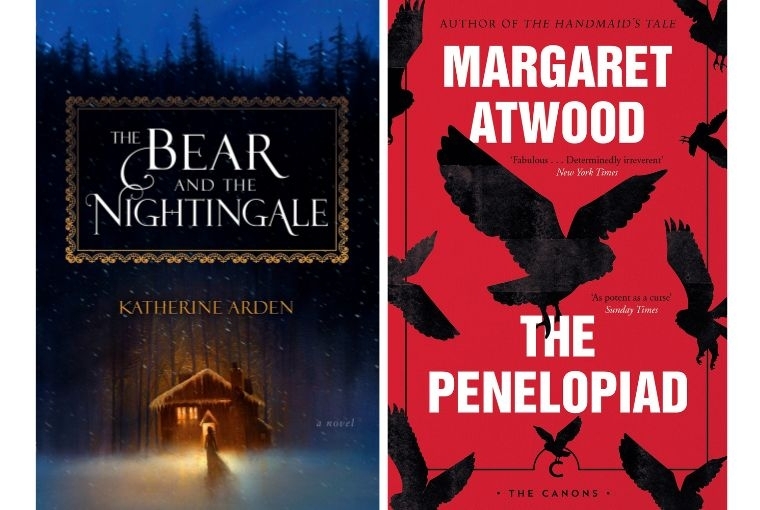
Medea Sang Me a Corrido by Dahlia de la Cerda
Translated by Julia Sanches and Heather Cleary, Medea Sang Me a Corrido is a linked collection of six stories set in the fictional Mexican landscape of Aztlán. Dahlia de la Cerda reworks the myth of Medea in contemporary Mexico, making Euripides’ tragic heroine into a recurring figure of a spirit, midwife, gravedigger and protector to women confronting cartel violence, disappearance, abortion and poverty. Medea’s revenge is recast through Mexican folklore and the corrido tradition, transforming her rage and grief into collective feminist resistance.
Menaka’s Choice by Kavita Kane
Kavita Kane expands a brief episode from Hindu mythology into the story of Menaka, the celestial apsara sent by lord Indra to disrupt ascetic Vishwamitra’s austerities. Rather than reducing her to a divine seductress, Kane gives Menaka an interior life shaped by love, motherhood and the desire for autonomy. The novel reimagines her as a woman negotiating duty, abandonment and the possibility of choosing her own fate.
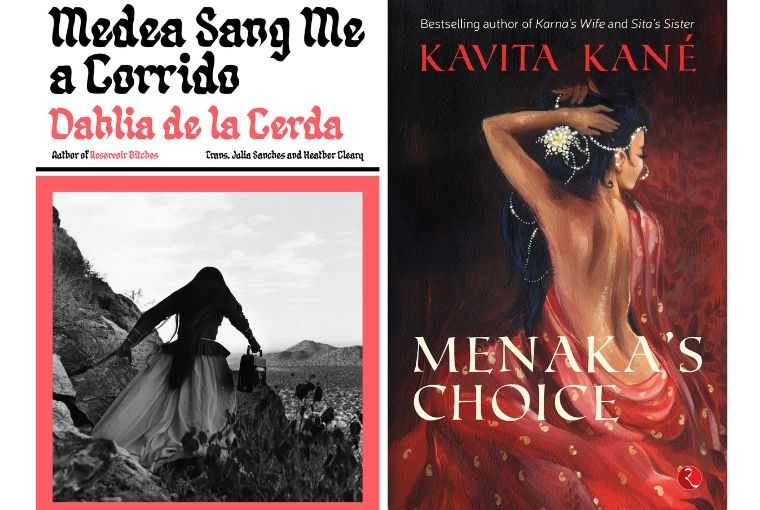
Kaikeyi by Vaishnavi Patel
Kaikeyi retells the Ramayana from the perspective of the queen traditionally cast as the cause of Rama’s exile. The author traces Kaikeyi’s life from her childhood in Kekaya to her rise as a politically astute queen, expanding the familiar figure into a complex woman seeking agency within a patriarchal world. There’s motherhood, ambition, loyalty, marriage, power and the costs of challenging tradition and an overall shifting of the Ramayana’s moral centre toward a silenced female perspective.
Fruit of the Dead by Rachel Lyon
Rachel Lyon undertakes a contemporary retelling of the Greek myth of Persephone, Demeter and Hades as the island becomes a modern underworld and wealth, pharmaceuticals and addiction replace the myth’s supernatural forces. When eighteen-year-old Cory takes a summer job, she is drawn into the seductive and dangerous world, while her mother searches for her. The book uses mythology to examine how vulnerable young women can be captured by systems of privilege and control.
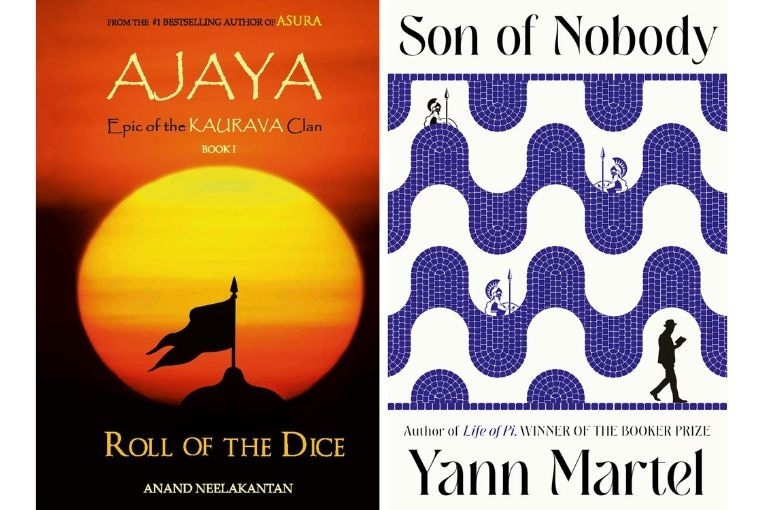
Ajaya: Roll of the Dice by Anand Neelakantan
Anand Neelakantan retells the Mahabharata from the perspective of its defeated Kauravas, particularly Prince Duryodhana, called Suyodhana in the novel. Amid the political tensions of Hastinapura, the book revisits Bhishma, Gandhari, Karna and other familiar figures to question the line between the ‘righteous’ Pandavas and the ‘villainous’ Kauravas. Power, caste, class, loyalty, legitimacy collide to confront the relativity of morality.
Son of Nobody by Yann Martel
Through fragments, translations and footnotes, Yann Martel retells Homer’s Iliad from the perspective of an ordinary man rather than kings or demigods. The novel explores ambition, homesickness, love, grief, family responsibility and the ways stories become history. The ancient narrative mirrors the protagonist’s fractured domestic life, suggesting that myth continues to give us ways to think about contemporary human conflict and loss.
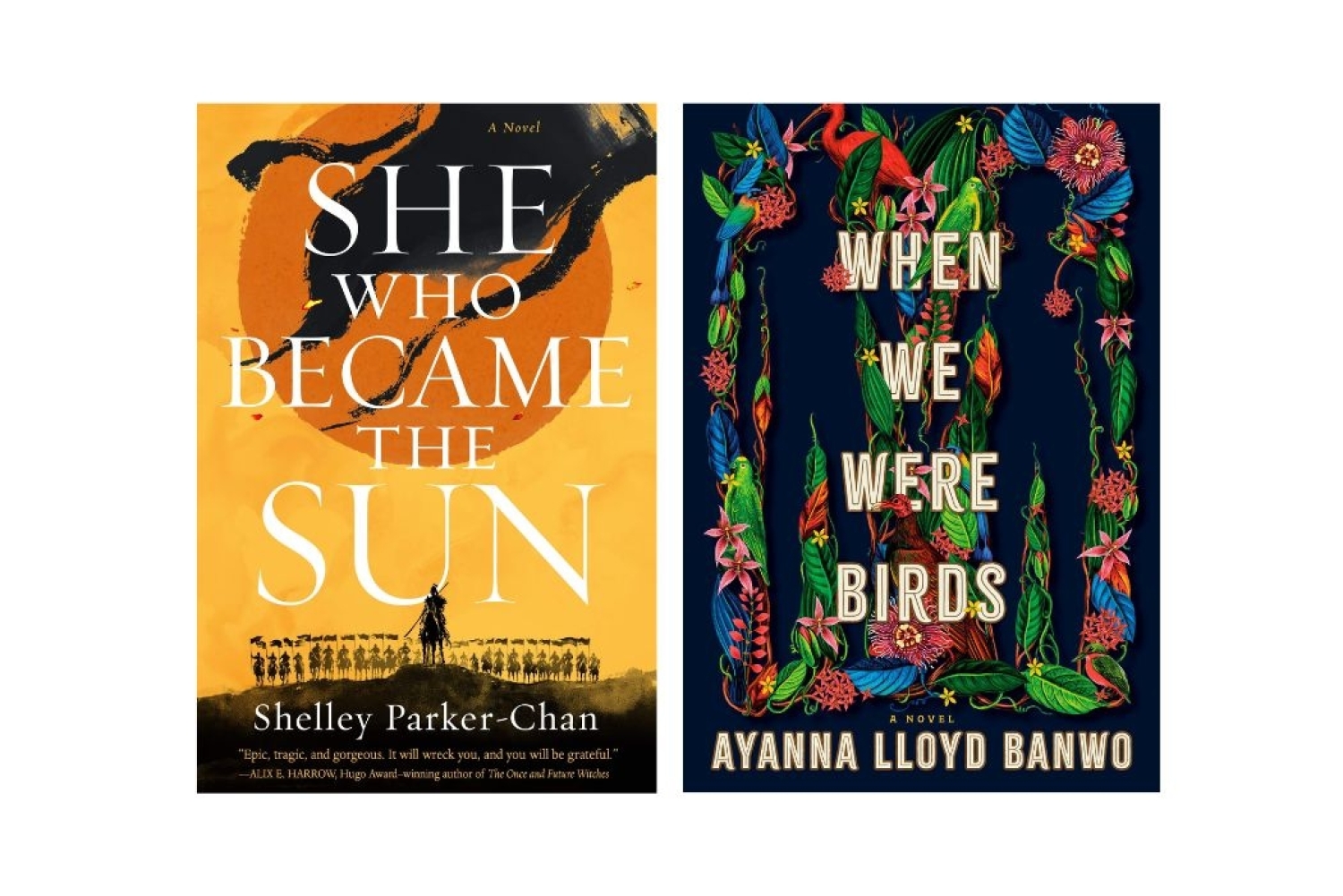
She Who Became the Sun by Shelley Parker-Chan
This book is a queer reimagining of a story behind the founding of China’s Ming dynasty. Set in fourteenth-century China, it follows a girl who takes her dead brother’s identity after being told she is destined for nothing, then pursues the greatness promised to him. Her journey intersects with war, desire and the rise of Zhu Yuanzhang, founder of the Ming dynasty. Blending history with mythic ideas of fate, the novel questions whether destiny is inherited, imposed or made with respect to gender and power.
When We Were Birds by Ayanna Lloyd Banwo
Blending magical realism, Caribbean folklore and ghost-story elements, the book is a Trinidad-set love story about Darwin, a young gravedigger who has broken with his Rastafarian upbringing and Yejide, who inherits her family’s supernatural ability to guide the dead into the afterlife. Their meeting in an ancient cemetery draws together the living and the dead, while a corbeau origin story provides the novel’s mythic foundation.
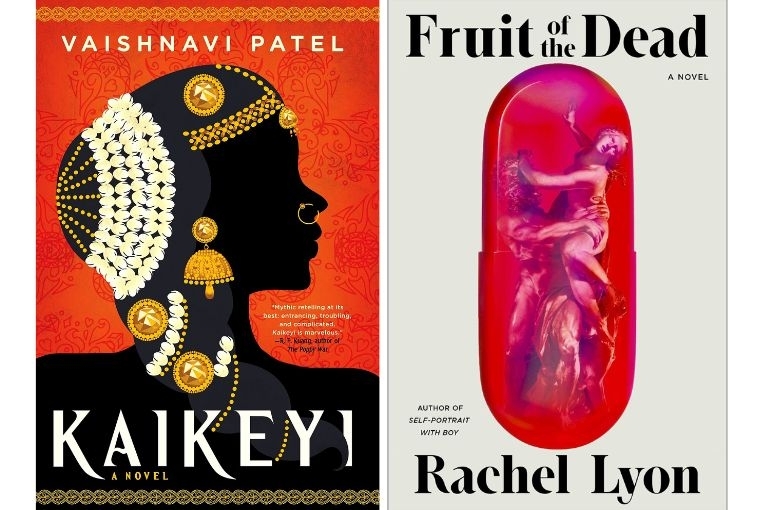
The Bear and the Nightingale by Katherine Arden
Katherine Arden draws on Russian folklore to tell the story of Vasya, a girl who can see the spirits protecting her medieval village. As Orthodox Christianity begins to displace older beliefs, the household spirits weaken and a darker force emerges from the forest. Rather than retelling a single myth, the author weaves together folk traditions to explore cultural memory, female independence and the tension between old and new worlds.
The Penelopiad by Margaret Atwood
Penelope, Odysseus’s wife, gets to tell her side of the story in Margaret Atwood’s retelling. Speaking from the underworld, she revisits her marriage, her years ruling Ithaca and the execution of her twelve maids, whose chorus interludes in the book offer a second, darker account. By shifting the epic away from Odysseus, Atwood exposes the gendered double standards and silences beneath the heroic tale.
Words Nidhi Soni
Date 18.8.2026