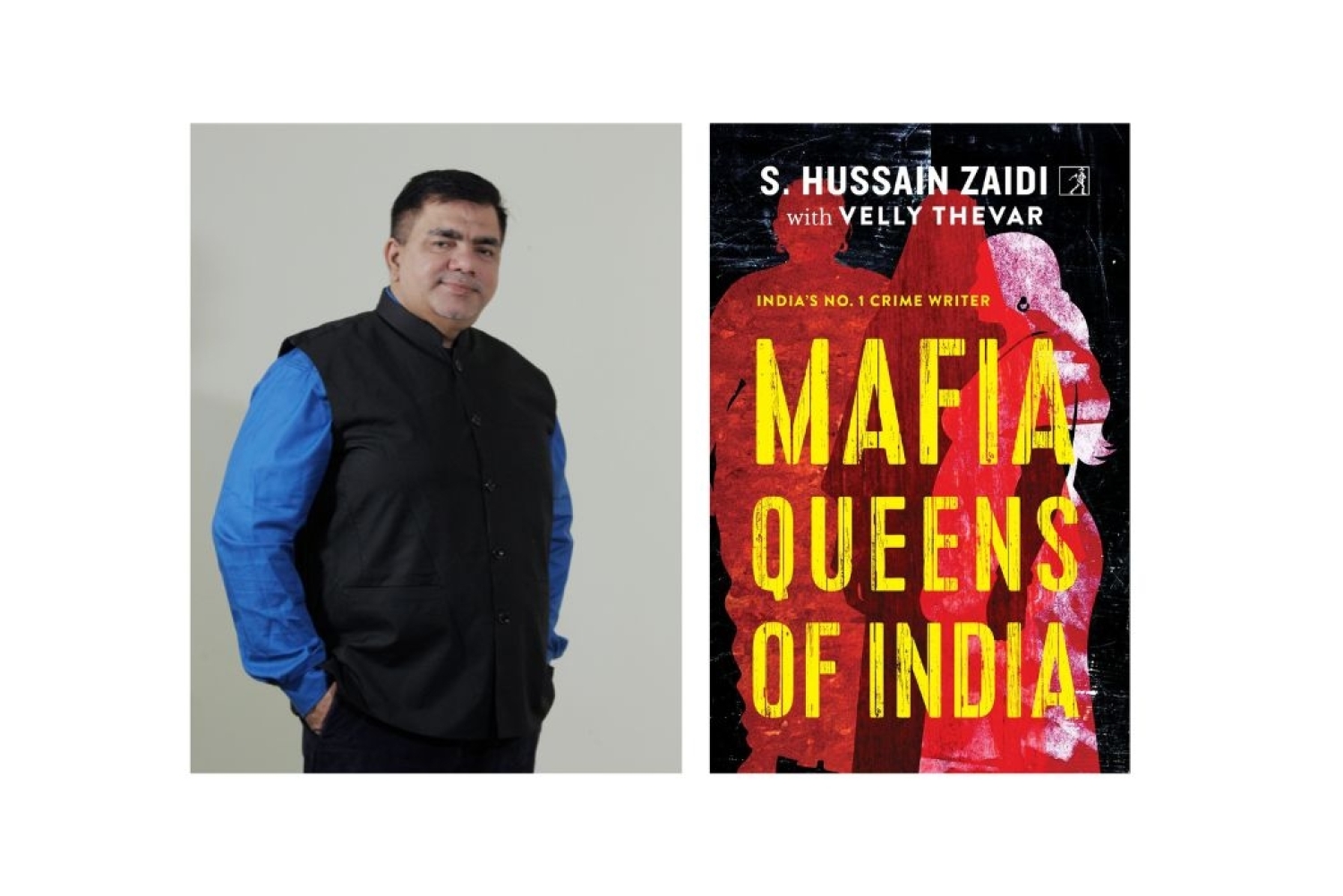
In Mafia Queens of India, each tale displays how audacity could be wielded just as effectively by women as by the men who overshadowed them. The book travels to the ravines of Chambal where a bandit seeks revenge against those who’d wronged her. In another part of the country, a ponzi scheme dressed in the garb of religion, derails the lives of millions. In colonial Amritsar, a family is hunted by British troops and a woman’s revenge threatens to bring down an empire. Told with the pace of a thriller and the intimacy of eyewitness reporting, Mafia Queens of India is a portrait of women who broke the rules, rewrote them, and sometimes paid the ultimate price. The myriad tales in these pages are a grim reminder that, in the dark shadows of the mafia, the most dangerous figures are not always the ones you expect to be.
We’re in conversation with Hussain Zaidi and Velly Thevar about what drew them to these stories, the kind of research that went into this book, and their own personal motivation to bring these stories to the forefront.
The Roots
Hussain Zaidi: As a journalist, I had reported enough on brutal crime and violence by men but I was fascinated with the fairer of the species in crime as they seemed very different in their approach. They believed in manipulation more than bloodshed. They were shrewd and cunning. Jennabai did not have money but she had a way with words, she analysed situations and gauged the depth of her opponents very easily. She brought people together and she could sweet-talk the mafia into having meetings. Jennabai had a commanding presence and walked a tightrope both as a police informer even while having a dalliance with the mafia. She was the go-to woman for solving conflicts in the mafia. Other women like Jaya Chheda paid a supari to kill her husband. In a calculated way she got hold of her husband’s matka empire. These women drew me to writing about Mafia Queens of Mumbai and its sequel, Mafia Queens of India.
Velly Thevar: Way back in the second half of the nineties, director Tanuja Chandra who was Hussain’s friend was keen to capture on celluloid some stories on women in crime. Hussain and I had worked on a detailed dossier on a bunch of women who walked on razor’s edge and lived to tell the tale. This list of women and their shenanigans got converted to Mafia Queens of Mumbai by Hussain. I was unable to assist him at the time as I was too bogged down with motherhood and a full-time job. Almost a decade later, it was my brother who suggested that I do a sequel to Mafia Queens and he rattled off a bunch of names and their bio-sketch from all over India.
Hussain brought to the table more women from diverse backgrounds and some of them with a lot of spunk. As a crime reporter, I was never inured to the ways of criminals, psychopaths and serial killers and was always horrified by the depravity that drove one human to hurt and abuse another. Jaya Chheda, Sonu Panjabi and Saira Begum breached a line that made them sub-human. In some cases, the prosecution and the police did a very professional job in pinning these women down for their crimes and I thought it should be written about.
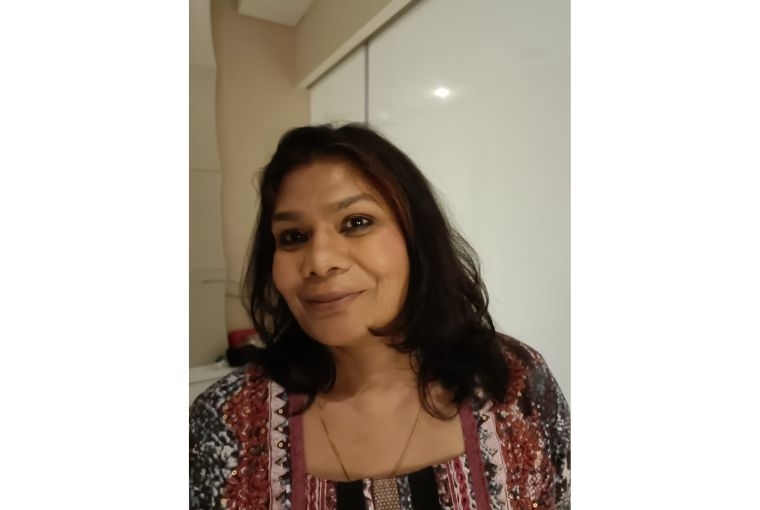
Co-Author, Velly Thevar
Research Process
HZ: The material for the stories came primarily from the women’s families and police records.
VT: We had more than ample documentation. For instance in the case of Sonu Panjabi, we have transcripts of wire-tapped conversation that the prosecution used to nail her. Long before we started work on the book, I happened to know a lot of families that had lost their homes and hearth because of Nowheera Sheikh. This woman did not actually kill anyone but contributed to many victims’ early and untimely demise. Except in the case of Cleopatra (which is Hussain’s first person account) and Baharo which Hussain got from a resourceful Pakistani source, there are police and court records; interviews and published articlesa available for all the women who made it to the book.
Power and Agency
HZ: These women did not want to take instructions from men but they did not loudly proclaim so. Their personal circumstances in some of the cases lured them towards a life of crime while in other instances they wanted to make easy money and did not want to be accountable to the men in their lives.
VT: The architecture of a criminal mind is not gender-specific, education-specific, or linked to any upbringing and lifestyle. There are more male criminals as we are a male-dominated society. For criminals, male or female, the pull of crime is sadly an undeniable one. They are drawn to a life of crime like a moth to a flame. When women who at their core are always associated with compassion and care-giving, preserver of family and values and possessing a moral compass cross the threshold to heap cruelty on their fellow beings, it is a statement on the shifting social dynamics of Indian society.
A Story That’s Close To Your Heart
HZ: Two women, Cleopatra and Baharo made me fall in love with them. I was completely enthralled by their stories. I had an amazing and deep personal vibe with Cleopatra and now that she is gone, I miss her terribly. Hats off to her grit and determination and the ability to remain behind the scenes even as her orchestration ensured that a Tamil don attain his place among Mumbai’s mafia dons. She changed Vardarajan Mudaliar’s life, but readily accepted the wallflower tag. She was the puppeteer who sculpted a Tamil don in Mumbai but chose anonymity. I love Baharo because of her dignity despite her notorious profession. I found a lot of grace in that woman and both Baharo and Cleopatra were victims of circumstances but they turned adversity into opportunity. When life gave them lemons, they made lemonade. That is truly an admirable quality in a woman. These two women had character. They were like lotus in a filthy pond.
VT: The little girl who was abducted in the Sonu Panjaban case tugged at my heartstrings. A lost childhood is a statement on us as a society. I was also pained for the victims in the case of Sonu Panjaban, Jaya Chheda, Saira Begum and Nowheera Sheikh. I liked Cleopatra for quietly pulling the strings in the mafia without making her presence felt. She was a king-maker. I admire Jenabhai for her chutzpah.
Words Neeraja Srinivasan
Date 18.12.2025