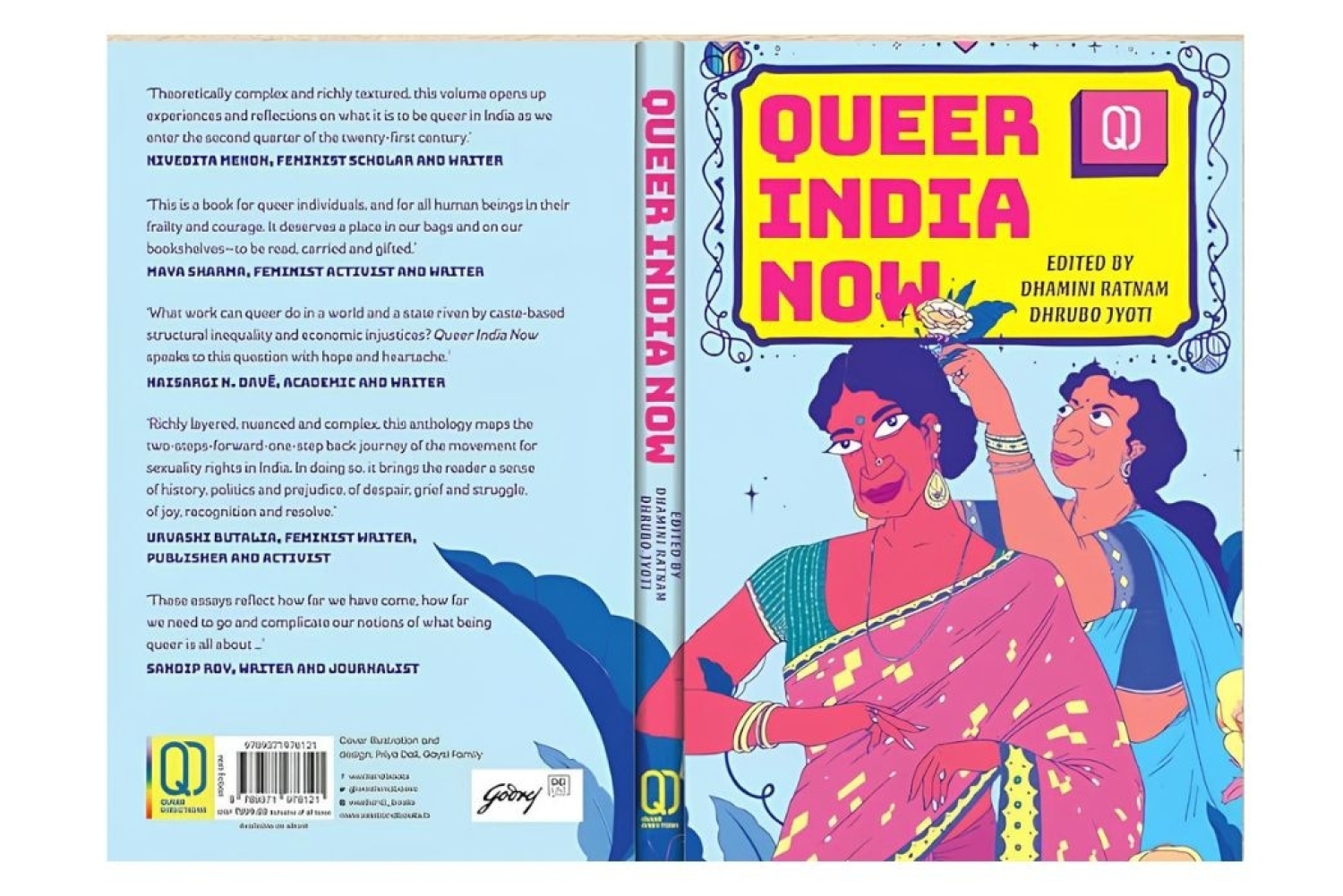
In the month of June, Queer India Now arrives as a deeply personal anthology exploring queer existence across contemporary India. Edited by journalists Dhrubo Jyoti and Dhamini Ratnam, the collection brings together essays, testimonies, reflections and art from voices spread across regions, professions and identities. For the editors, the anthology veers past the bounds of only being about visibility. It is also about documenting the present while locating it within a much longer history of queer writing in India. ‘The format of anthology is not a new one, particularly when it comes to queer writing,’ notes Dhamini, referencing earlier collections like Facing the Mirror and Because I Have A Voice. Many of these books emerged alongside major legal and political moments around Section 377. Queer India Now contains a multitude of experiences; as Dhrubo says, ‘Queerness in India is not one story. It cuts across caste, religion, class, language, region, and ability. This book reflects that.’
Beyond A Singular Queer Story
One of the anthology’s strongest impulses is its refusal to flatten queerness into a singular experience. Dhrubo explains that both editors approached the project with the understanding that queer lives are shaped by caste, class, geography and access. ‘As two queer people who came from different backgrounds, had different interests, different personalities, and different hopes and dreams, both of us were clear that there was no one queer story,’ recalls Dhrubo.
The editors also wanted to move beyond familiar narratives surrounding legal battles and decriminalisation. ‘The 377 story had been told, and told well,’ Dhrubo points out. ‘We were thinking of something that was maybe more conversational, more current, while keeping the long view of history intact. We wanted to ask people about the nuts and bolts of their ordinary life.’
That attention to everyday life runs throughout the anthology. Rather than centering only metropolitan experiences, the collection turns toward intersectional and more daily realities. Dhamini describes contributors that include a transman in rural Haryana struggling to secure identity documents, a college student from Beed finding affirmation in stand-up comedy, and a gay man from Kashmir navigating the twin hurdles of faith and society. ‘Our contributors speak from small towns and megacities, from courtrooms and shelter homes, and from hospitals and film studios,’ she adds.
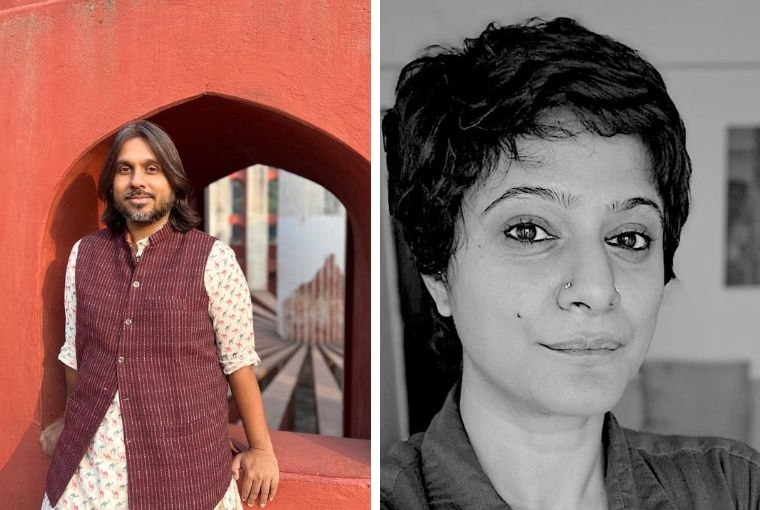
L: Dhrubo Jyoti R: Dhamini Ratnam
Across Caste and Region
Throughout their reflections on the anthology, both editors repeatedly return to intersectionality, away from theory and closer to lived experience. ‘We also hope that the anthology offers an understanding of intersectionality as a lived experience rather than as a theoretical concept,’ Dhamini explains. ‘The book’s many authors live out multiple marginalities of caste, class, gender, sexuality, language, religion and region.’
Dhrubo echoes this emphasis, particularly around caste. ‘The question of caste was also non-negotiable,’ they remark. ‘We could not talk about queerness and pretend it floated above caste.’ The editors actively searched for what Dhrubo calls ‘outlier stories’, including a person building a collective in rural Odisha, a transman in rural Bihar getting his dream job of being a policeman, or a model from Nagaland talking to young people about beauty. Importantly, the anthology does not attempt to reduce contributors solely to their marginalisations. ‘We didn’t want to bracket people from any marginalisation into one box,’ Dhrubo says. The collection’s structure reflects that multiplicity too. Alongside essays and reflections are poems, graphic narratives, conversations and artworks.
Beyond Pain, Challenging Assumptions
While Queer India Now does not shy away from systemic discrimination or social hostility, both editors are careful to point out that queer life cannot be understood only through pain. Dhamini describes the present as ‘one of great flux’, where ‘social relations are being restructured, citizenship is a hotly contested space, and the idea of family itself is being rethought by many of us.’ Yet within that uncertainty, she believes the anthology also captures ‘the strength, courage and joy with which queer people are living their lives.’
For Dhrubo, one of the most moving aspects of editing the anthology was seeing contributors challenge assumptions about queer life outside metro cities. ‘I think there's this assumption that if you're queer and you're not in a metro, your story is basically about waiting to escape,’ they observe. ‘Many of our contributors punctured that misconception with lives built with labour, joy, and community.’
Through its many voices, the anthology reclaims queer lives from abstraction and political debate, placing human experience at the centre. ‘The things people have written in this book, wanting to be loved, wanting your family to use your name, wanting to grow old without being afraid, those are not strange desires,’ Dhrubo says. Dhamini similarly resists offering a definitive answer about what queerness in India means today. ‘The book does not offer an answer of what it means to be queer today,’ she says. ‘The pieces simply hold up a mirror.’
This is an excerpt from the June EZ. For more such stories, read the EZ here.
Words Neeraja Srinivasan
Date 1.7.2026